
Quality transformations fail not because frameworks are wrong, but because organisations treat them as projects with end dates. I have spent over two decades implementing and transitioning ISO 9001 systems at a major aerospace manufacturer, SNOP, and WITE Automotive. The pattern is always the same: a gap analysis exposes nonconformities, corrective actions are issued, certificates are renewed, and the underlying process discipline quietly erodes within eighteen months. Quality becomes a audit-preparation exercise rather than an operational discipline.
The FOREAST methodology was developed to break that cycle. It is a seven-step framework designed for organisations that need the rigour of a full quality system but lack the infrastructure of a tier-one manufacturer. Rather than prescribing a single management standard, it sequences the operational and cultural mechanics required to make standards stick — Focus, Organise, Reinforce, Execute, Analyse, Standardise, Transform.
Each step is not a phase that ends, but a capability that compounds. The framework works across IATF 16949, AS9100, and ISO 13485 environments because it targets the common failure modes: scattered priorities, undocumented tribal knowledge, and improvements that never survive a shift change. The following sections break down how each step functions in practice, where the integration points sit, and what happens when organisations skip them.
Focus and Organise: Directing Resources at the Critical Constraints
Focus is the discipline of identifying the vital few processes that drive customer escapes, cost of poor quality, and delivery variance. Most organisations spread improvement budgets across twenty initiatives and deliver nothing. Focus forces leadership to rank processes by risk severity and commercial impact, concentrating engineering and quality resources where Cpk sits below 1.33 or where PPM rates breach customer thresholds.
The output of Focus is a narrowed scope. The output of Organise is the structural capacity to act on it. Organise defines roles, assigns process owners, and establishes the reporting lines that make accountability traceable. In a greenfield QA/QC department I built for a 900+ employee plant at SNOP, the first task was not writing procedures — it was mapping who owned each process failure mode and giving them the authority to change it.
Without this structural foundation, improvement efforts become voluntary contributions from already-busy operators. Process owners need explicit authority to stop a line, escalate a deviation, or quarantine a batch. If the organisation chart does not support those decisions, the methodology collapses at the supervisory level. VDA 6.3 process audits will expose this gap every time — the question 'who owns this?' must have a single, documented answer.
Operational Thresholds That Trigger FOREAST Intervention
Reinforce and Execute: Moving From Plan to Sustained Action
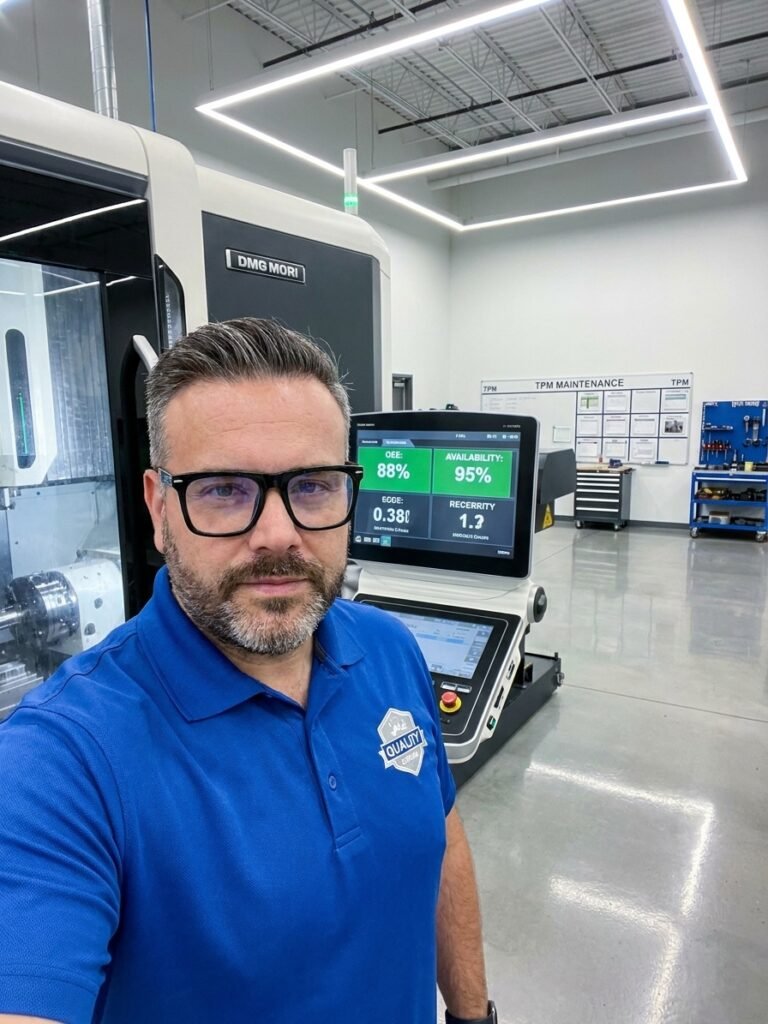
Reinforce builds the daily mechanisms that hold new behaviours in place. A PFMEA identifies a failure mode; a control plan specifies the detection method; Reinforce ensures the operator actually performs the check every cycle, logs the result, and escalates when the measurement drifts. This is where most methodologies lose traction — the documentation exists, but the shop-floor habit does not.
Reinforcement requires layered process audits, visual management boards, and shift-handover protocols that force a structured review of quality status. It is not a training session. It is the daily operating rhythm that makes the standard the default path of least resistance. When I introduced Routing Verification KPIs at a major aerospace manufacturer, the mechanism cut internal lead time by 97% — not because the metric was clever, but because it was reviewed and acted upon every single shift.
Execute is the conversion of validated plans into measurable process changes on the floor. This is where SMED implementations, Poka-Yoke installations, and line-balancing changes actually happen. Execution fails when teams wait for perfect data or full management sign-off on every adjustment. The methodology requires defined thresholds for autonomous action — the boundary within which a process owner can implement a change without escalating, and the threshold above which formal change control applies.
Analyse and Standardise: Locking in Proven Results
Analyse closes the loop between execution and systemic improvement. Every change must be measured against a defined baseline: scrap rate before and after, setup time reduction, first-time-through yield. MSA (Measurement System Analysis) is non-negotiable here — if the gauge R&R exceeds 10%, the data driving your decisions is noise. I have audited plants that were making decisions on measurement systems so unstable the results were effectively random.
Standardisation takes a validated improvement and makes it the new baseline. This means updating the control plan, revising the work instruction, retraining the relevant operators, and locking the change into the documented management system. In IATF 16949 environments, this is where engineering change management and PPAP submission requirements intersect with daily operations. A change that is not documented in the control plan does not exist — it will disappear at the next shift change or operator reassignment.
The standardisation step is where organisations often confuse documentation with compliance. A binder of updated procedures sitting in a quality office is not standardisation. The standard must be visible at the point of use — a visual work instruction at the station, an updated setting on the machine controller, a revised check sheet on the audit clipboard. The test is simple: can a newly assigned operator perform the task correctly using only the information available at the workstation?
Transform: Quality as Operational DNA
The final step is the one most organisations never reach. Transformation is the point where quality stops being a function and becomes a shared operational discipline. The maintenance technician flags a deviation before the quality inspector finds it. The production scheduler factors in MSA uncertainty when planning gauge calibration windows. The shift supervisor reviews Cpk trends alongside OEE without being prompted.
Quality transformations fail not because frameworks are wrong, but because organisations treat them as projects with end dates.
This level of integration cannot be mandated by procedure. It is the cumulative result of the preceding six steps operating consistently for months — Focus giving direction, Organise giving structure, Reinforce giving habit, Execute giving evidence, Analyse giving truth, and Standardise giving permanence. When those six are present, the cultural shift is a byproduct, not a separate workstream requiring its own communication plan or motivational campaign.
The practical indicator of transformation is the nature of the problems an organisation solves. Pre-transformation organisations spend their time reacting to customer escapes and internal rejects. Post-transformation organisations have reduced their reactive load to the point where engineering and quality teams spend the majority of their time on proactive process optimisation and capability improvement. The 8D reports get shorter and less frequent because the failure modes have been engineered out.
Evidence From the Floor: Where the Methodology Proved Itself
The framework has been stress-tested across a range of manufacturing environments. At ArcelorMittal, applying the Execute and Standardise steps to a SMED programme delivered a 70% reduction in setup times, translating to significant annualised savings. The key was not the SMED technique itself — it is well-documented — but the organisational discipline that ensured the new setup sequences were measured, locked into work instructions, and reinforced on every shift until they became standard practice.
At Norgren, a systematic approach combining Organise, Reinforce, and Standardise produced a 40% increase in productivity and a 25% reduction in work-in-process inventory. The improvement came from restructuring how changeovers were managed, making the new method habitual through daily reinforcement, and then documenting the standard so it survived operator turnover. Without the Standardise step, the gains would have eroded within a quarter.
A mid-sized automotive supplier applied the full seven-step methodology to address a critical quality crisis. The result was a 70% reduction in customer complaints, a 50% improvement in first-time-through quality, and successful IATF 16949 certification. The transformation was comprehensive — not just the numbers improved, but the daily operating culture shifted from reactive firefighting to data-driven prevention. The certification was a byproduct of the system, not the objective.
FOREAST Application: Common Practice vs. Disciplined Practice
What teams typically do
- Run a kaizen event, document the outcome, move to the next project
- Update the procedure but leave the workstation visual unchanged
- Track OEE and scrap monthly without linking them to process capability
- Assign corrective actions without giving owners authority to change the process
What the methodology requires
- Apply Focus to prioritise, then Reinforce daily until the change is habitual
- Update the control plan, work instruction, and visual aid simultaneously
- Cross-reference Cpk, PPM, and OEE in a single shift-level review
- Grant process owners defined autonomous authority to stop and correct
Why the Sequence Matters and Where Organisations Skip Steps
The seven steps are sequential because each one creates the precondition for the next. Focus without Organise creates frustrated teams who know what to fix but have no mechanism to act. Execute without Analyse creates activity without evidence. Standardise without Reinforce creates documentation that no one follows. Every failed quality initiative I have audited in twenty years of practice skipped at least one step in this sequence — usually Reinforce or Analyse.
Reinforce is skipped because it is unglamorous and repetitive. It requires daily presence on the floor, checking that the new standard is being followed, coaching operators who deviate, and making the deviation visible immediately. Analyse is skipped because honest measurement threatens established practices — a process owner who has staked their reputation on a particular method does not welcome data that contradicts it. The methodology requires that data wins. Judgment matters, but measurement is non-negotiable.
The universality of FOREAST across automotive, electronics, medical device, and service industries comes from this structural logic. The specific tools change — PPAP and PFMEA in automotive, design controls and CAPA in medical devices, AS9108 first-article inspection in aerospace — but the sequence of identifying, structuring, executing, verifying, and locking in the change is constant. The framework is industry-agnostic because the failure modes are universal.
The human dimension is not a separate consideration. The methodology integrates training, role definition, and habit formation directly into Organise and Reinforce. Plants that applied the full sequence reported sustained improvements in operator morale — not because morale was the target, but because people perform better when they have clear standards, working equipment, and processes that consistently produce conforming parts. Quality and morale are not separate workstreams; they are the same workstream viewed from different angles.