
A shift supervisor notices scrap rate up by 0.3% in last week's report. On paper, it is a decimal point. On the line, it is thirty scrapped parts a day. He has two choices.
Option one: write an email, call a meeting, prepare a corrective-action presentation, and schedule implementation for next week. Option two: walk to station four, where the defect clusters, and ask the operator what is happening.
The operator explains that incoming material occasionally arrives near the lower tolerance limit. When it does, he has to add a manual reorientation to make the fit. That adjustment takes three seconds, disrupts the takt time, causes a bottleneck, and intermittently produces a defect.
The supervisor returns, adjusts the pressure setting on the clamp at station two—a ten-minute fix—and the problem disappears. No meeting. No presentation. No week-long delay. That is Gemba Kaizen in its purest form.
Beyond Reports: Where Quality Actually Happens
Gemba Kaizen merges two Japanese management concepts. Gemba means the real place—where value is created, where material becomes product, where quality is either built in or lost. Kaizen means change for the better—continuous improvement driven by the people doing the work.
Combined, they create a system where improvement happens in real time, at the point of execution, by the people who know the process best. Not top-down. Not by quarterly project.
In my experience auditing and building QA departments across automotive plants, the most expensive quality failures are the ones being debated in meeting rooms while the root cause sits unexamined on the shop floor. I have seen IATF 16949-certified plants with immaculate 8D documentation lose thousands of euros a week to a process deviation that a fifteen-minute floor walk would have exposed.
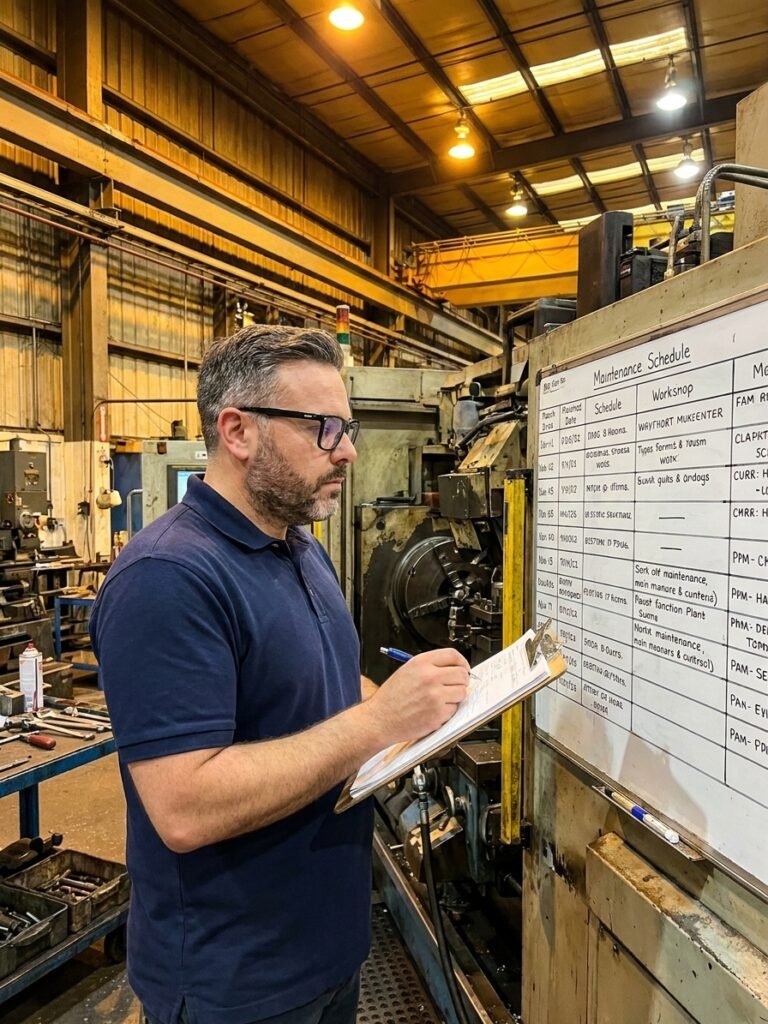
Reports show the past. The Gemba shows the present. When a quality engineer sits in an office analysing a month of Cpk data, that data is already historical. The defect happened. The part is scrapped. Standing at the line shows what no Pareto chart captures: how the operator reaches for the tool, how the material flexes during clamping, how the cycle actually behaves.
Small Changes, Compounded Daily
Western quality systems favour large interventions. Six Sigma projects run for months. Reorganisations take quarters. Kaizen works in reverse: small changes, made immediately, with low risk and instant feedback.
An operator notices that packaging cartons sit three metres from her station. Three metres out, three metres back, twenty times a shift: 120 metres of wasted motion. She moves the cartons one metre closer. Five minutes of effort, permanent savings.
In isolation, these changes seem trivial. Thirty such changes a month, six hundred a year, and you have a fundamentally different operation. None was dramatic. Their sum is transformative.
The Micro-Kaizen Implementation Cycle
- 01ObserveIdentify a bottleneck, wasted motion, or recurrent defect directly at the station.
- 02ProposeOperator logs the issue and a proposed adjustment on the shift Kaizen board.
- 03TestSupervisor and operator trial the change within the same shift to verify the impact.
- 04StandardiseIf successful, update the standard work instructions and lock in the gain.
The Operator Is the Process Expert
Who understands station four best? The engineer who designed it? The manager who approved the budget? Or the operator who runs it eight hours a day, five days a week?
The answer is obvious. Yet how often is that operator asked for his opinion on process improvement? Gemba Kaizen operates on the premise that every employee is the foremost expert on their own work. Management's role is not to deliver solutions but to build an environment where solutions originate at the workstation.
That means listening, asking questions, removing barriers, and—hardest of all—stopping the reflex to always have the answer.
Observe Before You Measure
Numbers without context mislead. A scrap rate of 2.3% at a given station could indicate a material defect, tool wear, an operator in training, or a machine running at the edge of its tolerance. Only standing at the station reveals which interpretation is correct.
This is the three-gen principle: genba (the real place), genbutsu (the real thing), genjitsu (the real facts). You go to the location, examine the actual physical part, and collect verifiable facts. No assumptions, no hearsay, no 'I think it might be…'.
None of this replaces your MSA or SPC infrastructure. But the data must serve the observation, not replace it.
Locking in the Gains Through Standardisation
No improvement is real until it is standardised. If an operator develops an assembly method that saves twenty seconds per part and reduces defect rates, that change must be documented, shared, and rolled out to all comparable stations.
Without standardisation, you have an isolated improvement that vanishes when the next operator takes over. A standard in Gemba Kaizen is not a cage. It is the baseline. Today's standard is the best known method. Tomorrow's may be better—but first, today's must be secured.
Gemba Kaizen is not a project with an end date. It is an operational habit you build into every shift.
What Sabotages Gemba Kaizen
Most failures stem from five recurring mistakes that undermine the methodology before it gains traction.
Why Gemba Kaizen Initiatives Fail
What kills it
- Treating the floor walk as a compliance audit with a checklist.
- Pursuing massive workflow reorganisations instead of micro-changes.
- Ignoring operator suggestions left on the Kaizen board.
- Setting an end-date for the 'continuous improvement programme'.
- Acting as the sole problem-solver rather than coaching operators.
What sustains it
- Walking the line to listen and observe without judging.
- Focusing on rapid, low-cost adjustments tested same-shift.
- Responding to every suggestion within 48 hours.
- Treating daily improvement as a permanent operational baseline.
- Removing barriers so floor staff solve their own problems.
The Cultural Shift
The measurable outcomes are compelling: significant scrap reduction in the first year, fewer unplanned downtime events, and a measurable drop in internal lead time. But these are by-products. The real outcome is cultural.
When you walk into a plant practising Gemba Kaizen, the atmosphere is different. Operators do not wait for instructions. They own their processes. Quality is not an inspection gate at the end of the line; it is embedded in how the work is done at every step.
Gemba Kaizen requires managers to admit they do not have all the answers. It requires pushing authority down to the floor. And it demands patience that outlasts a quarterly reporting cycle. It is not a quick fix. It is a capability you build through daily repetition until it becomes the way the plant breathes.