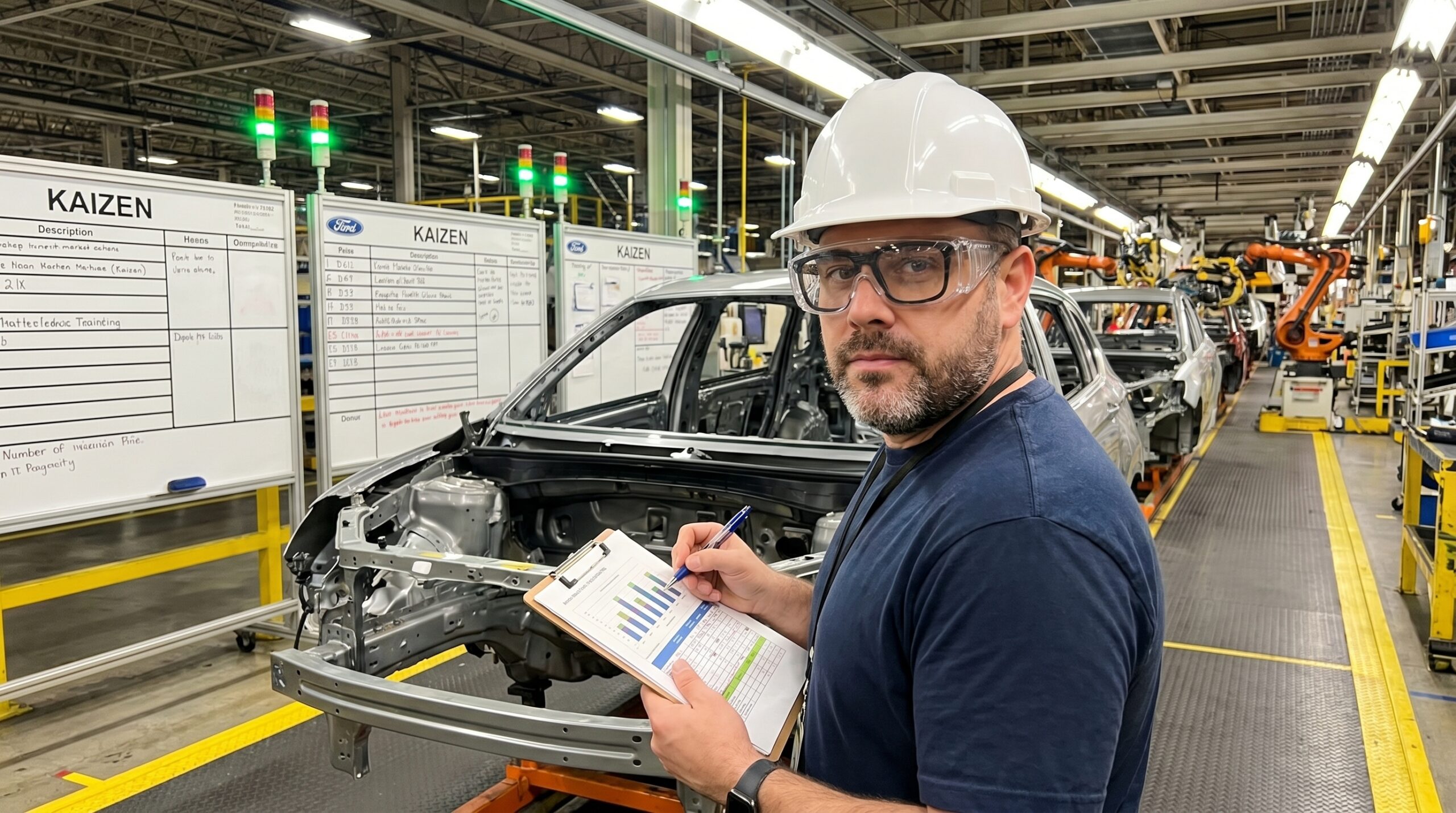
Plants fail to improve when management confuses compliance with capability. An organisation can hold IATF 16949 certification, pass every annual surveillance audit, and still watch its internal scrap rate stagnate. The assumption is that better documentation will generate better outcomes. It will not. Quality is determined at the point of execution, not in the document control room.
I have audited plants that possessed flawless PFMEA documentation but failed to hit a Cpk of 1.33 on critical characteristics. The paperwork described a theoretical process. The operators on the floor were dealing with a completely different reality. The gap between the standard and the physical workspace is where defects are born. Closing that gap demands presence.
Gemba Kaizen provides the operational framework to close this gap. It forces engineers and managers to leave their desks, observe the actual work, and execute incremental improvements based on physical evidence rather than statistical assumptions. It shifts the quality function from retrospective detection to proactive process design.
Defining Gemba and Kaizen in a Quality Context
Gemba translates to 'the real place.' In a manufacturing environment, this is the coordinate where raw material is converted into a finished component. It is the assembly station, the machining centre, and the inspection laboratory. Crucially, it is the only location where true process data exists. Reports summarising yesterday's OEE are abstractions. The gemba is reality.
Kaizen means continuous, incremental improvement. Western management models frequently favour sweeping, top-down capital expenditure projects to solve quality issues. Kaizen argues that small, daily process adjustments deliver more stable long-term results. When a production line improves by one per cent every day through micro-adjustments, the compounding effect rapidly outpaces one-off equipment overhauls.
Gemba Kaizen merges physical observation with continuous improvement. Engineers go to the assembly line to identify the root causes of variation—such as excess operator motion or transport delays—and implement immediate countermeasures. This methodology bypasses the communication lag inherent in traditional management hierarchies and links the engineering function directly to the value stream.
The Mechanics of a Structured Gemba Walk
A Gemba Walk is not a management tour or a safety inspection. It is a targeted observation exercise with a specific scope and standardised questions. The goal is to identify muda (waste), mura (unevenness), and muri (overburden) within a defined process. You observe the operator's standard work, check for deviations from the control plan, and ask questions to understand the friction points.
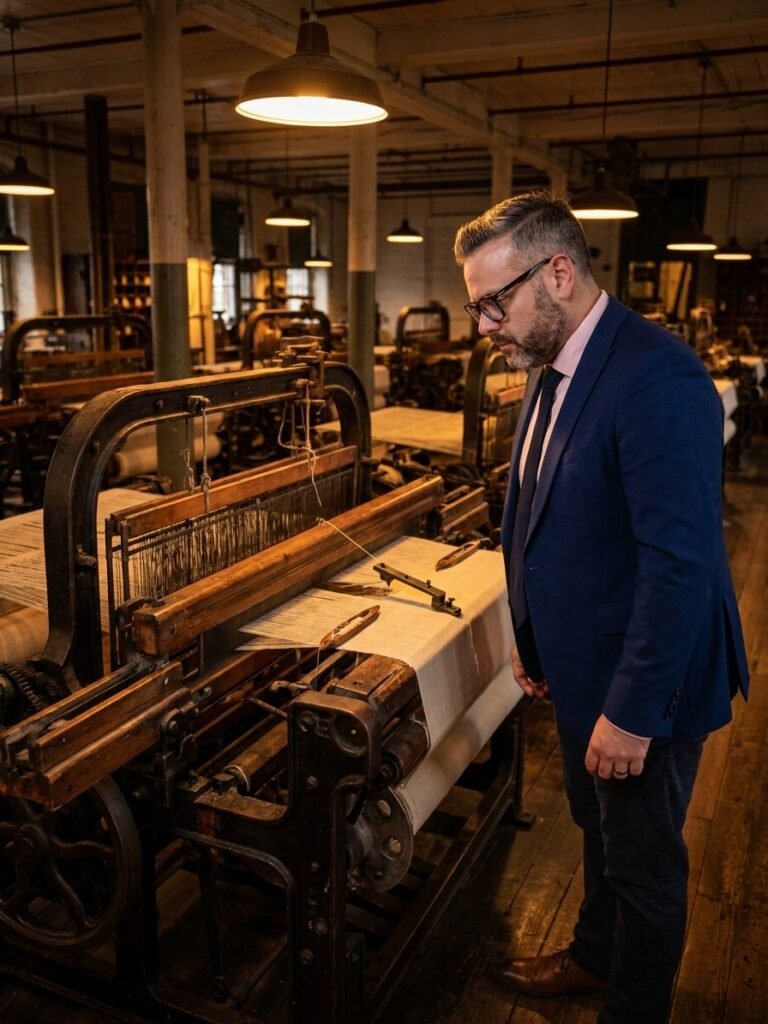
Engineers must direct their questions to the operators executing the work, not to the shift supervisor. Asking 'How do you verify this part meets specification?' reveals whether the operator actually understands the control plan. Asking 'What delays you the most during this cycle?' highlights hidden bottlenecks that never appear in the production schedule. These answers provide immediate, actionable engineering data.
The observer's mindset is critical. If an operator perceives the walk as an audit designed to assign blame for non-conformances, communication will cease immediately. The walk must be framed strictly around process optimisation and learning. The first supervisor who uses a Gemba Walk to issue a disciplinary action will destroy the cultural trust required for continuous improvement to function.
The Gemba Walk Execution Cycle
- 01Define ScopeSelect one specific process, cell, or line experiencing variation.
- 02Observe RealityWatch the actual standard work without interrupting the operator's cycle.
- 03Query the OperatorAsk what slows them down, how they verify quality, and what they would change.
- 04Capture CountermeasuresDocument the proposed adjustment on a visual board with an owner and due date.
- 05Implement & VerifyExecute the change and measure its direct impact on cycle time or defect rate.
Handling and Executing Improvement Proposals
During a Gemba Walk, operators frequently highlight minor ergonomic issues, such as reaching awkwardly for a component bin. A bin placed ten centimetres too far away adds fractional seconds to cycle time, generates operator fatigue, and ultimately compounds into measurable throughput losses over an eight-hour shift. Traditional quality systems ignore these micro-deviations. Gemba Kaizen prioritises them.
An idea only generates value if it is executed. Routed improperly, these observations die in an engineer's inbox. You need a physical, highly visible tracking board directly on the shop floor. Every suggestion—regardless of scale—must be logged, assigned an owner, and given a deadline. If a suggestion is rejected, the engineering team must explain the technical rationale directly to the operator who submitted it.
Implementation speed dictates the success of the programme. Low-cost improvements that do not impact safety or critical product characteristics must be executed within 24 hours. Changes requiring engineering validation or minor tooling adjustments should be processed within a week. Fast turnaround proves to the shop floor that management respects their input, which triggers further engagement.
Common Implementation Failures
The most frequent mistake is treating the Gemba Walk as a compliance audit. When a quality engineer arrives on the floor with a clipboard and a red pen, looking for procedural deviations, operators shut down. The walk becomes an exercise in hiding non-conformances rather than fixing root causes. The objective is to understand process friction, not to police documentation.
Walking the floor alone is another critical error. A cross-functional team—comprising quality, production, and maintenance personnel—sees different variables during the same observation. A maintenance technician might notice a leaking pneumatic valve that a quality engineer would overlook. If the engineering team isolates itself, it misses the multi-disciplinary signals required to solve complex manufacturing problems.
Observation without execution is like diagnosis without treatment; it produces no quality gains.
Finally, dismissing small improvements destroys the programme. Engineering teams often reject minor operator suggestions because the calculated time savings seem irrelevant on paper. However, dismissing a ten-second cycle time reduction tells the operator their expertise is worthless. When you multiply that ten-second saving across thousands of units and multiple shifts, the overall equipment effectiveness gains are massive.
Integrating Digital Tools with Physical Observation
Industry 4.0 technology does not replace the Gemba Walk; it enhances it. SCADA systems, IoT sensors, and real-time MES dashboards provide the quantitative data required to identify where a process is deviating from its standard. A sensor might confirm that a specific machine experienced a 14-minute unplanned downtime event. The data tells you where to look, but not why it happened.
Target Outcomes of Systematic Gemba Kaizen
The root cause of that downtime can only be found by physically examining the machine and speaking with the operator. You might discover that the downtime was caused by an operator walking across the cell to retrieve a specific tool that should have been staged at the point of use. Digital data provides the symptom; physical presence reveals the cure.
Modern quality systems merge these two environments. Digital andons and tablet interfaces placed at the workstation allow operators to flag issues instantly. Engineers monitor the live data streams from their desks, identify the disruption in real-time, and walk to the specific physical coordinate to implement a countermeasure. The tools evolve, but the fundamental principle of direct observation remains absolute.
Transforming Compliance into Active Quality Culture
The true objective of Gemba Kaizen is not the individual process improvements; it is the transformation of organisational culture. A compliance-driven workforce executes the control plan to avoid reprimands. A quality-driven workforce continuously refines the process to eliminate waste. Moving from the former to the latter requires engineers to treat operators as the primary source of process intelligence.
When an operator who has spent twenty years on an assembly line proactively suggests re-orienting a component feeder to shave two seconds off the cycle time, the culture has shifted. They are no longer just a labour resource; they are an active participant in process engineering. That level of engagement cannot be mandated by an ISO 9001 procedure. It must be earned through consistent engineering presence.
Implementing this system requires discipline. Close the audit report, leave the meeting room, and stand on the production floor. Ask the operators what prevents them from executing perfect work. Listen to their mechanical constraints, verify the layout, and adjust the workstation. The most effective quality tool available to any plant manager is the willingness to observe reality and act on it immediately.