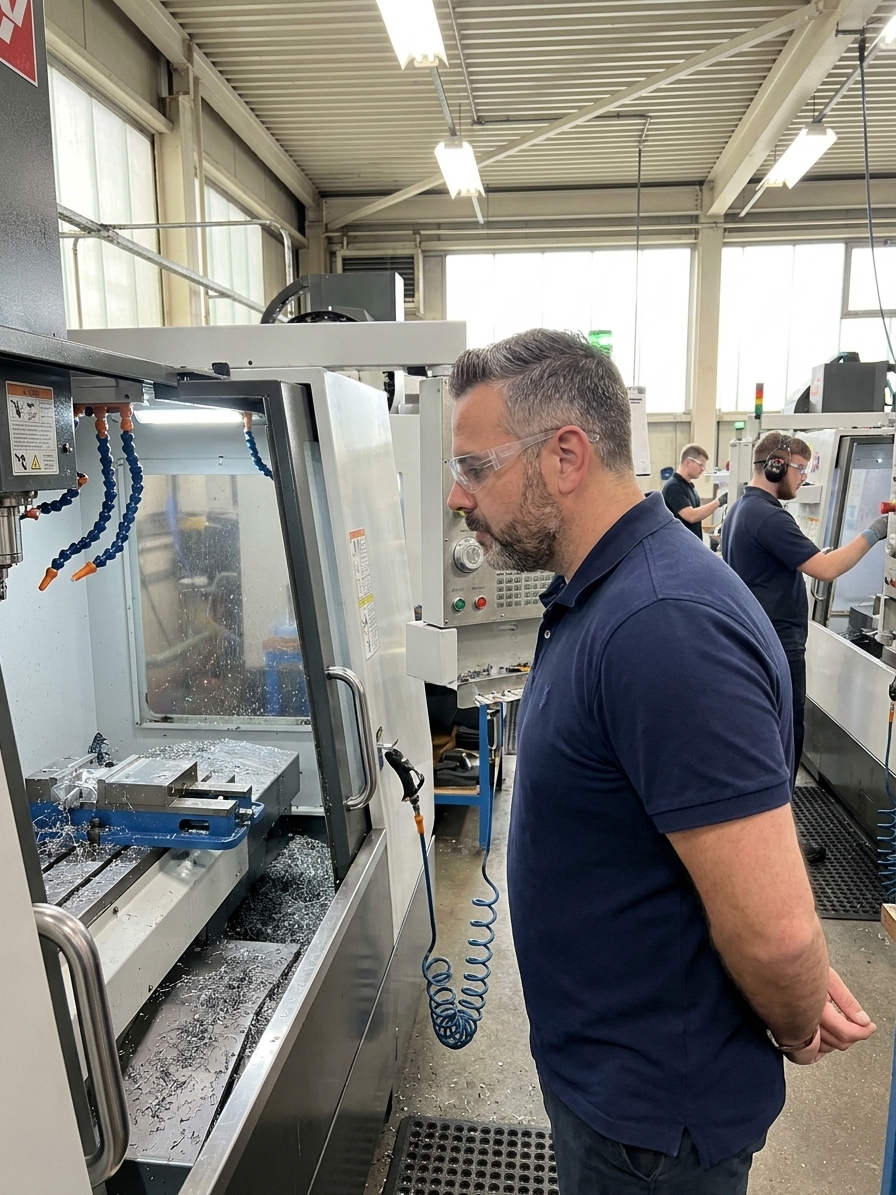
There is a specific silence that fills a conference room when a senior leader returns from a shop-floor walk and asks a basic question. The question is usually a variation of 'How many units did Line 3 produce last Tuesday?' or 'What happened with the customer complaint from the 14th?' People look at each other. Someone opens a laptop. Someone else says they will pull the data by end of day.
The leader, who just spent forty-five minutes on the floor, already knows the answer. They saw it. They heard it from the operator who runs the machine. The silence in the room is the sound of an organisation that has forgotten how to learn from reality. This is what Genchi Genbutsu is supposed to prevent, and exactly what it fails to prevent when the practice is reduced to a scheduled event.
Genchi Genbutsu means 'the actual place' and 'the actual thing.' Originating at Toyota as a foundational pillar of the Toyota Production System, it requires managers and engineers to base their understanding on direct observation rather than filtered reports. Most organisations that claim to practise it do nothing remotely resembling this. They send managers on walk-throughs with standardised checklists, talk to each other instead of operators, and return to make decisions based on the same dashboards they would have used anyway.
The Critical Distinction Between Visiting and Observing
Visiting a shop floor is not the same as observing a process. Walking through a factory is not the same as understanding what is happening inside it. Standing near a machine is not the same as knowing whether it is operating correctly. The distinction matters because most quality systems are designed to produce desk investigations, not floor observations.
Consider a machined part showing excessive dimensional variation. The SPC control chart has flagged the issue for three weeks. The investigation has produced two 8D corrective action reports, neither of which solved the problem. The standard response is to continue analysing data, requesting additional capability studies, and scheduling meetings with the production team to discuss potential root causes.
The alternative is for the quality engineer to go to the machine and watch ten complete cycles. Watch the operator's hands. Notice that on every fourth or fifth cycle, the operator reaches for a different fixture because the primary one has accumulated chips on the locating surface. Notice that the operator cleans the fixture inconsistently and with varying methods. Notice that the coolant flow misses the chip evacuation path, causing chips to accumulate exactly on the locating datum.
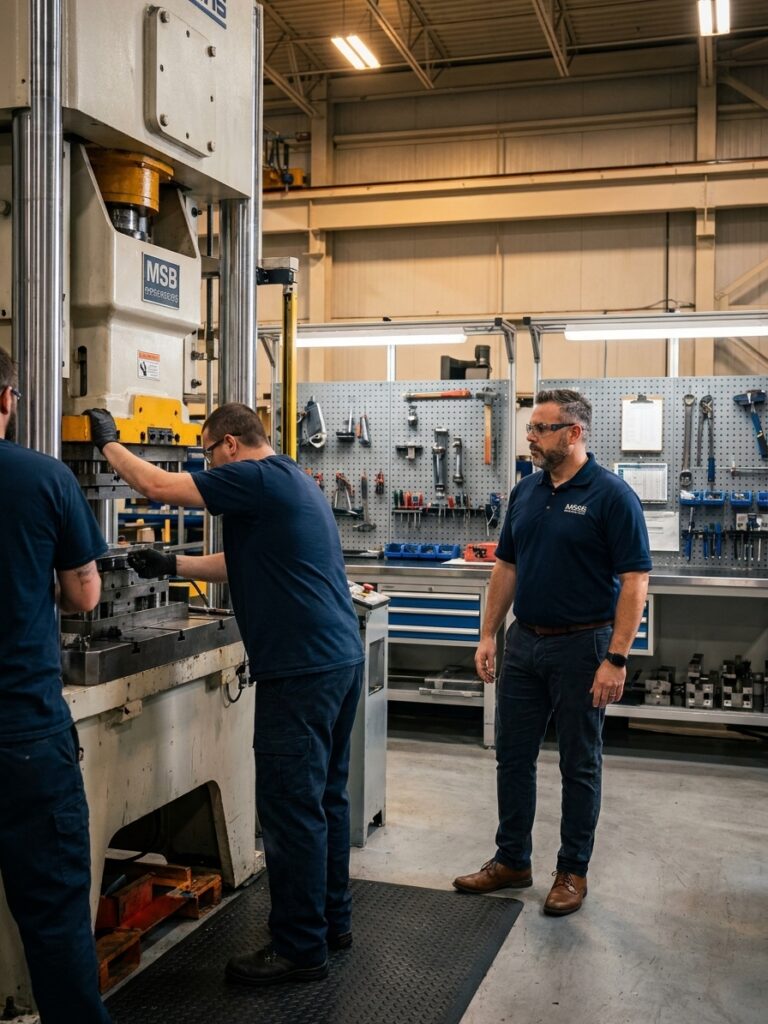
None of this information exists in the control chart or the corrective action database. It will not be discovered by analysing Cpk values or running a Design of Experiments. The information exists at the actual place, with the actual thing, and it can only be found by someone willing to stand there long enough to see it.
Structured Failure Modes of Scheduled Observation
Organisations fail at Genchi Genbutsu for reasons that are remarkably consistent and have nothing to do with the principle itself. The failures follow a predictable pattern rooted in how managers structure the activity. These failure modes undermine the observation process before it even begins, transforming a diagnostic tool into a compliance ritual.
The first failure mode is scheduling. The most important things happening on a shop floor do not occur on a schedule. The unplanned changeover, the operator's workaround, the moment a process drifts out of control — these happen when they happen. A scheduled walk during a stable period reveals nothing. The manager concludes everything is fine, confusing the absence of observable problems with the absence of problems.
The second failure mode is hierarchy. When a senior leader arrives, the floor changes. Operators behave differently and supervisors prepare. Problems that were visible five minutes ago become invisible. This social dynamic cannot be eliminated by exhorting people to be transparent. It is overcome only through sustained, repeated presence that builds trust and demonstrates that bringing problems forward leads to help, not punishment.
The Observation Disconnect
What teams usually do
- Schedule a calendar block for a floor walk
- Review metrics and form a hypothesis beforehand
- Travel in groups, talking primarily to each other
- Compress findings into an action-item spreadsheet
What actually works
- Go to the floor when anomalies or drift occur
- Arrive without a predetermined conclusion
- Observe full cycles alone, asking operators open questions
- Document systemic gaps, not individual task failures
The Confirmation Bias Trap in Preparation
The third failure mode is preparation — specifically, the wrong kind. Most managers prepare by reviewing the production report, checking quality metrics, and forming a hypothesis about what they will find. This sounds responsible, but it creates a confirmation bias filter. The manager arrives on the floor already expecting to see something specific.
They look for evidence that confirms their hypothesis. They do not look for evidence that contradicts it. They miss the unexpected root causes because they do not know to look for them. Genuine observation requires what practitioners call beginner's mind: the willingness to see a process as if for the first time, even if you have seen it a hundred times before. This is extraordinarily difficult to achieve, and most managers do not even attempt it.
The fourth failure mode is the report. The walk is completed and the manager writes a summary of action items. The observation has been transformed into a project management exercise. The richness of what was actually observed is compressed into bullet points. The spreadsheet becomes the artifact that matters, replacing the operational understanding that was supposed to be the point of the exercise.
The Dashboard Trap and Data Filtering
A specific pathology has become pronounced in the era of digital quality systems and real-time dashboards. Organisations invest heavily in technology that provides operational visibility without requiring anyone to physically go to the work. These dashboards display hundreds of metrics, use colour coding to highlight exceptions, and send alerts when thresholds are exceeded.
Dashboards give managers the feeling of being connected without the inconvenience of actually being present. The problem is that dashboards show what has been measured, not what is happening. A dashboard tells you Machine 7 has been down for forty-three minutes. It cannot tell you that the downtime is caused by an operator manually clearing a recurring material jam using a pry bar and a mallet, damaging the machine guide in a way that will cause precision failures three weeks from now.
I have audited plants that relied entirely on OEE dashboards to manage their lines, only to find that the data entry was being manipulated by operators under pressure to hit shift targets. The digital systems looked perfect, but the physical reality on the floor was chaotic. If you want to know about the pry bar and the mallet, you have to go and see.
What the Metric Captures vs. What the Floor Reveals
Practising Effective Genchi Genbutsu on the Shop Floor
Real Genchi Genbutsu is not efficient. It does not fit neatly into a manager's daily schedule, and it requires patience and humility. A plant manager who practises it effectively does not arrive with an entourage. They arrive alone or with one other person. They do not follow a predetermined route. They go where the noise is, where inventory has accumulated, or where an operator looks frustrated.
They stand and watch. They ask questions that sound like genuine interest, not an audit. 'How does this work?' 'What happens when this part runs out?' 'How do you know if the process is running correctly?' They do not take notes during the conversation because note-taking changes the dynamic. They write observations afterward, not as action items but as topics for discussion.
The real question is not why the operator bypassed the procedure, but why we built a system where procedure and target conflict.
This is the question you can only ask if you have been to the actual place. It reveals the gap between the system as designed and the system as it operates — a gap no data stream or report can fully capture. Practised correctly, this is one of the most powerful diagnostic tools in quality management, exposing the latent failures in your PFMEA and control plans.
A Corrective Genchi Genbutsu Routine
- 01Locate the frictionGo directly to areas with accumulated WIP, bottlenecks, or operator frustration.
- 02Observe full cyclesWatch the complete sequence of work at least ten times without interrupting.
- 03Ask open questionsDetermine how the operator knows the process is correct and what their main obstacle is.
- 04Map the conflictIdentify where standard work procedures contradict actual takt time demands.
- 05Address the systemChange the engineering or logistics constraint, do not simply discipline the operator.
Embedding Direct Observation as a Leadership Practice
Genchi Genbutsu is a leadership practice, not just a tool for engineers. The most effective manufacturing leaders maintain an unmediated connection to the work. They do not rely exclusively on filtered summaries from direct reports. Every layer of reporting strips out detail and softens anomalies. By the time information reaches the executive level, it has been reorganised to fit audience expectations.
The only way for a senior leader to access the unfiltered reality of their operations is to experience it directly. This is uncomfortable for executives because raw reality is messy. It reveals workarounds people have used for years. It exposes the gap between polished presentations and actual operating conditions. But this discomfort is the point. A leader who is never uncomfortable is not seeing reality.
Organisations that derive lasting value from Genchi Genbutsu treat observation as a skill that must be developed. They train people to watch a process without interrupting it, ask questions that reveal understanding rather than compliance, and distinguish between what is happening and what the procedure says should happen. They create structures for sharing observations as narratives, not action item lists.
The alternative is the conference room silence. The leader asks a question and no one can answer because no one has been to the place where the answer exists. Everyone has the data, but no one has the understanding. Everyone has the report, but no one has the reality. Genchi Genbutsu is the antidote: go and see for yourself. Organisations that take it seriously learn fastest and adapt best. Those that turn it into a checklist will continue to be surprised by problems that were visible all along.