
In early 2018, my team completed a comprehensive PFMEA deployment for a German OEM supplier. All project metrics were green, the customer signed off on the deliverables, and the quality department celebrated a clean transition. Two months later, we occupied the same conference room facing three critical findings during a VDA 6.3 process audit. The nonconformances the auditor cited were specific failure modes our risk assessment should have identified but missed entirely.
The immediate temptation was to blame the FMEA methodology, the cross-functional team's input, or the audit criteria. Instead, I applied a principle I had observed in Japanese lean systems: hansei, or rigorous self-reflection. The fundamental question was not what the documentation lacked, but what specific decisions I had made as the project leader that allowed the blind spots to persist. This shift in perspective changed how I build quality systems today.
In the automotive and aerospace sectors, standard problem-solving frameworks like 8D and DMAIC require us to define root causes and implement corrective actions. However, these engineering tools rarely force personal accountability. Hansei adds the missing variable. It demands that every engineer, quality manager, and operator examines their own contribution to a failure before closing the report.
Process, Team, and Individual Reflection
I categorise the maturity of organisational reflection into three distinct levels. Most manufacturing plants operate strictly at Level 1: process reflection. When a project ends or a defect escapes, the team meets, reviews the timeline, documents the technical failures, and saves the findings in a shared drive. This approach satisfies ISO 9001 and IATF 16949 documentation requirements for continuous improvement, but it rarely prevents recurrence.
Level 2 shifts the focus from the process to team dynamics. During a supplier deployment in Central Europe, I instituted mandatory 90-minute reflection sessions after every major production milestone. The structural rule was absolute: no blame-shifting, no defensive posturing, and complete honesty about communication breakdowns. The first three sessions were highly uncomfortable because the default industry culture equates admitting mistakes with professional weakness.
Level 3 is individual reflection. This is the core of hansei. Every person in the value chain, from the line operator to the plant manager, must identify their specific role in the outcome. It requires answering what personal bias led to a flawed assumption, what data was ignored, and what specific behaviour will change before the next production run.
The Three Levels of Hansei
- Level 3: Individual ReflectionPersonal accountability for decisions, biases, and ignored data.
- Level 2: Team DynamicsExamining communication breakdowns and cross-functional failures.
- Level 1: Process ReflectionDocumenting technical failures in a 'lessons learned' log.
Lessons Learned vs. Genuine Reflection
Western manufacturing relies heavily on the 'lessons learned' database. Teams document that a machine failed, note that a gauge was out of calibration, and mandate a daily equipment check. The facts are recorded accurately. Hansei asks a fundamentally different question: why did the maintenance technician bypass the calibration check in the first place, and why did the production supervisor accept the deviation?
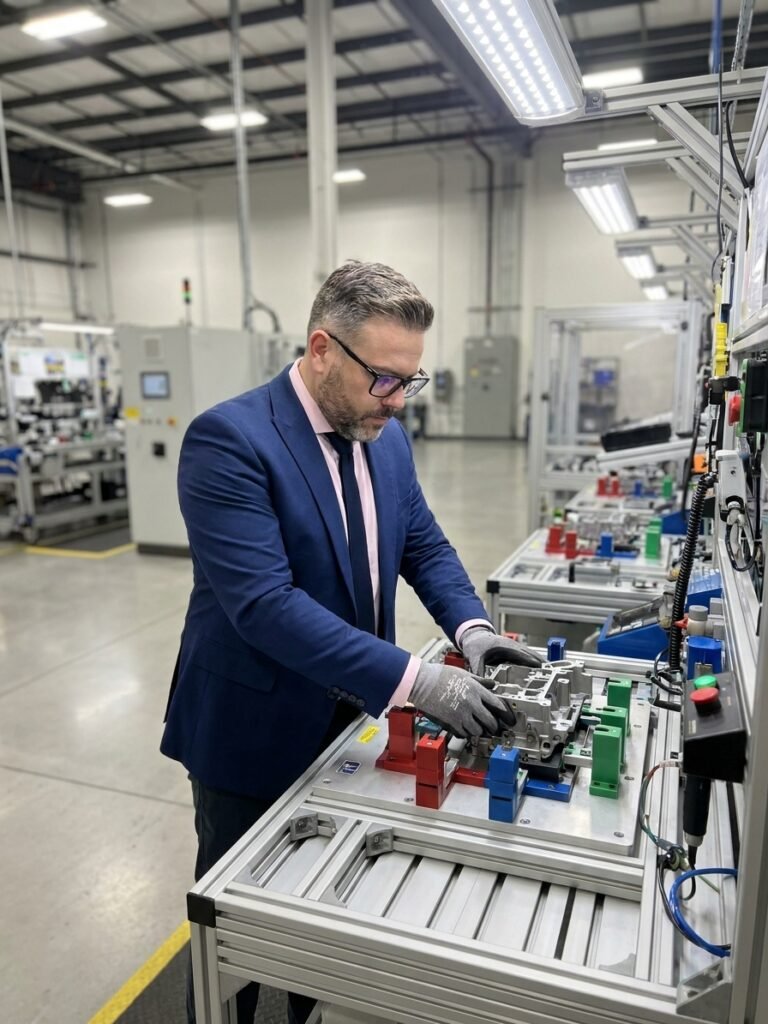
Documenting a technical failure without addressing the human behaviour that enabled it guarantees the defect will return. If a setup technician ignores a measurement deviation because 'it is not my job,' adding another inspection layer only adds bureaucracy. The real corrective action requires dismantling the siloed culture that punished the last person who escalated an issue.
I have audited plants that maintain immaculate 8D libraries but suffer identical warranty claims year after year. Their problem-solving loop is technically sound but emotionally disengaged. They catalogue the wreckage without ever examining the driver.
Using Hansei to Resolve Escaping Defects
I applied this framework at a Tier 1 supplier facing a critical delivery crisis. The OEM had rejected three consecutive shipments due to dimensional nonconformances. Each rejection triggered a customer line-down situation, generating immense pressure to resolve the dimensional variation. The engineering team's immediate response was highly typical: they demanded more in-process inspections, stricter gauge controls, and additional sign-offs.
I halted the inspection escalation. Adding quality control gates treats the symptom while ignoring the systemic failure. We spent two days mapping the entire process, focusing purely on human behaviour and information flow rather than dimensional data. The technical root cause was secondary to the cultural root cause.
We discovered that line operators had noticed the dimensional drift two weeks before the first rejection but said nothing. They had learned from past experience that reporting issues resulted in punitive blame rather than support. The SPC data showed the trend clearly, but the quality engineer hoped it would self-correct rather than escalating a potential conflict with production. No amount of additional inspection would fix a culture of fear and siloed priorities.
Integrating Reflection with Standard Frameworks
Documenting a technical failure without addressing the human behaviour that enabled it guarantees the defect will return.
Hansei does not replace your existing problem-solving methodologies; it anchors them. I implement it by attaching a structured reflection step directly to existing PDCA and 8D requirements. When a team closes a corrective action, they must complete a brief reflection on their own decision-making latency and communication gaps. This practice transforms an administrative report into a behavioural shift.
Supervisors must model this behaviour for it to cascade to the shop floor. When leadership openly acknowledges their own poor prioritisation during a launch, they grant operators the psychological safety required to report a failing process. Psychological safety is not abstract management theory. It is the structural prerequisite for accurate data reporting on any production line.
Integrating reflection requires firm scheduling. Do not leave it as an optional end-of-project step. After every VDA 6.3 audit, PPAP submission, or major milestone, block 45 minutes on the calendar. Mandate attendance from cross-functional leads. Make the reflection output a required attachment to the final project report.
Executing Reflection After Success
The most dangerous period in any manufacturing organisation is immediately following a major success. A clean IATF 16949 surveillance audit or a successful new product launch breeds complacency. The team attributes the positive outcome entirely to systemic rigour, ignoring the elements of luck, timing, or temporary supplier stability that actually carried the project.
Post-Success Reflection Protocol
- 01Acknowledge SuccessRecognise the team's achievement and the metrics delivered.
- 02Identify VulnerabilitiesDetermine which elements of success relied on luck or temporary conditions.
- 03Assume Worse ConditionsAnalyse how the process would perform under 10% tighter tolerances or faster cycle times.
- 04Define Behavioural TargetsEstablish what the team must learn or change before the next launch.
True hansei mandates reflection after victories, not just defeats. When we achieve a Cpk of 1.67 on a new characteristic, I force the team to ask whether our process capability is actually robust or if the initial sample set was artificially centred. This critical examination of success prevents the silent degradation of standards that typically occurs when teams feel overconfident.
Over decades of managing quality transitions, I have observed one consistent truth about professionals in this field. The most effective quality engineers and directors are not the ones who avoid making mistakes. They are the ones who systematically dismantle their own assumptions after every project phase. They do not defend their past decisions; they actively search for the flaws in them.
Measuring Cultural Change
Implementing reflection protocols requires measurable validation. You cannot manage cultural shifts purely through subjective feedback. I track specific operational metrics to determine if the organisation is genuinely adopting reflective practices or just going through the motions. The data provides the objective proof.
First, track the time from issue detection to formal reporting. If this metric drops significantly, your operators trust the system. Second, monitor the volume of voluntary stop-the-line events. An increase in these interventions indicates a healthy quality culture, even if it temporarily disrupts OEE.
Finally, track the recurrence rate of identical nonconformances. If your 8D system is technically robust but your defect recurrence rate remains flat, your root cause analysis is failing to address human behaviour. Hansei is the mechanism that closes that final, critical gap.