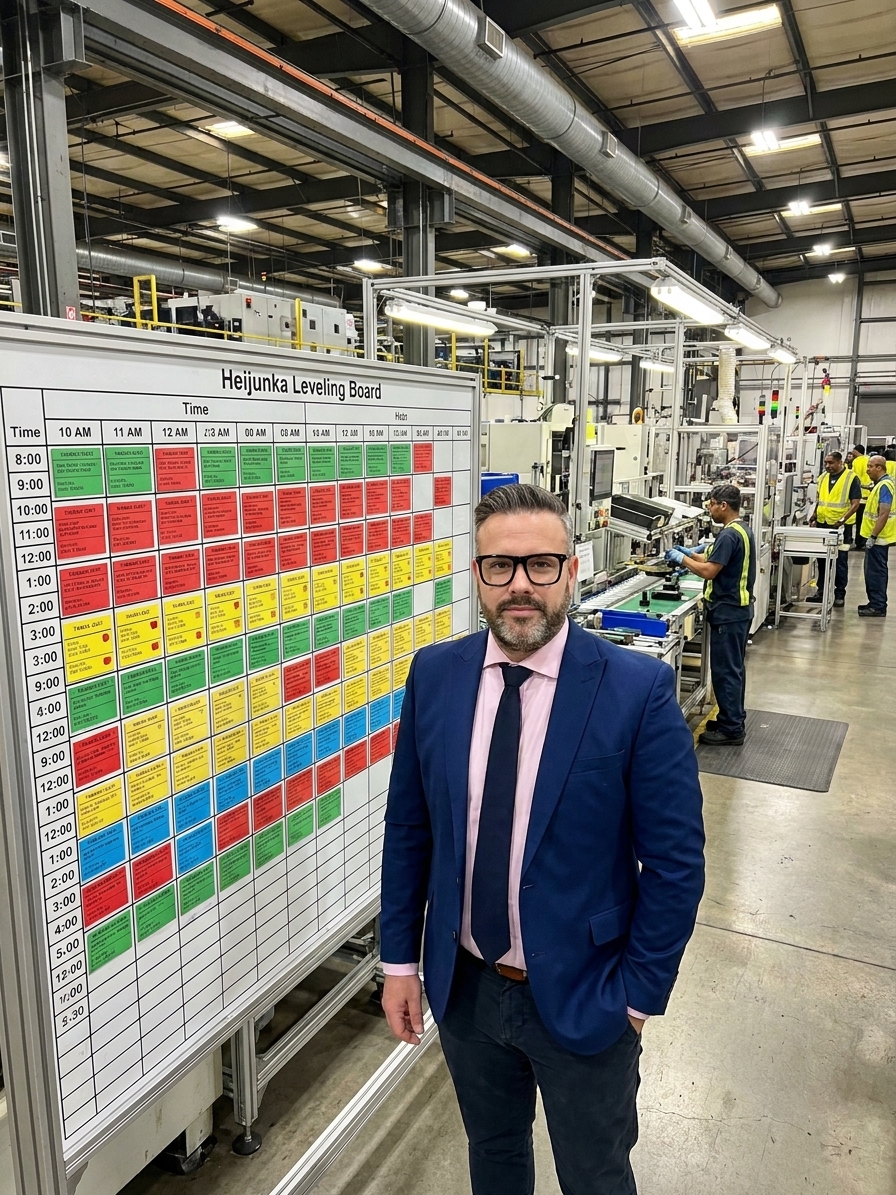
Production leveling, or Heijunka, is designed to be the heartbeat of a lean manufacturing system. Instead of building massive batches of one product before switching to another, you mix small quantities of different products in a repeating pattern. You level both the volume and the variety so that every shift looks roughly the same. This steady pull smooths the boom-and-bust cycles that exhaust operators and machinery, while stripping away the inventory that usually hides process failures.
It is one of the most powerful concepts in the Toyota Production System. It is also one of the most widely misunderstood and quietly abandoned practices in modern manufacturing. The implementation pattern is predictable: an organisation learns about Heijunka at a conference, hires a consultant, and builds a physical board with kanban cards. The board looks pristine during the training phase, but within six months the cards are outdated, the schedule is overridden daily, and the board becomes untouched wall art.
I have audited plants that proudly displayed their Heijunka boxes to visitors while simultaneously running massive, unlevelled batches on the shop floor. The disconnect stems from treating a systemic design philosophy as a quick-fix scheduling tool. When the underlying production system cannot support mixed-model manufacturing, the levelled schedule creates chaos rather than flow. To make Heijunka function, you must first build the structural prerequisites that make rapid, small-batch production possible.
The Category Error: Heijunka Is Not a Scheduling Tool
Most organisations treat Heijunka as a scheduling technique designed to make a Gantt chart look smoother. This is a fundamental category error. Heijunka is a system design philosophy that demands your entire production operation be capable of mixed-model manufacturing at a moment's notice. It forces the system to handle rapid product changes without sacrificing capacity, quality, or speed. If the system underneath the schedule is not engineered for this flexibility, the scheduling tool will inevitably fail.
This capability requires specific operational conditions. Your changeovers must be fast enough that switching between products does not destroy capacity. Suppliers must deliver frequently in small quantities, matched to your consumption rate. Operators must be cross-trained to handle different products without a learning curve, and equipment reliability must be high enough to eliminate the need for long buffer runs. When teams skip this foundational work and jump straight to the scheduling board, they guarantee their own failure.
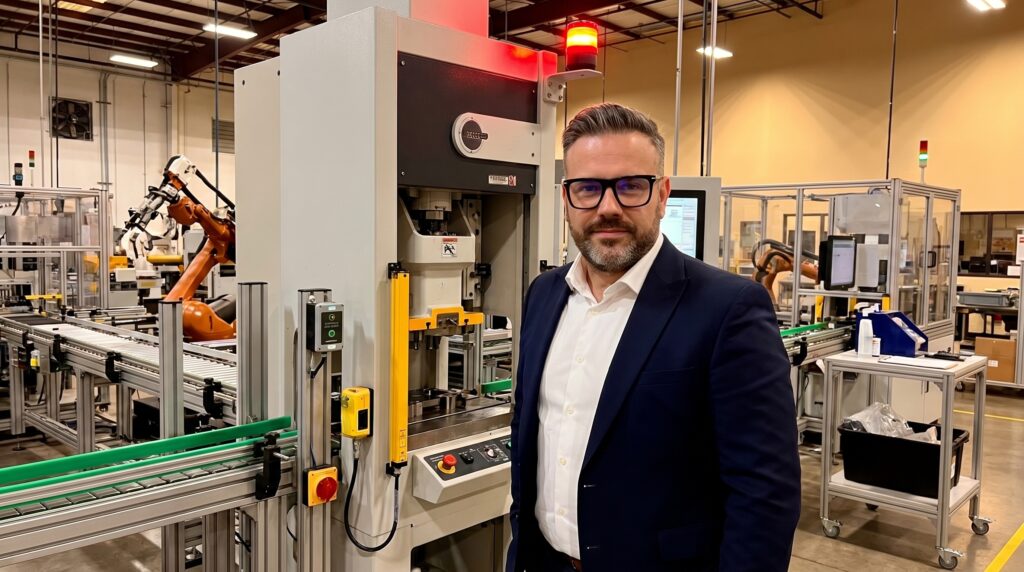
Without these prerequisites, the levelled schedule immediately generates shop-floor chaos. Changeovers take too long, material supply breaks down, and operators struggle to adapt. The schedule gets overridden first occasionally, then constantly, until Heijunka is formally declared unsuitable for the operation. The concept was never the problem; the missing prerequisites were never built. Implementing SMED, cross-training, and total productive maintenance must happen before you build the board, not after.
The Volume Problem: Leveling Against Unpredictable Demand
Heijunka assumes you can identify a relatively stable pattern in customer demand and level your production to meet it. When demand is genuinely unpredictable, this assumption breaks down. If a major customer places an order that dwarfs your normal daily volume, or a seasonal spike hits when your levelled schedule calls for producing two hundred units, the system fractures. The mathematical reality of levelling collides with the operational reality of volatility.
The purist answer is to level to average demand over a fixed period and build a small buffer of finished goods inventory to absorb the variability. This is correct in principle but difficult in practice. Building a buffer means deliberately producing units you do not need today to meet demand tomorrow. To a traditional manufacturing manager trained to minimise inventory, or a finance department measured on working capital, this looks like waste. The buffer is never built.
Heijunka Prerequisite Thresholds
When demand inevitably spikes, the organisation abandons levelling and reverts to batch production. The lesson learned is that Heijunka does not work in a variable-demand environment. The actual lesson is that Heijunka requires a deliberate inventory strategy as a shock absorber, and the organisation was unwilling to make that structural investment. There are genuinely difficult environments for pure Heijunka, such as engineered-to-order manufacturing, but most operations claiming this excuse are producing repetitive products at volumes that could be levelled.
The Variety Problem: Mixed-Model Production Exposes Every Weakness
Levelling variety, not just volume, is where most organisations hit the wall. In a traditional batch operation, you run Product A for three days, then Product B for two days. Each product runs long enough that the system stabilises, changeovers happen infrequently, and quality issues get sorted out within the run. Operators get into a rhythm. Mixed-model production deliberately destroys this stability. If you run Product A, then B, then C, then back to A within a single shift, every weakness in your system is exposed simultaneously.
Your changeover time, which was tolerable when it happened once a week, becomes unbearable when it happens four times a shift. Your tooling reveals that it cannot maintain tolerance across rapid switches. Operators who knew Product A thoroughly but were fuzzy on Product C now must be competent in all variants. Material flow, which worked when you staged a week of components for one product, becomes a nightmare of kitting and replenishment. The system stress becomes immediately and painfully visible.
This visibility is not a failure of the Heijunka system. This is Heijunka doing exactly what it was designed to do: making your problems visible so you are forced to fix them. The organisation that responds to this exposure by investing in SMED, cross-training, and error-proofing benefits from levelling. The organisation that responds by abandoning the levelled schedule and reververting to batches was looking for a shortcut. There is no shortcut in mixed-model manufacturing.
The Management Problem: Conflicting Metrics and Mental Models
Perhaps the deepest reason Heijunka fails is that it requires a fundamentally different way of thinking about production management. In traditional production management, the goal is to maximise the utilisation of every resource, especially expensive equipment. If a machine costs half a million euros, you run it continuously. Idle time is waste, long runs are efficient, and changeovers are lost production time to be minimised through scheduling rather than process improvement.
In a Heijunka system, the goal is to produce exactly what the customer needs, exactly when they need it, in a steady rhythm that stresses the system minimally. This sometimes means letting an expensive machine sit idle so that you can produce the right product at the right time, rather than the wrong product efficiently. It means deliberately accepting lower utilisation on individual machines to achieve higher overall system performance. Success is measured by how smoothly the entire value stream flows.
Traditional Utilisation vs. Heijunka Flow
Maximise local utilisation
- Run expensive machines continuously to amortise fixed costs
- Minimise changeovers through long batch runs
- Reward high individual machine output and low unit cost
- Absorb demand spikes through overtime and expediting
Optimise system flow
- Accept planned idle time to produce the right variant on time
- Engineer SMED to enable rapid product switching
- Reward schedule adherence and end-to-end lead time
- Absorb demand spikes through strategic finished goods buffers
Managers who have spent their entire careers being rewarded for high utilisation and low unit cost will not naturally embrace a philosophy that tells them to deliberately underutilise equipment. Without strong leadership commitment and a willingness to change the measurement system, Heijunka will be subverted by well-meaning managers optimising for the metrics they have always been measured on. If you continue to measure individual machine utilisation, your managers will inevitably revert to batch production.
The Supply Chain Problem: You Cannot Level Alone
A Heijunka system is only as stable as the supply chain that feeds it. If you have levelled your production beautifully but your suppliers are still shipping in massive monthly batches, you have simply moved the volatility upstream. Your factory floor looks smooth, but your warehouse is drowning in components. The internal metrics look excellent while the external inventory costs spiral out of control. This defeats the systemic purpose of levelling.
Heijunka is not a scheduling tool. It is a system stress test that forces you to fix what batching hides.
True production levelling requires levelled material flow from suppliers. This means frequent deliveries in small quantities matched to your consumption pattern. Your suppliers need to be geographically close enough to make frequent delivery economical, or you need a logistics partner who can consolidate milk-run deliveries from multiple vendors. Suppliers must be stable enough in their own processes to handle small, frequent orders without charging a premium that wipes out your lean gains.
Most organisations are unwilling to invest in this level of supplier development. They treat suppliers as interchangeable vendors to be squeezed on price rather than partners to be developed. The levelling stops at the factory door, and the waste is pushed into the supply chain. It remains invisible to internal OEE metrics but very real in the form of excess inventory, expediting costs, and quality surprises. Sharing your levelled schedule with your supply base is a strategic necessity.
Building the Capability: A Pragmatic Implementation Path
If you are committed to making production levelling work, start with the prerequisites before you touch a scheduling board. Invest in SMED until changeovers are consistently under ten minutes. Cross-train operators until anyone can run any product. Stabilise quality until your process capability clears standard thresholds, allowing you to run any product on any day without a quality crisis. Implement total productive maintenance until equipment reliability eliminates the need for buffer stock.
Analyse your actual customer demand over the past twelve to twenty-four months. Look for patterns, seasonality, weekly cycles, and product mix ratios. Segment your products: level the predictable ones and handle the genuinely sporadic ones separately. Build a deliberate buffer strategy, sizing the inventory based on demand variability rather than arbitrary accounting rules. Start with a single pilot line rather than trying to level the entire factory at once.
Heijunka Implementation Sequence
- 01Stabilise prerequisitesAchieve SMED targets, stabilise Cpk, cross-train operators, and raise OEE before scheduling changes.
- 02Segment demandAnalyse 12-24 months of data to separate predictable volume from genuinely sporadic orders.
- 03Establish buffersSize finished goods inventory to absorb demand variability without breaking the levelled rhythm.
- 04Pilot one lineLevel a single, stable cell to surface problems in a contained environment before scaling.
- 05Align metricsShift from machine utilisation to schedule adherence, lead time, and total value-stream inventory.
- 06Integrate supply chainShare the levelled schedule and develop suppliers for frequent, small-quantity delivery.
Most importantly, change the measurement system. Measure schedule adherence, end-to-end lead time, total inventory in the value stream, and customer service level. Reward smoothness, not heroics. The levelled schedule itself is not the ultimate objective. The objective is the organisational capability you build while trying to achieve it. Every prerequisite you invest in transforms your operation into one that can switch products without trauma, see its own problems clearly, and fix them immediately.