Heijunka — Production Leveling: When Your Factory Stops Feasting and Fasting and Finally Learns to Eat at a Steady Pace
The Factory That Couldn’t Stop Sprinting
Picture this. It’s Monday morning at a mid-sized automotive parts plant somewhere in Central Europe. The planning department has just released the weekly schedule. Assembly Line 3 is staring at 4,800 units of Product A — due by Wednesday. Then nothing. Then 3,200 units of Product B — due by Friday. The line that was gasping on Tuesday is ghost-town silent by Thursday.
Sound familiar?
This is the reality for thousands of manufacturers worldwide. They don’t have a production problem — they have a rhythm problem. They feast and they fast. They overload and they idle. And the cost of that oscillation is staggering: overtime on Monday, idle time on Thursday, expediting fees on Wednesday, quality shortcuts when the pressure peaks, and burned-out operators who stop caring somewhere around the third consecutive twelve-hour shift.
There is a word for the antidote. It’s Japanese, it’s elegant, and it has been hiding in plain sight inside the Toyota Production System for over half a century.
Heijunka. Production leveling.
And if you think it’s just a scheduling trick, you’re missing the most profound operational philosophy your factory has never implemented.
What Is Heijunka — Really?
Heijunka (平準化) translates roughly to “leveling” or “balancing.” But in the context of lean manufacturing, it means something far more specific: the deliberate practice of distributing production volume and product mix evenly over time so that neither your people, your machines, nor your supply chain are subjected to the chaos of fluctuating demand.
It is the third pillar of the Toyota Production System, standing alongside Just-In-Time and Jidoka (automation with a human touch). And while JIT gets all the glory and Jidoka gets the tech hype, Heijunka is the quiet force that makes both of them possible.
Here’s why: You cannot run Just-In-Time if your schedule looks like a roller coaster. JIT requires stability. It requires predictability. It requires that when you ask your supplier for 200 brackets on Thursday, you actually needed 200 brackets on Thursday — not 800 because you suddenly crammed three days of production into one.
Heijunka is the discipline that creates that stability.
The Two Dimensions of Leveling
Most people think of leveling as “make the same amount every day.” That’s volume leveling — and it’s only half the picture.
Volume Leveling (Leveling the Quantity)
This is the simpler dimension. Instead of producing 4,800 units in three days and then idling, you produce 1,370 units every day for a week. The total output is the same. The pace is sustainable. Your operators aren’t heroes on Monday and ghosts on Thursday.
But volume leveling alone doesn’t solve the mix problem.
Mix Leveling (Leveling the Variety)
This is where Heijunka becomes genuinely powerful — and genuinely uncomfortable for traditional planners.
Imagine you need to produce three products this week: – Product A: 2,400 units (60% of demand) – Product B: 1,200 units (30% of demand) – Product C: 400 units (10% of demand)
The traditional approach? Run all of A first, then all of B, then all of C. It minimizes changeovers. It maximizes local efficiency. And it creates absolute chaos downstream — in your warehouse, in your supply chain, in your customer delivery schedule.
The Heijunka approach? Interleave them. Produce in a repeating pattern that reflects the true demand mix:
A → A → B → A → A → B → C
And repeat. Every cycle produces roughly 60% A, 30% B, 10% C — matching the actual demand profile. Yes, you’ll have more changeovers. Yes, your traditional efficiency metrics will scream. But your lead times will shrink, your inventory will drop, your quality will improve (smaller batches mean faster defect detection), and your customers will get what they need when they need it.
This is the paradox of Heijunka: you sacrifice local efficiency to gain system-level excellence.
The Heijunka Box: Where Strategy Becomes Schedule
The most iconic tool of Heijunka is the Heijunka Box — a physical or digital scheduling board with rows for each product and columns for each time increment (usually shifts or hours). Kanban cards are placed in the grid to represent production orders, distributed evenly across the time horizon.
Walk up to a Heijunka Box and you can see the rhythm of your factory. If one row is packed with cards on Monday and empty on Wednesday, your leveling is broken. If the cards are evenly distributed — if the visual pattern is balanced — your factory is breathing.
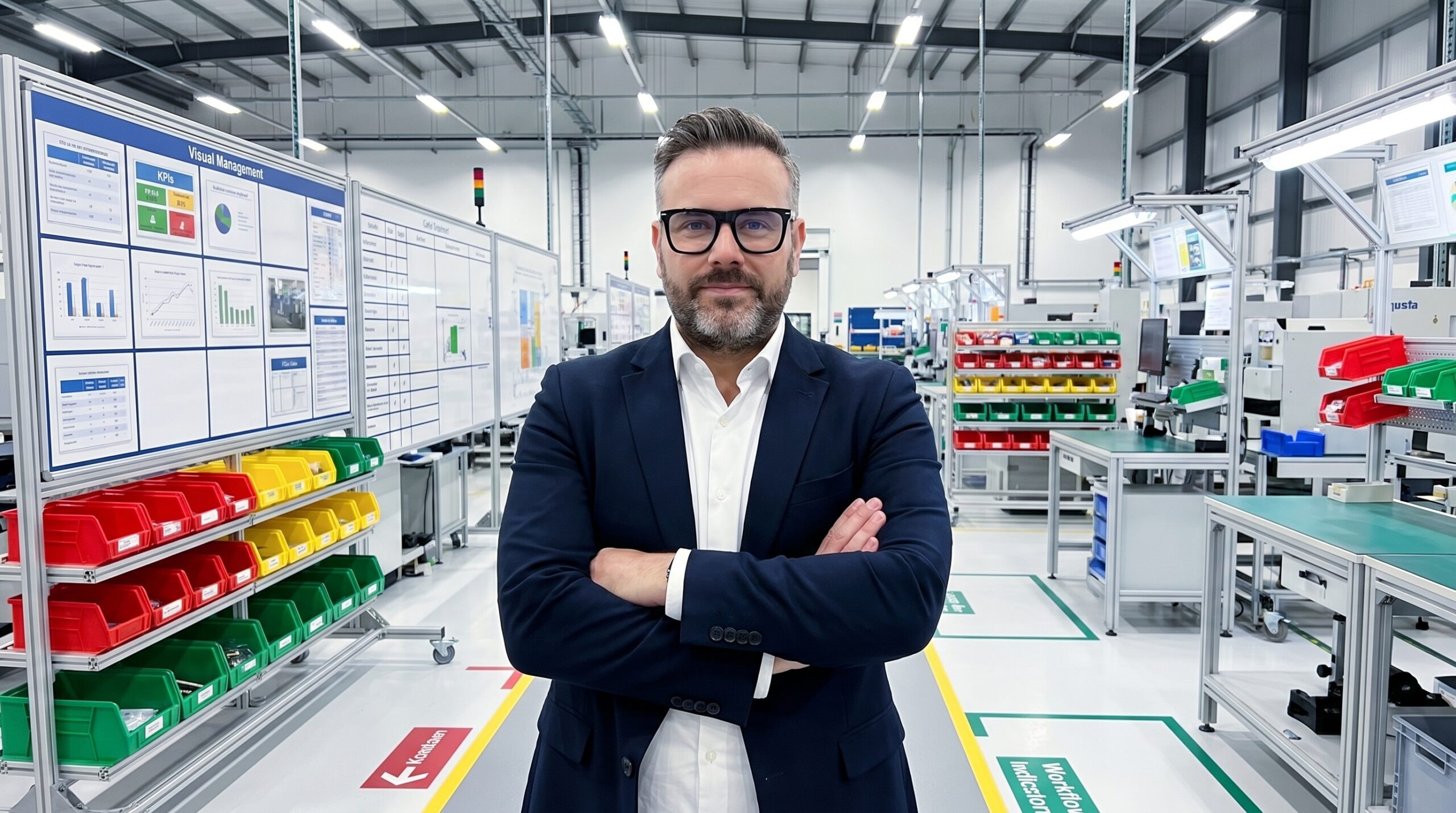
The box does something that no ERP system screen can do: it makes the schedule visually obvious. Anyone — an operator, a supervisor, a visiting executive — can look at it and immediately understand the production intent. That transparency is not a side effect. It’s a design feature.
Modern implementations use digital Heijunka boards integrated with MES systems, but the principle remains identical: make the plan visible, make the level obvious, make the deviation unmistakable.
Why Heijunka Is the Most Counterintuitive Lean Tool
Here’s the uncomfortable truth about Heijunka: it feels wrong.
If you’ve spent your career optimizing individual work centers, chasing OEE numbers, and minimizing changeover time, Heijunka asks you to do something that feels like heresy. It asks you to increase changeover frequency on purpose.
When you level the mix, you change over more often. Your per-shift efficiency at any single machine goes down. Your traditional cost accounting system — the one that divides total cost by units produced at each workstation — will tell you that you’re losing money.
And you will be tempted to go back to batch production. Because the local numbers look better.
This is where you need to understand the difference between local optimization and system optimization. A factory is not a collection of independent work centers. It is a system. And in a system, optimizing every component individually often produces the worst total result.
Heijunka works because it optimizes the flow — and flow is what connects your factory to your customer.
The Quality Connection: Why Leveling Reduces Defects
This is the part that most articles about Heijunka skip. And it might be the most important part.
Production leveling is a quality tool.
Not indirectly. Not as a side benefit. Directly and mechanically.
Here’s how:
First: Smaller batches mean faster feedback. When you produce 4,800 units of Product A before switching to B, you don’t discover a systematic defect in A until you’ve already made 4,800 defective units. When you produce A in smaller interleaved batches, you catch that defect after 200 units — because you come back to A sooner and the problem becomes visible faster.
Second: Reduced time pressure reduces human error. When operators aren’t sprinting to hit an unrealistic daily target, they make fewer mistakes. They follow standard work. They don’t skip steps. They don’t “make it work.” The connection between production pressure and defect rate is one of the most robust findings in quality research, and Heijunka directly addresses it.
Third: More changeovers mean more process verification. Every time you change over, you go through a setup verification. You check the first piece. You confirm the parameters. In a batch system, you verify once and assume it holds for 4,800 units. In a leveled system, you verify more frequently — and each verification is a quality checkpoint.
Fourth: Stable schedules enable effective SPC. Statistical process control assumes a stable process. A process that runs Product A at maximum speed on Monday and sits idle on Thursday is not stable. The control limits you calculated are meaningless. A leveled process, running at a consistent pace with regular product rotation, generates data that SPC can actually use.
Implementing Heijunka: A Practical Roadmap
You don’t implement Heijunka overnight. It requires preparation, and it requires a specific sequence. Here’s a field-tested approach:
Phase 1: Stabilize Your Demand Signal
Before you can level production, you need to understand what you’re leveling to. This means analyzing actual customer demand — not forecast, not wishful thinking — over a meaningful time horizon (typically 4-12 weeks). Look for patterns. Identify the true average demand rate for each product family.
Warning: If your demand is genuinely chaotic — if it swings 300% week to week with no pattern — you have a sales and operations planning problem before you have a production leveling problem. Fix that first.
Phase 2: Achieve Basic Flow
Heijunka cannot work in a batch-and-queue environment. You need at least a basic level of continuous flow — or at minimum, defined pull systems with kanban — before interleaving products makes sense. If your processes are disconnected, leveling the schedule just creates confusion.
Phase 3: Reduce Changeover Times
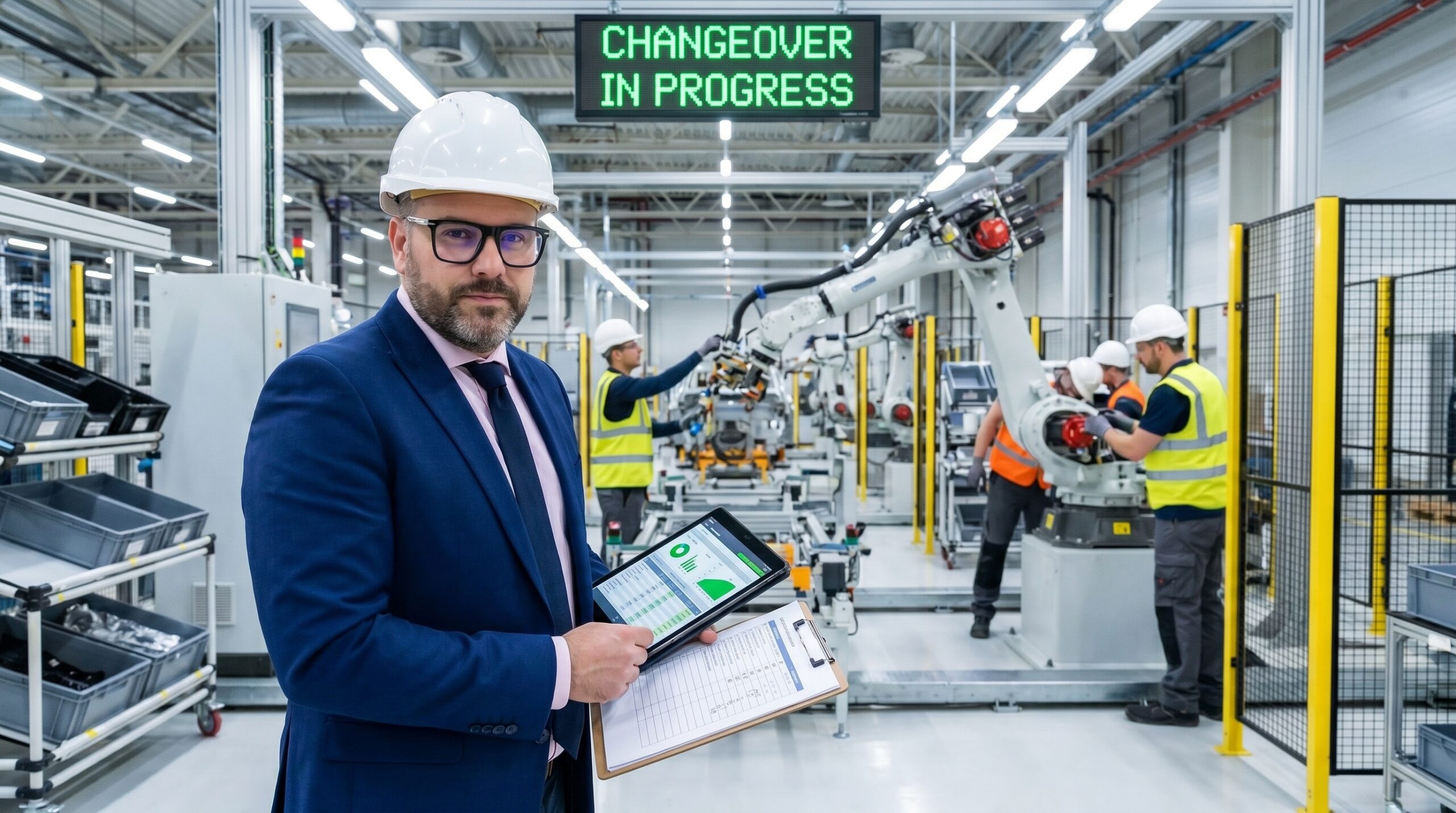
This is the enabler. If your changeover from Product A to Product B takes four hours, interleaving them is economic suicide. If it takes nine minutes — thanks to SMED (Single-Minute Exchange of Die) — then interleaving is not only possible but profitable.
Target: Every changeover under ten minutes. Aggressive? Yes. Achievable? Absolutely — Toyota achieved it decades ago with far less technology than you have today.
Phase 4: Define the Pattern
Based on your demand analysis, define the production pattern. Start simple: two products in a fixed ratio. Run the pattern for at least a month before adding complexity.
Example: If demand is 70% A and 30% B, your pattern might be A-A-B repeated every cycle. As the team gains confidence, introduce C. Then D. Eventually, you’re running a sophisticated pattern that mirrors the demand profile with remarkable precision.
Phase 5: Build the Heijunka Board
Whether physical or digital, create the visual management tool. Train every operator and supervisor to read it. Make it the single source of truth for what gets produced and when.
Phase 6: Monitor and Adjust
Heijunka is not a set-and-forget schedule. Customer demand shifts. Seasonal patterns emerge. New products launch. Review your pattern monthly and adjust the ratios to reflect current reality.
The Hidden Prerequisites Nobody Talks About
Three things that determine whether Heijunka succeeds or fails — and none of them are technical.
1. Leadership patience. Heijunka will make your local efficiency metrics worse before it makes your system metrics better. If your plant manager is evaluated on workstation OEE, Heijunka will look like a failure for the first three months. You need leadership that understands system performance — and has the patience to let the new rhythm establish itself.
2. Supply chain trust. A leveled schedule sends a steady, predictable signal to your suppliers. They can plan. They can optimize. They can reduce their own costs and pass some of those savings to you. But building that trust takes time and consistent behavior. If you level for two weeks and then revert to panic ordering, you’ve taught your suppliers that your schedule means nothing.
3. Cultural maturity. Heijunka requires discipline. It requires following the pattern even when it feels slow. Even when “we could just run all of A and get it done.” It requires a culture that values stability over adrenaline — and that is a profound cultural shift for organizations that have built their identity around firefighting.
Heijunka in the Age of Industry 4.0
The digital transformation has not made Heijunka obsolete. It has made it more powerful — and more accessible.
Modern MES systems can calculate optimal leveling patterns in real time, adjusting for demand fluctuations, machine availability, and supplier constraints. AI-powered scheduling engines can balance thousands of SKUs across hundreds of resources — a problem that would have been computationally intractable in Taiichi Ohno’s era.
But here’s the critical distinction: technology enables Heijunka; it does not replace the philosophy. A sophisticated algorithm that optimizes for local efficiency at each workstation — ignoring system flow — is the computational equivalent of the batch mindset. The algorithm must be programmed to optimize for flow, for level, for system performance. And that requires a human being who understands why leveling matters.
The best implementations combine the philosophy with the technology: the Heijunka principle as the guiding strategy, and digital tools as the execution platform.
Measuring Success: The Heijunka Metrics That Matter
How do you know if your leveling is working? Track these:
- Schedule Adherence by Product: Are you producing each product in roughly the planned ratio? A product that consistently falls behind signals a capacity or changeover issue.
- Production Lead Time: Should decrease as batch sizes shrink and flow improves. Target: 30-50% reduction within six months.
- Inventory Turns: Should increase as you produce closer to demand and reduce buffer stocks.
- Changeover Time Trend: Should be decreasing as the team gets more practice with frequent setups.
- Overtime Hours: Should stabilize. The feast-or-famine overtime pattern is the clearest signal that leveling isn’t working.
- Defect Rate by Batch Size: Track this. You should see a correlation between smaller batch sizes and lower defect rates — the quality payoff of Heijunka.
The Deeper Lesson: Rhythm Over Speed
There is a lesson in Heijunka that extends far beyond the factory floor. It is the lesson of sustainable pace.
Organizations — like organisms — perform best when they find their rhythm. Not when they sprint and collapse. Not when they alternately panic and hibernate. When they breathe steadily, work deliberately, and respond to variation with grace rather than drama.
Heijunka teaches us that the fastest factory is not the one that runs the hardest. It is the one that runs the smoothest. That the most profitable production schedule is not the one that maximizes every minute of every machine — but the one that optimizes the entire system from raw material to customer delivery.
And that the most profound operational improvements often come not from doing things faster — but from doing things steadier.
Your factory is a heart. Heijunka is the steady beat. And a steady beat, sustained over time, outperforms every arrhythmia — no matter how dramatic the spike.
Peter Stasko is a Quality Architect with 25+ years of experience transforming manufacturing operations across automotive, electronics, and industrial sectors. He specializes in bridging the gap between lean theory and shop-floor reality — helping organizations build quality systems that don’t just look good on paper but actually work in production. His approach combines deep technical expertise with practical, no-nonsense implementation strategies that deliver measurable results.