
A production manager shows me next week's schedule. Two days run a single variant, then three run concurrently, and a fifty-unit order is squeezed in over the weekend. Two weeks later, he calls back: four hundred extra units, a component shortage, and operators burning out from constant changeovers.
Most plants build to customer orders exactly as they drop. If the customer wants one hundred units on Monday and twenty on Wednesday, production mirrors that volatility. The factory floor becomes a victim of demand swings, driving up work-in-process and destroying any chance of standardised work.
Heijunka—production leveling—breaks this cycle. Instead of running massive batches, you distribute volume and mix evenly across the week. It is a prerequisite for a functioning pull system, yet most organisations skip it because the cultural shift is demanding.
The Two Dimensions: Volume and Mix Leveling
Volume leveling decouples your daily output from erratic customer demand. If a client orders a hundred units on Monday and twenty on Wednesday, you build forty units a day from Monday through Wednesday. You hold a controlled, predictable buffer on Monday to ensure your downstream processes remain completely stable through Wednesday.
Mix leveling sequences those forty units to match the overall demand ratio. If your demand profile is sixty percent product A, thirty percent B, and ten percent C, a traditional mass-production approach runs all A, then B, then C. A leveled approach sequences them repetitively: A-A-B-A-A-B-C. Every shift dispatches a proportional mix of all customer requirements.
This constant cycling prevents upstream starvation. If you run product A for three straight days, any downstream process needing B or C grinds to a halt. Mix leveling ensures that every product family flows through the value stream daily, drastically reducing overall lead time.
Mass Batching vs. Leveled Production
Traditional Mass Batching
- Long, infrequent setup cycles
- High WIP and finished goods inventory
- Unpredictable material supply to the line
- Amplified demand volatility for suppliers
Heijunka Leveled Flow
- Short, standardized setup cycles
- Controlled, minimal strategic buffers
- Steady, predictable material consumption
- Dampened demand signals across the chain
Why SMED is the Prerequisite for Leveling
You cannot level production if changeovers take an hour. I recently audited a German plant running four assembly lines and twenty-three product variants. Their average setup time was forty-seven minutes. Operators naturally resisted frequent changeovers, preferring to build massive batches once a machine was dialed in.
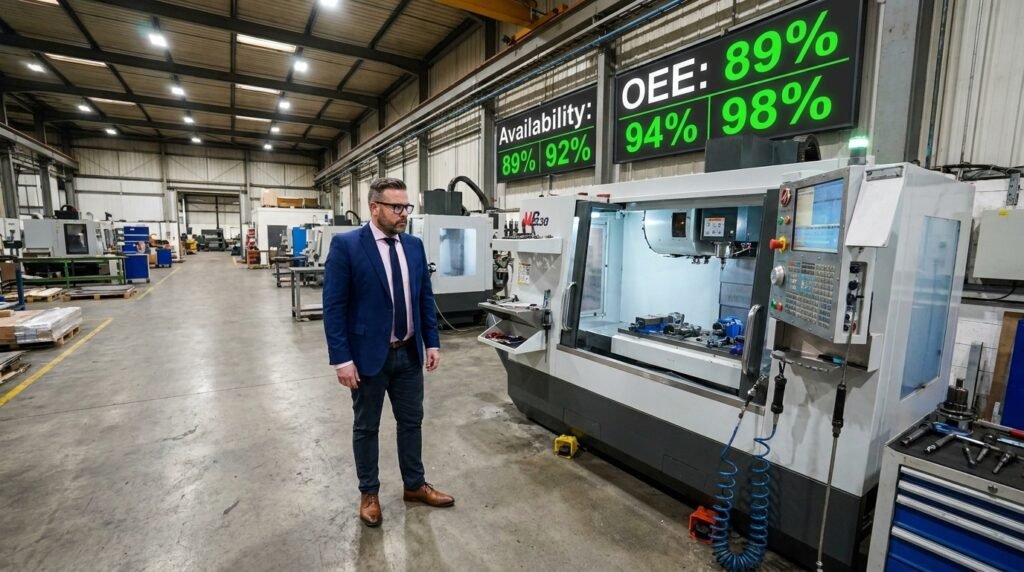
We launched a pilot focused on their top six variants, but we coupled it directly with a Single-Minute Exchange of Die (SMED) initiative. The goal was to convert as many internal setup operations—tasks requiring the machine to stop—into external operations performed while the line was still running.
Within four weeks, we stripped the setup time from forty-seven minutes to nine. Once the penalty for switching variants dropped below ten minutes, the operators stopped fighting the new schedule. SMED is the mechanical prerequisite that makes Heijunka culturally acceptable on the shop floor.
Designing the Heijunka Box and Takt Time
Leveling requires a rigid pulse. You calculate your takt time by dividing available production time by customer demand. If you have four hundred eighty minutes per shift and the customer demands two hundred forty units, your takt time is two minutes. Every two minutes, a finished unit must exit the line.
To enforce this rhythm, you need a visual management tool: the Heijunka box. It is a physical rack of compartments where columns represent time intervals (e.g., ten-minute blocks) and rows represent product variants. Kanban cards are placed into the slots to dictate the exact production sequence.
When an operator pulls a card from the box, they know exactly what to run next. Digital MES screens can replicate this, but a physical box forces visibility. It makes the day's manufacturing rhythm tangible, ensuring that the schedule is respected rather than ignored when pressure mounts.
Heijunka Pilot Performance Metrics
Defeating the Bullwhip Effect in the Supply Chain
The most profitable impact of Heijunka happens outside your factory walls. When your production schedule swings wildly between massive batches of different products, you transmit that volatility to your suppliers. They are forced to hold excess safety stock, expedite freight, and operate in constant firefighting mode.
A digital scheduling system will just automate your chaos if you haven't stabilised the physical process first.
This volatility is the bullwhip effect. By leveling your production, your material consumption becomes flat and highly predictable. Suppliers can plan their own manufacturing runs with certainty. Their operational costs drop, their quality improves, and those savings eventually make their way back to your component pricing.
In one aerospace program, stabilising our daily material pull through Heijunka resulted in a supplier voluntarily offering a price reduction. They recognised that our predictable orders eliminated the emergency setups and premium freight from their own system. Leveling your flow turns procurement from an adversarial negotiation into a mutual efficiency gain.
Common Implementation Failures
The most frequent error is scaling the pilot too broadly. Attempting to level forty-seven variants across seven lines simultaneously guarantees failure. You must select one problematic line, restrict the scope to three or four high-volume variants, and stabilise that micro-system before expanding.
Another failure mode is ignoring operator pushback. Supervisors will argue that large batches are more efficient because they maximise machine uptime. They are optimising locally for a single workstation while starving the rest of the value stream. You must break this mindset by showing them the system-wide lead time data.
Finally, teams frequently demand perfect demand data before starting. Perfect data does not exist. Heijunka works effectively on rough estimates and historical averages. The iterative process of leveling, measuring, and adjusting is far more valuable than waiting six months for a flawless production forecast.
Knowing When Heijunka Is the Wrong Tool
Heijunka is not a universal cure. If your factory runs a single product variant at a constant volume, you are already leveled. Applying the administrative overhead of a Heijunka box adds zero value. The tool exists to manage complexity; do not force it onto simple processes.
If your underlying process is inherently unstable—scrap rates fluctuating wildly, equipment suffering chronic breakdowns—you must stabilise it first. Attempting to level a chaotic process is impossible. Secure your OEE, implement preventive maintenance, and achieve basic process capability before attempting to dictate a leveled rhythm.
Heijunka is a strategic shift. It moves a plant from reacting to expedited orders to driving a predictable, system-wide cadence. When the factory floor knows exactly what it is building tomorrow, quality improves because the work becomes routine. That rhythm is what separates a functional plant from a world-class operation.