Jidoka
— Autonomation: When Your Machine Learns to Stop Itself Before It
Produces a Thousand Defects — and Your Quality System Gains Its Most
Powerful Reflex
The Machine That Refused to
Lie
It was 2:47 AM on a Tuesday at a Japanese automotive plant in the
late 1990s. The night shift was running at full speed — 47 parts per
minute flowing through an automated stamping line. The operator on duty
was monitoring three machines simultaneously, which meant each machine
got roughly six seconds of attention per cycle.
At 2:47 AM, the feed mechanism on Press #3 began to misalign. Not
dramatically — the shift was barely 0.3 millimeters. No alarm sounded.
No light flashed. The operator noticed nothing because, by design, there
was nothing to notice. The machine was happy. The line was running. The
numbers looked good.
By 3:15 AM, 1,386 stamped panels had been produced with a subtle but
critical dimensional defect. By the time the first failed inspection at
the downstream welding station caught the problem, those 1,386 panels
were scattered across three containers, mixed with good parts, and had
already begun their journey toward assembly.
The cost of that 28-minute silence was staggering: 1,386 scrapped
panels, a four-hour production stoppage to sort and contain, a delayed
shipment to the customer, and an emergency quality investigation that
consumed three weeks of engineering time.
Now imagine a different scenario.
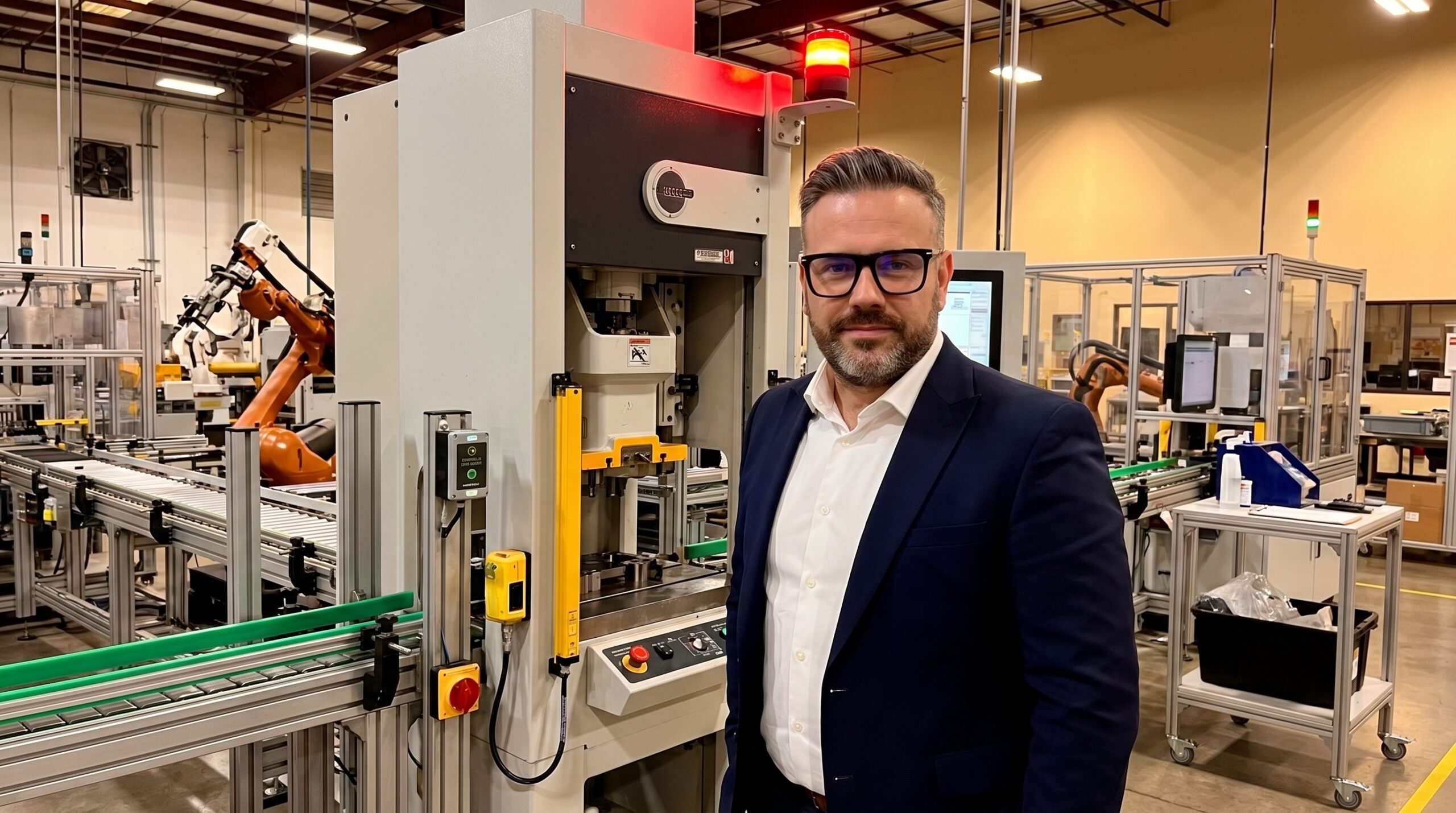
At 2:47 AM, the feed mechanism on Press #3 begins to misalign. Within
two parts — not two hundred — a sensor detects the positional deviation.
The machine stops itself. A red light illuminates. An andon signal
broadcasts the stop to the entire line. The operator walks over, sees
the problem immediately, makes the adjustment, and restarts.
Total defective parts produced: two.
Total line stoppage: four minutes.
Total cost: negligible.
That difference — between producing 1,386 defective parts and
producing two — has a name. It is called Jidoka. And it
might be the most misunderstood, underutilized, and powerful concept in
your entire quality arsenal.
What Is Jidoka, Really?
Jidoka is one of the two pillars of the Toyota Production System,
alongside Just-In-Time. Yet while JIT gets all the glory — everyone
loves to talk about inventory reduction and flow — Jidoka sits quietly
in the background, doing the work that makes JIT possible in the first
place.
The word itself carries a double meaning that reveals its genius. In
Japanese, jidoka (自働化) is written with the characters for
“self” and “work” — but the second character is dou, meaning
“motion” or “action,” deliberately replacing the similar character for
“move” that appears in the standard word for automation
(jidouka). The difference is subtle but profound:
Jidoka is not automation. It is automation with a human touch.
It is a machine that works, but also knows when to stop
working.
In the West, Jidoka is often translated as
“autonomation” — a portmanteau of “autonomous” and
“automation” that captures the essence: a process that is autonomous
enough to detect when something is wrong and stop itself, without
waiting for a human to notice.
Sakichi Toyoda, the father of the Toyota empire, invented the concept
in the early 1900s when he built a loom that would automatically stop
when a thread broke. Before his invention, a broken thread meant the
loom kept weaving — producing defective fabric that would go unnoticed
until inspection, or worse, until the customer received it. Toyoda’s
loom said: I will not produce defects. I will stop first.
That simple principle — stop before you produce the defect,
not after — is the heartbeat of Jidoka.
The Four Steps That Make
Jidoka Work
Jidoka is not a technology. It is a system of thinking, implemented
through four sequential steps that create a chain reaction of quality
protection.
Step 1: Detect the
Abnormality
The first question is deceptively simple: How do you know
something is wrong?
In most manufacturing environments, the answer is: you don’t — not
until the inspector checks, or the customer complains, or the SPC chart
trends. Jidoka demands that detection happen at the source, in real
time, automatically.
This means building detection mechanisms directly into the process: –
Sensors that measure critical dimensions, temperatures,
pressures, or positions – Limit switches that verify a
tool is in the correct position before the cycle begins – Vision
systems that confirm part presence and orientation –
Flow detectors that verify material is actually moving
– Force monitoring that detects when a torque, clamp,
or press operation is outside its normal range
The detection method doesn’t need to be sophisticated. Some of the
most effective Jidoka implementations I’ve seen were mechanical — a
simple pin that wouldn’t allow a fixture to close unless the part was
correctly seated. The elegance is in the placement: detection happens at
the exact point where the failure mode originates, not downstream where
it’s already propagated.
Step 2: Stop the Process
This is where most organizations flinch.
When a Jidoka mechanism detects an abnormality, it stops the process.
Not after the current cycle finishes. Not when it’s convenient.
Immediately.
This is profoundly counterintuitive in manufacturing cultures where
uptime is king, where operators are measured on parts produced per
shift, and where stopping the line is treated as a failure rather than a
victory.
But here is the uncomfortable truth: a process that produces
defects while running is not productive. It is destructive.
Every minute it continues to run after an abnormality occurs, it is
generating rework, scrap, and customer risk. The line was already
stopped — you just didn’t know it yet.
Toyota understood this deeply. Their famous andon cord — the rope
that any worker can pull to stop the entire production line — is Jidoka
applied to human processes. The worker is the sensor. The pulled cord is
the stop mechanism. And the philosophy is the same: Stop now. Fix it
now. Don’t let one defect become a hundred.
Step 3: Fix the Problem
Once the process stops, the focus shifts to correction. But here’s
the critical distinction: Jidoka doesn’t just fix the symptom. It
demands that someone investigates what happened, identifies the
immediate cause, and corrects it before restarting.
In a mature Jidoka system, the operator is trained and empowered to
handle common stoppages independently — a misaligned part, a jammed
feeder, a tool that needs adjustment. For more complex issues, the andon
system summons a team leader or technician.
What matters is that the problem is confronted at the moment
it occurs, when the evidence is fresh, the conditions are
observable, and the fix is immediate. Not three days later in a
conference room, looking at a spreadsheet of defect data, trying to
reconstruct what happened.
Step 4: Investigate and
Prevent
This is the step that separates organizations that use Jidoka from
organizations that truly live it.
Every stop is a learning opportunity. Mature Jidoka systems don’t
just fix and restart — they ask why. Why did the feed misalign?
Why did the temperature drift? Why did the sensor trigger?
This is where Jidoka connects to root cause analysis, to Kaizen, to
continuous improvement. Each stop is data. Each fix is a hypothesis.
Each permanent countermeasure is a step toward a process that doesn’t
just detect abnormalities — it eliminates them.
Organizations that master this fourth step find that their Jidoka
stops decrease over time. Not because they’ve disabled the
sensors — but because they’ve solved the underlying problems that caused
the stops. The process has become more robust. The quality has become
intrinsic.
Jidoka in
Practice: Three Levels of Implementation
Jidoka is not an all-or-nothing concept. It exists on a spectrum, and
understanding where you are on that spectrum is essential for moving
forward.
Level 1: Machine-Level Jidoka
This is where most organizations start — and where too many stop.
Machine-level Jidoka involves equipping individual stations with error
detection and automatic stop capabilities.
Examples include: – A torque tool that won’t release the fastener if
the torque reading is outside specification – A mold temperature sensor
that halts the injection molding cycle when temperature drifts beyond
limits – A Poka-Yoke fixture that physically prevents a part from being
loaded in the wrong orientation – A weight checker at the end of a
packaging line that diverts any package outside tolerance
Machine-level Jidoka is powerful and relatively straightforward to
implement. But it’s also limited — it catches problems at individual
points without addressing the systemic flow of quality through the
entire value stream.
Level 2: Line-Level Jidoka
At this level, individual Jidoka points are connected into a system.
When one station detects an abnormality and stops, the impact ripples
through the connected process:
- Upstream stations stop feeding parts to prevent
overproduction - Downstream stations are alerted that incoming
material may be suspect - Material handling systems quarantine in-process
inventory until quality is confirmed - Information systems log the event, capture the
parameters, and flag the affected lot
Line-level Jidoka creates a synchronized quality response. It’s the
difference between a single smoke detector beeping in one room and a
building-wide fire alarm that activates sprinklers, unlocks emergency
exits, and calls the fire department simultaneously.
Level 3: System-Level Jidoka
This is Jidoka at its most evolved — and its most powerful.
System-level Jidoka extends the principle beyond the shop floor into
engineering, supply chain management, and organizational
decision-making.
Examples include: – Engineering change processes
that automatically freeze affected production lots when a design
deviation is discovered – Supplier quality systems that
trigger incoming inspection escalations when a supplier’s process data
shows drift – Corrective action systems that cascade a
customer complaint into immediate containment actions across all
parallel processes – Management review processes that
automatically escalate quality metric deterioration beyond defined
thresholds to executive attention
At this level, Jidoka becomes a principle that permeates the entire
organization. The question is no longer “How do we detect defects on the
line?” but “How do we build automatic quality reflexes into every
system, every decision, every process?”
The Five
Resistance Patterns (And How to Overcome Them)
In 25 years of implementing Jidoka systems, I’ve encountered the same
five resistance patterns in nearly every organization. Recognizing them
is the first step to overcoming them.
1. “We Can’t Afford to Stop the
Line”
This is the most common objection, and the most misleading. The logic
goes: every minute of downtime costs X dollars, so stopping the line is
expensive.
But this calculation only counts visible costs — the labor standing
idle, the machines not running, the production quota slipping. It
ignores the invisible costs: the defects being produced, the rework
being generated, the scrap being accumulated, the warranty claims being
seeded, and the customer trust being eroded.
I once worked with a plant manager who proudly told me his line had
run for 47 consecutive days without a single stoppage. I asked him how
his defect rate looked. He paused. It was 3.2% — roughly one in every 31
parts. His “perfect uptime” was producing thousands of defective parts
per week, each one costing five times more to rework than to produce
correctly.
When we implemented Jidoka on three critical stations, his uptime
dropped by 4%. His defect rate dropped by 72%. The net savings in the
first quarter exceeded $340,000.
The line that never stops is the line that’s lying to
you.
2. “Our
Operators Will Stop the Line for Every Little Thing”
Yes. At first, they will. And that’s exactly what you want.
When Toyota first implemented the andon cord in their Georgetown,
Kentucky plant, American workers pulled it constantly — sometimes
hundreds of times per shift. Japanese advisors smiled and said: “Good.
Now we know where all the problems are.”
Within months, the pulls decreased dramatically — not because workers
stopped caring, but because the problems they revealed were
systematically solved. Each pull was a gift. Each stop was a fix. The
process improved because the problems became visible.
The fear of “too many stops” is really a fear of seeing how many
problems you actually have. Jidoka makes the invisible visible. That’s
its job.
3. “We Don’t
Have the Budget for Sensors and Automation”
Jidoka is not a technology purchase — it’s a thinking system. Some of
the most effective Jidoka mechanisms I’ve ever implemented cost less
than $50:
- A mechanical pin welded to a fixture that prevents a part from being
loaded backwards - A colored stripe on a component that must visually align with a mark
on the fixture — if it doesn’t, the operator stops - A simple checklist laminated and attached to the machine that the
operator must complete before starting each batch - A weight-based go/no-go gauge made from a block of steel and a
reference part
Technology amplifies Jidoka. It doesn’t create it. Start with the
simplest possible detection mechanism. Iterate. Add technology where the
simple solutions reach their limits.
4. “Our
Process Is Too Complex for Automatic Detection”
Complexity is not an argument against Jidoka — it’s the strongest
argument for it.
The more complex your process, the more failure modes it contains,
the more interactions between variables, the more opportunities for
subtle defects to propagate undetected. Complex processes don’t need
less Jidoka. They need more.
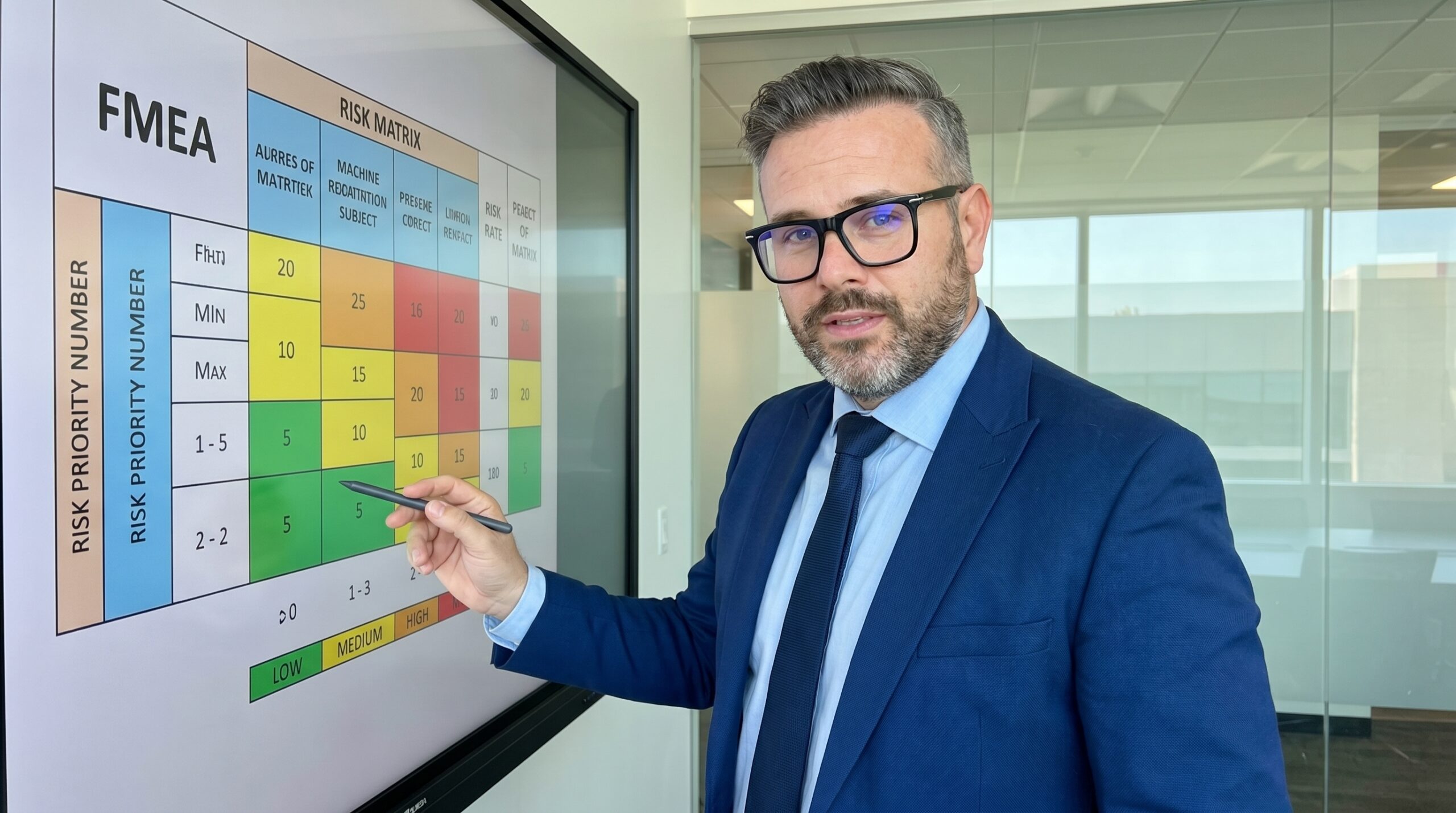
Start with the highest-risk failure modes — the ones with the most
severe consequences, the ones your FMEA has flagged as highest RPN.
Build detection for those first. Expand from there.
5. “We Already Do This —
We Have SPC Charts”
SPC (Statistical Process Control) is a monitoring tool. Jidoka is a
prevention tool. They are related but fundamentally different.
SPC tells you that your process is drifting — after it has already
drifted, and after you’ve plotted enough points to see the trend. It’s
valuable, but it’s retrospective.
Jidoka stops the process the moment the abnormality occurs — before
the trend, before the data accumulation, before the defect propagates.
It is instantaneous.
SPC is the weather report. Jidoka is the emergency sprinkler system.
You need both. But don’t confuse one for the other.
Building
Your Jidoka Roadmap: A Practical Framework
Implementing Jidoka is not a weekend project. It’s a multi-year
journey that evolves with your organization’s maturity. Here’s a
practical roadmap.
Phase 1: Foundation (Months
1-6)
Objective: Establish the principle and prove the
concept.
- Select three pilot stations — Choose stations with
known quality issues, clear failure modes, and willing operators. - Conduct focused FMEA — Identify the top five
failure modes at each station and determine which can be detected with
simple mechanisms. - Implement detection — Install the simplest possible
detection method for each failure mode: sensors, Poka-Yoke devices,
visual indicators. - Define stop protocols — Establish clear rules for
what happens when the detection triggers: who responds, how quickly,
what authority they have. - Train operators — Not just on the new mechanisms,
but on the philosophy. Explain why stopping is a victory, not a
failure. - Measure relentlessly — Track stops, response times,
defect rates before and after. Build the business case with data.
Phase 2: Expansion (Months
6-18)
Objective: Scale from pilots to full production
lines.
- Prioritize by risk — Use your FMEA data to rank all
stations by the severity and likelihood of failure modes. Implement
Jidoka on the highest-risk stations first. - Connect stations — Begin linking individual Jidoka
points into line-level systems. When Station 7 stops, Station 6 should
know. Station 8 should quarantine. - Develop standard work — Document the response
protocol for each type of stop. Create troubleshooting guides. Build the
institutional knowledge that makes responses faster and more effective
over time. - Integrate with your quality system — Connect Jidoka
stops to your corrective action system, your SPC data, and your
management review process.
Phase 3: Maturity (Months
18-36)
Objective: Embed Jidoka into organizational DNA.
- Extend beyond manufacturing — Apply Jidoka
principles to engineering processes, supplier management, and
administrative workflows. - Implement predictive Jidoka — Use data analytics to
detect early warning signs before the physical stop triggers. Move from
reactive detection to proactive prevention. - Drive continuous reduction — Set targets for
reducing Jidoka stops over time (by solving the underlying problems),
not for reducing the number of Jidoka mechanisms. - Build Jidoka into new product/process design — Make
Jidoka a requirement in every new process design, every new equipment
specification, every new supplier qualification.
The Metric That
Matters: Stop-to-Defect Ratio
Most organizations measure defect rates — parts per million, scrap
percentage, cost of poor quality. These are important, but they’re
lagging indicators. They tell you what already happened.
Jidoka introduces a powerful leading indicator: the
Stop-to-Defect Ratio.
This metric compares the number of Jidoka stops to the number of
defects that actually escaped to the customer. A high ratio means your
Jidoka system is catching problems before they become defects. A low
ratio means problems are getting through.
Target: Your stop-to-defect ratio should be high (many stops, few
escapes) in the early phases of implementation, and should gradually
decrease as you solve the underlying problems that trigger stops.
A declining stop-to-defect ratio combined with a declining defect
rate is the signature of a maturing Jidoka system. You’re not catching
more defects — you’re preventing them.
The Paradox of Stopping
Here is the deepest insight Jidoka offers: the organizations
that stop most often are the organizations that produce the fewest
defects.
This sounds paradoxical until you think about it. An organization
that stops frequently is an organization that sees its problems,
confronts them immediately, and fixes them at the source. An
organization that never stops is an organization where problems
accumulate invisibly until they explode.
Toyota’s most productive plants are not the ones that run without
interruption. They are the ones where the andon boards light up
constantly — where every worker feels empowered to say “something is
wrong” and the entire system responds. Those plants produce some of the
highest-quality vehicles in the world.
The willingness to stop is not weakness. It is the ultimate
expression of quality maturity. It says: We value getting it right
more than we value appearing to be right.
The Road Ahead
As manufacturing moves deeper into Industry 4.0, Jidoka is evolving.
IoT sensors provide detection capabilities that were unimaginable a
decade ago. Machine learning algorithms can identify subtle patterns of
process drift before traditional sensors trigger. Digital twins can
simulate failure modes and test detection strategies in virtual
environments before any physical hardware is installed.
But the core principle remains unchanged. Technology is the enabler.
The principle is the foundation. And the principle is simple:
When something goes wrong, stop. Find out why. Fix it.
Prevent it from happening again.
Your machines should know this. Your people should know this. Your
organization should know this.
Jidoka is not a tool you implement. It is a reflex you develop. And
once your organization has it — once stopping becomes as natural as
breathing — you will wonder how you ever operated without it.
Peter Stasko is a Quality Architect with 25+ years
of experience helping organizations build quality systems that don’t
just detect failures — they prevent them. He has implemented Jidoka
principles across automotive, electronics, and medical device
manufacturing on three continents.