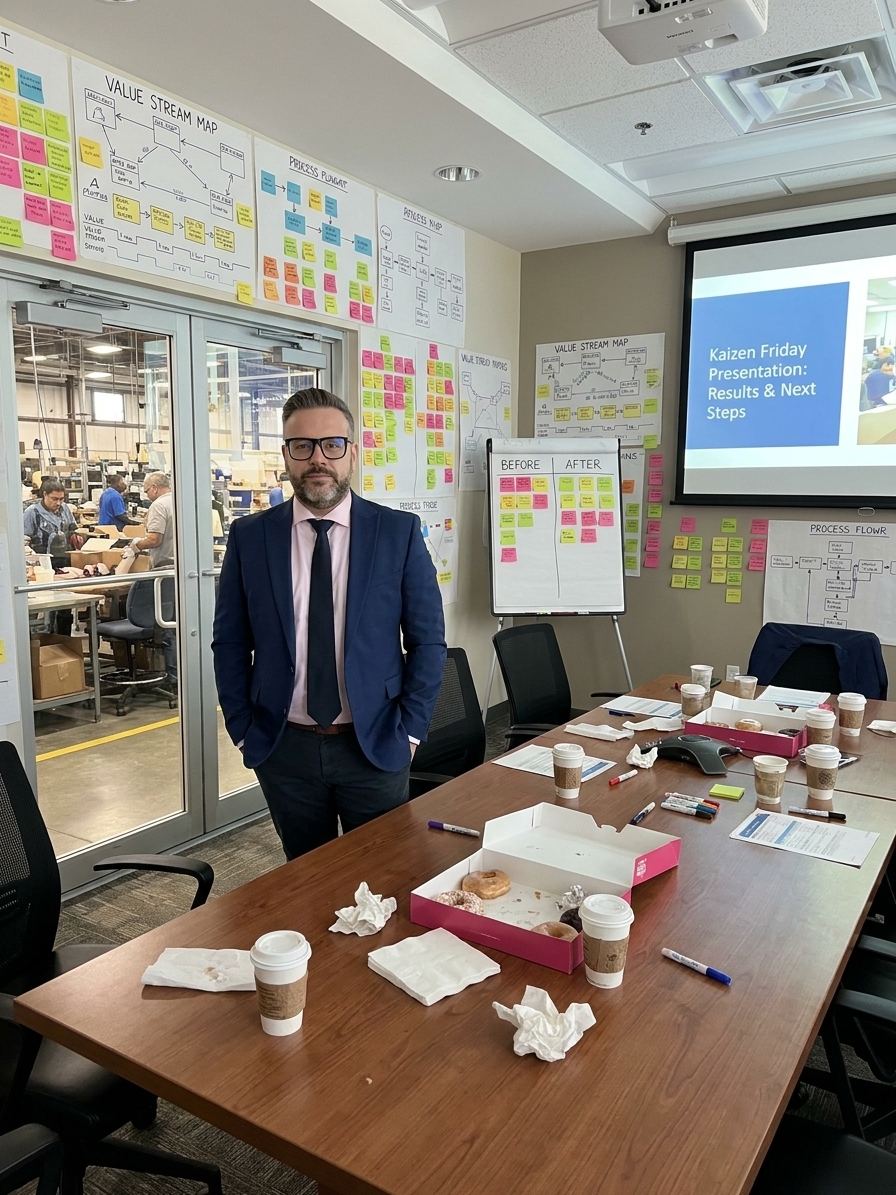
A senior leader sponsors a kaizen event. A cross-functional team leaves the shop floor for a full week. An external consultant facilitates sessions covering the walls with sticky notes. By Friday afternoon, the group presents ambitious recommendations to applauding managers. By the following Monday, the organization returns to routine and nothing on the floor has actually changed.
I have audited plants that ran dozens of these workshops, and the pattern is remarkably consistent. Months later, the target workstation exhibits the exact same bottleneck. The war room is again a standard conference space. The presentation sits unread on a shared drive, and the projected savings exist only in a spreadsheet.
The fundamental issue is not a lack of effort or intent. The western adaptation of kaizen into discrete, time-boxed events structurally separates improvement from daily operations. When a temporary team owns the change, the people who actually run the process never adopt it. The organization consumes thousands of labour hours generating deliverables that deliver precisely zero sustained capability.
The Structural Flaw in the Event Model
The concept of kaizen emerged from the Toyota Production System as a daily management practice. Every operator was expected to identify waste, propose solutions, and implement small improvements within their own standardized work. This philosophy required a management system that rewarded daily problem-solving and provided the structural time to execute it.
The adaptation of this practice into bounded workshops was intended to force time for analysis. When executed rigorously, a focused event can compress weeks of value stream mapping into days. The breakdown occurs because the event model makes improvement episodic rather than continuous. It assigns ownership to a temporary team that disbands on Friday afternoon.
In the original model, the operators who ran the process also owned the improvement. In the event model, the operators become passive subjects of analysis. The resulting changes lack operational buy-in. When the facilitator leaves and the cross-functional team returns to their regular duties, the floor reverts to its previous state within weeks.
Charter Scope and Vague Mandates
The decay starts before the workshop begins, during the chartering phase. A manager identifies a politically intolerable problem and declares a kaizen event as the response. A lean office drafts a charter document that reflects what leadership wants to hear rather than what process data supports.
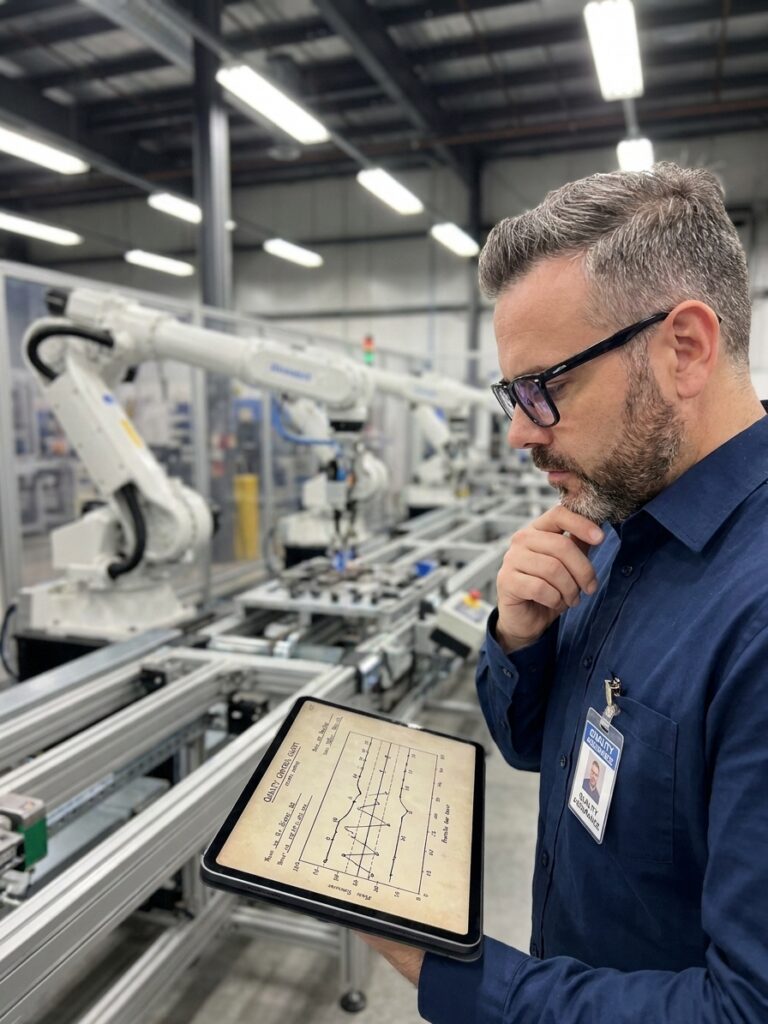
The scope is typically drawn far too broadly, encompassing an entire value stream when the actual constraint is a single station. The objectives rely on aspirational language rather than specific, measurable targets. Team assembly is driven by departmental availability rather than deep knowledge of the failing process.
By Monday morning, the team operates with a vague mandate and an unrealistic scope. The expectation is to justify the event's existence through a polished Friday presentation. This political framing forces the team to focus on demonstrating activity rather than solving the specific engineering problem at hand.
The Disconnect Between Activity and Validation
During the week, the current-state mapping reveals complexity the charter ignored. Root cause analysis using 8D or 5-Why methodologies stalls at symptoms because nobody collected baseline data. The facilitator, feeling the pressure of the Friday deadline, begins steering the group toward solutions that look good on slides rather than countermeasures validated by the data.
Subgroups conduct time studies but sample so few cycles that the results lack statistical significance. Another group designs a new layout without securing the authority or capital to implement it. Standard work instructions are drafted in a conference room instead of at the gemba, completely disconnected from the reality of the operator's cycle time.
By Thursday, the team pushes unvalidated changes onto the floor. They photograph these modifications for the report-out. Countermeasures that should run through rigorous PPAP or MSA validation are declared successful after a single trial. The core objective shifts from sustaining process improvement to producing compelling evidence of effort.
The Collapse of the Thirty-Day Follow-Up
The Friday report-out is the peak of the illusion. Leadership applauds the before-and-after layouts and projected cost savings. Everyone leaves the room feeling validated. Beneath the surface, the standard work has not been adopted, and critical follow-up actions are assigned to team members who have already returned to their full-time operational duties.
The thirty-day follow-up is where most events actually die. In the first week, residual momentum pushes a few changes forward. By week two, operators revert to old methods because the new standard work was never properly communicated or trained. The daily metrics tracking falls apart completely.
By day ninety, the event is a memory and the process, measured honestly, has improved by approximately nothing.
The action item list is color-coded green, yellow, and red. The green items are the trivial ones: labels applied, a shadow board organized, a document updated. The red items represent the hard engineering changes: equipment modifications, layout reconfigurations, and systemic standard work adoption. These require capital and sustained leadership, both of which disappeared on Friday.
Rebuilding with Standardized Metrics
Organizations keep running these events because they are highly visible artifacts of commitment. A week-long workshop demonstrates action without requiring systemic culture change. The failure is slow and diffuse, allowing each event to be rationalized as a partial success, while the aggregate performance data goes completely untracked.
Validating Sustained Improvement
To break the cycle, audit your last ten events. Ask if the implemented changes survived six months. Ask if the projected savings appeared in actual financials or if they were buried in variance reports. Ask if operators are still following the new standard work or if the documented information has been quietly discarded.
Shift the balance of effort from theatrical events to daily improvement. Train team leaders in core problem-solving methodologies like 8D and give them protected time to coach operators. When a process deviation occurs, the immediate response should be root cause analysis, not scheduling a cross-functional workshop for the following quarter.
Restructuring the Event for Measurable Impact
When concentrated effort is genuinely required, change the operational model. Narrow the scope dramatically to one specific constraint and one measurable metric. Give the operators who run the process decision-making authority inside the room. A facilitator can guide the methodology, but the operators must own the output.
Demand a rigorous follow-up period of at least ninety days with mandatory weekly check-ins attended by the executive sponsor, not just the team lead. Track the specific metrics—Cpk, OEE, scrap rate, cycle time—honestly. If the process capability drops below the target threshold, the countermeasure has failed and must be re-evaluated.
Structured Event Follow-Up Protocol
- 01Define specific metricSelect a measurable constraint like Cpk or cycle time before the event begins
- 02Baseline data collectionGather statistically significant samples to establish true current state
- 03Pilot implementationTest countermeasures on one shift with operator ownership
- 0430-day validationSponsor audits the floor to verify standard work adoption
- 0590-day lock-inConfirm metric improvement and integrate into layered process audits
Stop measuring kaizen success by the quality of the Friday presentation. Measure it by the verified state of the process ninety days later. If the process is genuinely, measurably better and the change is sustained, the event was worthwhile. If it is not, no volume of polished slides changes that engineering reality.
Real improvement looks like an operator who notices a loading difficulty, mentions it during the shift huddle, and tests a fixture modification. It is small, continuous, and owned by the people on the floor. Management's role is to provide the standardized work, the visual management, and the systematic replication of validated best practices across the organization.