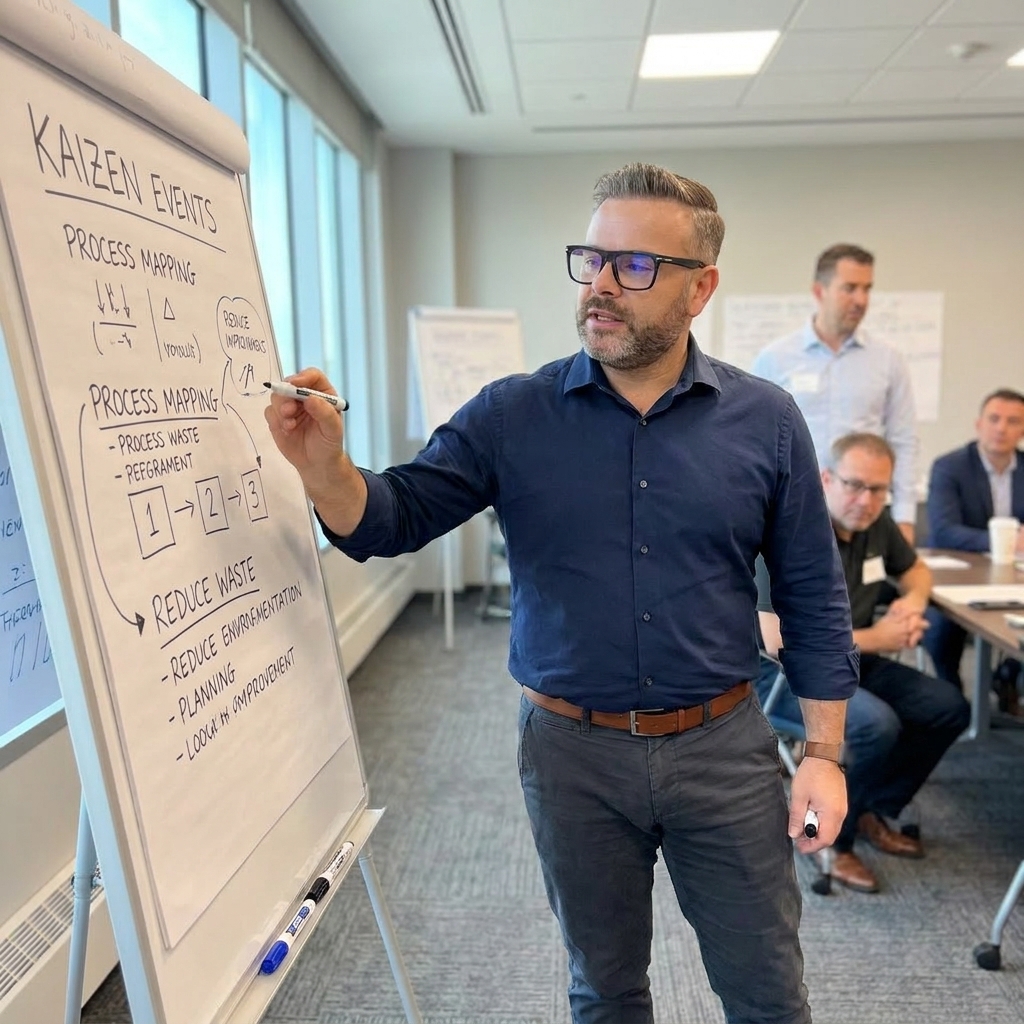
Kaizen gets reduced to a slogan in most plants. A board goes up, suggestion cards get filled out for a month, and by the next audit the board is a relic. The problem is not the philosophy. The problem is that improvement activity is separated from the documented quality management system, so nothing is held in place.
Over twenty years implementing and transitioning ISO 9001 systems at a major aerospace manufacturer, SNOP, and WITTE Automotive, I have seen what happens when improvement is treated as a culture project rather than a process control. Culture is a byproduct of a system that dictates how changes are proposed, tested, verified, and standardised. If your layered process audits and PFMEA reviews do not reference recent Kaizen activity, the system is leaking value.
Genuine continuous improvement requires the same discipline as any other quality mechanism. It needs measurable inputs, documented reviews, and a direct line into the standard work instructions that operators follow on the floor. When improvement is wired into compliance, it survives leadership turnover and audit cycles.
The Mechanism: Small Steps, Captured and Locked
Kaizen works on a simple premise: massive changes introduce risk, while small changes are testable. In an automotive or aerospace environment, a major untested process change can compromise Cpk, disrupt PPAP submissions, and trigger customer escapes. Small, incremental adjustments allow you to isolate variables and verify outcomes without destabilising the entire value stream.
The failure mode is predictable. A team makes a beneficial adjustment to a machining cycle, cycle time drops, and everyone is satisfied. But the change is never pushed into the control plan, the operator balance chart, or the visual standard work. The next shift reverts to the old method, or a new operator is trained on outdated documentation. The improvement evaporates within a week.
At SNOP, building the greenfield QA/QC department for a 900+ employee plant required embedding improvement into the DNA of the daily management system. We did not launch a suggestion campaign. We built a requirement into the layer audits: every team leader had to log one tested process adjustment per week and submit it to the quality engineering team for standardisation review.
Eliminating Waste Through Systemic Visibility
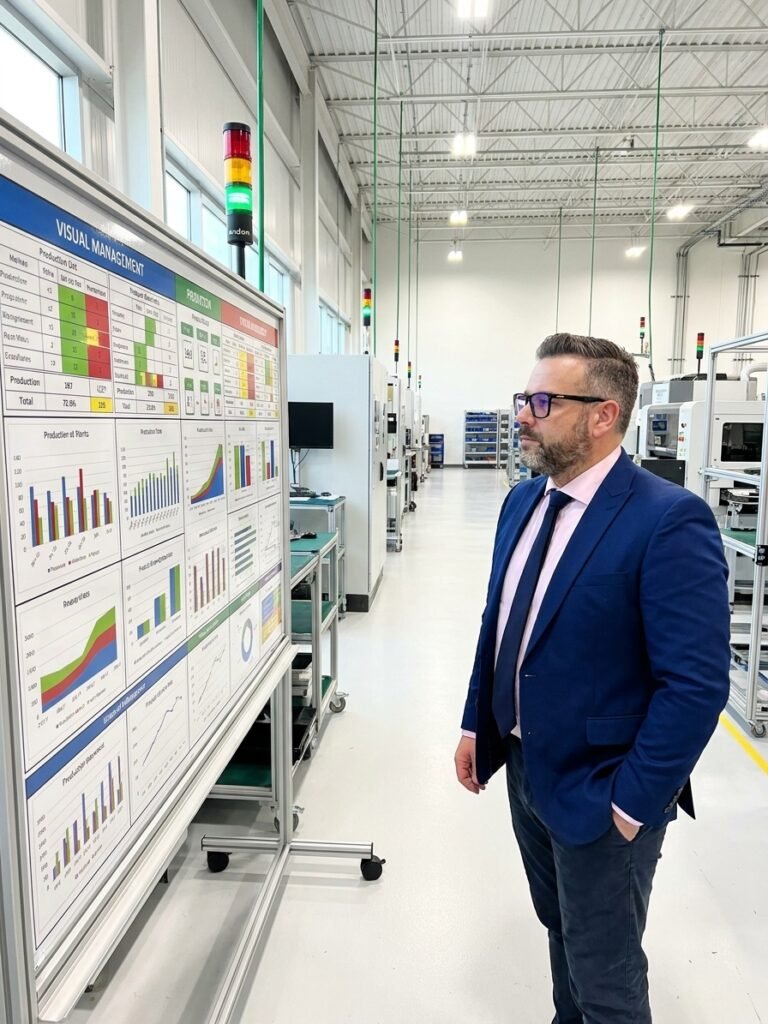
You cannot improve what your management system does not force you to see. The lean toolkit exists to create visibility. Value Stream Mapping (VSM) exposes the gap between processing time and lead time. 5S exposes the wasted motion embedded in a workstation. But mapping waste without a mechanism to eliminate it is an academic exercise. The mapping output must convert directly into an action log with owners and deadlines.
In heavily regulated environments, waste often hides behind compliance itself. Excessive handling, redundant signatures, and unnecessary inspection steps are frequently mistaken for quality control. I have audited plants where operators filled out three separate paper travelers for a single assembly step, all in the name of traceability. VSM reveals this burden, and Kaizen provides the mandate to challenge and streamline it.
The objective is to route resources toward value-added activity. If an activity does not transform the product or service in a way the customer pays for, and it does not satisfy a specific regulatory mandate like EASA or FDA traceability, it is a target for elimination. Improvement teams need the authority to aggressively remove that non-value-added work from the standard.
Improvement Activity: Decorative vs. Systemic
What teams do (Decorative)
- Stand up a suggestion board with no review cadence
- Reward ideas based on novelty, not verified impact
- Leave control plans and work instructions untouched
- Measure success by the number of cards submitted
What works (Systemic)
- Require weekly improvement targets in layered audits
- Validate changes through MSA and capability data
- Update FMEA, control plans, and SOPs within 48 hours
- Measure success by sustained OEE and Cpk stability
Standardisation as the Anchor
An unrecorded improvement is temporary by definition. In an IATF 16949 or AS9100 system, standardisation means updating the documentation that controls the process. If a team finds a better way to torque a fastener or route a harness, the reaction plan, the PFMEA, the control plan, and the visual work instructions must reflect that change immediately.
This is where most continuous improvement initiatives collide with quality assurance. Engineering teams complain that updating documentation is too slow. Quality teams complain that engineers bypass documentation controls. The solution is not to bypass the system; it is to build a rapid-response standardisation loop into your engineering change process.
At a major aerospace manufacturer, introducing Routing Verification KPIs cut our internal lead time by 97% precisely because the system forced immediate verification of routing changes. When a process route improved, the system verified and locked that route instantly. There was no manual paperwork lag, and operators could not revert to the old routing. The improvement was captured in the system architecture.
Employees as Verified Agents of Change
The phrase "employee empowerment" is overused to the point of meaninglessness. Empowerment without boundaries creates chaos on a manufacturing floor. Employees must be empowered to identify waste and propose solutions, but the implementation of those solutions must pass through a verification gate—typically an 8D or structured A3 review—before it becomes the new standard.
When teams see their ideas survive the verification process and become the new documented standard, momentum builds. If their ideas are implemented without verification and subsequently cause a customer escape, trust evaporates instantly. Quality leaders must position themselves as facilitators of good ideas, not gatekeepers, but they must protect the integrity of the verification process.
The Standardisation Loop
- 01Identify and ProposeOperator logs a specific waste or bottleneck on the shift board.
- 02Trial and MeasureRun a controlled trial; measure the impact on cycle time, scrap, or defect rate.
- 03Verify StabilityConfirm the change does not compromise Cpk or introduce new failure modes.
- 04Update DocumentationRevise PFMEA, control plan, and standard work within 48 hours of approval.
Why Kaizen Extends Beyond Manufacturing
The mechanisms of continuous improvement are not limited to the shop floor. I have applied these exact principles to back-office processes in service and financial industries. Whether you are processing insurance claims or assembling cable harnesses—like my early work at Molex Slovakia reducing WIP—the methodology is identical. Map the value stream, identify the constraint, test a small change, measure the result, and lock it in.
An unverified improvement is just a rumour; standardisation is what makes it a fact.
In transactional environments, the "scrap" is rework, delayed first-time resolution, and customer callbacks. Applying 5S to a digital shared drive, or using VSM to eliminate redundant approval steps in a call centre, yields the same percentage gains as reducing changeover times on a press. The discipline of daily, small improvements translates directly to service efficiency.
The decisive factor is consistency. Organisations that succeed with continuous improvement do not rely on random bursts of innovation. They execute thousands of small, documented adjustments per year. They treat improvement as a daily operational requirement, not an annual culture workshop. The volume of executed changes creates a compounding effect that competitors cannot easily replicate.
Building the Metrics That Drive Improvement
If your management review meetings only look at lagging indicators like customer PPM and final audit scores, you are managing the past. To drive continuous improvement, you must measure the process itself. This means tracking how many proposed improvements are in the trial phase, the cycle time of your standardisation loop, and the percentage of standard work instructions updated in the last quarter.
These leading indicators tell you if the improvement system is actually functioning. A high number of proposed changes with a low standardisation rate points to a bottleneck in your engineering change process. A low number of proposals points to a breakdown in the layered audit system. The metrics must expose the health of the mechanism, not just the outcome.
Tie these metrics directly to IATF 16949 and ISO 9001 requirements for continuous improvement. When auditors arrive, they should not find a separate binder of culture initiatives. They should find a fully integrated system where the daily improvement log feeds directly into the management review, the updated PFMEAs, and the capability data on the floor. That is how culture becomes compliance, and compliance becomes performance.