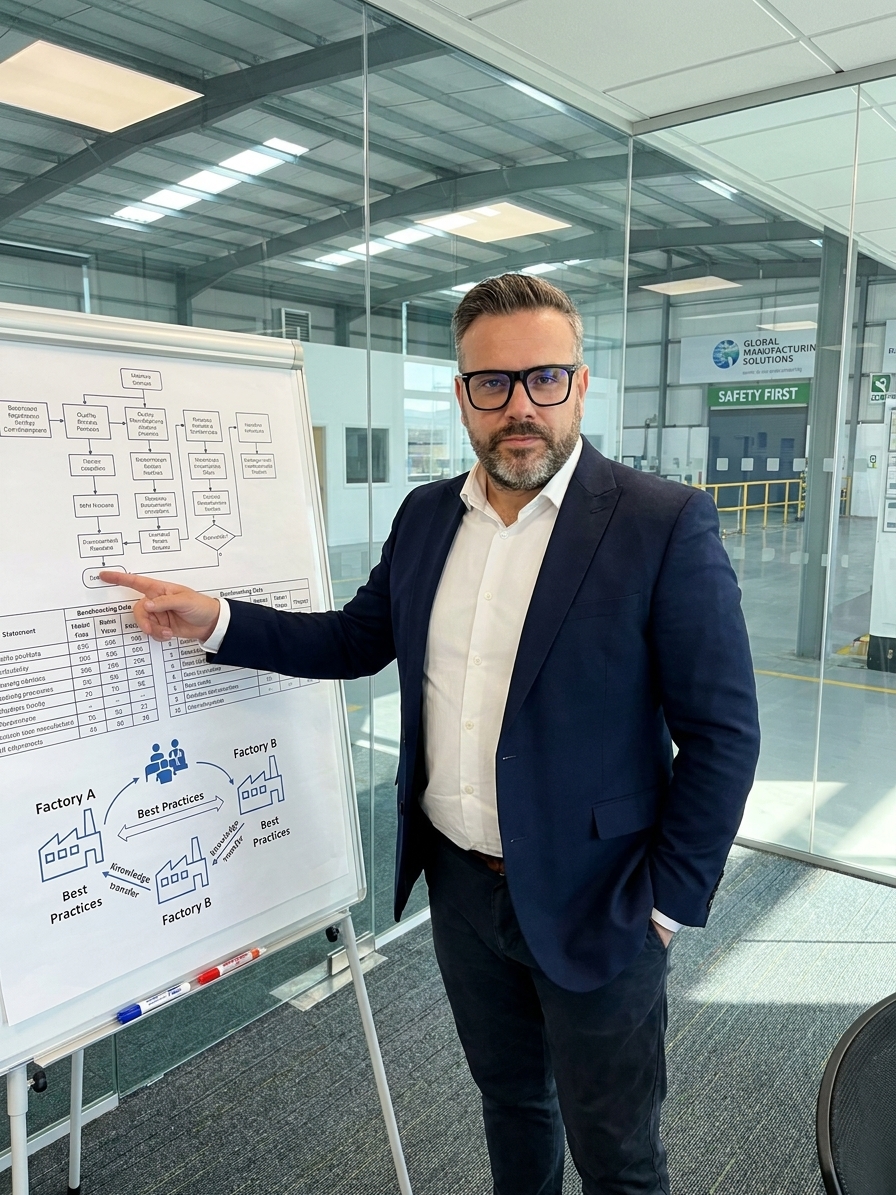
Not Invented Here (NIH) is the rejection of external knowledge, solutions, or practices simply because they originated outside your team's boundaries. In quality management, it is one of the most expensive psychological forces operating today. I have audited plants across automotive and aerospace that routinely sacrifice months of throughput and thousands of engineering hours just to avoid adopting a solution they did not create themselves.
The rejection is rarely based on technical merit. The solution works, the statistical data supports it, and the root cause logic is sound. It gets rejected because the origin story does not match the internal team. This behaviour hides in duplicated engineering effort, delayed problem resolution, and repeated process failures that standard CAPA systems rarely catch.
Consider the ISO 9001 and IATF 16949 frameworks your facility operates under. The core tools—PFMEA, SPC, MSA, APQP, PPAP—were all developed externally. The Plan-Do-Check-Act cycle came from Deming. Quality professionals build their entire careers on externally invented knowledge. Yet, when it comes to a specific corrective action or process tweak, organisations suddenly demand internal origination.
The true cost of rejecting external solutions
The financial impact of NIH is substantial but invisible, because it does not appear as a distinct line item on the cost of poor quality (COPQ) dashboard. It hides in plain sight. When a plant insists on solving a problem from scratch rather than adapting a proven solution, the timeline for resolution stretches from weeks to months.
During that extended period, defects continue, customers absorb the impact, and scrap costs accumulate. I once worked with a multinational automotive components company where each of seven European plants had independently developed its own control plan template. The total engineering hours invested across all seven easily exceeded 2,000 hours. A single well-designed template, adapted locally, would have required 200 hours total. That is 1,800 hours of pure NIH waste.
The most dangerous cost is not duplicated effort; it is missed innovation. External solutions carry perspectives and technologies that emerge from different constraints and failure modes. When NIH blocks these inputs, the organisation does not just duplicate effort—it stagnates. Plants with strong NIH cultures become increasingly isolated, eventually rejecting benchmarking data outright because the source operates in a slightly different market segment.

How professional identity drives poor engineering decisions
NIH is not a lack of intelligence. It is a convergence of predictable psychological forces. Professionals derive a significant portion of their self-worth from their ability to solve problems independently. When an external solution is presented, the immediate reaction is a defence of professional identity. The resistance feels like a technical critique, but it is emotional.
This is the IKEA effect applied to process engineering. A team that builds its own custom inspection checklist will defend it more fiercely than a standard AIAG template, regardless of which actually reduces escape rates. The act of creation produces an emotional investment that overrides objective evaluation. People value what they build, even when what they build is statistically inferior.
Attribution errors compound the problem. When an internal solution fails, the team blames circumstances: the supplier sent bad material, or the operator made a mistake. When an external solution fails, the team blames the essence of the solution itself, declaring the entire approach invalid. This asymmetry makes external proven solutions appear riskier than they actually are.
The vocabulary of internal justification
Nobody ever says they are rejecting a solution because they did not invent it. NIH wears a wardrobe of professional-sounding justifications that mimic genuine engineering rigour. Identifying these arguments is the first step to dismantling them. You must force the conversation back to technical specifics, away from emotional generalities.
The most common defence is claiming the situation is unique. Yes, every manufacturing line has specific variables. But the question is whether those unique elements are actually relevant to the specific problem being solved. Solder paste behaves according to physics, not company culture. Steel tensile strength is governed by ASTM standards, not plant location.
Evaluating NIH Resistance vs. Genuine Technical Justification
The NIH Defenses
- "Our process is totally unique."
- "We need to understand it from scratch."
- "Our supplier mix makes this invalid."
- "Let's build our own custom version."
The Engineering Response
- Specify the exact process variable that differs.
- Define the learning timeline vs. implementation timeline.
- Request a comparison of incoming material specs.
- Calculate the engineering hours required to rewrite.
Another frequent claim is the need to understand the solution internally. This sounds noble until you measure the timeline. If understanding a process means spending four months running Design of Experiments (DOE) to rediscover what another plant learned in four weeks, it is not education. It is stubbornness wearing an academic gown.
Finally, teams will demand adaptation. Adapting an external solution to fit local constraints is a legitimate engineering activity. But when adaptation becomes a complete rewrite that happens to arrive at the exact same parameters as the original proposal, it is just NIH in slow motion. You must call out the delay for what it is.
Structural mechanisms to break the cycle
Dismantling NIH requires altering your quality management system's structure, not just sending out a memo. You have to make external benchmarking a mandatory gate in your problem-solving methodology. Before a team can begin a root cause investigation, require them to complete a benchmarking scan: has this defect been solved elsewhere in the network?
Language matters. Stop talking about adopting external solutions and start talking about adapting them. Adoption implies passive acceptance of someone else's work. Adaptation implies active engagement, evaluation, and customisation. This reframing directly addresses the competence threat. When a team adapts a solution, they remain creators exercising engineering judgement.
The quality director who accepts ISO 9001 but rejects a proven reflow profile from a sister plant is managing a psychological threat, not a technical risk.
You must also alter your recognition systems. In most facilities, the engineer who solves a problem gets a reward; the engineer who finds an existing solution and implements it gets nothing. Change this immediately. Create formal recognition for best adapted solution alongside best new solution. Make knowledge brokering a visible, valued contribution during performance reviews.
Measuring the gap between invention and integration
What gets measured gets managed. You must start tracking the specific costs of duplicated effort that result from NIH. When a team spends three months developing a corrective action that already existed in another facility, quantify the exact cost. Tally the engineering hours, the continued scrap rate, the warranty claims, and the customer impact.
Presenting these costs in hard financial terms changes the conversation from abstract preference to concrete waste. It forces leadership to acknowledge that their team's pride is actively destroying operational efficiency. The tax of Not Invented Here is always paid in time, money, and customer patience.
The Real Cost of Rebuilding vs. Adapting
I once presented a proven thermal profile adjustment to a quality director that would have immediately resolved a 2,300 PPM defect rate on PCB assemblies. The solution was rejected. His team spent four months running their own DOE to arrive at an identical corrective action. The defect rate dropped to 180 PPM. The solution was identical; the only difference was the origin story, and the company paid for four months of avoidable scrap to secure it.
Building external learning into your CAPA system
Senior leaders dictate the tolerance for NIH. If plant managers never reference external sources or bring back insights from industry working groups, NIH will persist regardless of the structural changes you make to the QMS. Quality directors must visibly demonstrate that external learning is a strength.
When a leader says they saw a successful approach at an AIAG conference or a VDA 6.3 audit in another facility and demands an immediate evaluation, it signals that internal origination is not the only acceptable path. It shifts the culture from one of defensive isolation to one of aggressive learning.
The best quality outcomes draw on every available source of knowledge. No single organisation has a monopoly on good solutions. The systems that will thrive in the next decade are not the ones with the most original ideas. They are the ones with the fastest learning cycles, capable of identifying and integrating external knowledge before the competition.
Not Invented Here is not a quality philosophy. It is an obstacle. The best solution to most manufacturing problems already exists somewhere in your industry, documented and validated, waiting for someone humble enough to use it.