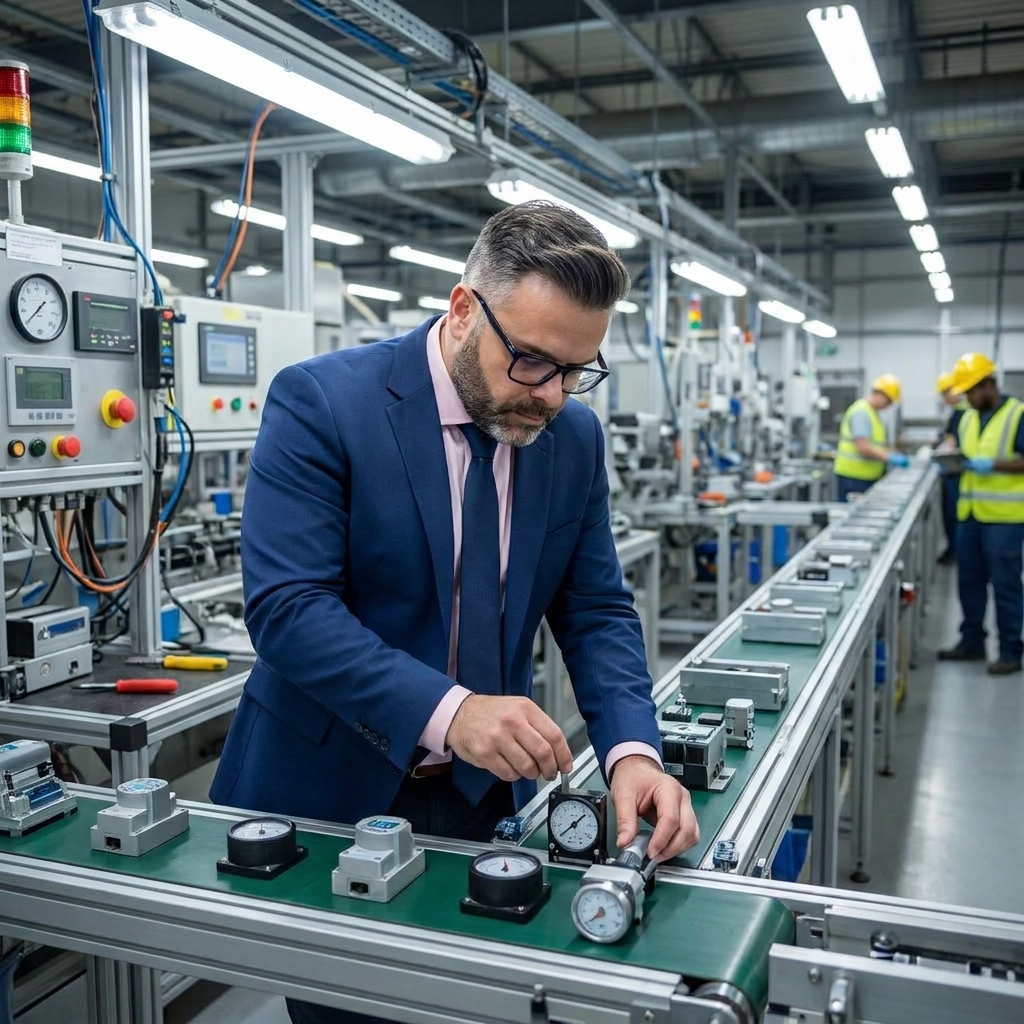
Detection is not prevention. The distinction is the foundation of Poka-Yoke, and failing to understand it keeps plants trapped in a cycle of rework, containment, and corrective action. Poka-Yoke, the error-proofing methodology formalised by Shigeo Shingo at Toyota, is a deliberate engineering choice. It designs the process, the fixture, or the system so that a specific defect cannot physically occur or is immediately obvious the moment it does.
In two decades implementing and transitioning ISO 9001 and IATF 16949 systems at companies like a major aerospace manufacturer, SNOP, and WITTE Automotive, I have audited countless plants that confuse inspection with quality assurance. They invest heavily in end-of-line testing, catch the defects, and ship good product. But they never improve OEE because the line is constantly stopping for rework. Poka-Yoke attacks the failure mode at its origin, rendering human error structurally irrelevant.
The method shifts quality control from reactive sorting to proactive process design. When you engineer a process where the operator cannot assemble the part backwards because the pin pattern is asymmetric, you do not need to inspect for that specific defect. The fixity of the design eliminates the variability.
The Two Functional Categories of Error-Proofing
Every Poka-Yoke device falls into one of two functional categories: control or warning. Control devices physically prevent the error from occurring or stop the process the moment a parameter is breached. Warning devices alert the operator through sensors, lights, or alarms, but rely on human intervention to correct the issue. Control is categorically superior because it removes reliance on operator response time.
Consider a stamping line where a misaligned die could destroy the tool and produce nonconforming parts. A control Poka-Yoke uses interlocked machine guards and positional sensors that physically prevent the press from cycling unless the material is seated correctly. A warning Poka-Yoke triggers an alarm if the sensor detects a gap. The control device makes the error impossible; the warning device merely announces that a defect has already entered the system.
Effective PFMEA and 8D processes often reveal that plants deploy warning devices when control devices are technically feasible and economically viable. The goal of Poka-Yoke implementation is to migrate as many failure modes as possible from detection-based warning systems into hard, physical controls.
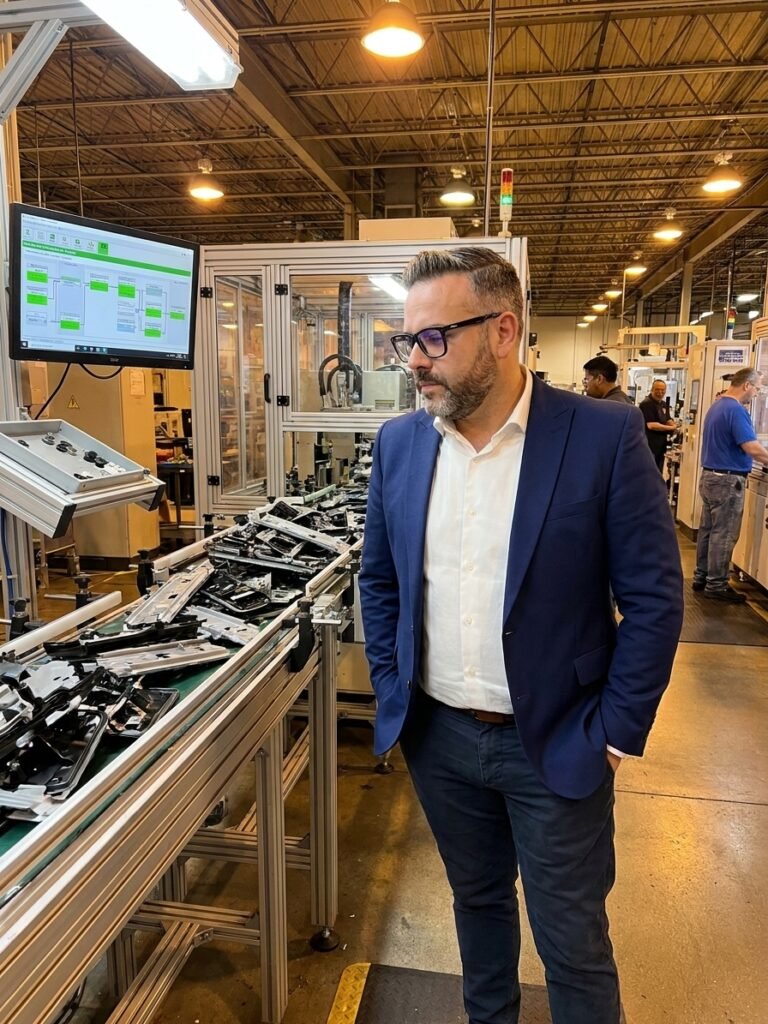
The choice between control and warning dictates your downstream quality costs. A control device eliminates the defect, the scrap, and the sorting effort entirely. A warning device still incurs the cost of the failed cycle, the labour to remove the part, and the logistical burden of routing the nonconforming material into your MRB loop.
Mechanism Design: Simplicity, Feedback, and Sustainability
The most effective Poka-Yoke devices share three characteristics: they are mechanically simple, they provide immediate feedback, and they are robust against environmental wear. Complexity is the enemy of error-proofing. If a sensor requires constant calibration or a fixture is prone to jamming, operators will bypass it to maintain cycle time. When the bypass becomes routine, the Poka-Yoke device itself becomes a new source of process variation.
Immediate feedback is non-negotiable. If a defect is detected downstream in a cell separate from where it was created, the Poka-Yoke has failed its primary function. The device must act at the exact point of operation. Asymmetrical tooling, keyed connectors, and machine interlocks that halt the cycle within milliseconds of an anomaly ensure that no secondary value is added to a defective part.
Sustainability requires treating Poka-Yoke devices as critical-to-quality assets within your maintenance system. At SNOP, building the greenfield QA/QC department for a 900-plus employee plant meant integrating these mechanical safeguards directly into the autonomous maintenance standards. If a locating pin wears beyond tolerance, the Poka-Yoke function is compromised, and the process reverts to an uncontrolled state.
Implementation Realities: Automotive and Aerospace Standards
In automotive manufacturing governed by IATF 16949, Poka-Yoke is foundational to achieving the Cpk and Ppk targets demanded by OEMs during PPAP submissions. Implementing mechanical blocking systems, optical presence sensors, and sequential torque strategies reliably drives assembly defect rates down by the majority. The objective is always to engineer the failure mode out of the physical build sequence.
Aerospace operates under different constraints but applies the same engineering logic. At a major aerospace manufacturer, where I served as a POM Rep, error-proofing is inextricably linked to flight safety and EASA compliance. The margin for defect acceptance approaches zero. Every safety-critical assembly, from wing rib mating to harness routing, relies on prevention mechanisms—tooling geometry that accepts only the correct fastener, sensors that verify torque sequences, and hard stops that prevent over-travel.
Integrating Error-Proofing into FMEA and Control Plans
Poka-Yoke is not an afterthought applied during production; it is an output of the design phase. During PFMEA development, you identify potential failure modes and score their Severity, Occurrence, and Detection. The standard engineering response to a high Occurrence or Detection ranking should be the implementation of an error-proofing device. If the device is physical and reliable, the Occurrence ranking drops to a statistical minimum.
Integrating Poka-Yoke into PFMEA
- 01Identify failure modeDefine the specific defect path in the process flow during PFMEA.
- 02Assess rankingsEvaluate Severity, Occurrence, and Detection to quantify risk.
- 03Select mechanismEngineer a physical control device that makes the error impossible.
- 04Update Control PlanLock the Poka-Yoke parameter into the operator work instructions.
- 05Validate effectivenessConfirm through MSA and run-at-rate audits that the mechanism holds.
The Control Plan must explicitly reference the Poka-Yoke method. An auditor reviewing your IATF 16949 or AS9100 system expects to see the error-proofing device listed as the primary control for a given characteristic. They will then verify that the device is included in the preventive maintenance schedule and that operators are trained not just to use it, but to immediately halt the line if it fails or is bypassed.
Too often, engineering teams rely on operator vigilance—documented as training or visual aids—as the primary control for critical characteristics. This is a systemic failure. Poka-Yoke exists precisely because training is not a reliable control for repetitive tasks under production pressure.
A warning light tells you a defect exists; a control device ensures it never does.
Measuring the Impact on Quality Metrics
The success of Poka-Yoke is reflected directly in first-time-through rates, scrap reduction, and the elimination of 8D corrective actions for specific failure modes. When I introduced Routing Verification KPIs at a major aerospace manufacturer, the immediate visibility into process flow combined with physical prevention mechanisms cut internal lead time for quality deviations by ninety-seven percent. The defects stopped occurring because the process no longer permitted them.
Impact Metrics of Effective Poka-Yoke
In electronics manufacturing, applying systematic visual cues and mechanical locks during component placement severely reduces the volume of rework. By designing the workstation so that incorrect components cannot physically seat into the fixture, the process throughput increases, the cost of non-quality plummets, and MSA studies on the assembly process yield consistently reliable results.
The Economics of Prevention Versus Detection
The primary objection to Poka-Yoke is implementation cost. Engineering custom fixtures, purchasing sensors, and validating the system requires upfront capital. However, the lifetime cost of detection—scrap, rework labour, warranty claims, containment物流, and the administrative burden of constant 8D reporting—consistently dwarfs the one-time investment in prevention.
Quality systems built entirely on detection require layers of inspection that add cycle time without adding value. Every inspection point is an admission that the process is not capable. Poka-Yoke reverses this paradigm. By making the defect structurally impossible, you eliminate the inspection step entirely, reclaiming the labour cost and the cycle time for productive manufacturing.
The transition from ISO 9001 compliance to genuine quality excellence demands this shift. Design your processes to make errors impossible, document the controls in your FMEA and Control Plan, maintain the physical mechanisms relentlessly, and the defects will disappear from your Pareto charts permanently.