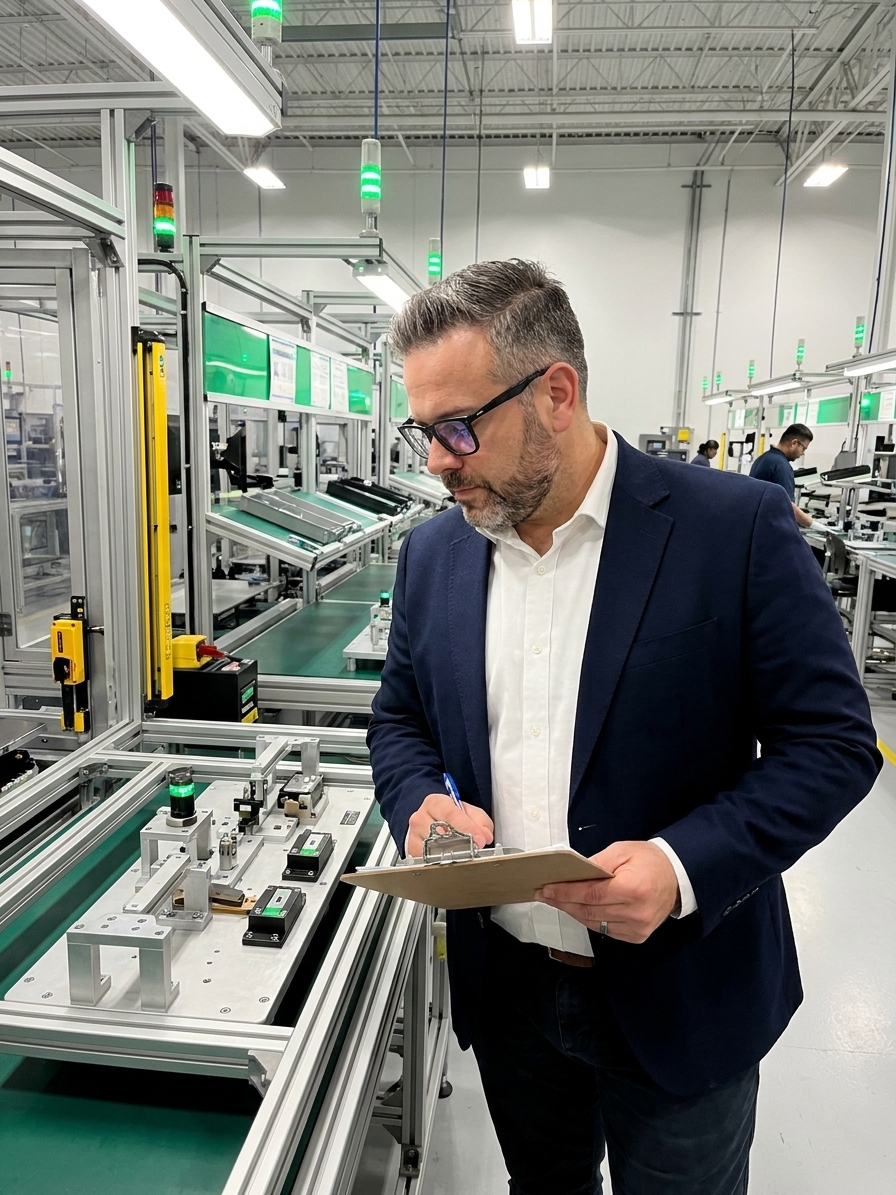
Inspect a recurring defect in your plant and check the last three 8D reports. If the root cause listed is 'operator error' and the corrective action is 'retraining,' your quality system has a fundamental design flaw. You are relying on the most error-prone control mechanism ever invented: sustained human vigilance during repetitive tasks.
In my experience auditing automotive and aerospace facilities, retraining operators never eliminates a defect. It merely resets the clock until the next inevitable lapse in attention. The mathematics guarantee this failure. An operator performing a task with a 99.9% accuracy rate still generates 250 defects annually on a high-volume line. That is not an operator problem. It is a process design failure.
The alternative is poka-yoke, or mistake-proofing. Developed by Shigeo Shingo at Toyota, the methodology shifts the burden of quality away from the operator's attention and onto the engineering of the process. It requires building physical, mechanical, or software constraints directly into the production system to make defects physically impossible or immediately obvious.
The Failure of Training and Inspection
Training and retraining are comfortable corrective actions because they place the burden of failure on the individual rather than the system. They do not work. Fatigue, distraction, illness, and the natural decay of human attention during monotonous tasks will always overwhelm even the most rigorous competency assessment program.
Adding inspection steps fails for the same reason. Inspection is itself a human process subject to identical error rates. The established literature on visual inspection consistently shows that human operators catch between 80% and 90% of defects under ideal laboratory conditions. On a live shop floor, under time pressure and dealing with complex criteria, that detection rate frequently drops below 60%.
When you rely on training and end-of-line inspection, you are simply hoping the inspector catches what the assembler missed. Poka-yoke bypasses this fragile chain by addressing the error at the exact moment and location it would occur. It removes the need for perfect human behaviour entirely.
Control Mechanisms vs Warning Devices
Mistake-proofing devices operate in two fundamental categories: control and warning. A control device physically prevents the error from occurring. A warning device signals that an error has occurred or is about to occur, relying on the human operator to take corrective action.
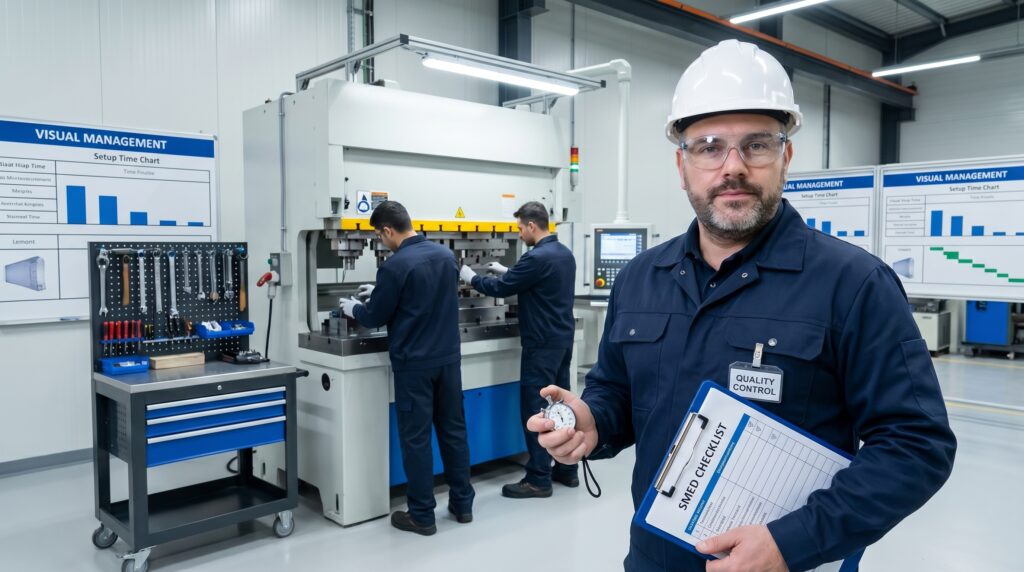
Control mechanisms are the gold standard because they require zero human response time. A misaligned part that physically cannot enter the fixture is a control. An asymmetrical connector that only plugs into the correct port is a control. These designs make the defect impossible, eliminating the need for vigilance.
Warning mechanisms are less robust but still vastly superior to standard inspection. A proximity sensor that triggers a light tower when a part is missing, or a scale that turns red when an assembly is underweight, alerts the operator immediately. The vulnerability remains that the operator must notice and react to the warning.
| Mechanism | Function | Robustness |
|---|---|---|
| Contact Method | Detects physical shape, presence, or connection via sensors or geometry. | High |
| Fixed-Value Method | Verifies the correct count of parts or operations via tray slots or counters. | Medium-High |
| Motion-Step Method | Enforces correct sequencing via software interlocks or mechanical gates. | High |
The Systematic Implementation Framework
Effective mistake-proofing is not about randomly adding sensors to machines. It requires a rigorous methodology that begins with data analysis and ends with a validated engineering change. You must map your error landscape, prioritise by risk, and engineer a specific constraint.
Deploying a Poka-Yoke Constraint
- 01Map Error LandscapeAnalyse nonconformance reports and customer complaints to find recurring human-error defects.
- 02Prioritise by RiskTarget defects combining high severity and high frequency first, guided by PFMEA scoring.
- 03Classify MechanismIdentify if the error is an omission, commission, or sequencing failure.
- 04Design ConstraintEngineer a physical or software barrier that makes the error impossible or instantly visible.
- 05Validate in ProductionTest the device on the live line to ensure it catches the defect without introducing new cycle-time delays.
Begin by analysing your top ten defects by total cost over the past twelve months. For each defect, classify the specific human failure mode. Determine whether the operator forgot a step (omission), executed a step incorrectly (commission), performed steps out of order (sequencing), or selected the wrong component.
Once you isolate the failure mode, design the constraint. If the failure is an omission, introduce a fixed-value method like a counting sensor. If the failure is commission, redesign the fixture geometry so the part only fits in the correct orientation. Validate the solution under actual production conditions to ensure it does not introduce new cycle-time delays or ergonomics issues.
Assessing Organisational Maturity
Most manufacturing organisations remain stuck at a reactive level of quality control. They rely on final inspection to catch defects, responding to failures with rework and retraining. Mistake-proofing is applied rarely, usually as a panicked response to a severe customer escape or a major safety incident.
To reach a systematic level, poka-yoke must be integrated directly into the PFMEA and production readiness processes. Error-proofing must become a standard requirement during the design phase of new products and new lines, not an afterthought applied when a defect appears in the field.
The Hierarchy of Error Prevention
- Reactive InspectionDefects caught at end-of-line; reliance on operator vigilance and 100% sorting.
- Targeted PreventionPoint solutions applied after a significant quality incident or customer escape.
- Systematic DesignPoka-yoke integrated into PFMEA and production readiness reviews.
- Predictive EngineeringPotential failures identified and designed out before production launches.
At the highest level of maturity, mistake-proofing becomes a cultural imperative. When someone identifies a potential failure mode, the organizational instinct is to design a device, not to write a new work instruction. The core question shifts from 'How do we ensure people do it right?' to 'How do we ensure the process only allows it to be done right?'
The True Economics of Mistake-Proofing
Quality managers frequently reject poka-yoke initiatives by citing the cost of redesigning fixtures or adding sensors. This objection relies on a fundamentally flawed cost comparison. It weighs the highly visible, immediate cost of an engineering change against the invisible, ongoing cost of absorbing defects.
The visible cost of a poka-yoke device is always finite. The invisible cost of a recurrent defect is always compounding.
Calculate the fully loaded cost of a single recurring defect. Include the line downtime for rework, the direct labour, the scrapped material, the engineering time for the 8D investigation, and the commercial risk of an escape reaching the customer. A seemingly minor assembly error often carries a hidden annual cost in the tens of thousands of dollars.
Contrast that with the implementation cost. A shaped plastic cap that physically blocks an operator from inserting a connector into the wrong port costs pennies and installs in minutes. The return on investment for mistake-proofing is routinely calculated in the thousands of percent, precisely because simple engineering constraints prevent expensive, complex systemic failures.
Stop accepting 'operator error' as a root cause. The next time you initiate a corrective action, walk to the production floor, observe the physical process, and engineer the mistake out of existence. Your defect rate will drop, your costs will fall, and your operators will finally be freed from the impossible task of sustained perfection.