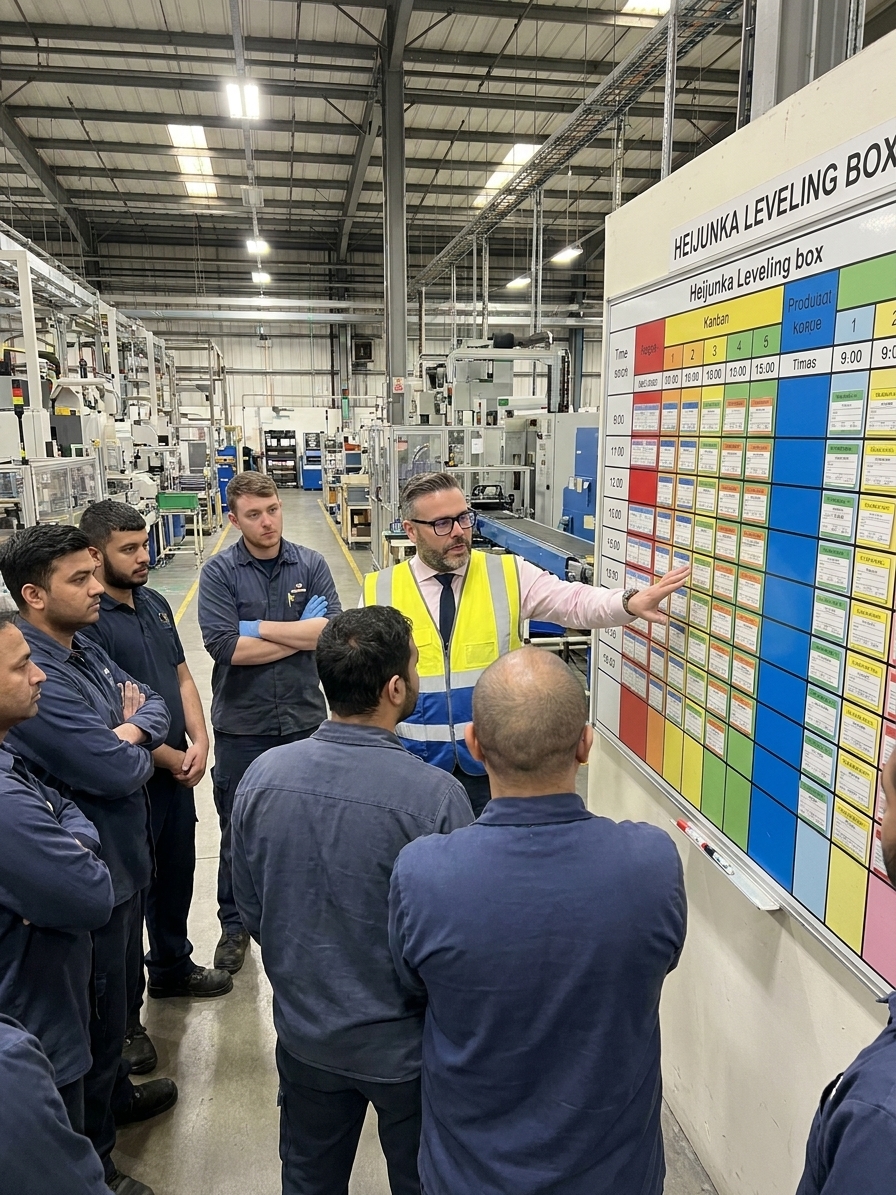
Production leveling is a mathematical exercise until it meets the supplier interface. Inside the four walls of a plant, engineers can calculate takt time, design a heijunka box sequence, and reduce changeovers through SMED. The internal system becomes predictable. Then the first truck arrives two hours late, the raw material inventory spikes, and the leveled schedule erodes.
Across two decades implementing quality systems in automotive and aerospace, I have seen this pattern repeatedly. A plant achieves internal stability only to discover that its suppliers operate on completely different rhythms. The customer plant levels production to match assembly demand. The supplier, measured on batch efficiency and asset utilization, produces in massive runs and ships infrequently. The variability has not been eliminated; it has been pushed backward into the supply chain.
The result is a factory that looks lean on a process audit but carries hidden inventory to compensate for upstream chaos. This inventory absorbs capital, masks quality defects, and destroys the lead-time improvements that leveling was supposed to deliver. If production leveling does not cross the organizational boundary, it fails to deliver system-wide value.
The Decoupled Mismatch: Why Supplier Cycles Clash
The fundamental failure at the supplier interface is a cycle-time mismatch. The customer plant designs a heijunka cycle based on daily consumption: perhaps pulling small quantities of ten different part numbers each shift. The supplier, however, organizes production around long runs to minimize changeovers and maximize OEE. The supplier builds a month of Part A, then switches to Part B.
This creates a bullwhip effect. The customer's leveled pull signal requests consistent, mixed daily deliveries. The supplier's production schedule responds with large, infrequent batches. Someone must absorb the difference. Usually, the customer plant builds a massive incoming warehouse to store the batch deliveries and feed the leveled line piece by piece.
I have audited facilities where the incoming raw material warehouse physically doubled in size after a heijunka implementation. The plant had successfully leveled its assembly line but failed to transfer that rhythm to its supply base. They had optimized local flow while doubling total system inventory. The variability was simply trapped in cardboard and racks instead of WIP.
Internal vs. Cross-Boundary Leveling
Leveling stops at the dock
- Supplier runs large batches for OEE
- Customer builds warehouse to buffer
- Total system inventory increases
- Variability masked, not eliminated
Leveling extends upstream
- Supplier runs smaller batches to demand
- Deliveries match consumption rhythm
- Buffer stock shrinks to safety margins
- Variability addressed at the source
Contractual Metrics That Destroy Pull
Supplier quality agreements in automotive and aerospace typically enforce strict PPAP and delivery performance metrics, but they rarely address production rhythm. A supplier might hold a 99% on-time delivery score while completely ignoring the customer's daily mix. They ship the full weekly requirement on Monday morning. The delivery metric is green. The customer's leveled schedule is broken.
Traditional procurement metrics actively fight pull systems. Purchasing departments are often measured on piece price reduction and freight cost minimization. Freight optimization rewards full truckloads. Full truckloads require large batch shipments. The procurement team's success directly undermines the heijunka cycle by forcing the plant to receive materials in quantities that do not match the daily build sequence.
To make leveling work across company boundaries, quality and operations leaders must redefine supplier performance. Delivery metrics must evolve from simple on-time percentages to rhythm adherence. Did the supplier deliver the correct mix of parts in the sequence required by the heijunka box? If the metric only measures volume, the supplier will optimize for volume, and the mix will suffer.
Co-Designing the Replenishment Rhythm
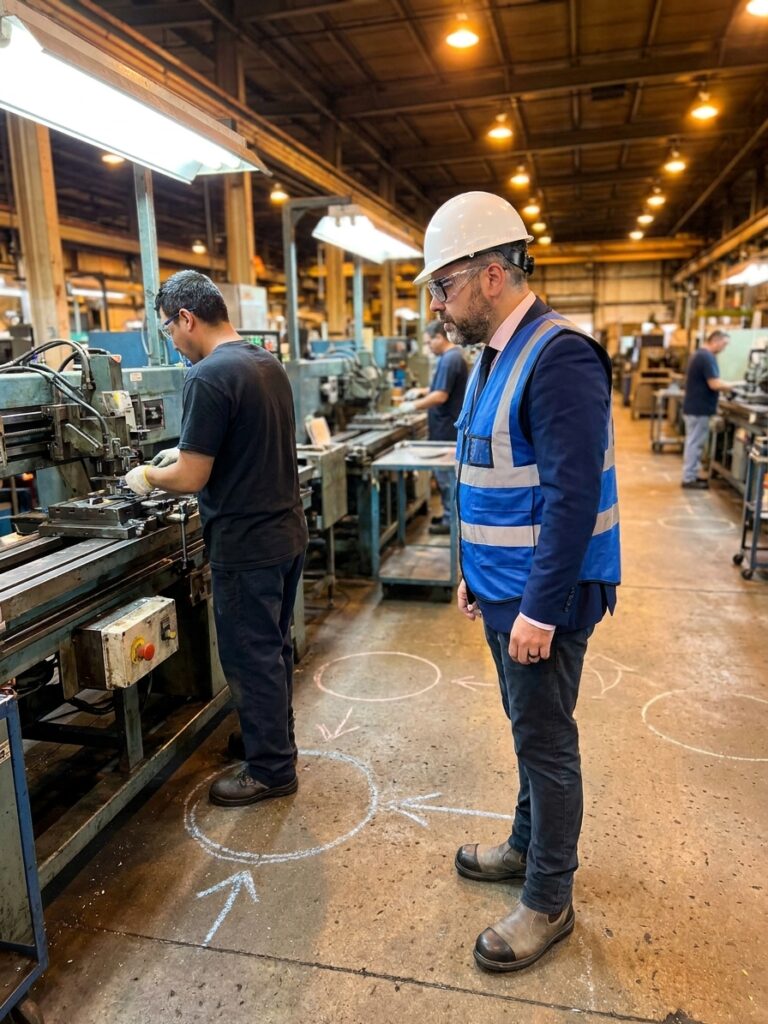
Fixing the supplier interface requires moving from adversarial positioning to joint production design. The customer cannot simply demand leveled deliveries without helping the supplier build the capability. If the supplier needs a four-hour changeover to switch between part variants, they cannot economically meet a daily mixed-model delivery requirement. The technical capability must exist on both sides of the boundary.
Successful organizations share their heijunka box schedules directly with key suppliers. This transparency allows the supplier to see the actual consumption pattern rather than reacting to distorted ERP order signals. When the supplier understands the true daily mix, they can synchronize their own internal changeover sequences to match, creating a continuous pull across two separate facilities.
This synchronization demands a stable platform. I have implemented supplier development programs where we sent process engineers to tier-1 facilities to conduct SMED workshops. By reducing the supplier's changeover time from hours to minutes, we made it economically viable for them to produce in small daily batches. The technical capability had to precede the commercial demand.
The interaction must operate on a fixed cadence, typically managed through an enhanced S&OP process that includes critical suppliers. This is not a quarterly business review. It is a weekly operational synchronization meeting where demand signals, capacity constraints, and exception management are negotiated jointly. When the rhythm breaks down, the cadence meeting is where the recovery plan is built.
The Visibility Gap and Information Latency
Most supplier failures stem from information latency. A plant using a heijunka system pulls material based on actual consumption. The kanban card travels back to the supplier, triggering replenishment. But if that signal moves through a sluggish EDI system or a manual faxing process, the supplier receives the demand information days after the consumption occurred.
Latency forces the supplier to forecast rather than respond. They build safety stock based on predicted demand rather than actual pull signals. This forecasting introduces error, and error introduces inventory. The lean principle of replacing what you consume only works if the consumption signal transmits instantly and accurately across the organizational divide.
Modern e-kanban systems and integrated supplier portals have largely solved the technical latency problem, but organizational latency persists. A supplier receives the pull signal but delays production because their own internal scheduling system prioritizes long runs. The information flows, but the supplier's process discipline breaks down. This requires an operational agreement, not just a software integration.
When the metrics fight the method across company boundaries, the larger company absorbs the cost.
Tiered Complexity: Managing Multiple Supplier Rhythms
A single assembly line may draw from fifty different suppliers, each with different lead times, capabilities, and delivery profiles. Leveling the internal production mix means coordinating fifty different inbound rhythms. Not every supplier requires the same treatment. Critical, high-volume components may need daily mixed-model delivery, while low-volume custom parts might operate effectively on a weekly pull.
The failure mode is treating all suppliers identically. Plants that try to force every vendor into a daily delivery cadence create chaos. The logistics cost overwhelms the inventory benefit, and suppliers revolt against uneconomical shipping requirements. The segmentation of suppliers based on volume, criticality, and distance is essential for designing a functional cross-boundary pull system.
Supplier Segmentation for Rhythm Alignment
- Daily mixed-model (Critical, high-volume)Requires near-zero latency and mature SMED capability at the supplier
- Weekly batch pull (Standard, medium-volume)Operates on standard kanban with dedicated milk runs or consolidated freight
- Monthly make-to-order (Custom, low-volume)Driven by MRP forecasts; leveled internally but not requiring daily supplier rhythm
Rebuilding the Boundary: A Diagnostic Approach
Organizations struggling with leveling must assess the supplier interface before redesigning internal schedules. The diagnostic begins with a simple question: does your supplier know your heijunka sequence? If the supplier only receives discrete purchase orders from an ERP system, they cannot see your leveling rhythm. The pull signal is opaque, and they will default to batch production.
Next, audit the incoming inventory velocity. If the internal line runs on a daily pull but raw material sits in the warehouse for three weeks, the supplier interface is decoupled. Calculate the total system lead time from the supplier's raw material to your finished goods. If it has increased since implementing heijunka internally, the variability has merely shifted upstream, and the implementation has failed at the system level.
Finally, map the contractual incentives. Review the supplier quality agreement and the purchasing scorecard. If the metrics reward full truckloads, absolute volume adherence, or price reductions without any reference to delivery sequence or mix adherence, the contract actively prevents leveled production. Change the agreement before you change the expectation.
True production leveling is a supply chain discipline, not a plant-level tool. It succeeds only when the rhythm crosses the loading dock and influences how suppliers build, schedule, and ship. When that boundary is managed deliberately, the entire value stream stabilizes. When it is ignored, the heijunka box on the factory floor becomes a museum piece surrounded by inventory it was meant to eliminate.