
A customer escape triggers an 8D cross-functional team meeting. The quality engineer presents dimensional data pointing toward worn tooling. The obvious corrective action is a weekend press shutdown to refurbish the dies. The plant manager asks if the team agrees to the shutdown.
The production manager nods, thinking only of Monday's shipment. The maintenance supervisor agrees, knowing his team lacks the overtime budget. The process engineer stays silent; she suspects material batch variation is the actual root cause but assumes everyone else has ruled it out. The manager declares consensus, and the team files a corrective action report based on a premise nobody in the room actually believed.
This is the Abilene Paradox. Organizations routinely take actions that contradict what every individual member actually wants. In quality management, this manifests as documented organizational commitments to flawed decisions. Your quality system assumes the people operating it tell each other the truth; the paradox guarantees they often do not.
Distinguishing the Abilene Paradox from Groupthink
Quality professionals often confuse the Abilene Paradox with groupthink. Groupthink occurs when individuals suppress their dissent to preserve group harmony. They know they disagree, but they prioritize conformity over correctness. The suppression is a conscious choice to avoid conflict with peers or leadership.
The Abilene Paradox is far more insidious. People do not suppress their dissent; they genuinely misread what others want. They agree to a flawed PPAP requirement or an inadequate 8D corrective action because they incorrectly believe the rest of the group genuinely supports it. They publicly conform to a consensus that does not actually exist.
This psychological dynamic creates a devastating output for manufacturing quality. It produces collective commitments to bad decisions. The organization fully endorses a choice—documented in meeting minutes and audit reports—that every individual member secretly knew was fundamentally wrong from the start.
Groupthink vs. The Abilene Paradox
Groupthink Dynamics
- Individual consciously suppresses their own dissent
- Driven by the desire to preserve social harmony
- The individual knows the group decision is flawed
- Peer pressure forces compliance with the majority
Abilene Paradox Dynamics
- Individual genuinely misreads what others want
- Driven by the false belief that everyone else agrees
- The group decision is something nobody actually wants
- Pluralistic ignorance forces compliance with a phantom
False Consensus in Specification and Corrective Action
I have audited plants where an engineering team universally accepted a customer's critical specification of ±0.05mm despite the process only capable of holding ±0.08mm consistently. The quality engineer knew this would trigger massive scrap rates. They stayed silent because engineering and production managers were nodding. The team assumed they were the only one who saw the capability gap.
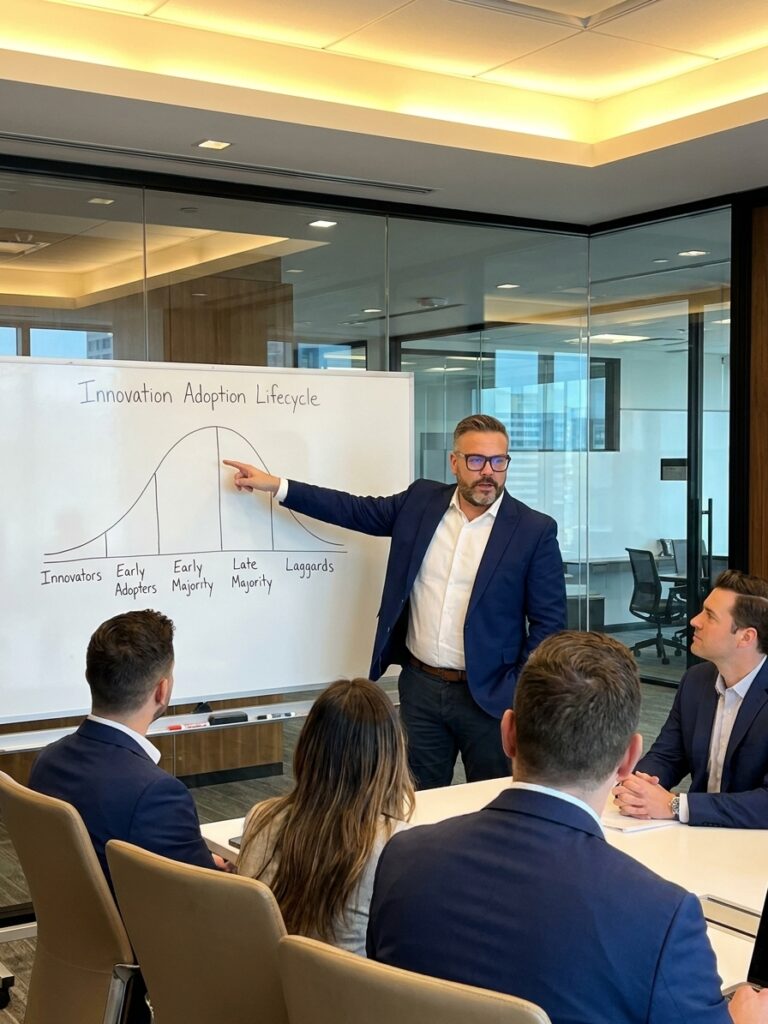
The plant spent eighteen months running inefficient operations, surviving only through 100 percent final inspection and costly rework loops. The quality engineer, production supervisor, and process engineer all knew the specification was unachievable. None of them spoke up during the APQP review because each believed they were alone in their doubt.
The dynamic repeats during corrective action. An 8D team faces a 48-hour deadline to respond to a customer escape. They propose retraining operators and updating work instructions because the primary root cause—worn tooling—requires an $85,000 capital expenditure and a six-week lead time. Nobody wants to deliver that message to the plant manager.
The team collectively agrees to the training solution. The customer accepts the 8D report. Three months later, the identical defect escapes again. The customer issues a formal warning or takes the business elsewhere. Everyone on that 8D team knew retraining would fail, but the illusion of agreement carried the decision.
The Erosion of Quality System Integrity
When a bad decision is made by one person, you can trace the error, correct the mechanism, and move on. The Abilene Paradox is far more destructive because it grants the bad decision full organizational legitimacy. It was approved by consensus, documented in a CAPA file, and supported by meeting minutes.
Reversing these decisions later is enormously difficult. Challenging the status quo means acknowledging that the organization's entire decision-making process failed. It requires leadership to admit the documented consensus was completely false and that their quality system simply generated a documented lie.
Repeated exposure to this cycle erodes trust in the quality management system. When people participate in decisions they privately oppose, and then watch those decisions produce the exact failures they predicted, they lose faith in ISO 9001 or IATF 16949 processes. They conclude the system does not work, but miss that their own silence broke it.
The Consequences of the Abilene Paradox
- Learned HelplessnessQuality engineers and operators stop analyzing or reporting concerns, knowing their input will be swallowed by false consensus.
- Systematic DistrustTeams lose faith in APQP, MSA, and CAPA processes because documented decisions consistently fail to hold up in production.
- Institutionalized FailureThe plant accepts corrective actions and specifications that are unworkable, relying on workarounds to survive.
- Phantom ConsensusIndividuals agree to quality decisions they actually oppose because they misread the group's true position.
Implementing Structured Dissent in Quality Meetings
Never ask a quality team 'Does everyone agree?' during a PFMEA review or 8D closing meeting. That closed question is the primary delivery mechanism for false consensus. Instead, require a formal premortem before finalizing any major manufacturing decision.
Frame the premortem explicitly: 'It is six months from now, and this corrective action has failed completely. What went wrong?' This reframing gives your engineers and supervisors structured permission to voice the doubts they have been suppressing. It shifts the cognitive burden from confrontation to objective prediction.
Real understanding produces disagreement. Instant agreement usually means your team is about to drive to Abilene.
Assign the role of designated dissenter on every cross-functional team. Rotate this responsibility among the engineers and supervisors. Their job is not to be inherently contrarian, but to forcefully argue the opposing position. This breaks the illusion of unanimous support and forces the team to defend their technical logic with actual process data.
Decoupling Opinion Gathering from Group Dynamics
The Abilene Paradox thrives on social pressure and the human desire not to be the lone dissenter. Eliminate this pressure by gathering root cause assessments independently before the group convenes. Use written 8D inputs, anonymous surveys, or one-on-one interviews to collect genuine technical evaluations.
When the team meets, present the collected positions without attribution. State clearly: 'Three team members believe worn tooling is the primary cause. Two believe it is material batch variation. One believes it is inadequate operator training.' The discussion now starts from honest, diverse positions rather than misread social cues.
Change the default interpretation of silence. In most manufacturing meetings, silence is treated as consent. Reverse this rule explicitly in your quality operating procedures. Inform the team that silence means their position is unknown, not affirmative. Decisions require active, verbal agreement from every stakeholder.
Structured Dissent Process for Quality Decisions
- 01Independent InputGather written root cause assessments from team members privately before the meeting.
- 02Blind PresentationPresent the collected positions to the group without linking them to specific individuals.
- 03Premortem AnalysisRequire the team to articulate why the proposed corrective action will fail.
- 04Active EndorsementRequire each stakeholder to verbally state their specific agreement for the record.
Rebuilding a Culture of Active Agreement
Most organizations penalize dissent. The individual who challenges a rushed 8D corrective action or flags an unachievable PPAP specification is seen as an obstacle to production progress. This perception is exactly backwards and guarantees the persistence of phantom agreements.
When an engineer speaks up and halts the trip to Abilene, they have saved the organization from a costly customer escape or a massive scrap event. You must thank them publicly. Make their intervention highly visible to plant leadership. Reward the behavior you want to see repeated.
Genuine consensus in manufacturing quality is rare. Achieving it requires debate, friction, and the systematic dismantling of false agreement. Your quality system's biggest vulnerability is not your Cpk or your measurement system analysis. It is the fact that the people who know what is wrong will not say what is wrong.
The next time your quality team reaches rapid consensus on a complex root cause analysis, do not feel relieved. Recognize the warning signs of the Abilene Paradox. Instant alignment on a major decision usually means nobody has actually evaluated the risk. Real engineering decisions require debate.