Quality
and the Boiling Frog Effect: When Your Organization’s Slow Quality
Decline Goes Unnoticed — and the Gradual Deterioration Nobody Perceived
Becomes the Crisis Nobody Prevented
The water doesn’t boil all at once. It warms one degree at a
time. And the frog never jumps.
The Parable That
Explains Your Quality Crisis
You’ve heard the story. Drop a frog in boiling water and it jumps out
immediately. But place it in cold water and heat it slowly, and the frog
stays put — adjusting, adapting, normalizing — until it’s too late. The
frog doesn’t notice the danger because the change is gradual.
The science of actual frog behavior is more nuanced than the parable
suggests. But as a metaphor for what happens to quality in
organizations, it is devastatingly accurate.
I’ve watched it happen in factories, in pharmaceutical plants, in
aerospace suppliers, in automotive assembly lines. Not the dramatic
quality failure that makes headlines. The slow, quiet,
one-degree-at-a-time deterioration that everyone lives with and nobody
addresses until a customer rejects an entire shipment, or an auditor
writes a major nonconformance, or — worst case — a defect reaches the
field and someone gets hurt.
The boiling frog isn’t a curiosity. It’s a description of how most
quality systems actually fail.
How the Water Starts Warming
Quality decline never announces itself. It doesn’t arrive with alarm
bells or red dashboards. It arrives with small compromises that feel
reasonable in the moment.
The first degree is barely noticeable. A calibration interval gets
extended from six months to nine because the calibration lab is backed
up and the instrument has been “rock solid” for years. One parameter
drifts slightly. Nobody notices.
The second degree is a shortcut. A first-article inspection gets
waived because the part is “the same as last time” and production is
under pressure. The operator doesn’t measure. The part goes into the
assembly. It fits. Problem solved — except the problem wasn’t solved. It
was hidden.
The third degree is rationalization. The scrap rate creeps from 1.2%
to 1.8% over three months. In the monthly review, the quality manager
notes it, attributes it to “material variation,” and moves on. The
target was 2%. We’re still under target. Everything is fine.
The fourth degree is forgetting. The process that used to have three
control points now has two because the third was “redundant” and the
engineer who designed it left the company six months ago. Nobody
remembers why it was there. The FMEA wasn’t updated. The control plan
wasn’t revised. The process runs fine — until it doesn’t.
Each degree is survivable. Each degree is explainable. Each degree
has a justification that sounds perfectly reasonable when you say it out
loud. And each degree makes the next one easier to accept.
Why Smart Organizations Get
Cooked
The uncomfortable truth is that the boiling frog effect doesn’t
happen because people are stupid or negligent. It happens because people
are adaptive.
Human beings are exquisitely tuned to detect sudden changes and
remarkably poor at detecting gradual ones. This isn’t a character flaw.
It’s a feature of our nervous system. Your eyes adjust to a darkening
room. Your ears adjust to rising background noise. And your organization
adjusts to declining quality standards the same way — not through
conscious acceptance, but through the absence of conscious
detection.
I worked with a Tier 1 automotive supplier that had maintained a
customer return rate below 15 PPM for seven consecutive years. When I
arrived, their return rate was 340 PPM. They were in crisis mode —
customer on probation, source inspections required, the whole
catastrophe.
When we reconstructed the timeline, the deterioration hadn’t happened
overnight. It had taken eighteen months. The return rate had gone from
15 to 22 to 35 to 58 to 90 to 150 to 280 to 340. Each increase was
discussed. Each was explained. Each was “being addressed.” But nobody
had drawn a line and said: This is not the same quality system we
had a year ago.
They had adapted to every degree of warming. And by the time they
noticed the water was hot, they were already cooking.
The Four Mechanisms of
Gradual Decline
After twenty-five years of watching this pattern, I’ve identified
four mechanisms that drive the boiling frog effect in quality
systems:
1. Threshold Drift
Every quality system has thresholds — specification limits, control
limits, action limits, alarm thresholds. These are supposed to be fixed.
But in practice, they drift.
A control limit gets recalculated using recent data that already
includes the deterioration, so the new “normal” embeds the decline. A
specification gets relaxed through a concession that becomes permanent.
An action limit gets “adjusted” because it was triggering too many
alerts and the alerts were “mostly false positives.”
The threshold doesn’t move in one dramatic decision. It moves through
dozens of small adjustments, each defensible, each undocumented, each
moving the goalpost a few millimeters closer to the edge of the
cliff.
2. Evidence Erosion
Quality systems depend on evidence — records, data, measurements,
observations. The boiling frog effect erodes evidence gradually.
First, a record gets filed late. Then it gets filed incompletely.
Then it gets filed from memory at the end of the shift instead of in
real-time. Then the “end of shift” becomes “end of the week.”
Eventually, the record exists but the data in it is reconstruction
rather than observation. The quality system still looks like it’s
functioning. The paperwork is there. But the evidence has become
fiction.
This is how organizations pass audits while their quality systems are
already failing. The audit checks for records. The records exist. But
the records no longer reflect reality.
3. Attention Atrophy
Quality requires attention. Not just the attention of the quality
department — the attention of operators, engineers, supervisors,
managers, executives. And attention is finite.
When a process has been running “fine” for a while, attention
naturally migrates to newer, more urgent problems. The operator who used
to check every part starts checking every third part. The supervisor who
used to review SPC charts daily starts reviewing them weekly. The
manager who used to walk the line every morning starts walking it when
there’s a problem.
None of these shifts is a conscious decision to lower standards. It’s
the natural allocation of limited attention away from things that seem
stable. But the process isn’t stable — it’s slowly deteriorating, and
the deterioration is invisible precisely because nobody is looking.
4. Normalization of Deviance
This is the most insidious mechanism, and it deserves special
attention because it creates a feedback loop that accelerates all the
others.
Normalization of deviance — a term coined by sociologist Diane
Vaughan in her analysis of the Challenger disaster — occurs when
deviations from standards become so common that they become the de facto
standard. The first time an operator skips a check, it feels wrong. The
tenth time, it feels routine. The hundredth time, it feels like the
actual standard, and the written standard feels like an unrealistic
ideal.
Each instance of normalization makes the next deviation easier. And
each deviation that goes unremarked redefines what “normal” looks like —
not by changing the written standard, but by changing the lived one.
The
Temperature Gauge: How to Detect What You Can’t Feel
If the fundamental problem is that gradual change is invisible, then
the solution must involve making the invisible visible. You need a
temperature gauge — a mechanism that measures absolute quality
performance over time, independent of how “normal” the current state
feels.
The Longitudinal Baseline
Most quality reporting is cross-sectional. It tells you where you are
right now compared to a target. What it doesn’t tell you is the
trajectory.
A longitudinal baseline tracks the same metrics over extended periods
— not just the last month or quarter, but the last year, the last three
years. It doesn’t compare you to a static target. It compares you to
yourself.
When I implement this for clients, I use a simple tool: a rolling
twelve-month control chart for every critical quality metric, with the
baseline period set to the organization’s historical best performance.
Not the target. Not the industry benchmark. The best you’ve actually
achieved. Any sustained departure from that baseline is a signal,
regardless of whether you’re still “within specification.”
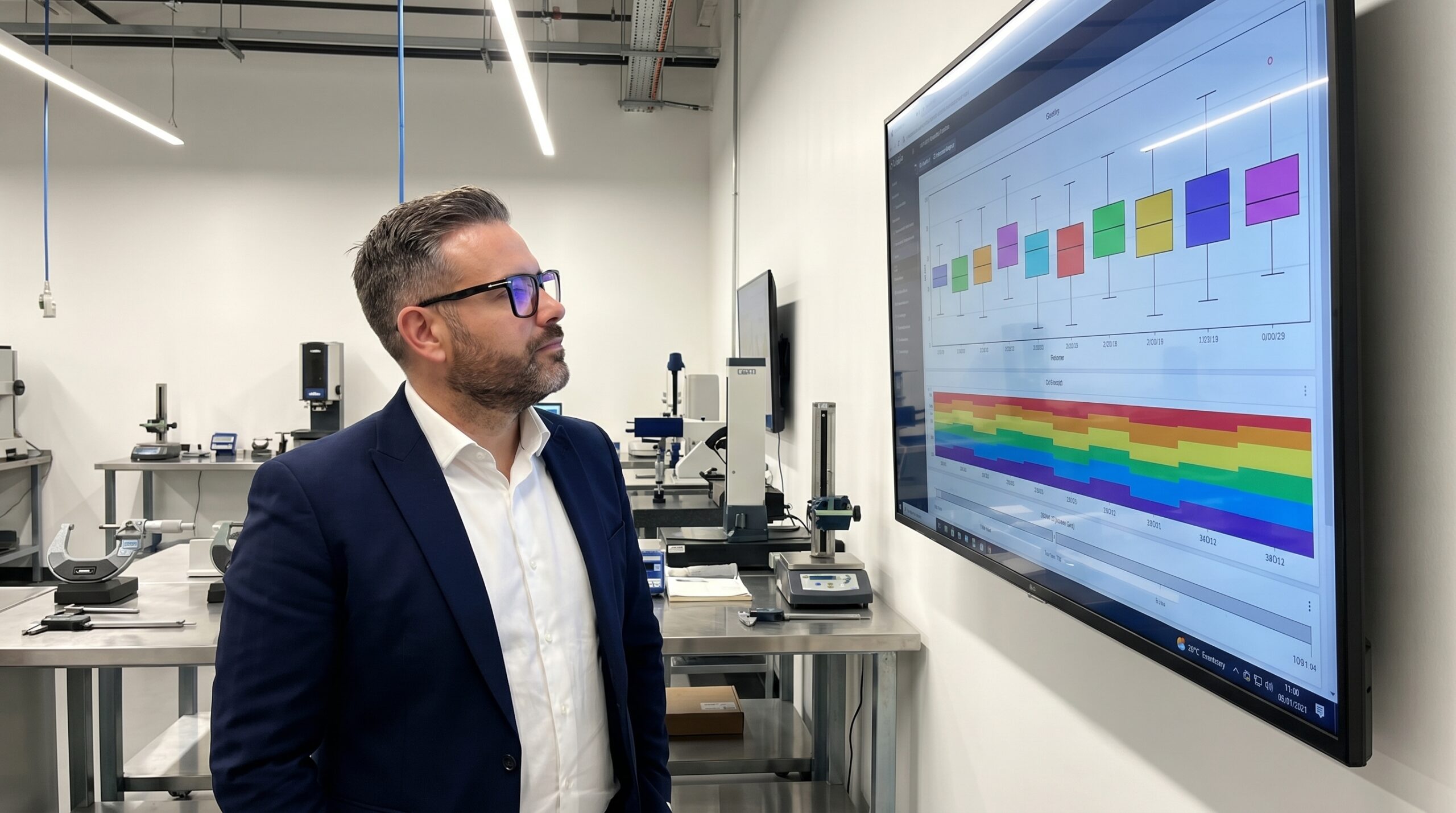
The Process Capability Time
Series
Cp and Cpk are typically calculated as current snapshots. But
tracking process capability over time reveals deterioration that no
single calculation can show.
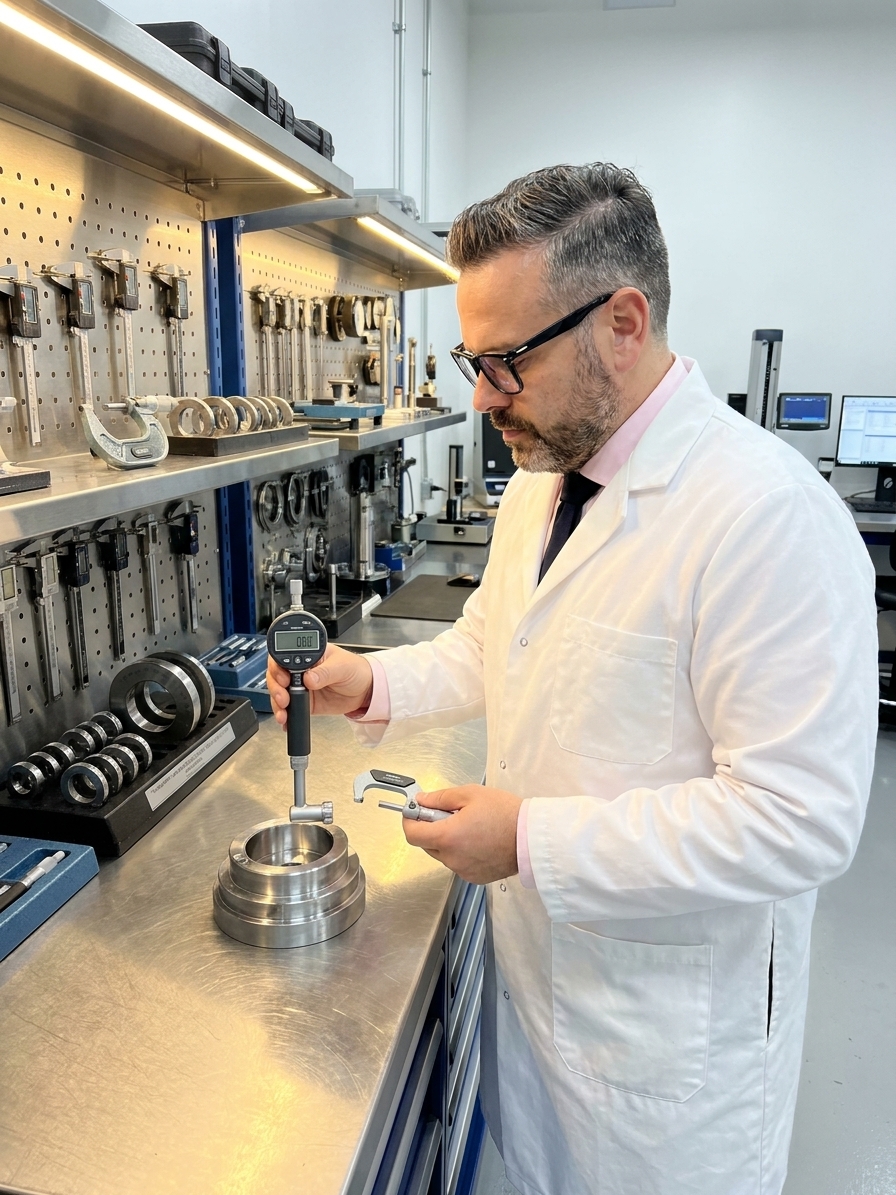
I worked with a machining operation whose Cpk on a critical bore
diameter was 1.45 — perfectly respectable. But when we plotted Cpk
monthly for the previous two years, we found it had declined from 1.72.
The process was still capable, but it was becoming less capable. The
mean was shifting. The variation was increasing. The trajectory was
clear, and the endpoint was predictable: in another eight months, they
would drop below 1.33, and in fourteen months, they would drop below
1.0.
Nobody had noticed because 1.45 is “fine.” But 1.45 after two years
of decline from 1.72 is not fine. It’s a frog in warming water.
The Culture Pulse
Not all quality deterioration shows up in metrics first. Sometimes it
shows up in behavior. Operators stop reporting near-misses. Engineers
stop challenging concessions. Supervisors stop asking questions.
I recommend a quarterly “culture pulse” — five to ten questions asked
anonymously to everyone who touches the quality system. Questions
like:
- “When was the last time you reported a concern?”
- “Do you believe the current quality standards reflect what actually
happens on the floor?” - “Has any process step been informally modified in the last
quarter?” - “Would you feel comfortable raising a quality concern to your
manager right now?”
The answers to these questions detect the boiling frog effect before
it shows up in any metric. If confidence in standards is declining, if
concern-reporting is dropping, if informal modifications are increasing
— the water is warming.
Jumping
Out: What to Do When You Realize the Water Is Hot
If you’re reading this and realizing that your organization might
already be in warm water, here’s what to do:
First: Establish the Real
Baseline
Don’t compare yourself to your targets. Compare yourself to your
historical best. Pull the data from two years ago — from every critical
metric — and lay it next to today’s data. The gap, if there is one, is
the temperature of your water.
Second: Reconstruct the
Trajectory
Don’t just look at the gap. Look at the path. When did the decline
start? Was it gradual or sudden? Was it triggered by a specific event —
a personnel change, a customer pressure, a cost reduction initiative?
Understanding the trajectory tells you whether you’re dealing with the
boiling frog (gradual, multi-causal) or a specific failure that got
papered over.
Third: Audit the
Actual Process, Not the Records
Go to gemba. Watch the process as it actually runs today. Compare
what you see to the control plan, the FMEA, the work instructions. The
gaps between documented and actual practice are your degrees of
warming.
Fourth: Restore the
Original Standards
This is the hard part. You can’t fix the boiling frog by turning the
temperature down one degree. You have to jump back to cold water. That
means restoring the original standards — the original control points,
the original inspection frequencies, the original calibration intervals,
the original documentation requirements.
This will feel like overreaction. It will feel like unnecessary cost.
It will feel like going backwards. That feeling is the normalization of
deviance fighting back. Ignore it.
Fifth: Install
the Temperature Gauge Permanently
Once you’ve restored the baseline, install the monitoring systems
that will prevent the frog from sitting in warming water again.
Longitudinal tracking. Process capability time series. Culture pulse
surveys. Regular gemba walks by people with the authority to stop the
line.
The Leader’s Role
The boiling frog effect is fundamentally a leadership failure. Not
because leaders are negligent, but because leaders are human. They adapt
to gradual change the same way everyone else does.
The leader’s job in preventing the boiling frog effect is to be the
person who notices the temperature — even when everyone else has
adapted. This requires:
Discipline to look at long-term data when short-term
data looks fine. Every month, review your critical metrics on a rolling
twelve-month chart. Every quarter, compare current performance to
historical best. Every year, reassess whether your standards have
drifted.
Courage to call out deterioration when the
organization is comfortable. If the scrap rate has doubled but is still
under target, say something. If the Cpk has dropped from 1.8 to 1.5, say
something. If operators have informally modified a process step, say
something. The water is warming, and saying “it’s still within spec” is
not a response.
Commitment to the original standard when compromise
is easier. Every concession, every waiver, every “temporary” exception
is a degree of warming. Some are necessary. Most become permanent. Treat
every exception as what it is: a risk that must be actively managed, not
a problem that has been solved.
The Uncomfortable Question
Here is the question every quality leader should ask themselves
today:
If I could transport my organization back two years and place it
next to my current organization, would the current organization be
acceptable?
Not “is it within specification.” Not “are we passing audits.” Not
“are customers complaining.” But: is this the same quality system we
built? Are we running the same process? Are we holding the same
standards? Are we generating the same evidence?
If the honest answer is no — or if you don’t know — the water is
already warm. And the question isn’t whether to jump. The question is
how much time you have left.
The frog doesn’t jump because each degree of warming feels like
adaptation. Your quality system doesn’t fail because of one dramatic
event. It fails because a hundred small compromises, each reasonable in
isolation, accumulated into a catastrophe that everyone saw coming and
nobody acted on.
Don’t wait until the water boils. Install the gauge. Watch the trend.
And when you see the temperature rising — even if it’s just one degree —
say something. Do something. Jump.
That’s not overreaction. That’s quality leadership.
Peter Stasko is a Quality Architect with 25+ years
of experience transforming organizations across automotive, aerospace,
and pharmaceutical industries.