Quality
and the Illusion of Control: When Your Organization Believes It Has
Mastered the Process That Has Never Actually Been Under Control — and
the Confidence Nobody Questioned Became the Defect Nobody Predicted
The Dashboard That Lied
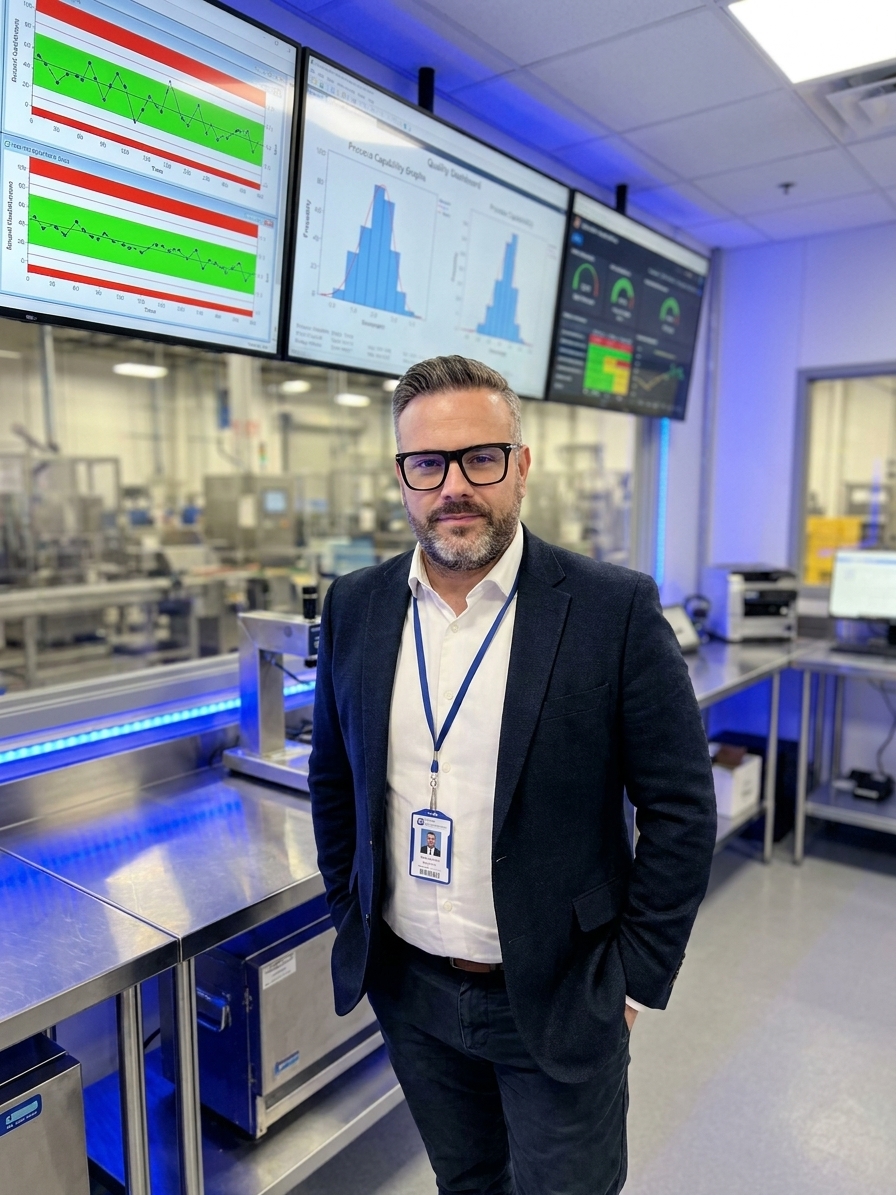
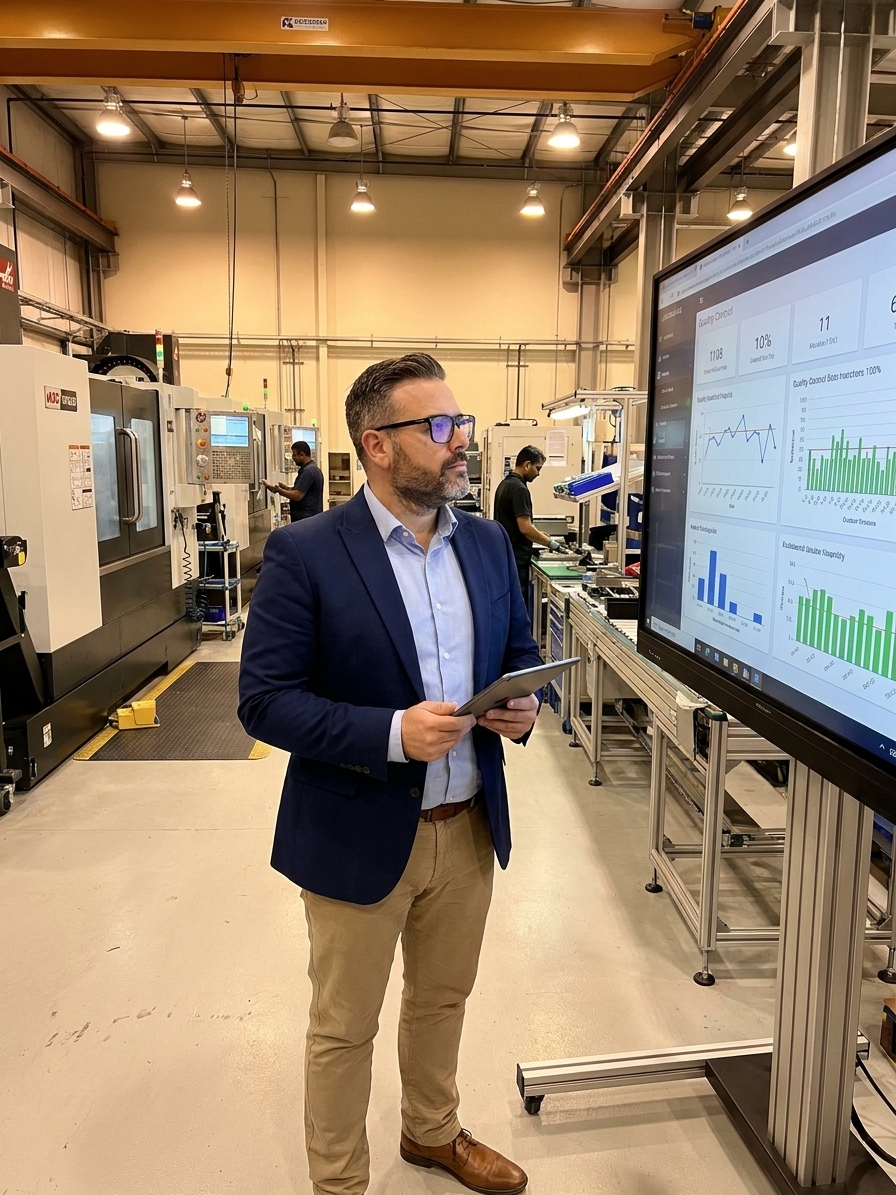
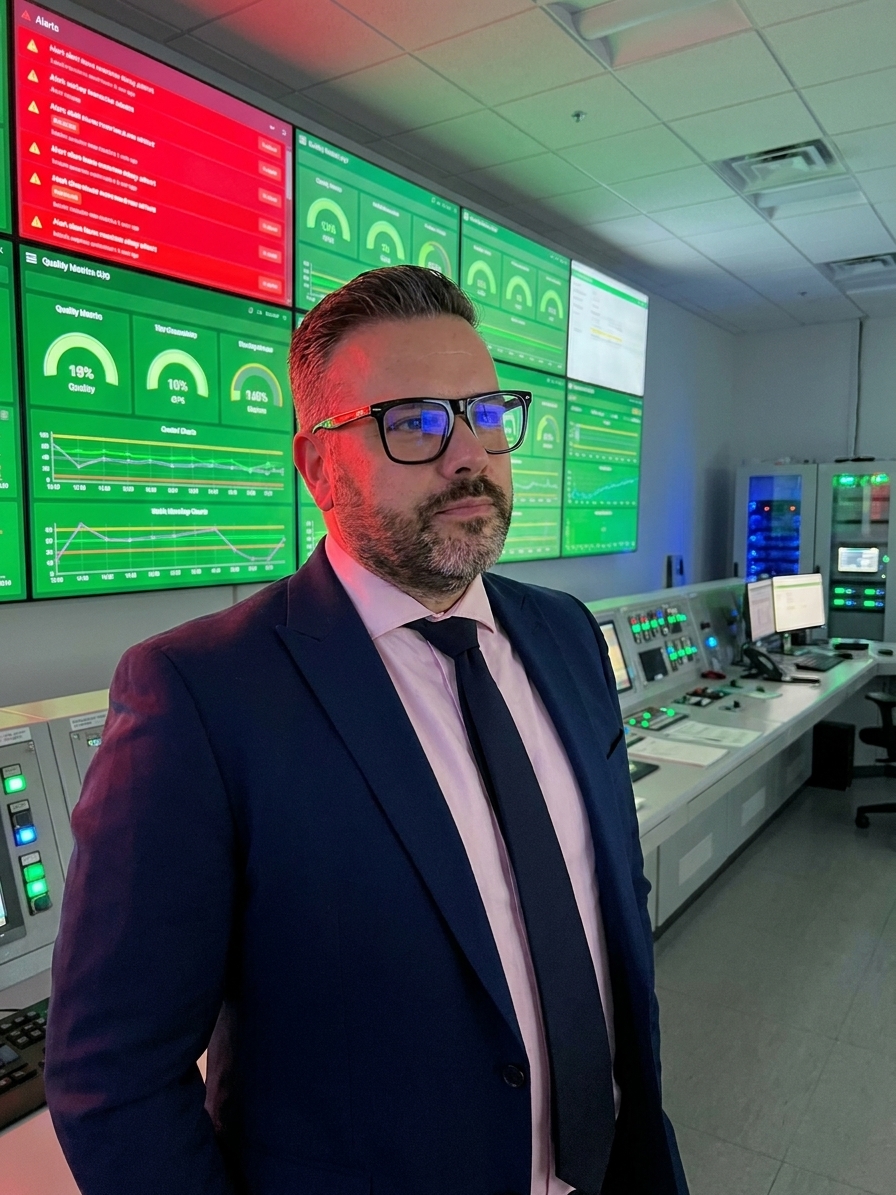
The plant manager stared at the real-time quality dashboard with
quiet satisfaction. Every widget was green. Every KPI was trending
upward. The scrap rate had dropped below 0.3% for the sixth consecutive
month. Customer complaints were at an all-time low. He had personally
overseen the implementation of the statistical process control system
two years ago, and the numbers were finally telling the story he always
knew they would tell: this plant was under control.
Two weeks later, a customer sent back an entire shipment. Not because
of a tolerance violation — every dimension had been within
specification. But a surface treatment had been applied inconsistently,
creating a corrosion vulnerability that wouldn’t appear for months in
the field. The defect had been invisible to every inspection point. It
had been invisible to every control chart. It had been invisible to the
dashboard that the plant manager trusted with the confidence of a man
who had already decided that control had been achieved.
The investigation that followed revealed something uncomfortable: the
surface treatment process had been drifting for over a year. But because
the final dimensional inspection — the only measurement anyone tracked —
still passed, the drift went unnoticed. The organization didn’t have a
quality problem. It had an illusion of control problem.
What Is the Illusion of
Control?
The illusion of control is a cognitive bias first identified by
psychologist Ellen Langer in 1975. It describes the tendency for people
to overestimate their ability to control events — to believe that their
actions, skills, or decisions are producing outcomes that are actually
determined by factors outside their influence, or simply by chance.
In a classic experiment, Langer found that people behaved as if they
could influence the outcome of a purely random coin toss if they were
allowed to flip the coin themselves. They weren’t just hopeful — they
genuinely believed their action made a difference. The sense of personal
involvement, combined with a superficial resemblance to situations where
skill does matter, was enough to create a powerful false belief.
This bias doesn’t disappear when people enter a factory, a
laboratory, or a boardroom. If anything, it intensifies. Quality systems
are built around the premise that processes can be controlled, that
variation can be reduced, and that defects can be prevented. These
premises are often true — but they are not always true to the degree
that organizations believe. The gap between actual control and perceived
control is where the most dangerous quality failures live.
Why Manufacturing Is
Especially Vulnerable
Manufacturing environments are fertile ground for the illusion of
control for several specific reasons.
The Complexity Trap
Modern manufacturing processes are extraordinarily complex. A single
production line might involve hundreds of variables — material
properties, machine settings, environmental conditions, operator
techniques, tool wear, chemical interactions, and dozens more. The
illusion of control flourishes when people believe they understand all
of these variables and their interactions. But the reality is that most
organizations understand only a subset of the variables that affect
their outcomes, and they understand even fewer of the interactions
between them.
You can have perfect control over twenty variables and still produce
defective parts because of a twenty-first variable you never measured.
The dashboard shows green on all twenty indicators, and the confidence
builds. But the confidence is built on incomplete information.
The Automation Trap
Automation compounds the illusion. When a machine performs a process
with precision and repeatability, people tend to assume that the process
is under control. But automation controls what it is programmed to
control. It does not control what it is not programmed to monitor, what
it was never designed to detect, or what emerges from the interaction of
multiple automated systems that were designed in isolation.
An automated inspection system that checks dimensional compliance
with laser accuracy is an extraordinary tool. But if the defect is
metallurgical, chemical, or functional rather than dimensional, the
automation provides a precise measurement of something irrelevant while
the actual problem passes through undetected. The precision of the
measurement creates an illusion of comprehensive control.
The Metrics Trap
Perhaps the most insidious driver of the illusion of control is the
metrics system itself. Organizations measure what they can measure, and
then they gradually come to believe that what they measure is what
matters. This creates a dangerous circularity: the dashboard shows that
everything is under control because the dashboard only shows the things
that were already under control. The unmeasured, unmonitored, and
unknown variables — the ones most likely to produce surprise failures —
are invisible by design.
The result is an organization that feels confidently in command of a
process it only partially understands, monitored by a system that only
partially observes, producing data that only partially describes
reality. And yet the confidence is absolute.
The Anatomy of an Illusion
The illusion of control in quality management typically follows a
recognizable pattern.
Phase 1: Initial Success. A quality system is
implemented, and real improvements follow. Defect rates drop. Customer
satisfaction rises. The improvement is genuine, and it reinforces the
belief that the system is working.
Phase 2: Dashboard Dependence. The organization
builds increasingly sophisticated monitoring systems. More metrics are
added. More dashboards are deployed. More real-time alerts are
configured. The volume of data creates a sense of comprehensive
visibility.
Phase 3: Confidence Crystallization. Over time, the
organization’s confidence in its control hardens into an assumption. “We
have this under control” shifts from a cautious assessment to an
unexamined belief. Questions about what might be missing become less
frequent. After all, if something were wrong, the dashboard would show
it.
Phase 4: The Blind Spot. A failure occurs in a
dimension that was never measured, never monitored, or never imagined.
The organization is blindsided — not because the failure was
unpredictable, but because the confidence in existing controls had
eliminated the curiosity that might have anticipated it.
Phase 5: The Expansion. After the failure, the
organization adds new metrics, new inspections, and new controls. The
dashboard grows. Confidence gradually returns. And the cycle begins
again, with a slightly larger set of known variables but the same
fundamental assumption that everything important is now being
measured.
Where the Illusion Hides
The illusion of control manifests in specific, recognizable patterns
across manufacturing organizations.
Supplier Quality Assumptions
Organizations often assume that certified suppliers with audited
quality systems are under control. The certification creates confidence.
But supplier quality is a dynamic system — personnel change, equipment
ages, materials shift, and economic pressures create incentives to cut
corners. The certification was a snapshot, not a live feed. The illusion
is believing that yesterday’s certification guarantees today’s
quality.
Process Validation
Overconfidence
A validated process is not a permanently controlled process.
Validation demonstrates that a process can produce conforming output
under defined conditions. But conditions change. Raw material batches
vary. Environmental conditions fluctuate. Equipment degrades. The
validation proved capability at a point in time; the illusion is
treating it as proof of perpetual control.
Statistical Process Control
Hubris
SPC is one of the most powerful quality tools ever developed. But it
has limits. Control charts monitor specific characteristics. They do not
monitor the process as a whole. They do not detect drift in unmeasured
characteristics. They do not anticipate novel failure modes. The
illusion is believing that because the charts are in control, the
process is in control — when in reality, only the measured dimensions
are in control.
The Expertise Illusion
Experienced engineers and operators develop deep expertise over
years. This expertise is invaluable — but it can also create an illusion
of control. When someone has seen a process perform well for years, they
begin to believe they understand it completely. But long experience with
a stable process teaches you about stability, not about the failure
modes that emerge when stability breaks. The expert’s confidence can
become the organization’s blind spot.
Breaking the Illusion
Overcoming the illusion of control requires deliberate, sometimes
uncomfortable practices.
Ask What You Are Not
Measuring
The most powerful question in quality management is not “What does
the data show?” It is “What are we not measuring?” This question forces
the organization to look beyond its dashboards and acknowledge the
boundaries of its visibility. Regular reviews should include time
dedicated to identifying unmonitored variables, uninspected
characteristics, and unexplored interactions.
Distinguish Between
Control and Confidence
Control is a state of a process. Confidence is a state of mind. They
are not the same thing. Organizations should explicitly separate their
assessment of process control from their emotional confidence in that
assessment. A process that has been stable for two years might genuinely
be under control — or it might be stable because a critical variable has
not yet drifted into the failure zone. The discipline is in maintaining
the distinction.
Seek Disconfirming Evidence
The illusion of control is reinforced by confirmatory thinking —
looking for evidence that supports the belief that everything is fine.
The antidote is to actively seek evidence that it is not. This means
conducting destructive testing on products that passed inspection. It
means auditing suppliers you trust. It means challenging processes that
have never failed, specifically because they have never failed. The
absence of failure is not evidence of control; it may simply be evidence
that the triggering conditions have not yet occurred.
Talk to the People
Closest to the Process
Operators, technicians, and line workers often sense problems before
they appear in the data. They hear the subtle change in a machine’s
sound. They notice the slight variation in a material’s feel. They see
the tiny inconsistencies that no sensor captures. But in organizations
where the illusion of control is strong, these observations are
dismissed because they are not reflected in the dashboard. The dashboard
has become more authoritative than the human beings who operate the
process every day. This is a mistake.
Stress-Test Your Systems
Military organizations regularly conduct red team exercises —
simulated attacks designed to expose vulnerabilities that normal
operations would never reveal. Quality systems benefit from the same
approach. Intentionally introduce controlled variations. Simulate
failure conditions. Test the boundaries of your monitoring systems. Find
out what your dashboards miss before your customers do.
The Humility of Real Control
There is a profound irony at the heart of the illusion of control:
the organizations that are genuinely most in control are the ones that
are most honest about the limits of their control. They do not confuse
confidence with certainty. They do not mistake measurement for
understanding. They do not allow green dashboards to substitute for
critical thinking.
Real control in quality management is not the absence of uncertainty.
It is the continuous, disciplined management of uncertainty. It is the
willingness to acknowledge that no system of measurement is complete, no
process of validation is permanent, and no amount of historical success
guarantees future performance.
The plant manager from our opening example did something unusual
after the investigation. He didn’t just add the surface treatment to the
dashboard. He created a standing agenda item for the weekly quality
review called “What Are We Missing?” — a structured, documented
conversation about the variables, interactions, and failure modes that
the current system was not designed to detect.
It was an uncomfortable conversation. It regularly produced more
questions than answers. But it was the single most effective quality
improvement initiative the plant ever implemented — because it attacked
not the defects in the process, but the defects in the organization’s
thinking about the process.
The Lesson
The illusion of control is not a failure of intelligence or effort.
It is a fundamental feature of how human beings make sense of complex
systems. We see patterns. We build mental models. We develop confidence.
And then we stop looking — not because we are lazy or negligent, but
because the confidence itself suppresses the curiosity that would
protect us.
In quality management, the most dangerous words are not “We have a
problem.” The most dangerous words are “We have it under control.” Not
because control is impossible, but because the belief that control has
been achieved is the moment when control begins to slip.
The organizations that build the most resilient quality systems are
the ones that treat control not as a destination but as a discipline —
something that must be continuously earned, continuously questioned, and
continuously renewed. They understand that the dashboard is a tool, not
a verdict. That the metric is a proxy, not the reality. That confidence
is a starting point for investigation, not a conclusion.
Quality is not what you measure. Quality is what your customer
experiences. And the gap between those two things is exactly as wide as
the illusion you are willing to challenge.
Peter Stasko is a Quality Architect with over 25 years of
experience in manufacturing excellence, process optimization, and
quality system design. He has helped organizations across automotive,
aerospace, electronics, and medical device industries move beyond
surface-level compliance toward deeply embedded quality cultures that
deliver measurable, lasting results.