Quality
and the Streetlight Effect: When Your Organization Looks for Defects
Only Where the Light Is Good — and the Problems That Matter Most Stay
Hidden in the Dark
A police officer finds a man crawling on his hands and knees under a
streetlight at midnight. “What are you doing?” the officer asks.
“Looking for my keys,” the man replies. “Where did you drop them?” “Over
there,” the man says, pointing to a dark alley fifty meters away. “Then
why are you looking here?” “Because the light is better.”
It’s an old joke. It’s also the most accurate description of how most
organizations investigate quality problems.
The Parable
That Describes Your Quality Department
You know the pattern. A defect escapes to the customer. The quality
team mobilizes. They pull up the data they have — the SPC charts, the
inspection records, the final test results. They analyze what’s
available, what’s measurable, what’s already being tracked. They run the
numbers, build the Pareto, identify the “top contributor,” and close the
corrective action.
Three months later, the same defect comes back. Different batch,
different shift, same root cause — because the real root cause was never
in the data they were searching. It was in the process parameter nobody
was logging, in the supplier change nobody documented, in the ambient
condition nobody thought to measure. It was in the dark alley. But the
team kept looking under the streetlight because the light was
better.
The Streetlight Effect — also known as the drunkard’s search
principle — is one of the most insidious cognitive biases in quality
management because it doesn’t feel like a bias at all. It feels like
diligence. You’re using data. You’re being analytical. You’re following
the methodology. And you’re systematically avoiding the very information
that would solve your problem.
Why
the Streetlight Effect Thrives in Quality Organizations
The Streetlight Effect doesn’t survive because people are lazy. It
survives because organizations build systems that make it the path of
least resistance.
Consider your typical corrective action process. When a
nonconformance is reported, what happens? Someone opens the 8D form or
the CAPA template. They fill in the known quantities: part number,
defect description, quantity affected, date, shift, operator. They pull
the process data from the usual sources: control charts, inspection
results, machine logs. They interview the people who are available. They
document what they find.
Every step is rational. Every step is defensible. And every step
unconsciously limits the search to what’s already visible — what the
organization has already decided to measure, track, and record. You’re
not searching for the root cause. You’re searching for the root cause
within the data you already have. And those are not the same
thing.
The Streetlight Effect is reinforced by three organizational
dynamics:
Measurement inertia. Organizations measure what
they’ve always measured. The gauges, sensors, and inspections that were
set up years ago define what’s “visible” today. If a critical variable
was never instrumented, it doesn’t exist in your data — and therefore it
doesn’t exist in your investigation. You can’t find what you can’t see,
and you can’t see what you never decided to look at.
Analysis comfort zones. Quality professionals, like
all professionals, gravitate toward methods they’re skilled at. If your
team is strong in statistical process control, they’ll analyze control
charts. If they’re experienced in FMEA, they’ll update the FMEA. If they
know DOE, they’ll design an experiment. The tool becomes the
searchlight, and the searchlight defines where you look. Every method
has a blind spot, and the blind spot is always exactly where the method
isn’t looking.
Time and resource pressure. Real investigations —
the kind that venture into uncharted territory, that require new
measurements, that challenge assumptions about what matters — take time.
They take equipment. They take cross-functional collaboration with
people who don’t normally talk to each other. Under deadline pressure,
the team naturally gravitates toward what’s fast, available, and
familiar. The streetlight doesn’t just provide illumination — it
provides efficiency. And efficiency in the wrong direction is the most
expensive kind.
The Hidden
Cost: Recurring Problems That Never Die
The most damaging consequence of the Streetlight Effect isn’t a
single unsolved problem. It’s the chronic recurrence of problems that
were “solved” based on incomplete evidence.
You’ve seen this pattern. A defect is investigated. A root cause is
identified. A corrective action is implemented. The defect rate drops.
Everyone celebrates. And then, weeks or months later, the defect returns
— slightly different manifestation, same underlying mechanism. The
second investigation discovers a “new” root cause. Another corrective
action. Another celebration. Another recurrence.
What’s happening is not a series of separate problems. It’s the same
problem, being partially addressed each time because the investigation
keeps looking in the same well-lit places and keeps missing the same
dark corners. Each “fix” addresses a symptom or a contributing factor
but never the true driver — because the true driver lives in the data
you’re not collecting, in the process step you’re not monitoring, in the
supplier interaction you’re not auditing.
The cost compounds. Each investigation consumes resources. Each
corrective action adds process complexity. Each recurrence erodes
credibility — with customers, with management, with the operators who
watched the problem come back and quietly concluded that the quality
team doesn’t know what it’s doing. The Streetlight Effect doesn’t just
prevent you from solving problems. It prevents you from building the
trust you need to solve them.
Where the Dark Alleys Hide
Understanding the Streetlight Effect requires understanding where
your organization’s dark alleys are — the areas where critical
information exists but isn’t being captured. Here are the most common
ones:
Supplier blind spots. You audit your suppliers
periodically. You review their certificates. You check incoming
material. But what about the changes they make between audits? The raw
material substitution they didn’t report. The process adjustment they
made to meet your delivery deadline. The sub-tier supplier they quietly
switched to. Your supplier quality data is only as good as what your
suppliers choose to share — and what they choose to share is usually
what makes them look good.
Environmental variables. Temperature, humidity,
vibration, ambient air quality, electrical supply stability. Most
process control systems track the primary process parameters —
pressures, speeds, temperatures at the point of processing. But what
about the environment around the process? The seasonal humidity swing
that affects material properties. The vibration from the adjacent press
that subtly shifts alignment. The voltage fluctuation that no one
noticed because the machine didn’t alarm. These variables are rarely
tracked, rarely investigated, and frequently implicated in problems that
“shouldn’t have happened.”
Human factor gaps. Your inspection records tell you
what the inspector found. They don’t tell you what the inspector missed,
or why. Fatigue, distraction, inadequate training, ambiguous standards,
production pressure to “not find problems” — these are all human factors
that affect quality outcomes but are almost never captured in the data
stream. When you investigate a defect that passed through inspection,
you analyze the inspection records. But the inspection records don’t
contain the reason the inspector missed it. That information is in the
dark.
Interface and handoff zones. Between process steps,
between departments, between shifts, between organizations. The
transitions. The moments where responsibility transfers and information
is lost. Your process maps show the steps. Your control plans monitor
the steps. But the spaces between the steps — the handoffs, the
transitions, the “it should be fine” assumptions — are where some of the
most significant quality failures originate. And they’re almost never
instrumented or monitored because they don’t belong to any single
process step.
Time-dependent effects. Most quality data is
cross-sectional — a snapshot of the process at a moment in time. But
many quality problems are longitudinal. They develop over hours, shifts,
or days. Tool wear that accumulates slowly. Chemical solutions that
degrade gradually. Calibration drift that compounds over time. These
time-dependent effects are invisible in point-in-time measurements. You
need trend data to see them, and trend data requires tracking variables
over time that most organizations don’t track at all.
Breaking Out of the
Streetlight
Recognizing the Streetlight Effect is necessary but not sufficient.
You need deliberate strategies to push your investigations into the
dark.
Start every investigation with “What aren’t we
measuring?” Before you analyze the data you have, catalog the
data you don’t have. What process variables aren’t being tracked? What
environmental conditions aren’t being recorded? What supplier
information aren’t you receiving? What human factors aren’t being
assessed? Make this catalog a standard part of your problem-solving
methodology — not an afterthought, but the first step.
This is uncomfortable. It means admitting that your measurement
system has gaps. It means acknowledging that your carefully designed
control plan doesn’t cover everything. But the alternative is worse:
building corrective actions on incomplete foundations and watching
problems recur with depressing regularity.
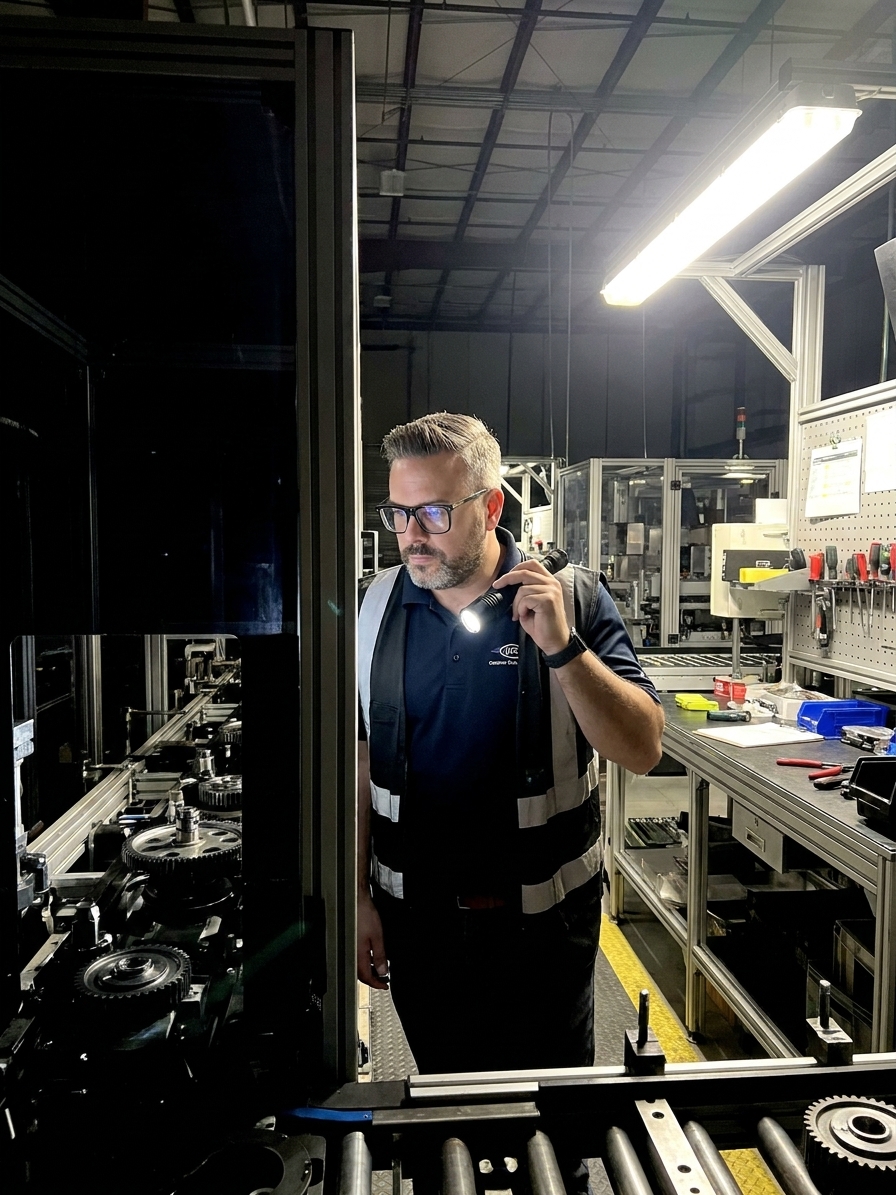
Create “dark alley” audits. Periodically — not for
every problem, but for significant or recurring ones — conduct an
investigation that deliberately ignores the standard data sources. Send
investigators to the Gemba with no preconceptions and no data packages.
Have them observe the process from start to finish, paying special
attention to the transitions, the environmental conditions, and the
human behaviors that don’t show up in any log file. The goal is not to
replace data-driven analysis. It’s to supplement it with reality-driven
observation.
Invest in measurement expansion. The Streetlight
Effect persists because measuring new things is expensive and difficult.
But the cost of not measuring them is higher. For every critical
process, ask: “What variables could affect quality that we’re not
currently tracking?” Prioritize based on risk. Invest in the sensors,
the data collection, the training needed to bring new variables into the
light. This is a capital investment that pays for itself in problems
prevented and investigations accelerated.
Cross-pollinate investigations. The people closest
to the data are usually the last to see its limitations. Bring in
outsiders — not consultants, but colleagues from different departments,
different processes, different facilities. They’ll ask the “stupid
questions” that expose hidden assumptions. They’ll point to variables
that your team takes for granted. They’ll notice the dark alleys that
are invisible to people who walk the same route every day.
Challenge your root causes. Every root cause should
pass the “dark alley test”: Is this root cause based on evidence we
found, or evidence we already had? If your root cause comes from data
you were already tracking, it’s suspect. Not wrong — but suspect. It
might be the real answer. It might also be the answer that was easiest
to find. The difference matters enormously.
The Streetlight and Your
FMEA
One of the most practical applications of Streetlight awareness is in
your Failure Mode and Effects Analysis. When your FMEA team is
brainstorming potential failure modes, they naturally gravitate toward
failure modes they can imagine and quantify. They think about what’s
gone wrong before, what the data shows, what the standards require. But
the most dangerous failure modes are often the ones nobody imagined —
the ones outside the collective experience of the FMEA team.
A Streetlight-aware FMEA process includes a deliberate step where the
team asks: “What failure modes exist that we can’t detect with our
current measurement system? What could go wrong that our current
controls would miss?” This single question — uncomfortable, difficult to
answer, impossible to fully resolve — pushes the analysis beyond the
visible and into the territory where the most consequential failures
often hide.
The Leadership Role
The Streetlight Effect is ultimately a leadership problem. Leaders
set the expectations for how investigations are conducted. Leaders
define what “thorough” looks like. Leaders decide whether “we analyzed
all available data” is an acceptable conclusion, or whether it triggers
the follow-up question: “What data isn’t available, and why?”
If your leadership team celebrates fast root cause identification and
quick corrective action closure, you’re reinforcing the Streetlight
Effect. You’re rewarding the team for finding answers under the light,
not for venturing into the dark. The metric you’re optimizing is speed
of closure, not depth of understanding.
If, instead, your leadership team asks “What didn’t you look at?” as
a standard review question, you begin to shift the culture. You signal
that incomplete investigations are not acceptable, even if they’re fast.
You create permission for quality professionals to say “We don’t have
enough data to answer this question yet” — and you give them the
resources to go get it.
This is hard. It means longer investigations. It means spending money
on measurements that might not yield answers. It means accepting
uncertainty in the short term to build capability in the long term. But
the alternative — the perpetual cycle of solving the same problem under
the same streetlight — is harder still.
The Paradox of Data
Here is the deepest irony of the Streetlight Effect in quality: the
more data your organization collects, the stronger the bias can become.
Not because more data is bad, but because more data creates a stronger
illusion of completeness. When you have dashboards full of metrics,
control charts for every parameter, and inspection records going back
years, it feels like you can see everything. The streetlight is so
bright, so comprehensive, that it’s hard to imagine anything hiding in
the dark.
But no measurement system covers everything. No dashboard captures
every relevant variable. No inspection regime sees every defect. And the
gap between what you measure and what matters is where your most serious
quality problems live.
The organizations that master quality aren’t the ones with the most
data. They’re the ones with the clearest understanding of what their
data doesn’t show. They know where their streetlights are, and
they know where the dark alleys are. They don’t pretend to see
everything. They admit what they can’t see, and they build systems —
observation, measurement, cross-functional investigation — to illuminate
the gaps.
From Streetlight to
Searchlight
The goal is not to eliminate the Streetlight Effect. That’s
impossible. You will always have measurement gaps. You will always have
blind spots. You will always, in some way, be searching where the light
is good.
The goal is to be aware of it. To build systems that compensate for
it. To create habits — investigation habits, measurement habits,
leadership habits — that regularly venture into the dark. To treat “we
found the root cause in the data we already had” not as a conclusion,
but as a starting point for a deeper question.
The man in the joke was looking for his keys under the streetlight
because the light was better. Your quality team is looking for root
causes in the data they have because the data is available. Both are
understandable. Both are insufficient.
The keys are in the dark alley. The root cause is in the data you’re
not collecting. And the quality problems that keep coming back are
coming back because you keep solving them with the same incomplete
picture.
Next time a defect escapes, before you open your data system and
start analyzing what you have, stop. Ask a different question first:
What aren’t we measuring that could explain this? Then go find
a flashlight.
Peter Stasko is a Quality Architect with 25+ years
of experience transforming organizations across automotive, aerospace,
and pharmaceutical industries. He specializes in helping companies see
what their quality systems are missing — not just what they’re measuring
wrong, but what they’re not measuring at all.