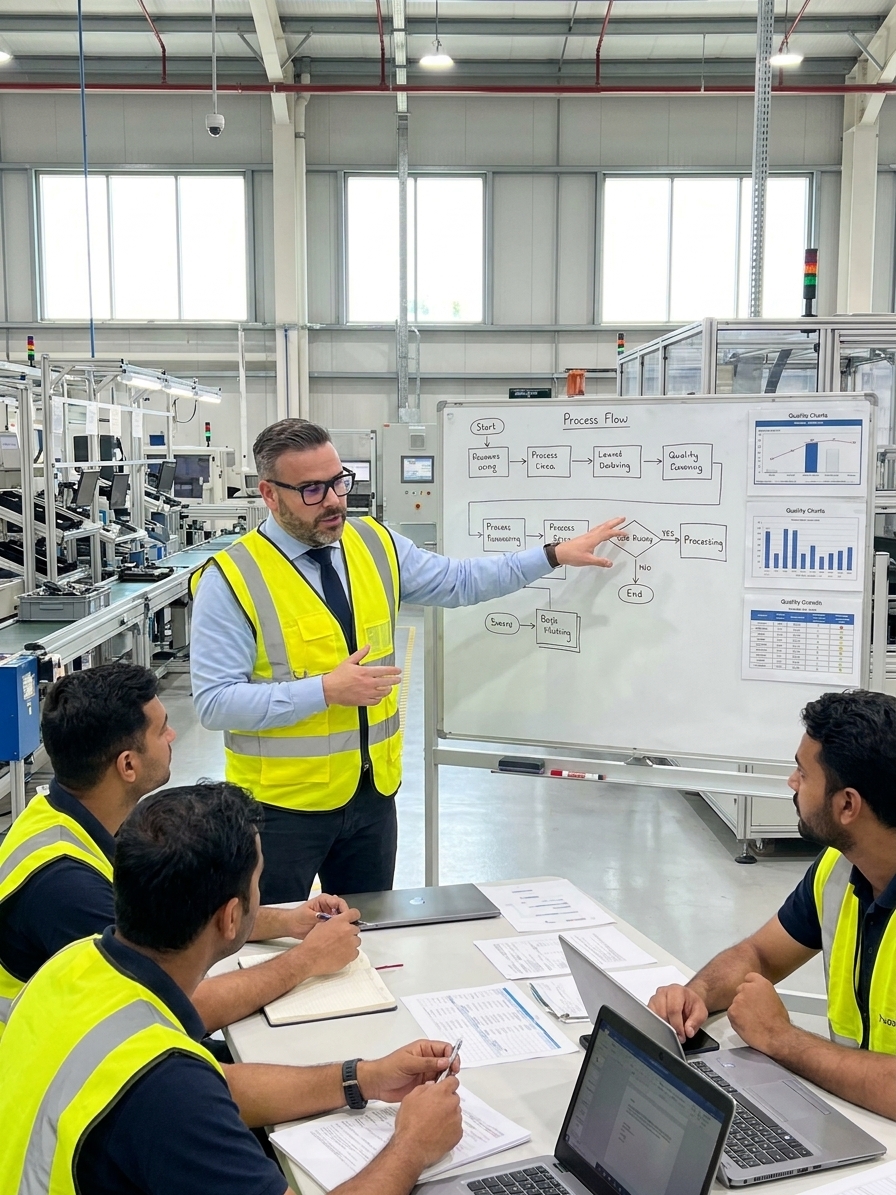
Quality Circles were designed to be the most democratic concept in manufacturing. You give the operators, technicians, and inspectors who are closest to the work a structured forum to identify problems, analyse data, and implement solutions. The concept that rebuilt Japanese industry has, in most Western implementations, devolved into a mandatory monthly meeting where employees sit in silence while a supervisor reads from a spreadsheet.
The failure of these programs teaches organisations the wrong lesson. Management concludes that the workforce is not ready for empowerment or that the culture is unsuited to participation. They refuse to conclude that they themselves killed the initiative. They took a living practice, converted it into a dead ritual, and then blamed the practice for dying.
The original concept, developed by Kaoru Ishikawa in the early 1960s and proliferated through the Union of Japanese Scientists and Engineers, was structurally radical. A Quality Circle is a small group—typically four to eight people—who perform similar work and meet regularly to solve quality problems in their own area. The group selects the problem, analyses the data, proposes the solution, and presents it to management for support.
The Design Principle: Frontline Authority
The critical design principle is that the circle owns the problem. Not the quality department, not the engineering team, and not a cross-functional task force. The people who execute the process daily decide what needs fixing and how to fix it. This is not a suggestion-box system where workers drop an idea into a slot and hope an engineer reads it.
It is structured, data-driven, facilitated problem-solving where the frontline is the primary actor. Ishikawa understood that the person who runs a forming press eight hours a day knows more about that machine's behaviour than the engineer who visits the floor for thirty minutes with a clipboard. That operational knowledge is locked inside the operator's head. The Quality Circle is the mechanism designed to unlock it.
I have audited plants where the gap between the engineers' PFMEA and the operators' actual daily work was staggering. The key only works if the lock is genuine. The circle must have real authority to identify real problems and pursue real solutions without fear of being overruled, dismissed, or punished for surfacing something that makes a supervisor uncomfortable.
Diagnosing the Failure Mode
If you want to know whether your Quality Circles are alive or dead, look for specific operational symptoms. The most obvious is compulsory attendance. Quality Circles are built on voluntary engagement. The moment participation becomes mandatory, you replace intrinsic motivation with extrinsic compliance. People contribute the minimum necessary to demonstrate participation.
Employees do not bring up real problems in a mandatory forum because raising real issues carries political risk. No one takes political risk for a meeting they were forced to attend. The meeting becomes a transactional exercise where employees sit through it to avoid a note in their file, and the circle fills chairs instead of solving problems.
The Mutation into Delegated Labour
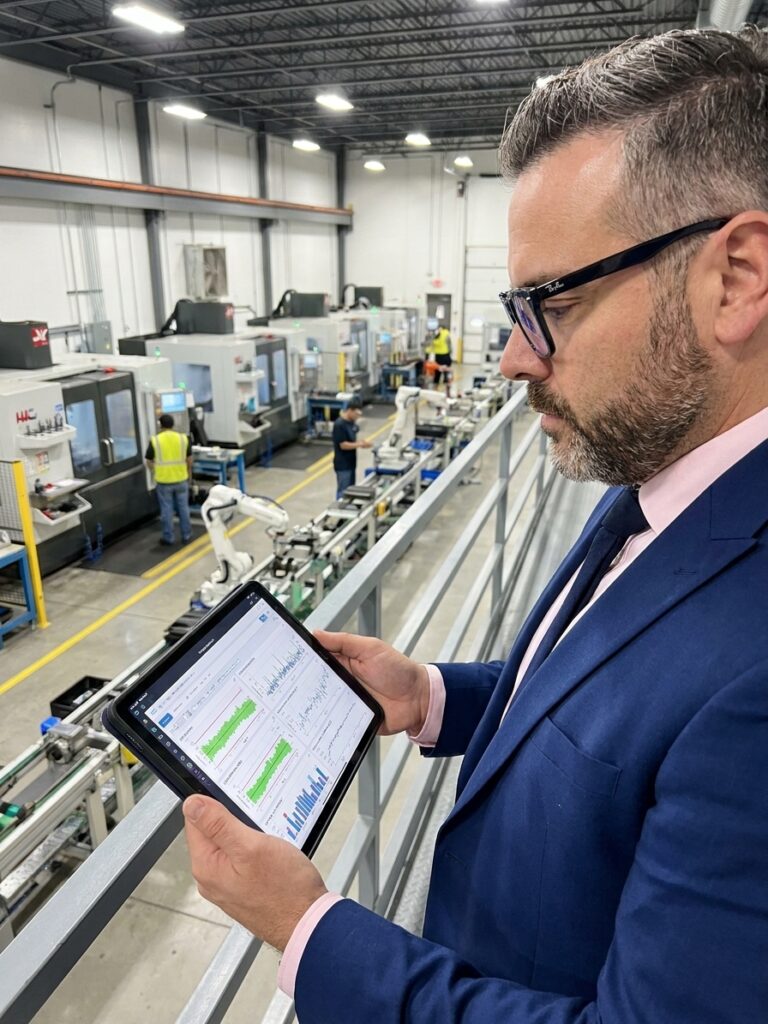
The most common mutation occurs when management selects the topics. A well-meaning plant manager decides the circles need focus and assigns each one a topic for the quarter. They might mandate reducing scrap on Line 3 or improving first-pass yield on the welding cell. These may well be the correct priorities, but the act of assigning them fundamentally changes the psychology of the circle.
Assigning topics transforms participants from problem-owners into task-executors. They are no longer identifying what matters to them; they are implementing what matters to someone else. The quality of thinking collapses accordingly. When management picks the topic, the circle becomes a project team with extra steps. You wanted distributed intelligence; you got delegated labour.
This mutation is often accompanied by a fixed presentation hierarchy. Dead Quality Circles always have the same presenter—usually the team lead or the most extroverted operator. Everyone else sits and watches. If one person is doing eighty percent of the talking, presenting solutions handed to them by a supervisor or quality engineer, you do not have a Quality Circle. You have human wallpaper for management's thinking.
Living Practice vs. Dead Ritual
What teams do
- Wait for management to assign a quarterly topic
- Rely on the team lead to present findings
- Investigate solutions suggested by supervisors
- Discuss minor, politically safe issues only
What works
- Self-select the most urgent operational problems
- Rotate facilitation and presentation roles
- Develop countermeasures from their own analysis
- Challenge cross-functional failures openly
The Filter on Real Problems
Organisations are remarkably bad at detecting the suppression of real problems because the absence of uncomfortable topics looks like the absence of problems. Circles discuss minor issues—a worn fixture, a labelling inconsistency, a training gap. These are real, but they are not the problems actually preventing the plant from meeting its IATF 16949 targets.
The real problems are structural and political. A supplier change that increased incoming defects but nobody wants to challenge the procurement manager who negotiated it. A maintenance backlog deferred because the equipment is running fine for now. A design change that engineering pushed through without consulting production, resulting in poor part fit. Operators live with these consequences every shift.
They will never bring these issues up in a Quality Circle if the political cost of doing so is higher than the personal benefit. The Quality Circle becomes a forum for safe, irrelevant problems. Everyone in the room knows the forum is irrelevant, even if the program charter claims otherwise. The organization loses its best defense against systemic quality escapes.
Resource Starvation and Self-Fulfilling Prophecies
Quality Circles were designed to meet during paid working time. Ishikawa was explicit that the meeting is part of the work, not a favour workers do for the company on their own time. Western implementations frequently try to run circles during lunch breaks, before shifts, or after shifts. The language is always the same: the plant cannot afford to take people off the line.
If the circle identified a problem that embarrassed a manager, would they raise it? If the answer is no, you have a suggestion box with chairs.
What management means is they do not believe the circle will produce enough value to justify the line stoppage. Because they do not believe it, they withhold the time. Because the circle has no time, it cannot produce value. This self-fulfilling prophecy is one of the most reliable killers of Quality Circle programs worldwide. Even a modest improvement requires resources to prototype and test.
Healthy circles have access to a small discretionary budget controlled by the circle itself. This allows them to test ideas without navigating a capital approval chain. Dead circles have no budget. Every proposed solution competes with every other plant priority and usually loses. After two or three cycles of management saying they will look into it, the circle stops proposing solutions that require resources.
The Organizational Cost of Circle Failure
- Cultural CynicismEmployees learn that empowerment is performative; the gap between program promises and reality becomes a running joke at management's expense.
- Suppressed Problem-SolvingInformal improvement mechanisms atrophy because issues are deferred to a dysfunctional circle that never actually addresses them.
- Loss of Top Talent TrustThe operators who initially engage genuinely are the first to recognize the hollowness and the most demoralized when their time is wasted.
Rebuilding Genuine Authority
Quality Circles work in organisations that understand the design principles and commit to them. A living circle operates on voluntary participation. People are invited, not assigned, and the group is small enough that everyone present wants to be there. The circle self-selects its problems; management may suggest priorities but does not dictate topics.
Roles must rotate. Everyone leads eventually, and everyone presents eventually. The facilitator is a resource, not a boss. Management provides support without seizing control. Leaders attend presentations, ask genuine questions, provide resources, and follow through on commitments. They do not rewrite the circle's recommendations or hand them pre-digested solutions.
The meeting happens during working hours, every week, without exception. Canceling the meeting is not an option. The circle has a real budget to test ideas. Most importantly, when the circle solves a problem, the solution is implemented and the result is communicated. The organization sees that participation leads to change.
These conditions are not complicated. They do not require advanced training or expensive consultants. They require the genuine belief that the people closest to the work have valuable contributions to make, and the discipline to build a system that proves it. Organizations that pass this test do not need to mandate participation because people volunteer.