Quality
Debt: When Your Organization Borrows Against Tomorrow’s Excellence — and
the Interest Compounds Faster Than Any Improvement Project Can Pay It
Back
The Loan Nobody Remembers
Taking
There’s a moment in every manufacturing organization’s life when
someone — usually under pressure, usually at 4:47 PM on a Friday — makes
a decision. Not a dramatic decision. Not the kind that gets documented
in a corrective action report or debated in a management review. Just a
quiet, practical, entirely reasonable decision:
We’ll skip the full first-article inspection this time. The
operator is experienced. The lot is small. We need to ship by
five.
That decision takes about four seconds to make. And in that four
seconds, your organization just took out a loan.
The principal is small — one skipped check, one informal deviation,
one undocumented workaround. But the interest? The interest is enormous.
Because that one skipped check becomes two. Two becomes routine. Routine
becomes “the way we’ve always done it.” And before long, your quality
system is carrying a debt load it can barely service, let alone
repay.
This is Quality Debt. And unlike financial debt, which at least shows
up on a balance sheet, Quality Debt is invisible — until the day it
isn’t.
The Anatomy of a Quality
Loan
Every organization carries Quality Debt. Not because people are
careless or malicious, but because manufacturing is a pressure cooker of
competing priorities, and quality is the domain that most easily defers
to the urgent.
Let’s map the most common types of Quality Debt your organization is
probably accumulating right now:
1. Process Debt
This is the debt you accumulate when you modify a process without
updating the documentation. The operator finds a faster way to assemble
the component. It works — most of the time. The work instruction still
shows the old method. The trainer still teaches the old method. And now
you have two processes running simultaneously: the one on paper and the
one on the floor.
The loan: We’ll update the procedure later.
The interest: When a new operator follows the documented procedure
and produces defects because the documented procedure no longer reflects
reality. When an auditor finds the gap and your certification is at
risk. When the “faster way” turns out to have a failure mode nobody
evaluated because nobody evaluated it.
2. Calibration Debt
This is the debt you accumulate when you extend calibration intervals
because the schedule doesn’t fit the production plan. The gauge was due
last Tuesday. It’s still reading within tolerance — probably. You’ll
send it out next month.
The loan: It’s probably fine for another few weeks.
The interest: Every measurement taken with that gauge between its due
date and its actual calibration is a measurement your quality system
cannot fully defend. If that gauge has drifted — even slightly — every
accept/reject decision it informed is now suspect. You don’t have one
bad measurement. You have thirty days of potentially compromised
data.
3. Training Debt
This is the debt you accumulate when you certify operators on the
minimum instead of the sufficient. The new hire watched the video,
signed the form, and was on the line within two hours. Competent? Maybe.
Confident in the edge cases? Absolutely not.
The loan: We’ll do the full training when things slow
down.
The interest: Things never slow down. And your newest, least
experienced operator is now making decisions about your most
quality-critical processes — decisions that your training program never
equipped them to make.
4. Corrective Action
Debt
This is perhaps the most insidious form. It happens when your
organization identifies a root cause, writes a corrective action,
implements the fix — and never verifies that the fix actually worked.
The CAPA is closed. The problem recurs six months later. Nobody connects
the two events because the first one was “resolved.”
The loan: We’ll check effectiveness later. Let’s move
on.
The interest: The same failure, recurring indefinitely, each time
consuming investigation resources, containment costs, and customer
patience. You’re not paying down the debt. You’re making interest-only
payments while the principal grows.
5. Design Debt
This is the debt embedded in your product before it even reaches the
factory floor. The tolerance that was set too tight for the
manufacturing process but was never challenged during design review. The
material specification that your supplier can barely meet consistently.
The assembly sequence that requires three hands and a prayer.
The loan: Manufacturing will figure it out.
The interest: Every unit that requires rework. Every operator who
develops an undocumented workaround. Every inspection point that catches
defects that should have been designed out in the first place. You’re
paying compound interest on a loan that engineering took out and
production is paying back.
The Compound Interest of
Compromise
Here’s what makes Quality Debt so destructive: it compounds.
Not in the clean, mathematical way that financial interest compounds.
Quality Debt compounds chaotically, unpredictably, and in ways that
multiply across your system.
Consider a scenario:
Your organization has a slight calibration debt on a critical gauge.
The gauge reads 2% high — within tolerance, but on the edge. Meanwhile,
you have process debt on the same line: operators have informally
adjusted the temperature setting because the documented range produces
inconsistent results. And you have training debt: two of the four
operators on that line were fast-tracked and don’t fully understand the
interaction between temperature and measurement error.
Individually, each of these debts is manageable. The 2% gauge drift?
Within spec. The informal temperature adjustment? Produces good parts —
usually. The training gap? The other two operators help out.
But together? Together, they create a convergence zone where the
gauge error and the temperature deviation and the operator’s incomplete
understanding combine to produce a defect that none of them would have
caused alone.
This is Quality Debt compounding. And it’s why organizations that
feel like they’re “basically fine” can suddenly face a quality crisis
that seems to come from nowhere. It didn’t come from nowhere. It came
from a dozen small loans that were all due at the same time.
The Balance
Sheet Your Organization Doesn’t Have
Financial organizations are required to report their debt. They have
balance sheets, income statements, and regulatory bodies that demand
transparency.
Quality organizations have no such requirement.
Your ISO auditor doesn’t ask, “How much Quality Debt have you
accumulated since the last surveillance audit?” Your management review
doesn’t include a line item for “Deferred Quality Investments.” Your KPI
dashboard tracks defects, complaints, and delivery performance — but it
doesn’t track the silent accumulation of compromises that haven’t yet
manifested as metrics.
This is a gap. And it’s a gap that the best organizations are
learning to close.
Here’s how to start building your Quality Debt balance sheet:
Audit Your
Deviations — Not Just Your Nonconformances
Every time your organization deviates from its documented process —
even with good reason — you’re adding to Quality Debt. Track these
deviations. Not to punish, but to understand the pattern. If the same
process requires deviation repeatedly, the process itself is the
problem, and every deviation is a loan against future quality.
Measure Your Documentation
Lag
How long does it take between a process change and the corresponding
document update? That gap is Process Debt. Track it. Reduce it. A
document that’s three months behind reality is a loan that’s
accumulating interest every single day.
Track Your Open CAPAs by Age
Every open corrective action is a loan. Every closed corrective
action without effectiveness verification is a loan with a balloon
payment due. Sort your CAPA log by age and ask yourself: which of these
have been open so long that the original problem has already evolved
into something different?
Survey Your Training
Completeness
What percentage of your operators have completed their full training
curriculum? Not the minimum. Not the “good enough.” The full curriculum.
The gap between 100% and wherever you actually are — that’s Training
Debt. And every percentage point of that gap is a bet you’re placing on
luck.
Map Your
Design-to-Manufacturing Handoff Gaps
Every tolerance that manufacturing struggles to meet, every
specification that requires special handling, every assembly step that
generates rework — these are Design Debt. And they’ll keep generating
interest for the entire product lifecycle.
Paying Down the Debt
Debt repayment is never glamorous. It doesn’t produce the dopamine
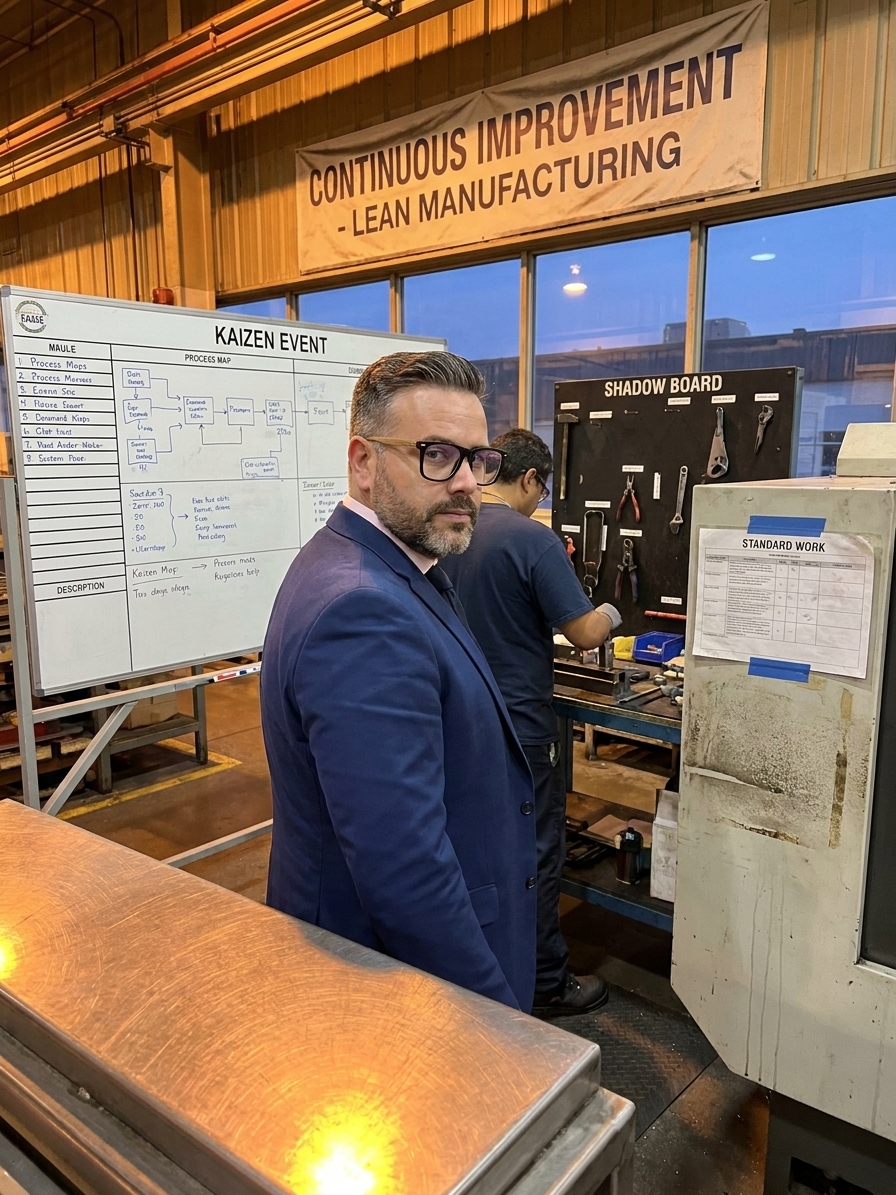
hit of a new initiative or the photo opportunity of a kaizen event
banner. It’s systematic, incremental, and often invisible work.
But it’s the most important quality work your organization can
do.
Start With the
Highest-Interest Debt
Not all Quality Debt is equal. Some loans carry 2% interest — a minor
documentation lag in a low-risk process. Others carry 30% interest — an
unverified corrective action on a safety-critical characteristic.
Prioritize by risk, not by convenience.
The corrective action that was closed without effectiveness
verification on your most critical process? That’s your highest-interest
loan. Pay it first.
Create a Quality Debt
Register
Just as financial organizations maintain a register of their
obligations, create a register of your Quality Debt. Track the type, the
origin date, the risk level, and the repayment plan. Review it in
management review — not alongside your performance metrics, but as its
own category of organizational health.
Establish a “No New Debt”
Policy
This doesn’t mean zero deviations. It means every deviation is
consciously acknowledged as debt, with a clear plan for repayment.
“We’re skipping this inspection because we need to ship — and we’re
scheduling a supplemental check for Friday” is very different from
“We’re skipping this inspection and hoping for the best.”
The difference is intentionality. Debt taken consciously, with a
repayment plan, is manageable. Debt taken unconsciously, one small
compromise at a time, is how quality systems die.
Make Debt Visible
The most powerful thing you can do with Quality Debt is make it
visible. Put it on the shop floor. Put it in the management review. Put
it in the language your organization uses to talk about quality.
When an operator says, “I found a workaround,” teach them to hear: “I
just took out a Quality Loan.”
When a manager says, “We’ll deal with that later,” teach them to
hear: “We’re adding to our Quality Debt.”
When an engineer says, “Manufacturing can handle it,” teach them to
hear: “I’m transferring my Design Debt to the production floor.”
The Organization That
Paid It All Back
I once worked with a tier-one automotive supplier that had
accumulated Quality Debt for over a decade. They were certified. They
were profitable. They had never had a major customer complaint.
But when we mapped their Quality Debt, the picture was staggering:
340 undocumented process deviations, 67 corrective actions closed
without effectiveness verification, 12 critical gauges operating beyond
their calibration intervals, and a training completion rate of 58%.
They weren’t failing. But they were running on borrowed time.
The plant manager made a courageous decision. Instead of launching a
new improvement initiative, he launched a Debt Reduction Program. For
six months, the organization did nothing new. No new projects. No new
tools. No new certifications. They just paid down debt.
They updated 340 process documents. They verified 67 corrective
actions — and found that 23 of them hadn’t actually worked. They
recalibrated everything. They trained everyone.
After six months, their defect rate dropped by 40%. Not because they
implemented anything new. Because they stopped paying interest on a
decade of accumulated compromises.
The Question That Changes
Everything
Here’s the question that will tell you more about your organization’s
quality health than any dashboard or audit report:
What did we compromise on this week?
Not what failed. Not what went wrong. What did we choose to defer,
skip, shortcut, or accept — because the alternative was
inconvenient?
That list is your Quality Debt statement. And it’s probably longer
than you’d like to admit.
The organizations that thrive — not just survive, but genuinely
thrive — are the ones that manage their Quality Debt with the same
discipline they manage their financial obligations. They track it. They
prioritize it. They pay it down. And they think very carefully before
taking on more.
Because quality, like credit, is easy to spend and painful to repay.
And the organizations that forget this are the ones that wake up one
morning to discover that their quality system has been running on
borrowed excellence for so long that it’s forgotten what genuine
excellence feels like.
Peter Stasko is a Quality Architect with 25+ years
of experience transforming manufacturing organizations from reactive
defect management into proactive quality systems. He specializes in
making invisible quality problems visible — and then making them
disappear.