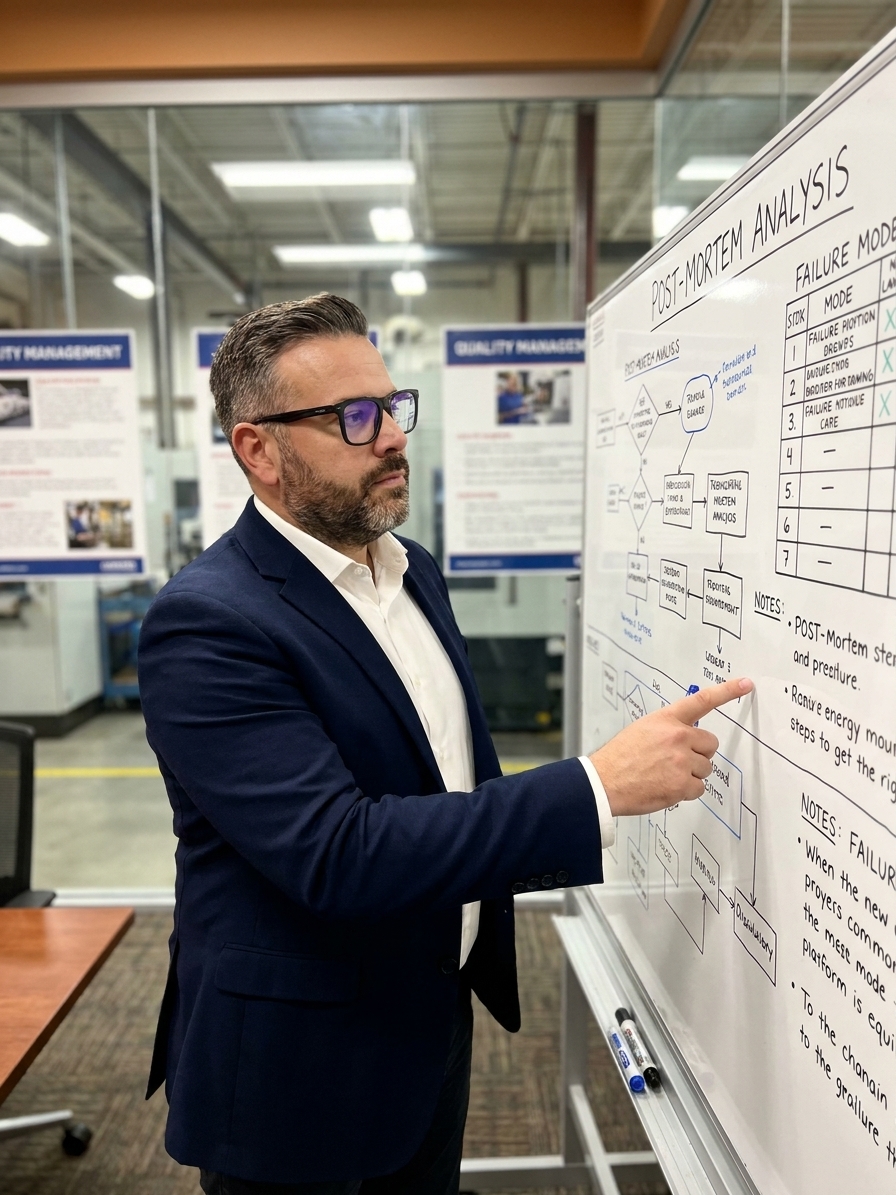
Standard quality planning relies on analytical tools. PFMEA, control plans, and risk registers systematically examine process steps to identify potential failure modes. These tools are effective at mapping technical vulnerabilities, but they share a critical blind spot: they depend entirely on a team's willingness to be candid about operational realities.
In my experience auditing and implementing ISO 9001 and IATF 16949 systems, the most costly failures rarely stem from unidentified technical risks. They are caused by known organisational risks that were never formally documented. Single-source supplier vulnerabilities, rushed operator training, and pending staff departures are open secrets that a PFMEA cannot capture because the social dynamics of a planning meeting suppress them.
The premortem technique bridges this gap. Developed by psychologist Gary Klein, it shifts the team's cognitive posture from prediction to explanation. Instead of asking what might go wrong, the facilitator states that the project has already failed and asks the team to explain why. This reframe bypasses optimism bias and makes pessimism a required, structured deliverable.
Why Standard Risk Tools Leave Vulnerabilities Exposed
Cognitive biases systematically undermine standard risk identification. Planning fallacy causes teams to underestimate timelines. Optimism bias discounts negative outcomes. Groupthink forces convergence on a shared, confident view, suppressing individual doubts. These biases are structural features of human cognition, not character flaws, and they actively degrade the output of your FMEA.
A PFMEA requires the team to assign severity, occurrence, and detection ratings. If the procurement manager is in the room, a junior engineer is unlikely to flag a critical supplier vulnerability. The exercise becomes an echo chamber. The resulting risk priority numbers reflect a sanitized version of reality, leaving the actual operational exposures completely unmitigated until launch.
The premortem works because it leverages prospective hindsight. Research demonstrates that when individuals assume an event has already occurred and work backward to explain it, they generate significantly more reasons for the outcome than when they try to predict it. The cognitive pathway for constructing narratives about definitive events is simply more robust than the pathway for forecasting possibilities.
This psychological distance is crucial for quality engineering. By moving the evaluation to a hypothetical future, the technique detaches participants from their emotional investment in the current plan. The social risk shifts entirely. Participants are no longer worried about looking negative for raising a concern; they are focused on looking unprepared if they cannot explain the failure.
Executing a Structured Premortem Session
A quality premortem requires deliberate facilitation. Schedule 60 to 90 minutes at a critical decision point, such as a design review or Phase 3 PPAP gate. The plan must be detailed enough to evaluate but flexible enough to modify. Running the exercise too early yields generic risks, while running it too late means confronting locked-in decisions.
The session begins with a strict framing. The facilitator defines the scope and the expected outcomes, then delivers the scenario: assume it is six months in the future, and this product launch has failed completely. The team's assignment is to write the post-mortem report explaining the specific root causes. Treat the failure as an absolute certainty.
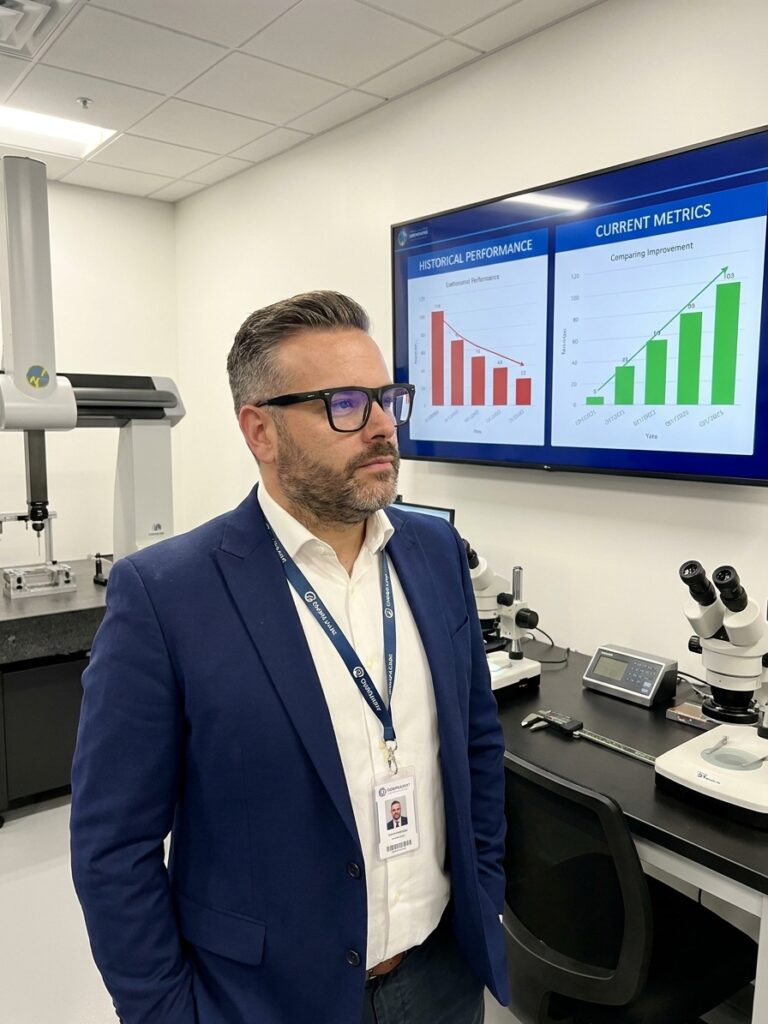
Before any group discussion, enforce a period of silent individual generation. Give every participant ten minutes to write down three to five explanations for the failure. Instruct them to look beyond technical defects and consider organisational, political, and resource factors. This phase is where the junior engineer documents the actual reason a new measurement system will fail without having to contradict the senior tooling manager.
The Four-Phase Premortem Methodology
- 01Frame the FailureEstablish that the project has definitively failed and the team must explain why.
- 02Generate IndependentlyAllow 10 minutes of total silence for individuals to list specific root causes.
- 03Share and ClusterCapture every explanation publicly, grouping overlapping systemic vulnerabilities.
- 04Translate to ActionAssign specific mitigation tasks and feed them directly into the existing FMEA.
Prioritising and Operationalising the Output
Once the silent generation ends, go around the room. Each person reads their list while a facilitator records every item without debate. Patterns will emerge immediately. One operator might cite improper gauge validation, another might highlight untrained night-shift staff, and a third might reference the upcoming departure of the lead quality engineer. These are three perspectives on the same systemic vulnerability.
Cluster these items logically but preserve the individual descriptions. The nuances matter. If three people independently identified a training gap, that risk carries a different weight than a single speculative concern. Use dot voting or a simple impact matrix to prioritize the cluster groups based on their potential severity to the production line.
The deliverable is not a ranked list. The deliverable is a set of specific, actionable control measures integrated into your quality planning. For every high-priority failure scenario, the team must determine what must change immediately to prevent the hypothetical failure from becoming an actual 8D corrective action.
High-Impact Applications in Manufacturing Quality
Premortems deliver the highest value when the cost of failure is significant. New product launches are the classic application. Before granting launch approval, gather the cross-functional team and run the exercise. It will surface supplier vulnerabilities and process gaps that the APQP process missed.
Significant process changes benefit heavily from this approach. Implementing new automated inspection equipment or revising routing verification requires a premortem to identify implementation risks that the change management procedure overlooked. The goal is to find the operational blind spots before the first part is run.
Corrective action implementation is another critical application point. After defining a root cause and designing a CAPA, run a premortem assuming the corrective action failed. This catches the most common CAPA failure mode: a technically correct solution that collapses during actual shop-floor execution due to lack of operator buy-in or inadequate training resources.
Standard FMEA vs. Quality Premortem
Standard PFMEA Session
- Asks participants to predict what might go wrong
- Trigger optimism bias and groupthink
- Limited to technical failure modes
- Output: A risk priority number matrix
Structured Premortem
- Assumes failure has occurred, asks why
- Triggers diagnostic thinking and candor
- Captures organisational and human factors
- Output: Targeted preventive control measures
Avoiding the Failures That Derail Premortems
The most damaging failure mode is running the exercise and ignoring the results. If you identify real risks and then proceed with the original plan because the schedule is too tight, you have taught the team that honest input is performative. The next premortem will be useless because participants will have learned the exercise has no authority.
Inviting the wrong participants is another common error. Premortems require diverse perspectives across functions and seniority levels. If you only include the project core team, you will generate risks they have already considered. You must include the operators, supplier quality specialists, and shift supervisors who will actually execute the plan and interface with its outputs daily.
A premortem does not give you better analytical tools. It gives you a structured mechanism to make the unsayable sayable.
Do not confuse a premortem with a risk register. A risk register is a living tracking document. A premortem is a time-bounded generation exercise. Feed the insights from the premortem directly into your existing FMEA and control plans to ensure they actively drive daily quality operations, rather than sitting in an isolated report.
Integrating the Methodology into Your Quality System
Do not mandate premortems for every minor process modification. Start with a single high-stakes APQP launch or a critical supplier transition. Run the session with strict adherence to the independent generation phase. Document the specific risks that were captured in the premortem but missed by the standard risk assessment.
Track these identified risks against actual production outcomes. When a premortem successfully predicts a failure mode and the preventive action stops it, document the return on investment. This evidence is what builds the business case for wider adoption across the organization's engineering and quality functions.
Train your quality engineers to facilitate these sessions. Facilitation requires creating psychological safety, managing group dynamics, and preventing the session from devolving into a complaint exercise. Quality engineers are uniquely suited for this role due to their training in structured problem-solving and their neutral organisational position.
Finally, treat the exercise as a calibration tool. After a project launches, revisit the premortem document and compare the predicted failures against actual field failures or internal scrap reports. This feedback loop sharpens the team's ability to identify real operational risks and continuously strengthens the preventive capability of your entire quality system.