Quality
Stress Testing: When Your Organization Stops Waiting for Real Failures
and Starts Manufacturing Them on Purpose
The phone rang at 2:47 AM on a Tuesday in January. The plant manager
at a Tier 1 automotive supplier in central Slovakia picked up, already
knowing it wasn’t good news. The customer’s assembly line in Germany had
stopped. A batch of injection-molded connector housings — 14,000 units
shipped over the past three days — had a hairline crack that only
appeared after thermal cycling. The crack propagated under vibration,
the connector failed, the harness shorted, and the vehicle’s braking
system threw a fault code. The customer wanted answers by 8:00 AM. The
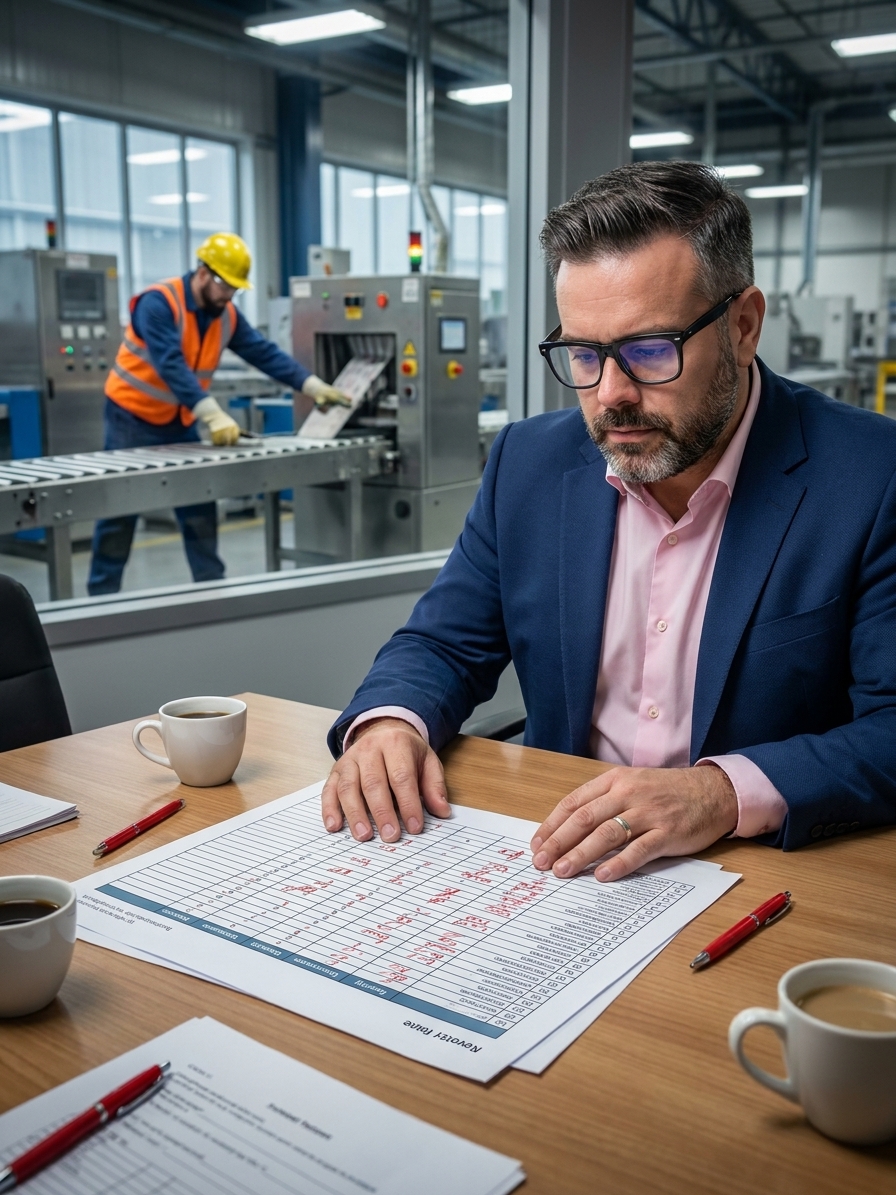
plant manager had been in quality for twenty-two years. He had PPAP
documentation, SPC charts, FMEA analyses, control plans, and audit
reports that all said this couldn’t happen. And yet here he was, at 2:47
AM, staring at the ceiling and realizing that every quality tool his
organization owned was designed to answer one question: “Did we build it
correctly?” Nobody had ever asked the question that actually mattered:
“What happens when everything that can go wrong, goes wrong?”
That question — aggressive, uncomfortable, deliberately destructive —
is the domain of quality stress testing. And most organizations never
ask it until a customer forces them to.
The Comfortable
Fiction of Normal Conditions
Here is the uncomfortable truth about most quality systems: they are
built for a world that doesn’t exist. Your control limits assume stable
inputs. Your process capability studies assume steady-state operation.
Your FMEA assumes you can anticipate every failure mode. Your audit
schedule assumes that if something worked last quarter, it’ll work this
quarter.
The real world doesn’t operate within your control limits. Suppliers
ship material that’s barely within specification — and then one batch
slips just over the line. Ambient temperature swings 15 degrees between
shifts. A new operator misses a step in the work instructions because
the instructions were written for the old fixture. The machine’s
hydraulic pressure drifts slowly downward over six months, and nobody
notices because the parts still pass inspection — barely. Your quality
system was designed to detect variation. It was never designed to
discover what happens when that variation compounds, cascades, and
converges.
Quality stress testing is the deliberate practice of pushing your
processes, products, and systems beyond their normal operating
conditions — not to destroy them, but to discover where they actually
break, and how much margin you really have between “passing” and
“failing.”
The aerospace industry has understood this for decades. Every
commercial aircraft component goes through accelerated life testing,
thermal shock cycling, vibration profiles that simulate 20 years of
turbulence, and salt spray chambers that compress a decade of corrosion
into two weeks. The pharmaceutical industry subjects every sterile
packaging system to bubble point tests, dye penetration challenges, and
microbial ingress studies. The automotive industry has its own suite —
but it applies primarily at the OEM level and only to finished vehicles
or major subsystems. The suppliers feeding those vehicles? Many of them
are still relying on in-process inspection and lot acceptance sampling,
treating quality as a question of conformance rather than
resilience.
This is a mistake. A catastrophic, expensive, 2:47-AM-phone-call kind
of mistake.
What Quality
Stress Testing Actually Looks Like
Stress testing is not simply “testing harder.” It is a structured,
intentional methodology that asks specific questions about your system’s
limits. There are several distinct categories, each designed to expose a
different type of vulnerability.
Environmental Stress Testing subjects products to
conditions at or beyond the edges of their specification: temperature
cycling from -40°C to +125°C, humidity exposure at 95% RH, thermal shock
transitions of 100°C in under 30 seconds, UV radiation exposure
simulating years of sunlight, and salt spray or chemical resistance
testing. The goal isn’t to simulate normal use. It’s to compress years
of degradation into days and see what fails first.
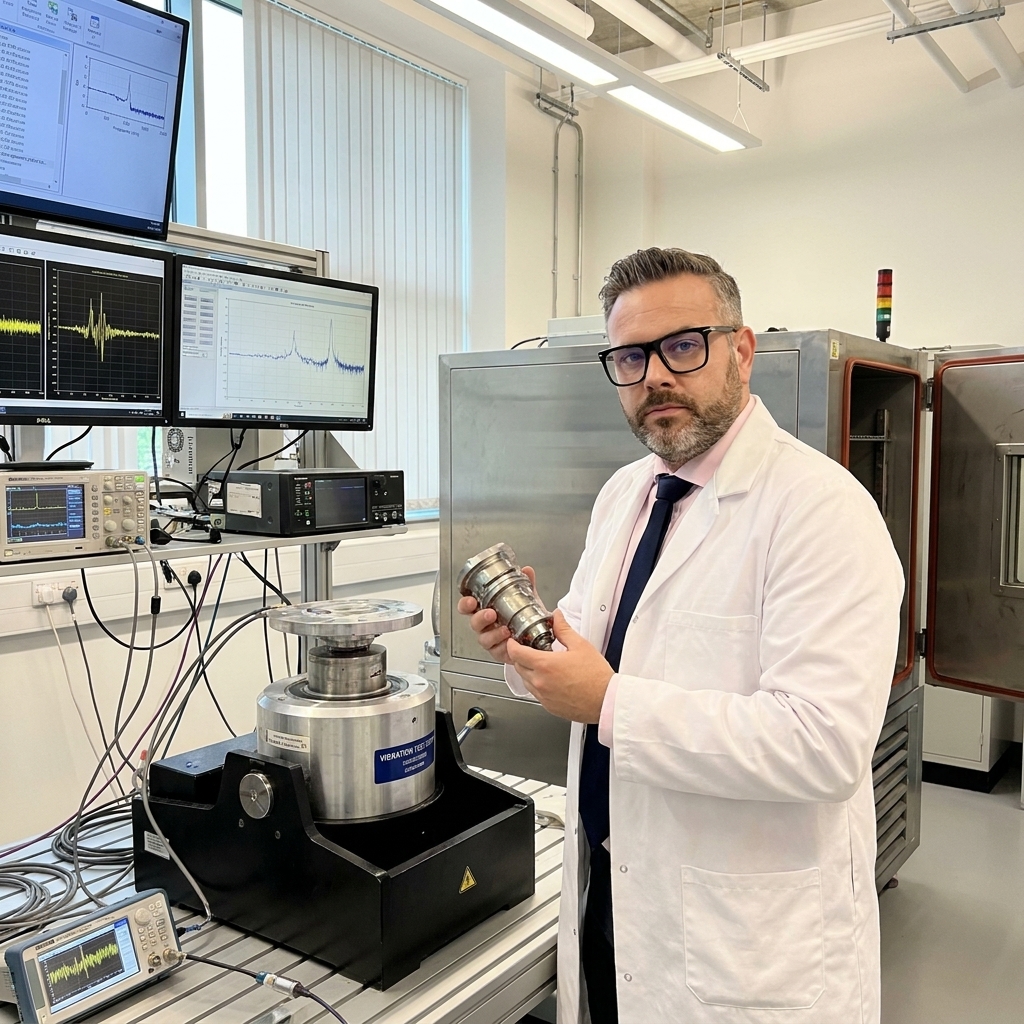
Mechanical Stress Testing includes vibration
profiles (random and sinusoidal), shock and drop testing, fatigue
cycling (opening and closing a latch 50,000 times), torque-to-failure
studies on fasteners, and crush resistance testing. If your product
moves, gets moved, or gets installed by someone using a hammer when the
instructions say “hand-tight,” mechanical stress testing will tell you
what survives.
Electrical Stress Testing applies to anything with a
circuit: overvoltage conditions, reverse polarity, electromagnetic
compatibility (EMC) testing, electrostatic discharge (ESD)
susceptibility, and power cycling — turning something on and off 10,000
times to see which capacitor or relay gives up first.
Process Stress Testing is the most overlooked and
potentially the most valuable category. Instead of testing the product,
you stress the process itself. What happens when you reduce cycle time
by 20%? What happens when you swap in a new operator with minimal
training? What happens when your primary supplier’s material is replaced
by the secondary supplier’s? What happens when you skip every other
inspection point? Process stress testing reveals the hidden dependencies
and fragile assumptions baked into your production system.
System Integration Stress Testing examines what
happens when individual components — each passing their own acceptance
criteria — are combined into a complete system. This is where interface
tolerances stack up, where thermal expansion from one component creates
stress on an adjacent one, and where electrical noise from one subsystem
interferes with another’s signal processing. Integration stress testing
is where the connector housing meets the vibration profile meets the
thermal cycle meets the 2:47 AM phone call.
The Margin Nobody Measures
Here is what stress testing reveals that conventional quality tools
cannot: your actual margin of safety.
Every specification has a tolerance. Every tolerance is set based on
engineering analysis, historical data, and sometimes plain guesswork.
The distance between your process’s current performance and the
specification limit is your process margin. Most organizations measure
this through Cpk and Ppk indices and feel good when the number is above
1.33.
But Cpk tells you about statistical performance under normal
conditions. It tells you nothing about what happens when three variables
drift simultaneously toward their limits. It tells you nothing about
interaction effects — the fact that dimensional variation combined with
thermal expansion combined with material lot variation can produce a
failure that none of those factors would produce alone.
Stress testing maps the actual boundaries of your system’s
performance. It tells you whether your margin is a wide, comfortable
highway or a tightrope strung over a canyon. And it tells you this
before a customer discovers it for you.
Consider the connector housing that triggered the 2:47 AM call. The
injection molding process was running at a Cpk of 1.67 on the critical
wall thickness dimension. The material was within specification. The
mold temperature was within specification. The cooling time was within
specification. But nobody had ever tested what happened when mold
temperature ran at the high end of its range, material viscosity ran at
the low end of its specification (a new lot), and cooling time was at
the minimum allowed by the cycle. Each factor individually was
acceptable. The combination produced a residual stress in the housing
that didn’t crack during inspection — it cracked after the customer
subjected the part to 200 thermal cycles between -20°C and +80°C, which
the supplier had never tested.
The margin wasn’t 1.67 Cpk. The margin was zero. The organization
just didn’t know it.
How to Build a Stress
Testing Program
Starting a stress testing program doesn’t require a multimillion-euro
test lab. It requires a change in mindset — from “Does this meet
specification?” to “What would it take to make this fail?” Here is a
practical framework for building a program from wherever you are
today.
Step 1: Identify your critical characteristics. Not
every dimension, every parameter, every output deserves stress testing.
Focus on the characteristics that, if they failed, would cause the most
harm — to safety, to function, to customer trust, to your balance sheet.
Use your FMEA as a starting point, but go further. Ask your warranty
team. Ask your customer complaints team. Ask the people on the shop
floor who quietly know which parameters are always “close to the
edge.”
Step 2: Define the stress profiles. For each
critical characteristic, define the combination of conditions that would
challenge it most aggressively. Use your FMEA’s failure mode
descriptions as a guide, then add environmental factors, mechanical
loads, and process variations that could compound the risk. Don’t limit
yourself to conditions within specification — include combinations of
parameters all simultaneously at their specification limits, which is
where the most dangerous failures often hide.
Step 3: Design the tests. Match your test methods to
the failure modes you’re investigating. Thermal cycling for materials
and adhesives. Vibration for mechanical assemblies. Humidity for
electronics and coatings. Power cycling for electrical components.
Process variation runs for production systems. Use accelerated testing
models (Arrhenius for temperature-driven degradation, Coffin-Manson for
thermal-mechanical fatigue, Miner’s rule for cumulative fatigue damage)
to correlate test duration with field life.
Step 4: Run the tests and document the failures.
This is the part most organizations get wrong. They run a stress test,
the part passes, and they file the report. The real value of stress
testing is in the failures. When a part fails under stress, that failure
is telling you exactly where your design, your process, or your
specification is vulnerable. Document every failure mode, every failure
mechanism, and every condition that produced it. These failures are
intelligence — they are the failures you will never see in production
because you discovered them in the lab.
Step 5: Feed the results back into your quality
system. Stress testing that doesn’t change your control plan is
theater. If stress testing reveals that a particular combination of mold
temperature and material lot produces a defect, add those parameters to
your control plan. If testing shows that vibration during transport
causes a fatigue crack after 500 km, redesign the packaging or the part.
If process stress testing reveals that reducing cycle time by 15% causes
a 300% increase in dimensional variation, document the boundary and
build it into your standard work.
Step 6: Repeat periodically. Stress testing is not a
one-time event. Processes drift. Materials change. Suppliers get
swapped. Equipment ages. Customer requirements evolve. A stress testing
program should run on a defined schedule — annually at minimum — and
should be triggered by any significant change to the product, process,
or supply chain.
The ROI of Breaking
Things on Purpose
Skeptics will argue that stress testing is expensive. Test equipment
costs money. Test samples cost money. Engineering time costs money.
Production downtime for process stress testing costs money. All of this
is true.
Here is what also costs money: a customer line stoppage that shuts
down a €2 million per day assembly operation. A product recall that
affects 40,000 units across three markets. A warranty claim rate that
triples because a material substitution looked fine on paper but failed
after six months of UV exposure. A lost customer contract worth €8
million annually because your competitor demonstrated superior
reliability through accelerated life testing data that you couldn’t
match.
The Tier 1 supplier with the connector housing crack spent €340,000
on the immediate containment, sorting, and replacement shipment. They
spent another €120,000 on the root cause investigation and corrective
action. They lost €1.2 million in quarterly revenue when the customer
reduced their allocation by 30% as a penalty. A stress testing program
that would have caught the thermal cycling vulnerability would have cost
approximately €15,000 in test equipment time and sample preparation.
The return on investment for stress testing is not theoretical. It is
calculated in failures prevented, customers retained, and 2:47 AM phone
calls that never happen.
The Cultural Dimension
Beyond the technical and financial benefits, stress testing does
something more subtle and more powerful: it changes how an organization
thinks about quality.
Organizations that don’t stress-test develop a conformance mindset.
Quality means “meets specification.” If the part passes inspection, it’s
good. If the Cpk is above 1.33, the process is capable. If the audit
score is above 90%, the system is healthy. This mindset is comforting,
tidy, and dangerous.
Organizations that stress-test develop a resilience mindset. Quality
means “performs reliably under conditions we can’t fully predict or
control.” The part that passes inspection is only the beginning of the
conversation. The Cpk tells you about today; stress testing tells you
about tomorrow. The audit score describes your system’s documentation;
stress testing reveals its actual robustness.
This cultural shift manifests in the questions people ask. In a
conformance culture, the question is: “Did we follow the procedure?” In
a resilience culture, the question is: “What would happen if the
procedure isn’t enough?” In a conformance culture, a passing test result
is the end of the story. In a resilience culture, a passing test result
prompts the question: “What would it take to make this fail?”
Stress testing teaches humility. It teaches that your specifications
might be wrong. That your margins might be thinner than you think. That
the combination of three minor deviations can produce a major
catastrophe. It teaches that the most dangerous quality failures are not
the ones you see coming — they’re the ones that emerge from the
interaction of factors you thought were independent.
Getting Started This Week
You don’t need a capital project to begin stress testing. Here are
three things you can do within the next five days:
First, pick one product family — your highest-volume or
highest-risk — and identify its three most critical quality
characteristics. You already know what they are. They’re the
ones that keep your quality engineer awake at night. They’re the ones
that show up in customer complaints disproportionately. They’re the ones
where a failure would be catastrophic rather than inconvenient.
Second, for each characteristic, design one stress test that
pushes it beyond normal conditions. It doesn’t have to be
sophisticated. If your critical characteristic is dimensional stability,
measure parts after thermal cycling in an oven and freezer. If it’s
adhesive bond strength, test bonds after humidity exposure. If it’s
electrical continuity, test after vibration. Use whatever equipment you
have access to. The point is not precision — the point is to ask the
question you’ve never asked.
Third, run the test and honestly evaluate the
results. If the parts fail, you’ve just discovered a
vulnerability that your quality system was blind to. If the parts pass,
you’ve just validated that your margin is real — and you now have data
to prove it to your customers, your auditors, and yourself.
The plant manager from that January morning didn’t go back to sleep
after the call. He drove to the plant, managed the containment, led the
investigation, and eventually implemented a thermal cycling test for
every new connector housing design. The test caught two latent defects
in the following year — defects that would have reached customers under
the old system. When I asked him what changed in his approach to quality
after that experience, he said: “I stopped asking whether we built it
right. I started asking what it would take to break it.”
That question is worth more than any audit checklist ever
written.
Peter Stasko is a Quality Architect with 25+ years
of experience transforming organizations across automotive, aerospace,
and pharmaceutical industries. He specializes in building quality
systems that don’t just comply — they perform under pressure.