Quality Throughput Accounting: When Your Finance Department Stops Counting Defects and Starts Counting What Defects Actually Cost Your Throughput — and the Number Changes Everything
The Day the CFO Walked Onto the Shop Floor
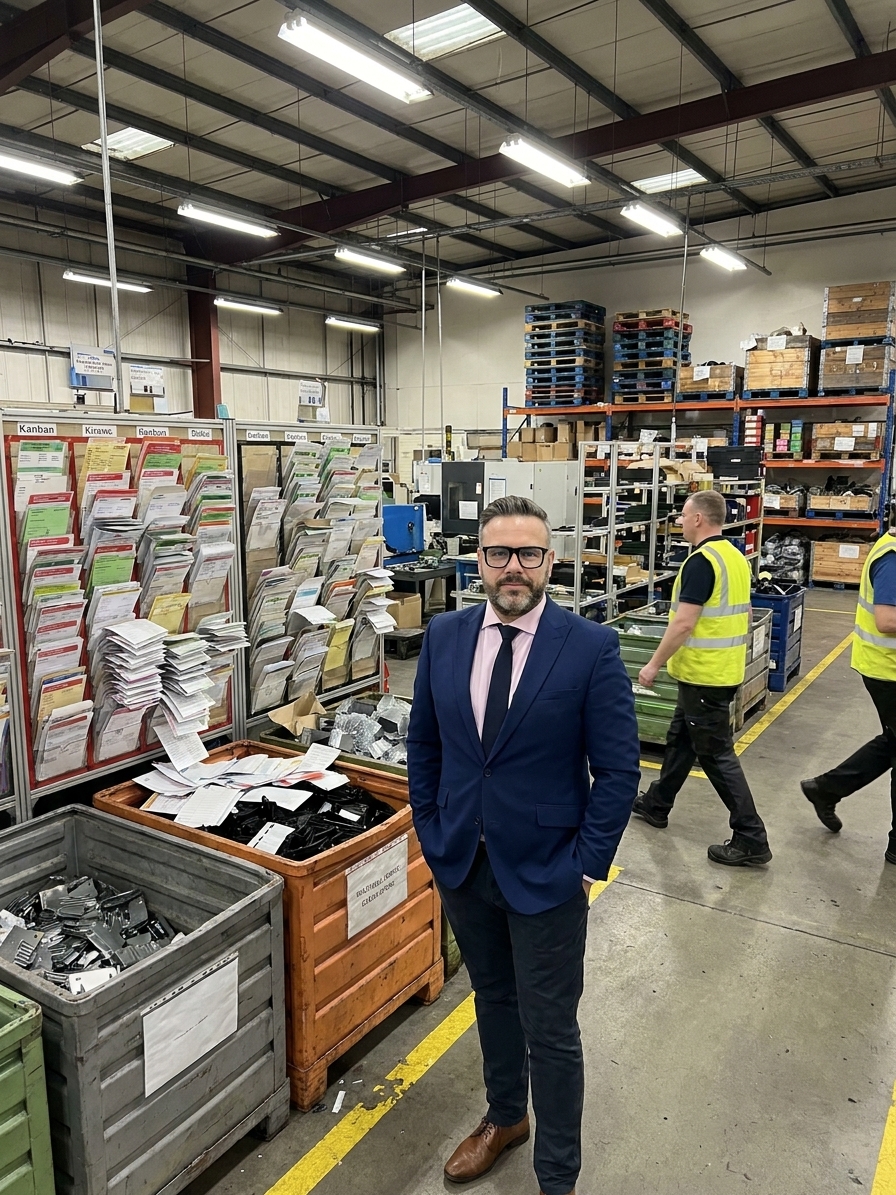
It was a Tuesday morning in a mid-size automotive components plant in Bavaria. The CFO — a man who had spent twenty years believing that quality was a cost center he needed to manage — walked onto the shop floor for the first time in three years. He wasn’t there for a tour. He was there because the plant manager had finally convinced him that the reason the company was missing its revenue targets had nothing to do with pricing, demand, or logistics. It had everything to do with quality — but not in the way the CFO had ever measured it.
The plant manager led him to Station 7, the CNC machining cell that was the constraint of the entire plant. Every part that left this station flowed through the rest of the system and reached the customer. Every minute this station ran well, revenue flowed. Every minute it didn’t, revenue evaporated.
“See those two bins?” the plant manager said, pointing to a yellow bin of rejected housings next to the machine. “Those twelve parts were scrapped this shift. Your quality cost report says that’s €480 in scrap material. That’s what shows up in the monthly cost of poor quality dashboard.”
The CFO nodded. “Yes. We track that.”
“You’re tracking the wrong number,” the plant manager said. “Those twelve parts took forty-two minutes of constraint time. In forty-two minutes, this machine could have produced twelve good parts that would have shipped to the customer for €3,600 in revenue. The scrap cost isn’t €480. The real cost is €3,600 in lost throughput — plus the €480. You’re underreporting the impact of quality by almost eight times.”
The CFO stared at the machine. Then at the yellow bin. Then back at the machine.
“Show me more,” he said.
That conversation changed the way the entire company thought about quality.
What Is Quality Throughput Accounting?
Quality Throughput Accounting is the application of Throughput Accounting principles — derived from Eliyahu Goldratt’s Theory of Constraints — to quality measurement and decision-making. It reframes the financial impact of quality failures not as the cost of scrap, rework, or warranty claims, but as the lost throughput that quality failures cause at the system’s constraint.
Traditional quality cost models — the familiar prevention, appraisal, internal failure, and external failure categories from ASQ and ISO frameworks — are useful. They create awareness. They build budgets. They justify improvement projects. But they suffer from one critical limitation: they measure quality costs in terms of resources consumed, not throughput lost.
Throughput Accounting flips the lens. Instead of asking “What did this defect cost us in materials, labor, and overhead?” it asks “What did this defect prevent us from selling?” And in a constrained system — which every real-world manufacturing system is — the answer to the second question is almost always larger, sometimes dramatically so, than the answer to the first.
The core throughput equation is deceptively simple:
Throughput = Revenue – Totally Variable Costs
Totally variable costs are the costs that are truly driven by producing one more unit — typically raw materials, purchased components, and sometimes direct subcontracted services. Labor, overhead, depreciation? They don’t change when you produce one more or one fewer unit in the short term. They’re operating expenses, not variable costs.
When a defect is produced at the constraint, the throughput lost is the selling price of that unit minus its totally variable costs. Not the cost of the defective part. Not the rework labor. The throughput that unit would have generated if it had been good.
This distinction doesn’t eliminate traditional quality costing. It supplements it with a more powerful lens — one that aligns quality decisions with the actual financial performance of the system.
The Three Questions That Change Everything
Throughput Accounting operates on three questions, and when applied to quality, they become a decision-making framework of remarkable clarity:
Question 1: How much throughput is the constraint generating per unit of time?
This is your constraint throughput rate. If your constraint produces one part every 3.5 minutes, and each good part generates €85 in throughput (selling price minus totally variable costs), then your constraint is generating approximately €1,457 per hour. Every hour. This is the heartbeat of your factory’s financial performance.
Now ask: What happens when a defect passes through the constraint? You’ve consumed 3.5 minutes of constraint time and generated zero throughput. You didn’t just lose the material cost of the part. You lost €85 in throughput. And since that constraint time can never be recovered — time is the one resource that is truly finite — that €85 is gone forever.
Question 2: How much throughput is lost to quality failures at the constraint?
This is where most organizations get their first shock. When you multiply the constraint throughput rate by the time lost to quality failures — scrap produced at the constraint, rework that requires constraint time, constraint downtime caused by quality issues upstream — the number is almost always an order of magnitude larger than the traditional COPQ figure.
Consider a plant with a constraint throughput rate of €2,000 per hour. If quality issues at the constraint consume 4 hours per week (scrap, rework, changeovers triggered by quality rejects, machine adjustments), the annual throughput loss is:
€2,000 × 4 hours × 50 weeks = €400,000 per year
The traditional scrap cost report might show €60,000. The difference — €340,000 — is the invisible quality cost that Throughput Accounting makes visible.
Question 3: Where should quality improvement investment be directed first?
This question reframes prioritization entirely. Traditional quality prioritization often follows Pareto logic: attack the most frequent defects, or the defects with the highest scrap cost. Throughput Accounting adds a constraint filter: attack the defects that consume constraint time first, because those defects are the most expensive defects in your system — regardless of their frequency or their scrap value.
A defect that occurs once per month but takes 30 minutes of constraint time to rework is more financially impactful than a defect that occurs daily but happens upstream, before the constraint, where recovery is possible.
This doesn’t mean you ignore non-constraint quality issues. But it does mean you sequence your improvement efforts based on throughput impact, not just defect count or scrap dollars.
The Constraint-Quality Matrix: A Practical Tool
To operationalize Quality Throughput Accounting, organizations need a simple tool that connects quality failures to constraint impact. I call it the Constraint-Quality Matrix, and it has four dimensions:
1. Constraint-Active Quality Losses: Defects produced at the constraint, or defects that require constraint time to recover. These are the highest-impact quality failures in your system. Every unit of time lost here is throughput lost permanently.
2. Constraint-Protective Quality Losses: Defects produced upstream of the constraint that are caught and removed before reaching the constraint. These consume upstream resources but don’t steal constraint time. They’re costly — materials, labor, energy — but they don’t directly reduce throughput. However, if upstream defect rates are high enough to starve the constraint (insufficient good parts flowing to it), they become indirect throughput losses.
3. Constraint-Revealing Quality Losses: Defects that pass through the constraint undetected and are caught downstream, at inspection, test, or customer. These are particularly dangerous because they consumed constraint time AND generated no throughput — but you might not discover the loss until days or weeks later, when the feedback loop is cold and the constraint time is long gone.
4. Market-Damaging Quality Losses: Defects that reach the customer. These carry not only the throughput loss of the specific unit but the potential throughput loss of future revenue — lost orders, warranty costs, reputation damage, and in regulated industries, the catastrophic cost of recalls.
Mapping your quality failures onto this matrix immediately reveals where your improvement dollars generate the highest throughput return. And the answer is almost never where your traditional Pareto analysis pointed you.
A Real-World Application: The Bearing Plant That Found Its Missing Revenue
A precision bearing manufacturer in Central Europe was struggling with a persistent quality problem: ovality on inner races after heat treatment. The defect rate was 2.3% — not catastrophic by industry standards, but annoying. The quality department tracked it as a Level 3 priority in their improvement backlog.
The scrap cost was manageable: about €38,000 per quarter in rejected raw material and heat treatment costs. The rework cost was minimal because ovality on bearing races generally can’t be reworked — the parts are scrapped.
Then a new operations director, trained in Theory of Constraints, asked one question: “Where does the grinding of these races happen relative to the constraint?”
The answer was illuminating. The CNC grinding operation that finished the inner races was the constraint of the entire plant. Every bearing that the company shipped passed through one of four CNC grinders that ran at near-full capacity. The heat treatment ovality meant that 2.3% of parts entering the grinding operation had to be rejected — after they had consumed their full grinding cycle time.
The throughput rate at the grinding constraint was approximately €12 per bearing in throughput contribution. With a production volume of 180,000 bearings per quarter, the 2.3% scrap rate meant:
180,000 × 0.023 = 4,140 rejected bearings × €12 throughput per bearing = €49,680 per quarter in lost throughput
Add the scrap cost (€38,000), and the total impact was €87,680 per quarter — €350,720 per year.
The quality team had been reporting €152,000 per year in scrap cost. The real impact was more than double. And that was just one defect type.
The ovality project moved from Level 3 priority to Level 1 overnight. Within eight weeks, a cross-functional team identified the root cause — a fixture distortion issue in the quenching press — and implemented a corrective action that reduced ovality to 0.4%. The throughput recovery was immediate: approximately €290,000 per year in additional revenue from the same equipment, the same people, the same factory.
No capital investment. No headcount increase. Just a quality improvement directed at the right place — the constraint — measured with the right metric — throughput.
The Five Shifts of Quality Throughput Accounting
Implementing Quality Throughput Accounting requires five fundamental shifts in how organizations think about quality:
Shift 1: From Cost of Defects to Cost of Lost Throughput
Stop asking “What did this defect cost?” and start asking “What throughput did this defect prevent?” The second question requires knowing your constraint and its throughput rate — which, surprisingly, many organizations don’t know with precision. Finding out is the first step.
Shift 2: From Defect Frequency to Constraint Impact
A defect that happens a hundred times a year upstream of the constraint might be less financially significant than a defect that happens ten times a year at the constraint. Prioritize by throughput impact, not by Pareto count. The frequency matters, but the location matters more.
Shift 3: From Scrap Cost Recovery to Throughput Recovery
Traditional quality improvement business cases calculate ROI based on scrap cost savings. Throughput-based business cases calculate ROI based on throughput recovery — the additional revenue generated by eliminating constraint time losses. This makes improvement projects significantly easier to justify to financial leadership, because throughput recovery flows directly to the top line.
Shift 4: From Departmental Quality to System Quality
Quality Throughput Accounting naturally breaks down silos between quality, operations, and finance. When quality performance is measured in throughput terms, it becomes a shared metric that all three functions care about — and can collaborate to improve. The quality engineer cares about the defect. The operations manager cares about the constraint time. The CFO cares about the throughput. Throughput Accounting gives them a common language.
Shift 5: From Reporting to Decision-Making
Most quality cost reports are backward-looking: they tell you what happened last month. Quality Throughput Accounting, when implemented as a real-time metric at the constraint, becomes a forward-looking decision tool. When the constraint operator knows that every scrapped part costs €85 in throughput — not €6 in material — the decision to stop and investigate a process drift takes on entirely different urgency.
Implementation Roadmap: Getting Started
Implementing Quality Throughput Accounting doesn’t require a system overhaul. It requires a disciplined sequence of steps:
Step 1: Identify Your Constraint. This is the prerequisite. If you don’t know where your constraint is, you can’t calculate throughput impact. Use the classic TOC diagnostic: where is work-in-process piling up? Where is every minute of downtime tracked obsessively? Where do production planners focus all their attention? That’s your constraint.
Step 2: Calculate Constraint Throughput Rate. Take your average selling price per unit, subtract totally variable costs (raw materials and purchased components), and divide by the constraint cycle time. This gives you throughput per minute at the constraint. Post it on the constraint station. Make it visible.
Step 3: Map Quality Losses to Constraint Time. For every significant quality failure mode, determine: Does it consume constraint time? If yes, how much — per occurrence and per period? This creates your throughput-adjusted quality cost, which I call T-COPQ (Throughput-adjusted Cost of Poor Quality).
Step 4: Re-prioritize Your Quality Improvement Backlog. Rank improvement projects by T-COPQ, not traditional COPQ. You’ll likely find that your top three projects change. This is the moment of insight — and the moment of resistance, because it challenges established priorities.
Step 5: Report T-COPQ Alongside Traditional COPQ. Don’t replace your existing quality cost system. Supplement it. Show both numbers in management reviews. Over time, the organization will naturally shift its decision-making toward throughput-based prioritization because the numbers speak for themselves.
Step 6: Extend to Supplier Quality. Apply the same lens to incoming material quality. A supplier defect that is caught before the constraint is a material loss. A supplier defect that reaches the constraint and causes scrap is a throughput loss. The contractual and commercial implications are significant — and change the nature of supplier quality discussions entirely.
The Resistance You Will Face
Every paradigm shift meets resistance, and Quality Throughput Accounting is no exception. The most common objections are:
“Our cost system doesn’t work that way.” Correct. Your cost system allocates overhead and labor to products. Throughput Accounting doesn’t. The two systems serve different purposes. Traditional costing is for regulatory compliance and long-term planning. Throughput Accounting is for operational decision-making. You need both.
“We can’t just ignore labor and overhead costs.” You’re not ignoring them. You’re recognizing that in the short term — the timeframe in which quality decisions are made — they don’t change when you produce one more or one fewer unit at the constraint. The oven is already hot. The building is already lit. The people are already on the floor. What changes is whether you produce a good part or a defective part at the constraint. And that decision either generates throughput or destroys it.
“But what about non-constraint quality issues?” They still matter. Defects upstream waste materials and capacity. Defects downstream waste inspection and test resources. But they don’t directly reduce the system’s output the way constraint-quality failures do. Throughput Accounting doesn’t say “ignore non-constraint quality.” It says “prioritize constraint quality first, because that’s where the money is.”
“Our constraint moves.” Yes, in many plants the constraint shifts between operations based on product mix, maintenance schedules, and demand patterns. This is normal. When the constraint moves, recalculate the throughput rate and re-map quality losses. The framework is dynamic, not static.
The Deeper Insight: Quality as a Throughput Multiplier
Perhaps the most powerful realization that Quality Throughput Accounting delivers is this: quality improvement at the constraint is the highest-leverage investment any manufacturing organization can make.
When you improve quality at the constraint, you don’t just reduce scrap costs. You increase throughput. And increased throughput — unlike cost savings — has no theoretical upper limit within the constraint’s capacity. If your constraint can produce 10,000 units per month and your yield is 95%, you’re shipping 9,500 good units. Improve the yield to 97% and you’re shipping 9,700. That’s 200 additional units of throughput with zero additional operating expense. The profit margin on those 200 units is extraordinary because the fixed costs are already covered.
This is why quality professionals who understand Throughput Accounting have a fundamentally different conversation with senior leadership. They’re not asking for investment to “reduce quality costs.” They’re proposing investment to “increase throughput through quality improvement.” And in the language of P&L management, that’s a conversation every executive wants to have.
The Bavarian CFO, One Year Later
Let me return to that Bavaria plant. One year after the CFO’s shop floor visit, the company had implemented Quality Throughput Accounting as a parallel metric alongside traditional COPQ. The results spoke clearly:
- T-COPQ was 2.4x higher than traditional COPQ, revealing €1.2 million per year in previously invisible throughput losses
- Three quality improvement projects were re-prioritized based on constraint impact, yielding €380,000 in throughput recovery within six months
- The quality department’s budget increased by 15% — approved by the CFO himself — because the business case was now expressed in throughput, not just cost savings
- The constraint yield improved from 94.1% to 96.8%, generating approximately €680,000 in additional annual throughput from the same equipment
The CFO now visits the shop floor monthly. He doesn’t come to check on costs. He comes to check on the constraint. And he asks one question every time: “Is this machine making good parts?”
He finally understands that in a constrained system, quality isn’t a cost to be managed. It’s throughput to be protected.
Final Thought
Every factory has a constraint. Every constraint has a throughput rate. Every quality failure at the constraint destroys throughput that can never be recovered. The number on your quality cost report is real — but it’s not the whole truth. The whole truth includes what you could have made but didn’t. Quality Throughput Accounting makes that truth visible. And once you see it, you can’t unsee it.
That’s not a burden. That’s leverage.
Peter Stasko is a Quality Architect with 25+ years of experience helping organizations transform their quality systems from compliance exercises into competitive weapons. He writes about the intersection of quality, operations, and financial performance — because the best quality improvement is the one that makes your factory more money, not just your defect chart prettier.