Gemba is the most discussed and least practiced concept in modern quality management. The Japanese term translates simply to "the actual place," referring to the shop floor where value is created and where the truth of your process actually lives. Yet across automotive and aerospace facilities, the practice has been thoroughly hollowed out into a scheduled procession.
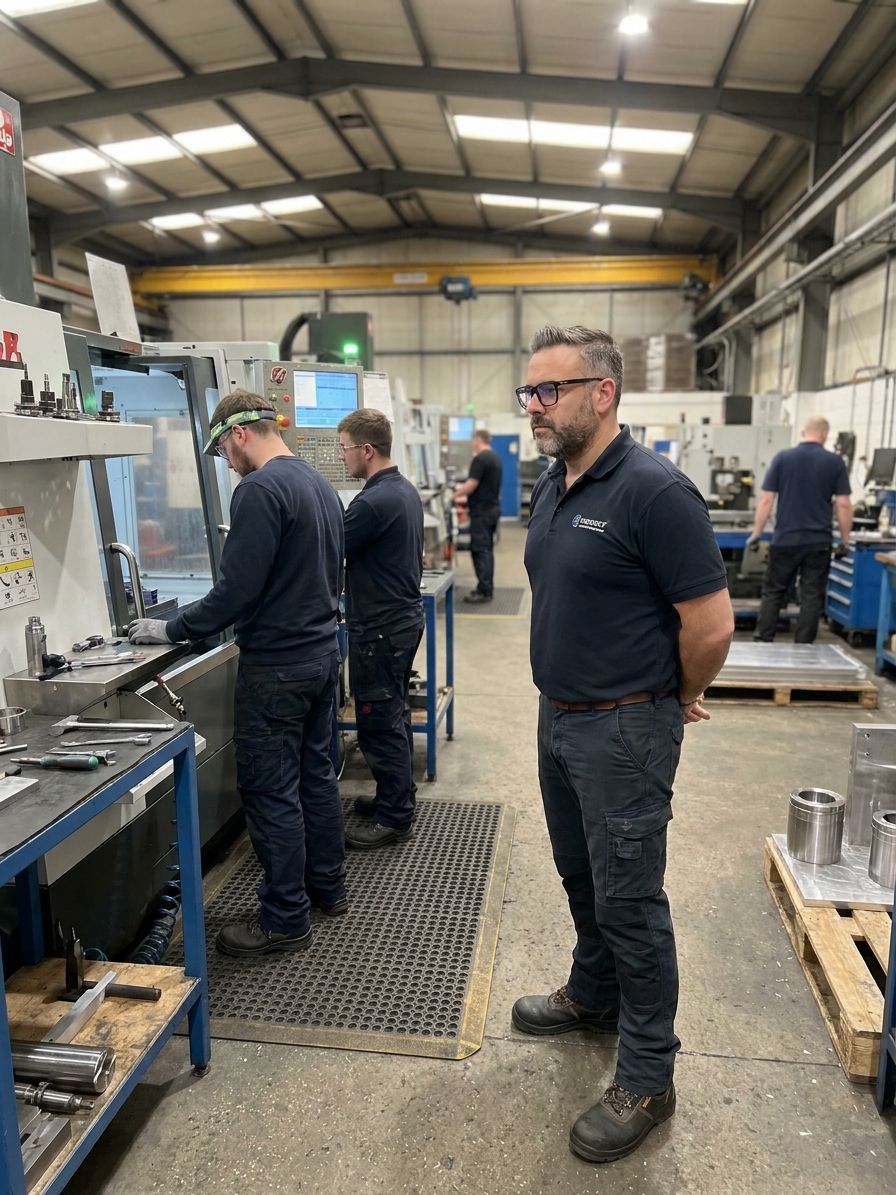
Taiichi Ohno, the architect of the Toyota Production System, famously drew a chalk circle on the factory floor and required managers to stand in it for hours. They were instructed to watch a single operation until they genuinely understood it, forcing their mental model of the process to collide with reality. It was uncomfortable, slow, and profoundly effective.
What most organisations practice today is a theatrical simulation of that original discipline. Managers walk the floor in clean vests, nodding at operators, snapping photos of clutter, and returning to a conference room to discuss what they supposedly observed. The physical act of walking has been preserved perfectly. The actual observation has died entirely, and nobody questions it because the activity feels sufficiently productive.
The Premise: Seeing Over Strolling
The underlying premise of a gemba walk is straightforward: to understand a process, you must observe it where it happens. You cannot see the reality of manufacturing from behind a desk, through a quarterly dashboard, or in a filtered 8D report. You must go to the floor, watch the work, and let reality challenge your established assumptions.
Ohno demanded specific, prolonged observation rather than a casual stroll. He positioned a manager at a single spot and required them to observe one operation for an extended period. The explicit instruction was not to fix anything, judge anything, or say anything. The purpose was to develop what Toyota called "the eyes for waste," the ability to see the invisible inefficiencies that operators working in the process daily had become blind to.
The gemba walk was never about the walking. It is exclusively about the seeing. In this context, seeing means standing still long enough for your assumed mental model of the process to collide with the actual process. The gap between what you think is happening and what is actually happening is where every genuine improvement begins.
If you cannot see that gap, you cannot close it. You cannot see the gap from behind a desk. When a scheduled walk replaces genuine observation, leaders end up making critical process decisions based on a documented fiction while the actual operation drifts quietly out of control.
The Five Failure Modes of Modern Walks
The failure of the gemba walk is not accidental. It is structural. Across plants and continents, the practice devolves into the same predictable anti-patterns that prioritise activity over comprehension.
The most common failure is the scheduled tour. Leadership decides the organisation should do gemba walks, so a schedule is created. Every Tuesday at 10 AM, the management team walks the floor using a predetermined route. Operators are warned in advance, so they clean up, stage materials neatly, and prepare an explanation. What the managers observe is a rehearsed performance, not the actual process.
Then there is the delegation walk. A senior leader assigns gemba walks to overloaded middle managers, who assign it to supervisors. The supervisors walk through the area, check a box on a form, and return to their desks. The walk has been officially completed. Nothing has been observed, and the systemic issues remain safely hidden.
Observation versus Inspection
What teams actually do
- Verify compliance with a clipboard or digital form
- Correct operators who deviate from documented standards
- Take photos of obvious problems like clutter or missing labels
- Log the interaction as a completed KPI metric
What actually works
- Stand still and watch a complete part cycle three times
- Suspend judgment and withhold immediate solutions
- Ask operators to demonstrate how they handle exceptions
- Record questions to investigate rather than answers to enforce
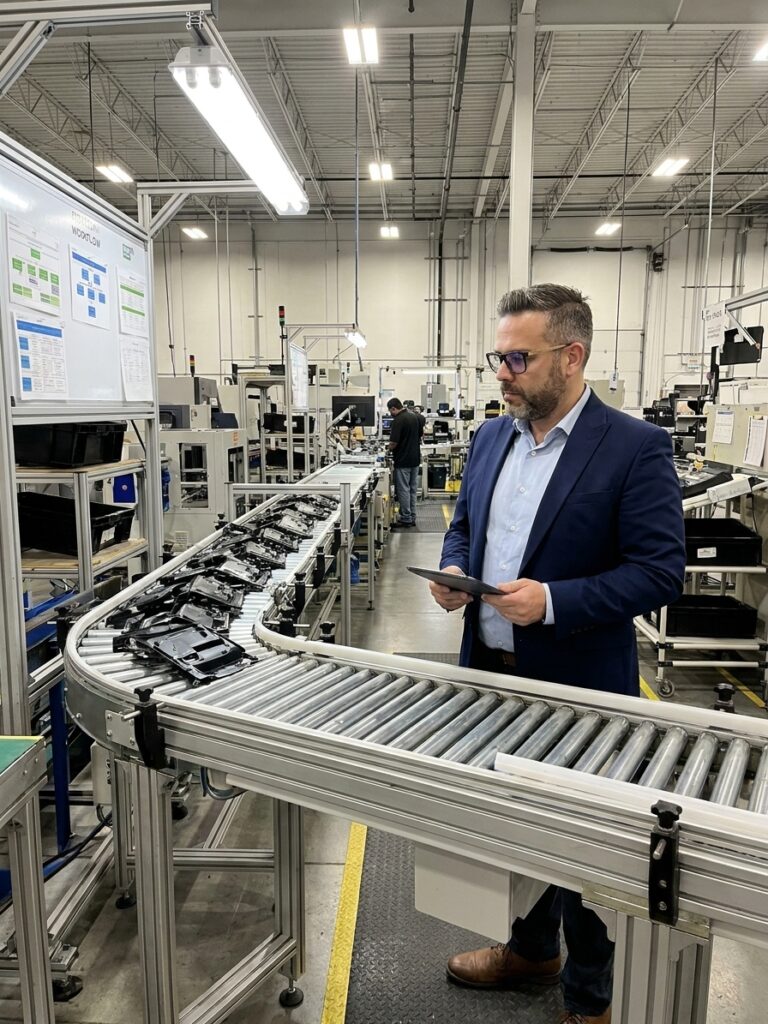
Another failure mode is the audit in disguise. A manager walks the floor with a tablet, verifying that operators are following procedures, wearing the correct PPE, and filling out the right forms. When they see something wrong, they correct it immediately. This is not observation. It is a layered process audit. Inspection creates defensiveness while observation creates understanding.
Finally, there is the photo walk. A manager takes pictures of problems, like work-in-progress accumulating between operations, and emails them under the subject line "Opportunities observed." People scramble to fix the specific items photographed, the area looks better for a week, and then it reverts. The systemic root causes driving the accumulation are never investigated.
Why Leaders Cannot Stand Still
The structural breakdown is driven by the reality that managers are trained to solve, not to observe. The entire career trajectory of a leader is built on providing answers and fixing things. You do not get promoted because you stood still and watched a machining center for forty-five minutes without intervening. The instinct to fix is simply too strong for most executives to suppress.
Furthermore, observation is a learned skill, not a natural ability. Seeing hidden waste requires repetition and coaching, much like conducting a statistical analysis or executing a VDA 6.3 audit. Most organisations send their managers to a two-hour training session, hand them a checklist, and declare the competency established. That checklist immediately transforms the walk from observation into compliance audit.
The power dynamic also distorts everything. When a senior director appears at a workstation, operator behaviour changes instantly. This is a rational response to someone who controls performance reviews and compensation. The operator shows their best work, hides their workarounds, and says what they think the manager wants to hear. Ohno’s standing circle worked partly because it normalised the presence of observers over time, reducing this Hawthorne effect.
When organisations track gemba walks as a KPI, they get exactly what they measure. They generate a high count of walks, a massive log of observations, and superficial improvements. The metric becomes the target, and the purpose of deep process understanding is lost entirely. This is Goodhart’s Law applied to manufacturing observation.
The Hidden Cost of Failed Observation
The cost of a failed gemba practice is not just wasted executive time. It is the severe opportunity cost of the operational understanding you could have gained but did not. The real walk reveals critical truths that no monthly report or shift handover log ever will.
If you cannot see the gap between documented process and reality, you cannot close it.
Genuine observation reveals that an operator has been working around a broken fixture for three months because nobody responded to their maintenance request. It reveals that the standard work document dictates a 45-second cycle time, but the actual cycle time is 62 seconds because raw material quality has degraded and the operator must manually reposition parts.
I have audited plants where the andon cord was physically disconnected because management grew tired of the line stopping. I have seen operations where the trained night-shift operator was actually instructed by someone who was never qualified themselves, allowing the process to drift for two quarters without anyone in quality engineering noticing the shift.
These are not minor administrative details. These are the hidden realities that determine whether your IATF 16949 quality system is functioning or merely documented. When gemba walks fail, resources get allocated to solving imagined problems while real ones fester, until they inevitably manifest as a major customer complaint or a catastrophic field failure.
The Protocol for Reclaiming the Practice
The path back to effective gemba practice requires leaders to abandon behaviours that have served them throughout their careers. It requires a strict, uncompromising protocol focused entirely on observation rather than intervention.
The Observation Protocol
- 01Go alone or in pairsLarge delegations create a theatrical dynamic; single observers can move without disrupting the flow.
- 02Leave the clipboard behindBring a notebook only to record questions, not to confirm beliefs or log compliance items.
- 03Stand still and watch three cyclesWatch a full part cycle three times to see the rhythm, the stutter, and the operator's hidden compensations.
- 04Ask 'show me'Invite demonstration of how they handle exceptions rather than asking them to justify their process.
- 05Do not fix anythingRecord issues for later investigation; immediate fixing shifts the dynamic to inspection and halts observation.
Finding a spot where you can see a complete cycle of work and watching it three times is the hardest discipline. The first time, you see the obvious motions. The second time, you notice details you missed. The third time, you begin to see the actual rhythm of the work, where it flows, and where the operator has to hesitate or compensate for upstream variation.
When engaging an operator, the specific language used dictates the outcome. Asking why they are doing something invites immediate defense. Asking them to show you how they handle damaged incoming material invites demonstration. Show-me questions build trust; why questions build resentment.
Above all, do not fix anything during the walk. You will see obvious inefficiencies, and every instinct will tell you to address them immediately. Resist this urge. The moment you start fixing things on the floor, the walk becomes an inspection, the operators shift into defensive mode, and the observation stops entirely.
Repetition Builds Understanding
One walk tells you very little. Ten walks to the same workstation, at different times of day and across different shifts, tell you everything. You begin to see patterns. You notice what changes and what stays constant in the manufacturing process.
Through this repetition, you build rapport with the operators, who gradually stop performing and start being honest about the process failures they work around daily. This repetition is what transforms gemba from a calendar event into a continuous operational practice.
Here is the test for whether your walks are working: the next time you are in an 8D root cause analysis meeting, ask yourself whether you have personally observed the failure mode in question. Not the Pareto chart, not the scrap report, but the actual process performed by the actual people on the actual equipment.
If the answer is no, you are making critical quality decisions about a reality you have not experienced. You are navigating by a map in terrain you have never walked. The disciplined act of standing still, watching, and not fixing is the single hardest thing a leader will do in a factory, and it is the only thing that separates organisations that improve from those that merely talk about it.