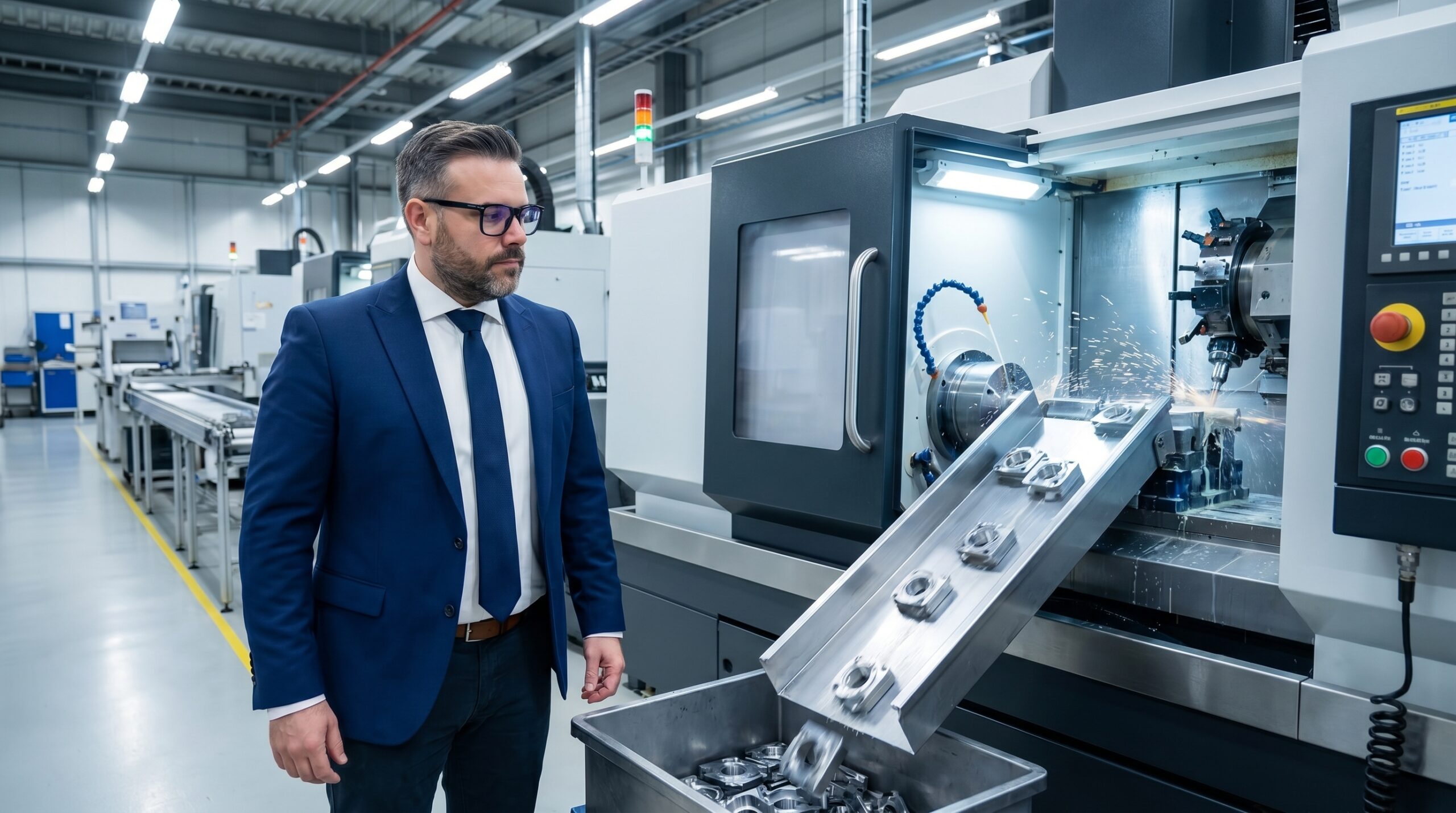
A single pneumatic ejector costing under 500 euros can cut cycle time by 15 percent. Implementing one on a pilot line is straightforward. Scaling that same mechanism across five plants running different product families exposes a far more complex engineering problem.
Volume expansion, mix changes, and multi-site replication strain simple mechanical solutions. An ejector designed for a 2-kilogram machined bracket will fail on a 12-kilogram casting. Gravity ramps built for stable geometries collapse when a design revision introduces a new centre of gravity. As these variables multiply across a corporate footprint, the mechanism itself becomes secondary to the management system governing it.
Across two decades building and transitioning quality systems in automotive and aerospace, I have seen this pattern repeat. Pilot lines achieve excellent results. The rollout stalls because the organisation treats automatic ejection as a one-off kaizen event rather than a formal standard embedded in the industrialisation process.
How Volume and Mix Undermine Pilot-Line Success
A manual unloading step that works at 500 parts per shift becomes a bottleneck at 1,500. Operators compensated on piece rate will rush the handling, driving up scratch and dent defects. First-pass yield drops precisely when the organisation needs it most. The 15 percent capacity gain predicted by the pilot study evaporates into rework costs and containment activity.
Product mix introduces another failure vector. High-mix environments running families of parts with different geometries cannot rely on a single gravity chute. An automatic ejection system must accommodate the lightest and heaviest part in the family, or the line requires rapid changeover capability for the ejector mechanism itself. Teams that overlook this during design end up disabling the mechanism and reverting to manual handling during model changeovers.
The solution is not a more sophisticated mechanism. It is a rigorous assessment of the product family matrix during the concept phase. Every variant must be tested against the proposed ejector geometry before any capital is committed. Parts that fall outside the capability of a standard pneumatic pin or ramp require documented containment actions before production launch.
Designing Ejection Standards for Industrialisation
The transition from a successful pilot to a multi-line standard fails when engineering teams copy hardware instead of codifying principles. A pneumatic cylinder that clears chips effectively on a horizontal machining centre might interfere with an operator's ergonomic reach on a vertical unit. Standardising automatic ejection requires building a design guideline, not just a parts catalogue.
Effective guidelines classify mechanisms by part weight, geometry, and surface sensitivity. A heavy, irregular casting requires a custom pneumatic fixture with guided rails. A delicate aerospace bracket with a critical surface finish demands a cushioned mechanical arm or a coated gravity slide. The standard dictates the selection logic, ensuring any engineer at any site arrives at the same technical solution for the same set of constraints.
Design Drivers for Automatic Ejection Selection
At SNOP, building a greenfield quality system for a 900-employee plant taught me that standardisation is a quality control tool. By enforcing a single ejection design standard, we reduced the variation that drives defect-related costs. A 70 percent reduction in those costs was directly tied to eliminating uncontrolled manual handling across the new equipment installations.
Integrating Ejection into PFMEA and TPM Systems
An automatic ejector is a machine element subject to wear, sensor drift, and mechanical fatigue. If it fails once per shift, operators lose confidence and revert to manual unloading. The capacity gain disappears, but the capital expense remains. Multi-site operations cannot tolerate this inconsistency. The mechanism must be engineered for reliability and maintained through a formal system.
The Process FMEA must identify the failure modes of the ejection system. A jammed ejector, a failed sensor, or a worn actuator pin are legitimate high-severity risks that halt the line. The PFMEA must drive the implementation of error-proofing devices, such as part-present sensors that confirm the ejection cycle completed before the machine re-clamps for the next cycle.
Total Productive Maintenance is the other half of the equation. The ejector mechanism must appear on the autonomous maintenance checklist. Operators must inspect the chute, clear debris, and verify sensor function during their shift. Without this TPM integration, standard work instructions are ignored, and the line degrades back to manual handling within weeks of launch.
The Network Effect of Chaku-Chaku Lines
Chaku-Chaku, or load-load lines, represent the ultimate application of automatic ejection. The operator walks in a circle, loading blank material into successive machines. Each machine automatically ejects the finished part into a chute or conveyor leading to the next station. Zero waiting, zero Work In Progress, and maximum productivity define the state.
Scaling Chaku-Chaku across a multi-site network delivers compounding returns. When a line achieves true one-piece flow, the lead time reduction frees up working capital and allows the supply chain to respond to customer demand changes within hours rather than days. Synchronising this capability across multiple facilities transforms the logistics network, allowing standardised containerisation and predictable inter-plant shipping.
A 340-euro ejector decides whether your multi-million-euro machine runs at 60 percent OEE or 85 percent.
However, the chain is only as strong as its weakest link. If one machine in the sequence lacks automatic ejection, the entire line reverts to batch processing. The operator must stop and wait for that specific cycle, accumulating WIP at the bottleneck. Achieving flow at scale requires auditing every station, not just the new ones. Legacy equipment is the usual culprit.
Building Local Engineering Capacity for Mechanism Design
Corporate engineering teams cannot design every ejector for every line across a global network. Centralised control creates a bottleneck that limits the speed of implementation. The solution is decentralisation: training site-level manufacturing engineers to design, validate, and install basic gravity and pneumatic ejection systems using standard corporate guidelines.
Multi-Site Ejection Standardisation Sequence
- 01Define standard categoriesCorporate engineering classifies ejection mechanisms by weight, geometry, and cycle time.
- 02Site-level gap assessmentLocal teams audit existing lines against the standard and log missing ejection mechanisms.
- 03Local design and procurementSite engineers select the approved mechanism and fabricate or source the hardware.
- 04Validation and PFMEA updateRun a 500-piece test, update error-proofing, and add the mechanism to the TPM plan.
- 05Central feedback loopReport failures and design improvements back to corporate to update the standard guideline.
This requires a structured competency framework. Site engineers must understand takt time analysis, part flow simulation, and ergonomic assessment. They must know how to conduct a 500-piece validation run and interpret the reliability data. If a local team cannot distinguish between a pneumatic cylinder failure caused by contaminated air lines and one caused by a sizing error, the rollout will stall.
Quality directors must build this capability through targeted training and structured standard work. The central team provides the design rules, the validated supplier list, and the PFMEA templates. The site teams execute. This division of labour allows a network of ten plants to implement automatic ejection on hundreds of machines within a single fiscal year.
Sustaining Gains Through Layered Process Audits
Automatic ejection systems degrade when management attention shifts. The mechanism jams, the operator manually unloads to keep the line running, and the shift supervisor accepts the workaround to meet the daily output target. Within a month, the mechanism is permanently bypassed, and the 15 percent capacity gain is lost.
Sustaining the gain requires integrating automatic ejection into the Layered Process Audit programme. LPA checklists must verify that the ejector is functional, the safety interlocks are engaged, and the operator is performing the intended Chaku-Chaku sequence rather than manually handling parts. These audits, conducted by management layers above the shift supervisor, prevent the silent regression to manual workarounds.
Across my career implementing IATF 16949 and AS9100 systems, the most resilient organisations treat hardware standards and behavioural standards as inseparable. An automatic ejector is a hardware solution to a process problem. Layered audits are the management system that ensures the hardware is actually used. Together, they build a scalable, sustainable manufacturing operation that extracts maximum value from its existing capital base.