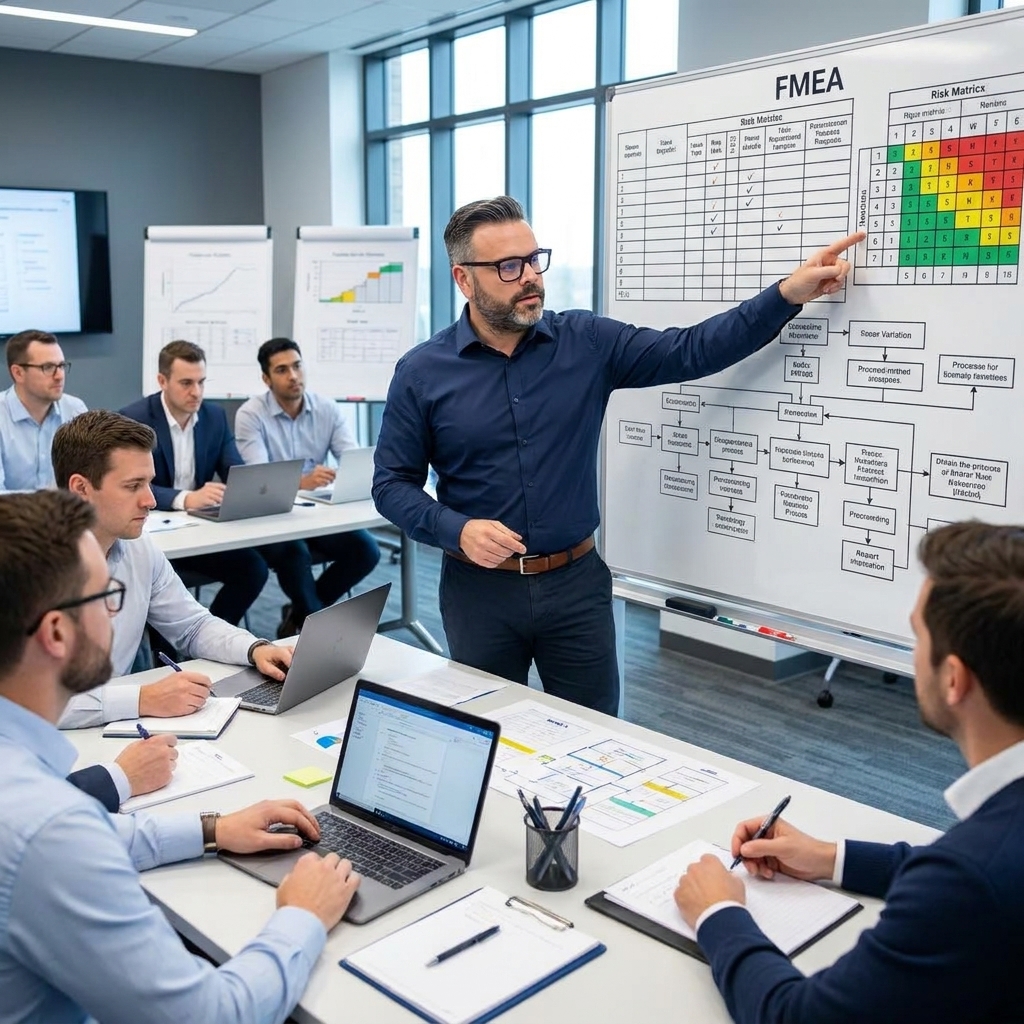
Shop
Floor Presentations and System Rollouts: My Experience at Airbus
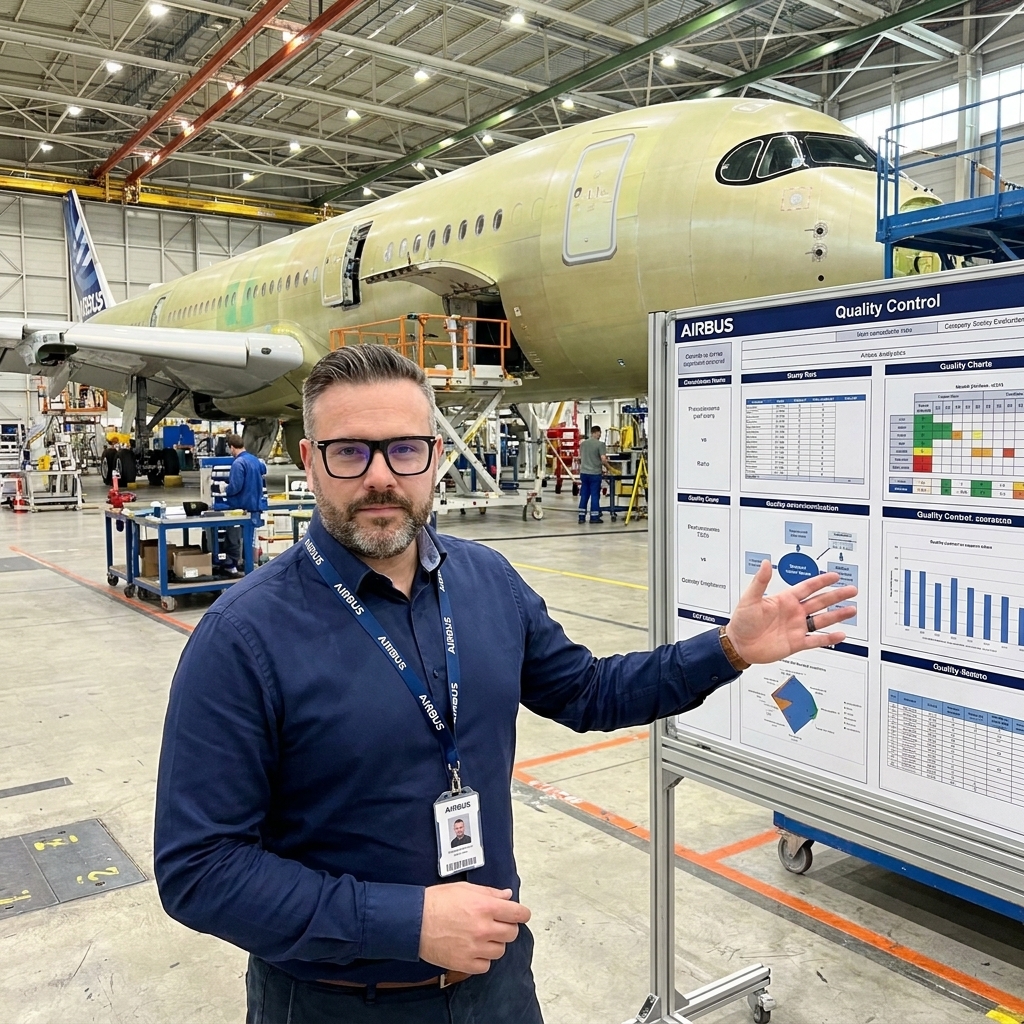
When you walk onto the Airbus shop floor in Mobile, Alabama, the
first thing that hits you is the scale. A330 Final Assembly Line
stretching out under hangar lights so bright they make everything look
sharp, every rivet and panel edge visible. The second thing that hits
you is the responsibility — when you’re standing there with a
presentation board and a room full of engineers and technicians waiting
to hear how the quality system is going to change their daily work,
you’d better know your stuff.
I’ve spent years working in quality management across automotive and
aerospace, but Airbus was different. Not because the fundamentals change
— ISO 9001, AS9100, root cause analysis, FMEA — those are the same
wherever you go. What changes is the stakes. In aerospace, a missed
defect doesn’t mean a recall. It means a potential failure at 35,000
feet. That reality changes how people listen.
The Shop Floor Presentation
The day started early. Randolph and I had been preparing the shop
floor presentation for weeks. We were rolling out a new quality
management system — a digital-first approach that would replace the old
paper-based inspection logs with a real-time, tablet-driven process. The
goal was simple: catch defects at the source, track them digitally, and
close the loop faster than anyone thought possible in a final assembly
line environment.
I stood in front of the presentation board — a large format display
we’d set up right on the shop floor, not in some conference room. That
was deliberate. If you want people to engage with a quality system, you
don’t invite them to a meeting room with stale coffee and fluorescent
lights. You go to where they work. You stand next to the aircraft
they’re building and show them how the system fits into their
reality.
The presentation covered three things:
First, the problem. Our current inspection process
had a 48-hour lag between defect detection and root cause documentation.
That meant by the time an engineer saw the paperwork, the assembly line
had already moved two stations downstream. We were chasing problems
instead of preventing them.
Second, the solution. A digital quality management
system with real-time defect logging, automated escalation triggers, and
a dashboard that gave shift leaders immediate visibility into quality
trends. Tablets at every station. No more clipboards. No more “I’ll file
the report at end of shift.”
Third, the ask. We needed every team lead to commit
to a two-week pilot on Station 7 — the wing-to-fuselage join, where
defect rates were highest. If it worked there, it would work
anywhere.
Working with Randolph
Randolph was the systems architect on this project. Where I brought
the quality expertise and the shop floor credibility, Randolph brought
the technical vision. He’d designed the dashboard architecture, selected
the tablet hardware, and worked with IT to ensure the system could
handle the secure environment requirements that come with aerospace
manufacturing data.
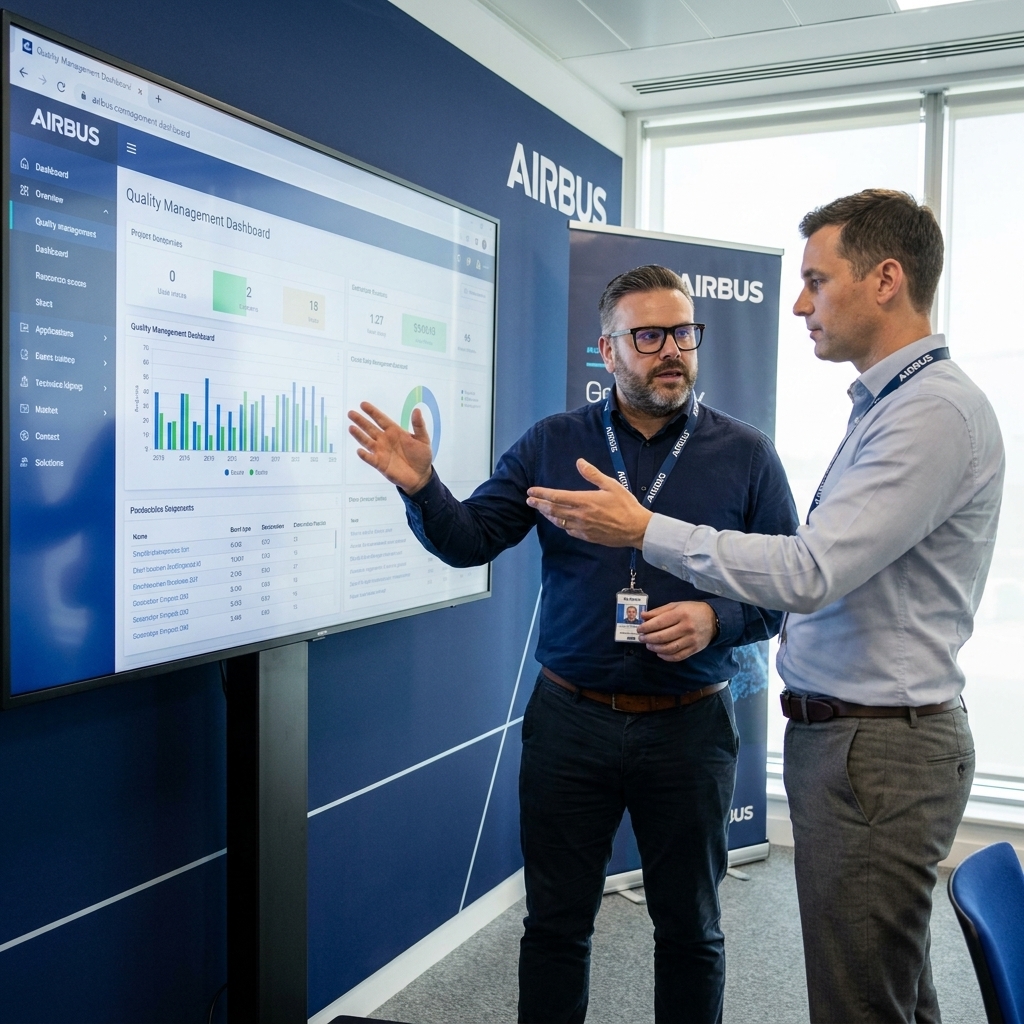
During the presentation, Randolph walked the team through the system
demo. He pulled up the live dashboard on the large screen — showing how
a defect logged at Station 7 would instantly appear on the shift
leader’s tablet, trigger an automated notification to the engineering
team, and create a digital trail that would follow the defect through
root cause analysis, corrective action, and verification.
The team watched. Some were skeptical — they’d seen “new systems”
come and go before. But Randolph was patient. He didn’t just show the
technology. He showed the workflow. He walked through a real scenario: a
fastener tolerance deviation found during wing panel inspection. Step by
step, he showed how the old process took six touchpoints and 48 hours,
and how the new system took two touchpoints and 4 hours.
That’s when the room shifted. Engineers started asking questions. Not
“why are we doing this” questions, but “how fast can we get this on our
station” questions. That’s the moment you know a presentation worked —
when the audience stops being an audience and becomes participants.
The System Presentation
After the shop floor session, Randolph and I moved to the main
conference area for the formal system presentation. This was for
management — plant directors, quality managers, IT leadership. Different
audience, different approach.
Where the shop floor presentation was about workflow and daily
impact, the system presentation was about metrics, compliance, and ROI.
I opened with the business case: the 48-hour lag in defect documentation
was costing us an estimated $2.3 million annually in rework, scrap, and
delayed deliveries. The digital QMS would reduce that lag to under 4
hours, with a projected first-year savings of $1.8 million.
Randolph then took over for the technical deep dive. He presented the
system architecture — cloud-hosted with on-premise failover, AS9100D
compliant, integrated with our existing ERP and PLM systems. He showed
the security model, the audit trail, the electronic sign-off
capabilities that would satisfy both FAA and EASA requirements.
The key moment came when Randolph demonstrated the analytics module.
Real-time SPC charts. Automated CpK calculations. Trend analysis that
could predict process drift before it resulted in defects. The plant
director leaned forward in his chair. “You’re telling me this system can
tell us we have a problem before we actually have a problem?” he
asked.
Randolph smiled. “That’s exactly what I’m telling you.”
What I Learned
Presenting on the shop floor and in the boardroom on the same day
taught me something I’ve carried into every project since: the
message doesn’t change, but the language does.
On the shop floor, I talked about fasteners, tolerances, and shift
handovers. In the boardroom, I talked about CpK, cost of quality, and
compliance metrics. But the core message was the same: we can do this
better, faster, and with fewer defects if we trust the system and commit
to the process.
Randolph taught me something too. I’d spent years as the quality
expert who knew what needed to change. Randolph was the systems expert
who knew how to make it change. Together, we were more effective than
either of us could have been alone. The best quality systems aren’t
designed by quality people alone — they’re designed by quality people
and systems people working side by side, each respecting what the other
brings.
The Pilot
Two weeks after the presentation, we launched the pilot on Station 7.
The results exceeded expectations:
- Defect documentation lag: reduced from 48 hours to
3.5 hours - First-pass yield: improved by 7.2% in the first
week - Rework hours: reduced by 31% compared to the
previous month - Employee engagement: 94% of Station 7 operators
reported the new system was “easier” or “much easier” than the paper
process
Within a month, the plant director approved a full rollout across all
assembly stations. Randolph and I spent the next quarter training team
leads, refining the dashboard based on operator feedback, and watching
the numbers improve week over week.
Why This Matters
Quality management isn’t about writing procedures that nobody reads.
It’s about standing on a shop floor, looking at the people building
aircraft, and giving them tools that make their work better. Not more
complex. Not more bureaucratic. Better.
The day Randolph and I presented on the Airbus shop floor was the day
I understood that quality systems are only as good as the people who
believe in them. And people believe in systems that are presented with
respect — respect for their time, their expertise, and their daily
reality.
That’s what we did that day. We didn’t sell software. We didn’t sell
compliance. We showed people that we understood their problems and had
built something that would help them solve those problems. Everything
else — the ROI, the metrics, the compliance — that all followed
naturally.
Peter Stasko is a Quality Director with 20+ years of experience
leading quality management systems across the automotive and aerospace
industries. He has implemented and transitioned ISO 9001 systems at
Airbus, SNOP, and WITTE Automotive, and specializes in digital quality
transformation on the shop floor.