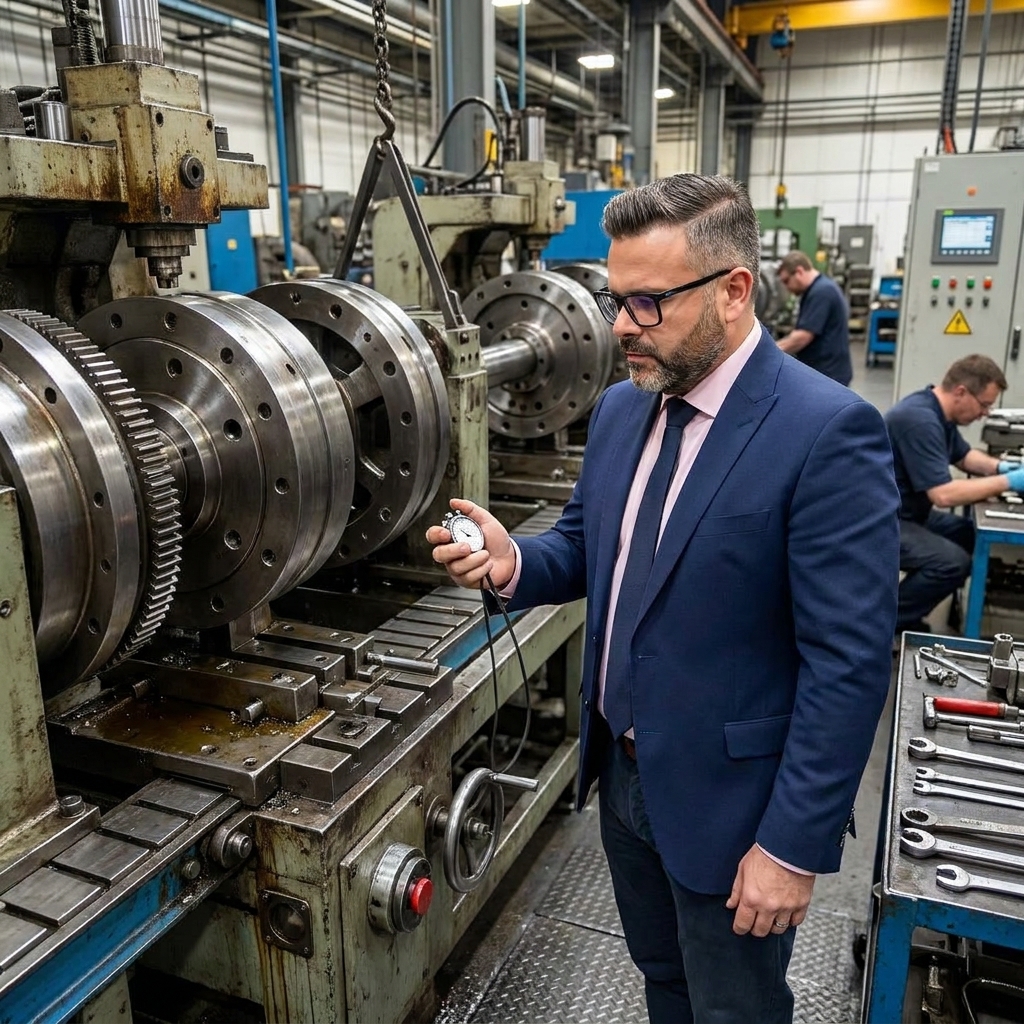
Single-Minute Exchange of Die (SMED) is the most misunderstood lever in OEE optimisation. Teams treat it as an exercise in raw speed, pressuring operators to work faster under stopwatch surveillance. The result is predictable: marginal time gains that disappear within a month, a spike in first-piece defects, and a workforce that views changeover as an emergency.
SMED is a systematic methodology for separating, converting, and streamlining setup tasks to achieve a target changeover of under ten minutes. The objective is not to accelerate labour but to engineer friction out of the process. When you move preparatory work external to the machine cycle, the press or line stays productive.
In automotive manufacturing under IATF 16949, the impact of SMED extends beyond availability. Faster changeovers enable smaller, more frequent batch sizes, directly reducing work-in-progress inventory. They also shorten the exposure window for quality drift between formal in-process inspections, supporting the core PPAP and APQP requirements for process stability.
The Internal and External Setup Distinction
The foundational mechanism of SMED is the rigid separation of internal setup from external setup. Internal setup encompasses every task that requires the equipment to be stopped: die removal, bolting, calibrating, and first-piece validation. External setup covers preparatory and finishing tasks that can occur while the machine is still running its current production.
Most manufacturing lines operate at a baseline where over half of the changeover work is done internally, needlessly extending downtime. Operators wait for the line to stop before fetching tools, searching for fasteners, or staging the next raw material packs. This behaviour is a process design failure, not a workforce competence issue.
The primary engineering goal is to relentlessly convert internal tasks into external ones. Pre-heating dies in an offline oven, pre-staging fixtures on shadow-bound carts, and standardising bolt lengths are all mechanisms that remove seconds and minutes from the critical path of the stopped machine. You cannot optimise what you have not first separated.
Implementing the Four-Phase SMED Sequence
An effective SMED deployment follows a strict sequence: Measure, Separate, Convert, and Reduce. Skipping the diagnostic phases to jump straight into 'quick wins' guarantees the gains will collapse within a quarter. You must baseline the current state before attempting to engineer the future state of the changeover.
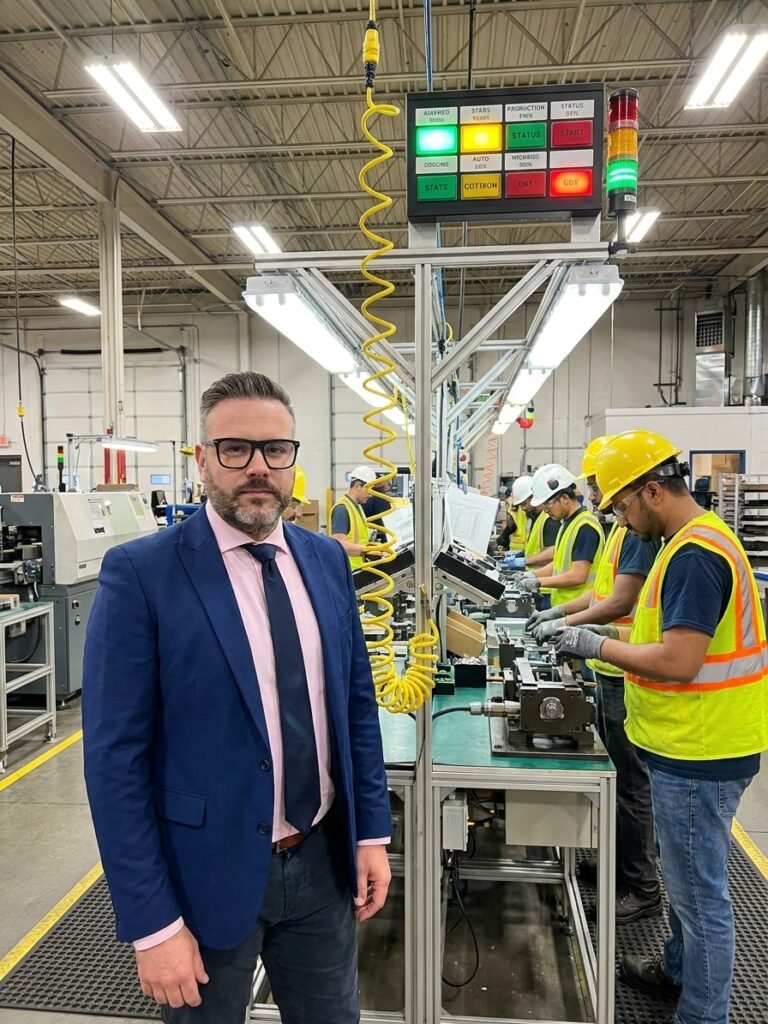
The Four-Phase SMED Implementation Sequence
- 01MeasureVideo-record current changeovers. Map every element to establish a factual baseline of internal downtime.
- 02SeparateClassify every task. Draw a hard line between what requires the machine stopped and what can be done live.
- 03ConvertRedesign tooling and staging. Shift internal tasks to external streams to eliminate machine idle time.
- 04ReduceApply 5S, quick-clamp mechanisms, and visual controls to streamline the remaining internal and external tasks.
During the Measurement phase, implement video analysis of actual changeovers. Do not rely on standard operating procedure documents, which reflect theoretical cycle times. Real-world video footage exposes hidden waste: operators hunting for specific spanners, waiting for cranes, or reversing steps because the staging area was obstructed by unrelated material.
Separation requires defining the boundaries of the internal setup with absolute clarity. Every second the machine is idle must be justified by a task that absolutely requires the equipment to be stationary. The Conversion phase then demands mechanical and logistical engineering solutions to push those boundaries back.
Standardising the Setup to Sustain Gains
The Reduction phase is where quality engineering intersects with lean manufacturing. By applying the principles of 5S and visual management, you remove the cognitive load from the operator. Shadow boards ensure the exact tool is available in seconds. Colour-coded die locators eliminate the risk of assembling components in the wrong orientation.
This standardisation is critical for maintaining the process capability (Cpk) of the first parts produced after a changeover. If an operator uses a slightly different bolting sequence or torque application method each time, the dimensional variation in the initial run will spike. This triggers scrap and requires destructive testing to validate the setup.
Target Impact Metrics of a Mature SMED Implementation
A standardised changeover must be treated like any controlled manufacturing process. Document the exact sequence, tooling, and torque values in standardised work charts. This documentation must be audited regularly, just as you would audit a critical control point in your PFMEA or control plan.
Sustaining SMED gains requires assigning clear ownership. In my experience building greenfield quality departments, processes without active ownership degrade immediately. Designate a setup technician or shift leader as the process owner, responsible for auditing changeover adherence and driving continuous time reduction through kaizen loops.
Integrating SMED With Customer Quality Requirements
For Tier 1 automotive suppliers, SMED is increasingly a mandatory customer requirement, not an internal optimisation choice. The Volkswagen Group's Formel Q capability auditing explicitly evaluates changeover management. Failing to demonstrate systematic control over setup times and first-piece validation triggers formal non-conformities and risks future sourcing.
SMED is not just about speed; it is about demonstrating engineering control over every second of your process.
Formel Q requires suppliers to prove that changeovers do not compromise the quality of subsequent runs. The SMED methodology provides the documented evidence. By separating preparation from execution, and standardising the internal setup, you guarantee a repeatable, validated first-piece outcome that satisfies the strictest automotive customer surveys.
This integration extends to modular manufacturing platforms used by manufacturers across the VW Group, including SEAT. Modular production demands frequent tool changes to accommodate derivative variants on the same line. Without aggressive SMED implementation, the logistical complexity of variant changes overwhelms the available production window, leading to missed takt times.
Securing the Return on Engineering Effort
The financial justification for SMED is found in recovered production capacity. A press line reducing its average changeover from ninety minutes to twenty minutes across three shifts gains thousands of production hours annually. This recovered capacity often negates the need for capital expenditure on additional machinery, drastically improving the return on assets.
Furthermore, the reduction of WIP inventory lowers carrying costs and reduces the risk of obsolescence. Smaller batch sizes mean quality escapes are caught earlier in the process, limiting the scope of scrap and rework. The speed and flexibility delivered by SMED directly feed the core metrics of OEE: availability, performance, and quality.
Executing SMED requires sustained engineering focus, not motivational posters. It demands mechanical modifications, rigorous time studies, and unyielding adherence to new standard work. When implemented systematically, it transforms changeover from a production constraint into a strategic advantage, allowing manufacturing to pivot with market demand without sacrificing quality or capacity.