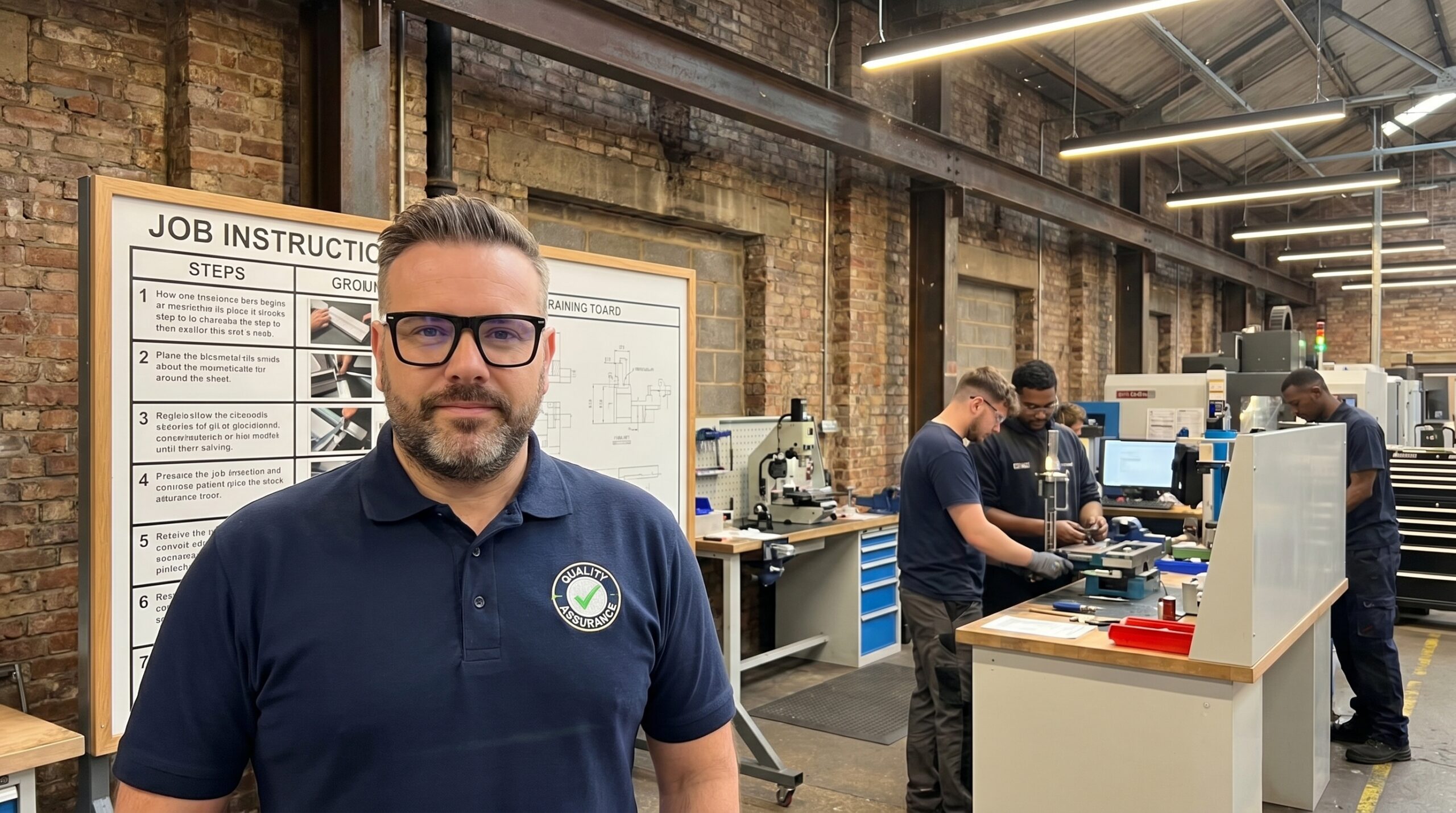
Training Within Industry (TWI) is a set of three supervisory skills developed by the US War Department in the 1940s. The programme was built to rapidly upskill a workforce of non-industrial workers into a productive manufacturing force. It comprises three modules: Job Instruction (JI), Job Methods (JM), and Job Relations (JR).
These three modules became the foundation of the Toyota Production System. Standard work, continuous improvement (Kaizen), and respect for people all trace their operational mechanics directly to TWI. Despite this heritage, most modern quality engineers and managers have never encountered the framework.
This is an operational vulnerability. Organisations can deploy statistical process control (SPC), implement PFMEA libraries, and certify to IATF 16949 or AS9100. But if frontline supervisors cannot teach a job correctly, improve a process systematically, or handle team friction, the quality management system (QMS) fails at the gemba. TWI provides the mechanical discipline required to make complex quality standards function on the shop floor.
Job Instruction: Replacing Assumptions with Standards
Job Instruction (JI) solves the most common root cause of manufacturing defects: poor knowledge transfer. The standard scenario involves a new operator being trained by a veteran who demonstrates the task once at full speed and asks if they understand. The new operator nods, and defective parts begin appearing within the hour. The resulting 8D report invariably categorises the failure as operator error.
JI eliminates this failure mode by mandating a Job Breakdown Sheet (JBS) for every critical operation. A JBS details the major steps, the key points (how to do the step), and the reasons for the key points (why it matters). When a JBS dictates the training, variation is engineered out of the learning process. The operator learns the actual standard, not a veteran operator's shortcut.
I have audited plants where control plans called out specific torque sequences, but the training instructed operators to use a different, faster pattern. The procedure specified 45 degrees; the informal training advocated 35 degrees. This 10-degree deviation reduced cycle time but also reduced fastener penetration depth by 15%, creating intermittent cold welds. The defect was designed into the training, not the process. Implementing JI eliminated the deviation and dropped the defect rate by over 90% in eight weeks.
The discipline of JI requires supervisors to follow a rigid four-step sequence. They must prepare the worker, present the operation step-by-step, have the worker perform the task while explaining the key points, and follow up on a declining schedule. This sequence replaces the ineffective buddy-system training that dominates unstructured shop floors.
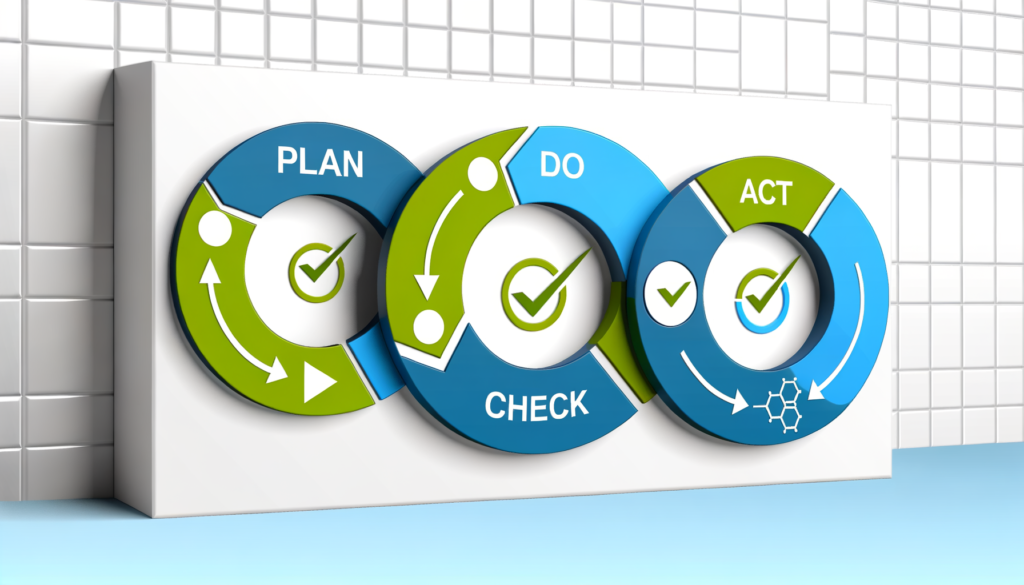
Integrating Job Instruction into ISO 9001 and IATF 16949
Modern QMS standards require competence and awareness, but they rarely prescribe the mechanism for achieving them. JI provides that mechanism. Integrating TWI into ISO 9001 or IATF 16949 requires mapping Job Breakdown Sheets directly to control plan characteristics. If a feature has a specific tolerance or critical-to-quality (CTQ) parameter, the JBS must explicitly list it as a key point with a corresponding reason.
During internal audits, quality engineers should verify the JBS against the latest engineering revision. More importantly, they must verify the operator's knowledge against the JBS. If an operator can perform the task but cannot explain the key points, the Job Instruction has failed. The standard is not the document; the standard is what the operator actually knows and does.
This integration directly supports PPAP (Production Part Approval Process) requirements. When a new process or revision is launched, the JBS becomes the primary tool for validating that operator training has occurred before the first production run. It transforms training from a sign-off sheet into a verifiable quality assurance step.
Job Methods: Democratising Continuous Improvement
Continuous improvement has become a specialist function. Organisations deploy Six Sigma Black Belts and Lean Engineers to run weeks-long kaizen events. The frontline supervisor is reduced to a bystander. TWI's Job Methods (JM) reverses this by equipping supervisors with a structured method to optimise their own processes without requiring statistical software or capital approval.
JM relies on the 5W1H method (Why, What, Where, When, Who, How) to question every detail of an existing operation. The supervisor breaks the job down, questions every step, eliminates unnecessary elements, and rearranges the sequence for efficiency. The new method is then standardised using Job Instruction.
The Job Methods Improvement Cycle
- 01Break Down the JobDocument every movement, material, and tool usage at the point of production.
- 02Question Every DetailApply the 5W1H framework to determine if each step is strictly necessary.
- 03Develop the New MethodEliminate, combine, rearrange, or simplify the remaining process steps.
- 04Apply and StandardiseRoll out the new method and lock it in with an updated Job Breakdown Sheet.
From a quality engineering perspective, JM is a powerful defect-reduction tool. Every step eliminated is a failure mode removed from the PFMEA. Every simplified movement reduces the potential for human error. When supervisors actively use JM, defect rates drop because process complexity is continuously minimised.
Job Relations: Managing the Human Variable
Quality systems are mechanical, but production is human. Job Relations (JR) addresses the friction, resistance, and interpersonal conflict that destroy process stability. Disengaged operators do not report near-misses; resentful operators hide nonconformances. JR provides supervisors with a framework to resolve these issues objectively rather than emotionally.
The module requires supervisors to gather facts, weigh options, take action, and check results. It demands consistency. A supervisor who ignores a safety violation on Monday but issues a formal warning for the same act on Friday destroys the psychological safety required for a transparent quality culture.
A QMS cannot inspect its way around a frontline culture built on fear or apathy.
JR teaches four foundational habits: providing regular feedback, giving credit, communicating changes in advance, and utilising individual abilities. These are not soft skills; they are the mechanisms that ensure operators feel empowered to stop the line when they spot a defect, rather than passing it down the value stream.
Trust is the most critical lubricant in a manufacturing environment. Without it, automated data collection and andon systems are useless because operators will simply not use them. JR builds the supervisory habits that sustain the integrity of the quality data you collect.
Implementing TWI in a Modern Manufacturing Environment
Deploying TWI requires commitment from the management team, starting with Job Instruction. Do not attempt a simultaneous rollout of all three modules. JI provides the most immediate, quantifiable return. Organisations typically see reductions in first-pass defect rates and faster time-to-competency for new hires within the first month of disciplined implementation.
Train internal certified trainers to deliver the methodology. TWI was designed as a multiplier system. These trainers must hold supervisors accountable for the output—specifically, the accuracy of Job Breakdown Sheets and the rigor of their follow-up schedules. If a supervisor skips the follow-up phase, the training fails.
Standard Onboarding vs. Job Instruction
Standard Onboarding
- Relies on experienced operators showing shortcuts
- Inherits and compounds legacy process deviations
- Leads to subjective, personality-driven defect rates
Job Instruction
- Mandates a documented Job Breakdown Sheet
- Aligns training directly with PFMEA control plans
- Produces predictable, operator-independent quality
Integrate the outputs into the QMS. Control plans should reference specific Job Breakdown Sheet numbers. Corrective actions should require a JM review when process layout is a contributing factor. Audit criteria must include operator knowledge verification, ensuring the supervisor has effectively applied the JI methodology.
Finally, measure the impact. Track OEE, scrap rates, and Cpk stability on lines where supervisors actively apply TWI versus lines where they do not. The data will confirm what Toyota discovered decades ago: structured instruction and systematic improvement outperform sophisticated systems that lack foundational shop-floor discipline.