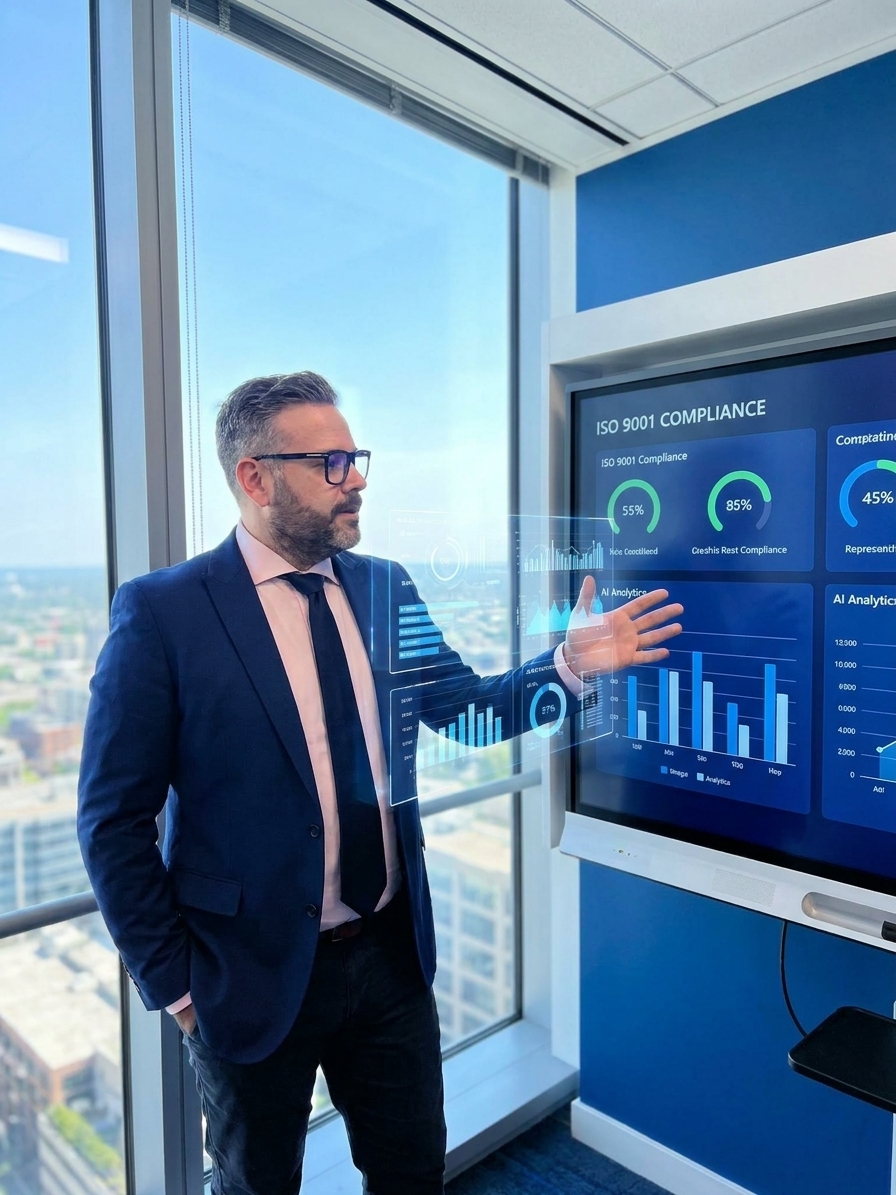
Quality managers routinely treat ISO 9001 compliance as a recurring operational hurdle. Every audit cycle triggers the same routine: excavating shared drives, reconstructing evidence chains, and scrambling to resolve documentation gaps just before the auditor arrives. This approach consumes the exact resources that should be driving process improvement.
I have transitioned and implemented ISO 9001 systems at a major aerospace manufacturer, SNOP, and WITTE Automotive. Across those environments, I watched engineering and quality teams lose weeks of productivity to manual evidence preparation. The manual approach guarantees you are managing the paperwork, not the process.
Autonomous AI agents fundamentally change the mechanics of compliance. These systems do not simply generate text for a quality manual; they connect to document control and operational systems to monitor compliance continuously, index records automatically, and identify clause-level gaps before an external audit begins.
The Cost of Manual Audit Preparation
The greatest waste in ISO 9001 compliance is evidence reconstruction. Auditors ask to see how a specific process was controlled months ago, and quality teams spend hours searching through disparate databases hoping cross-references remain intact. This is glorified data entry performed by highly skilled practitioners.
During my time managing complex quality systems, I have audited plants where smart personnel spent six weeks preparing evidence packs for a standard surveillance audit. The cost is not just labor. While your team formats spreadsheets, critical process improvements stall. Manual preparation forces a reactive posture where compliance overrides actual quality assurance.
AI agents eliminate this archaeological dig. They index every record, form, and approval natively as the events happen. When an audit occurs, evidence retrieval becomes a targeted query, reducing a forty-five-minute manual search to a thirty-second automated extraction without disrupting operations.
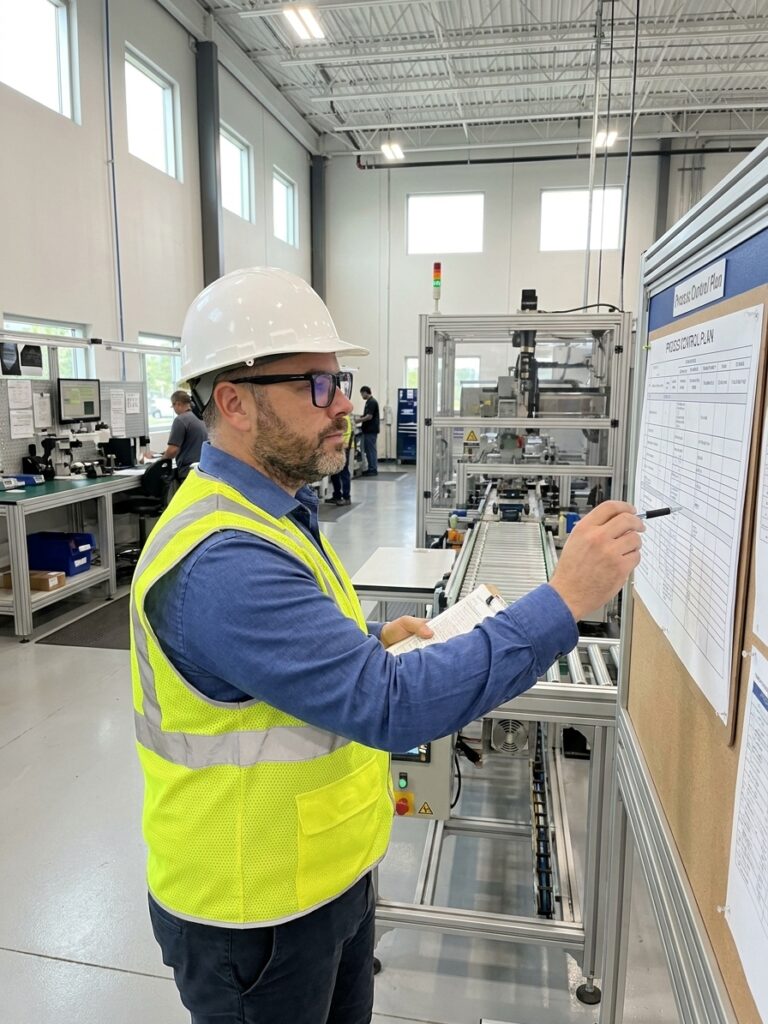
Continuous Document Lifecycle Monitoring
An AI agent integrated into your document management system does not wait for audit season. It reads every document change and version update. If someone alters a work instruction outside of the change control process, the system logs it immediately.
This continuous monitoring directly addresses one of the most common audit findings. When a procedure has not been reviewed within the mandated timeframe, the agent flags the expiration internally. This mechanism allows quality managers to correct document lifecycle failures before they ever reach an auditor's checklist.
In heavily regulated environments like aerospace and automotive supply chains, maintaining control over document revisions is paramount. Automating the monitoring of review cycles against standard requirements entirely removes the human error factor from document management.
Automated Compliance Impact Metrics
Proactive Gap Analysis Against the Standard
AI agents can map your quality management system directly against the ISO 9001 standard to identify structural gaps practically. The system might flag that your internal audit schedule covers operational clauses but missed updated requirements in clause 8.5.1 regarding the control of production and service provision.
The agent also maps systemic disconnections. It can identify if your organizational risk register fails to link directly to your CAPA system. The standard expects risk outputs to drive preventive action, and AI agents verify that this mechanical linkage exists across your digital infrastructure continuously.
By discovering these gaps during daily operations, organizations prevent minor issues from cascading into external nonconformities. Automated gap analysis shifts the quality department from a defensive audit posture to a continuous improvement posture.
I have implemented systems where continuous gap analysis significantly reduced external audit findings over consecutive cycles. Uncovering a missing cross-reference days before a stage two audit prevents costly corrective action requests and preserves both certification status and customer trust.
Addressing Implementation Realities
Quality professionals often argue that software cannot understand their specific QMS complexity. Modern agents trained on quality frameworks differentiate easily between a corrective action and a preventive action. They understand that clause 7.1.5 dictates monitoring and measuring resources differently than clause 7.1.4 governs the operational environment.
Others worry that auditors will not accept AI-generated evidence. This represents a fundamental misunderstanding of the technology. Agents do not fabricate records. They aggregate, index, and retrieve existing evidence generated by your enterprise resource planning and manufacturing execution systems.
Agents do not generate evidence; they make the evidence your operation already produces instantly findable.
Auditors evaluating your compliance want proof that your system functions effectively. Whether a human or an algorithm retrieves that cross-referenced calibration record is irrelevant to the standard. The key is ensuring the underlying operational data remains unaltered and accurate.
Structuring the Deployment Sequence
Implementing AI-driven compliance requires a phased approach to ensure system stability and data accuracy. Starting with document intelligence allows the agent to map the existing hierarchy before tackling complex operational data.
Once document control is stabilized, the agent connects to ERP and MES platforms to monitor process performance. It begins tracking nonconformity trends and corrective action statuses in real-time. At this stage, quality teams stop reacting to paperwork and start preventing process drift.
The final phase introduces predictive compliance. The agent learns from historical audit data and process metrics to forecast where the next nonconformity will appear. This transforms the audit from an annual hurdle into a byproduct of running a well-managed system.
AI Compliance Integration Phases
- 01Document IntelligenceConnect to the DMS to map hierarchy and flag expired instructions.
- 02Process MonitoringIntegrate with ERP and QMS to track live CAPA and nonconformity data.
- 03Predictive ComplianceAnalyze historical trends to identify clause-level risks before audits.
Reallocating Quality Engineering Resources
When AI handles the logistics of evidence retrieval and document monitoring, quality professionals regain their core function. At a major aerospace manufacturer, I introduced Routing Verification KPIs that cut internal lead time by 97 percent. That level of operational improvement happens when engineers analyze processes, not when they compile audit binders.
At SNOP, building a greenfield QA and QC department for a large workforce required absolute focus on process capability and defect prevention. Automated compliance tools ensure foundational administrative tasks are handled, allowing leadership to target resources toward capacity improvements and supplier development.
Shifting from manual audits to continuous compliance is a strategic operational advantage. Organizations that automate their evidence pipelines reduce costs, mitigate external nonconformities, and finally align their quality management system with the process improvement goals the standard was designed to promote.