Quality
and System 1 vs System 2 Thinking: When Your Organization’s Fast Brain
Makes Quality Decisions That Its Slow Brain Would Never Approve
The Defect That
Passed Because It “Looked Fine”
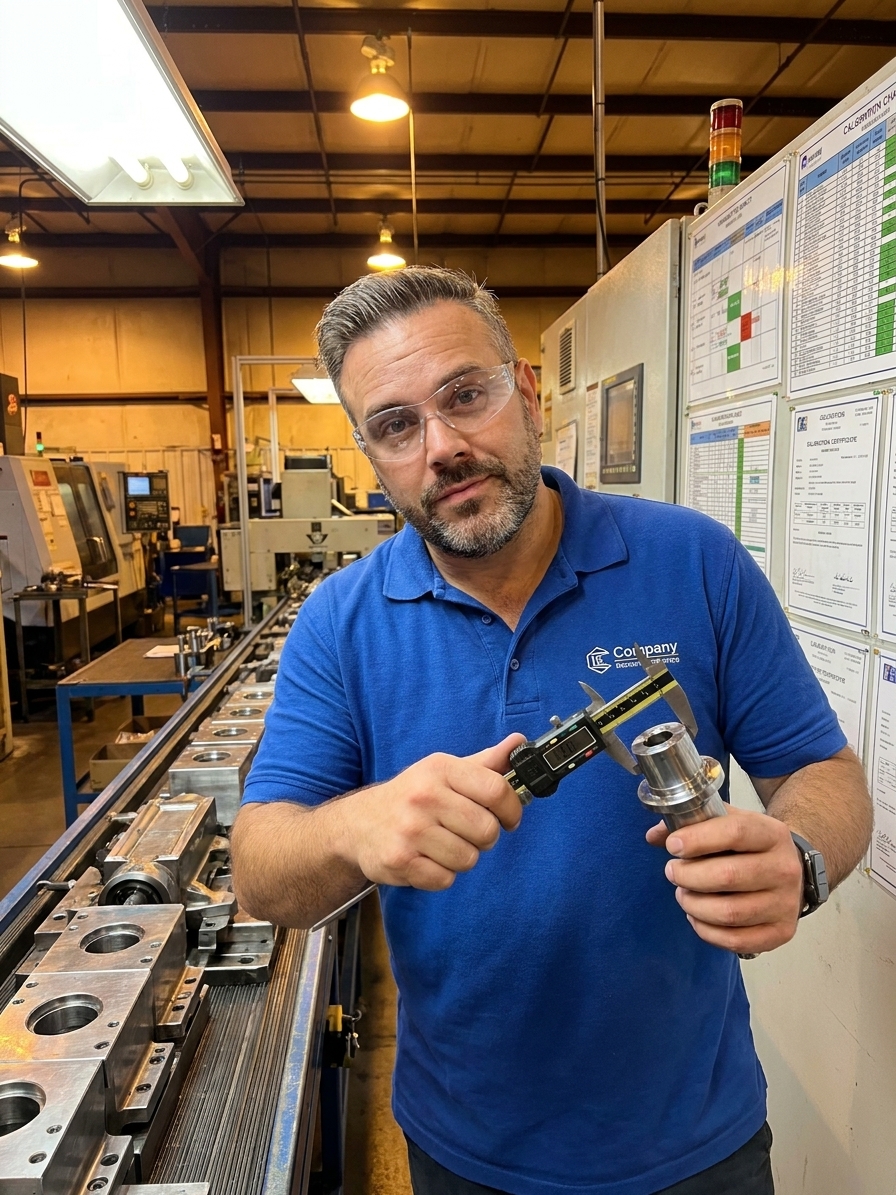
The auditor reviewed 47 parts that morning. Each one took about six
seconds. Check the dimension, compare to the spec, stamp the traveler,
move to the next. By part number 38, the rhythm was almost meditative —
a smooth, practiced flow that required almost no conscious thought.
Part number 39 was out of tolerance by 0.03mm.
The auditor stamped it “APPROVED.”
When the customer rejected the entire batch two weeks later, the
investigation traced back to that single moment. The auditor, a
fifteen-year veteran with a perfect record, sat in the conference room
staring at the nonconformance report with genuine bewilderment. “I would
have caught that,” he said. “I always catch those.”
He wasn’t lying. He genuinely didn’t remember missing it. That’s
because he hadn’t missed it with the part of his brain that makes
deliberate, careful judgments. He’d processed it with the other part —
the fast, automatic, pattern-matching system that handles 95% of our
decisions without ever asking permission.
His name was Robert. And what happened to Robert happens to every
quality professional on the planet, more often than any of us would like
to admit.
Two Brains, One Inspector
Daniel Kahneman spent decades mapping the architecture of human
decision-making, and what he found fundamentally changes how we should
think about quality systems. He identified two distinct modes of
thinking that operate in all of us, all the time:
System 1 is fast, automatic, and intuitive. It’s the
part of your brain that recognizes a face in a crowd, catches a ball
thrown without warning, or — crucially for quality professionals — makes
a judgment about whether something “looks right.” System 1 operates in
milliseconds. It doesn’t deliberate. It pattern-matches against
everything you’ve seen before and delivers an instant verdict. It’s
enormously efficient. It’s also enormously biased.
System 2 is slow, deliberate, and analytical. It’s
the part of your brain that solves a multiplication problem, follows a
complex procedure step-by-step, or carefully measures a dimension
against a specification with full conscious attention. System 2 is
accurate but expensive — it demands mental energy, concentration, and
time. And here’s the critical insight: System 2 is lazy. It activates
only when System 1 can’t handle the situation on its own.
Most of the time, this arrangement works beautifully. System 1
handles the routine, System 2 handles the complex, and we navigate the
world with a reasonable balance of speed and accuracy.
But quality inspection doesn’t work that way.
Quality inspection creates a unique cognitive trap. The inspector
sees hundreds of parts that conform. System 1 learns, very quickly, that
the answer is almost always “pass.” It builds a mental model: thing
looks like the other things → approve. This isn’t laziness. This
isn’t incompetence. This is the human brain functioning exactly as it
evolved to function — conserving expensive analytical energy for
situations that genuinely require it.
The problem is that in quality, the situations that genuinely require
System 2 — the outliers, the near-misses, the subtle defects — look
almost identical to the situations that don’t. A part that’s 0.03mm out
of tolerance doesn’t look visually different from a part that’s 0.03mm
within tolerance. There’s no visual alarm bell that wakes up System 2
and says “pay attention to this one.”
So System 1 handles it. And System 1, operating on pattern and
probability rather than measurement and analysis, makes the call that
it’s been making for the last 38 parts: approve.
This isn’t a training problem. You can train inspectors until they
can recite specifications in their sleep, and System 1 will still take
over on part number 38. This isn’t a motivation problem. The most
dedicated, conscientious inspector in the world still has a brain that
optimizes for efficiency. This is an architecture problem — a
fundamental mismatch between how human cognition works and what quality
systems demand from it.
Where System
1 Lives in Your Quality Organization
If you think this only applies to inspectors at a bench, you’re
missing the full picture. System 1 thinking permeates every level of a
quality organization, and most of the time, nobody notices because the
decisions feel right.
In Root Cause Analysis: A team investigates a defect
and arrives at “operator error” within minutes. System 1 has seen this
pattern before — a person made a mistake, the defect occurred, therefore
the person caused the defect. It’s satisfying, it’s quick, and it’s
almost always incomplete. System 2 would ask: “Why did the system allow
the operator to make that error? What conditions made it likely? What
would happen if a different operator were in that station?” But System 2
wasn’t invited to the meeting. System 1 closed the case.
In Supplier Selection: A procurement team evaluates
a new supplier and decides within the first ten minutes of the facility
tour that this is a “quality operation.” System 1 is reading signals —
clean floors, organized toolboards, confident management. These are
proxies for quality, not evidence of it. System 2 would demand process
capability data, audit results, corrective action history. But System 1
already made the call, and now System 2 is being used to justify it
rather than evaluate it.
In Corrective Action Effectiveness: A CAPA is closed
because the defect rate dropped after the corrective action was
implemented. System 1 sees a temporal correlation and infers causation.
System 2 would ask whether the defect rate fluctuated naturally, whether
other variables changed simultaneously, whether the sample size is
sufficient. But the CAPA is already closed, the auditor is satisfied,
and the genuine root cause is still at large.
In Audit Findings: An auditor writes up a minor
nonconformance because something “feels off” about how a process is
being executed, while missing a major systemic issue because it doesn’t
trigger any intuitive alarms. The allocation of audit attention is
heavily influenced by what System 1 considers interesting or suspicious,
not by what statistical analysis would identify as the highest risk.
In Management Reviews: Leadership reviews quality
dashboards and makes strategic decisions based on trend lines that
System 1 interprets as improving, stable, or deteriorating — often
without the statistical rigor that System 2 would demand. A process that
appears to be improving may simply be exhibiting normal variation around
a stable mean. But the narrative of improvement is compelling, and
System 1 writes the story.
Every one of these scenarios shares the same structure: a judgment
that feels right, made quickly, based on pattern recognition rather than
analysis, and never subjected to the slower, more expensive scrutiny
that would reveal its flaws.
The Cruel Mathematics of
Repetition
Here’s what makes this particularly insidious for quality
professionals: the better you are at your job, the more vulnerable you
become.
An experienced inspector has seen thousands of conforming parts.
System 1 has been trained, through thousands of repetitions, to
recognize “conforming” as the default state. The stronger this pattern
becomes, the more energy the brain saves by delegating to System 1, and
the harder it becomes for a borderline case to trigger System 2
engagement.
A junior inspector, by contrast, hasn’t built this pattern yet. Every
part requires more conscious attention. The inspection is slower, more
deliberate, and — paradoxically — more likely to catch borderline
defects because System 2 is still engaged.
This creates a perverse dynamic: the organization values experienced
inspectors precisely because they’re faster and more efficient, but the
very efficiency that makes them valuable is the efficiency of System 1,
which is the source of the missed defects.
I saw this play out at an automotive components plant in Slovakia. A
ten-year veteran of the final inspection line missed a crack in a brake
caliper housing that a six-month trainee caught on her very first day.
The investigation revealed that the veteran processed each part in an
average of 4.2 seconds. The trainee took 11.8 seconds — nearly three
times as long. Management had been planning to let the trainee go for
being “too slow.”
They reconsidered.
The veteran wasn’t failing because he was incompetent. He was failing
because his competence had become automatic, and automatic processing is
System 1’s territory. The trainee wasn’t succeeding because she was
exceptional. She was succeeding because she hadn’t yet developed the
automatic patterns that would eventually make her faster — and more
vulnerable.
Designing Quality
Systems for Two Brains
The organizations that understand this cognitive architecture don’t
try to eliminate System 1 thinking. They know that’s impossible.
Instead, they design their quality systems to account for both modes —
leveraging System 1’s speed where it’s reliable, and creating structures
that force System 2 engagement where it matters most.
Interrupt the Pattern: The most effective technique
is also the simplest: break the rhythm of automatic processing. Rotate
inspectors between stations. Change the order of inspection steps
periodically. Introduce known “defect seeds” into the inspection stream
— conforming parts that have been deliberately marked with subtle
defects — and track whether inspectors catch them. These pattern
interruptions force System 2 to re-engage, snapping the brain out of
autopilot.
A medical device manufacturer in Switzerland implemented a system
where inspectors received a “challenge part” — a deliberately defective
component — at random intervals, averaging one every 47 parts. If the
inspector caught the defect, the shift continued. If they missed it, the
line stopped for a five-minute recalibration break. The detection rate
for real defects improved by 34% within three months. The inspectors
weren’t working harder. They were just less comfortable letting System 1
run the show.
Separate Measurement From Judgment: Don’t ask
inspectors to measure and judge simultaneously. Measurement is a System
2 activity — it requires focused attention on a specific dimension.
Judgment is where System 1 sneaks in, especially when the measurement is
close to the specification limit. Automate the measurement wherever
possible and present the result as a clear pass/fail indicator. This
removes the temptation for System 1 to “round” a borderline measurement
in the direction that requires less action.
Structure the Decision Framework: When System 2 is
required for complex decisions — root cause analysis, corrective action
effectiveness, process changes — provide explicit frameworks that force
analytical thinking. The Five Whys technique, Ishikawa diagrams, and A3
thinking aren’t just tools for organizing information. They’re cognitive
prosthetics that keep System 2 engaged. Without them, a problem-solving
team will gravitate toward the first explanation that feels right —
which is System 1’s specialty.
Build in Reflection Points: Quality systems often
treat decisions as events — something that happens at a specific moment
and then is done. But System 1’s influence extends to how we remember
and interpret decisions after the fact. Build formal reflection points
into your processes: before closing a CAPA, before approving a supplier,
before signing off on a process change. Ask: “If I were seeing this for
the first time, with no context about what happened before, would I make
the same decision?” This question is specifically designed to bypass the
narrative that System 1 has constructed and re-engage System 2’s
analytical capacity.
Respect Cognitive Depletion: System 2 runs on a
finite pool of mental energy. Every complex decision, every forced
analytical moment, every interruption of automatic processing drains
this pool. By the end of a shift — or the end of a long audit day, or
the end of a grueling management review — System 2 is running on fumes,
and System 1 is making more and more of the decisions. Schedule critical
quality decisions for when people are fresh. Don’t put your most
important inspection at the end of an eight-hour shift. Don’t schedule
root cause analysis for late Friday afternoon. Don’t conduct supplier
audits on the last day of a week-long audit trip.
The Dashboard Trap
One of the most dangerous manifestations of System 1 thinking in
modern quality management is the dashboard. Quality dashboards were
designed to make data accessible and actionable. Instead, they’ve become
System 1 playgrounds.
A quality manager glances at a dashboard. Green indicators across the
board. System 1 registers “everything is fine” in about 200
milliseconds. The quality manager moves on to the next task.
What System 1 didn’t do — and wasn’t designed to do — is ask whether
the green indicators are measuring the right things, whether the
thresholds that define “green” are appropriate, whether the data behind
the indicators is reliable, or whether the absence of a metric is more
concerning than the presence of a green one.
System 2 would ask all of those questions. But System 2 doesn’t get
triggered by a green dashboard. It gets triggered by anomalies,
surprises, and things that don’t fit the pattern. A dashboard that shows
everything as expected is practically designed to keep System 2
asleep.
The organizations that use dashboards effectively understand this.
They don’t just display status. They embed analytical prompts: “This
metric has been stable for 90 days. Is this stability or stagnation?”
“This process has not been audited in 14 months. Risk assessment
updated?” These aren’t just notifications. They’re System 2 wake-up
calls — deliberate interruptions designed to prevent the comfortable
glide of automatic processing.
What It Costs to Ignore This
The costs of System 1 dominance in quality aren’t theoretical. They
show up in recalls, warranty claims, customer defections, and regulatory
actions — all traced back to decisions that “felt right” in the moment
but couldn’t withstand analytical scrutiny.
I worked with an aerospace supplier that had a persistent problem
with dimensional nonconformances on a critical turbine blade root. The
defect rate would spike, the team would investigate, they’d find a
cause, implement a correction, and the rate would drop. Then it would
spike again. This cycle repeated for eighteen months.
When we finally applied systematic System 2 thinking — controlled
experiments, statistical analysis of process variables, deliberate
hypothesis testing rather than pattern-based inference — we discovered
that the root cause wasn’t any of the things the team had “identified”
in their previous investigations. The actual cause was a thermal
variation in the heat treatment furnace that correlated with ambient
temperature changes, which happened to align with the production
schedule in a way that created a misleading pattern. System 1 had seen
the pattern and generated a compelling narrative. Three different “root
causes” had been identified and “corrected” over those eighteen months.
None of them were real.
The actual fix took four days to implement. The eighteen months of
chasing System 1’s phantoms cost the company over €2.3 million in scrap,
rework, and expedited shipping — not to mention the erosion of customer
confidence that no amount of corrective action paperwork could fully
restore.
The Uncomfortable Truth
Here’s what makes this topic genuinely uncomfortable for quality
professionals: acknowledging System 1’s role in quality failures means
acknowledging that expertise can be a liability. The more experienced
you are, the more powerful your System 1 patterns become, and the more
seamlessly they operate without your awareness.
This doesn’t mean experience is bad. It means experience needs
structure. The best quality professionals I’ve worked with aren’t the
ones who trust their instincts. They’re the ones who respect their
instincts enough to know when they need to override them. They’ve
developed a meta-awareness — a quiet voice that says, “This feels
obvious. That’s exactly why I should check.”
Building that meta-awareness across an organization isn’t a training
initiative. It’s a cultural shift. It means valuing the person who slows
down the line to double-check a measurement more than the person who
keeps the line moving. It means rewarding the team that takes three days
to find a root cause over the team that closes the CAPA in three hours.
It means designing systems that assume human cognition has limitations,
rather than systems that assume humans will overcome their limitations
through willpower and good intentions.
Robert, the auditor who missed the 0.03mm deviation, didn’t need
retraining. He needed a system that recognized his brain was doing
exactly what brains do — and created the conditions for System 2 to show
up when it mattered.
Your quality system isn’t just a set of procedures and
specifications. It’s a cognitive environment. The question isn’t whether
your people will default to System 1 thinking. They will. The question
is whether your system is designed to catch them when they do.
Peter Stasko is a Quality Architect with 25+ years of experience
transforming organizations across automotive, aerospace, and
pharmaceutical industries. He has spent decades studying not just what
goes wrong in quality systems, but why human beings — intelligent,
experienced, well-intentioned human beings — make the decisions that
lead to those failures. His work focuses on designing quality systems
that work with human cognition rather than against it.