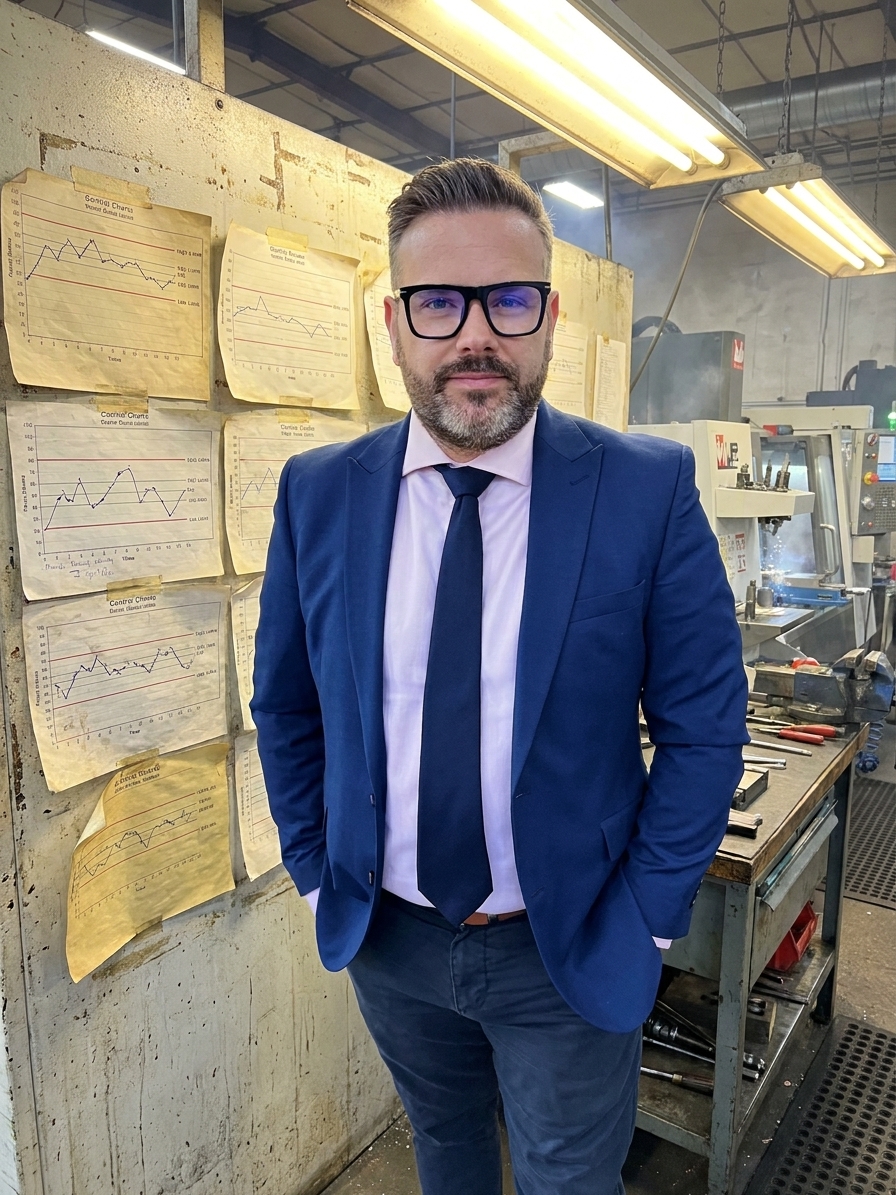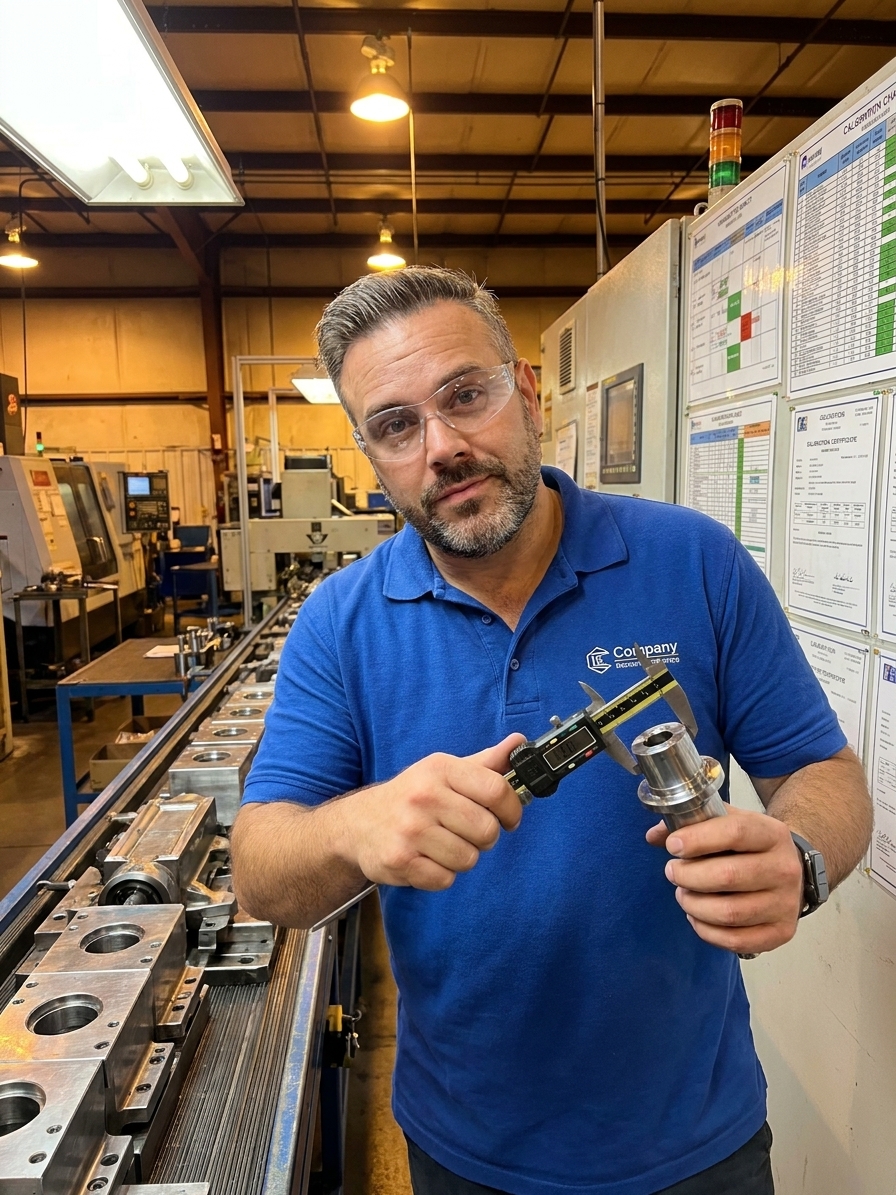
You have seen this person on your production floor. The operator who
has been running the same machine for three years, who has never read
the work instruction, who has never attended a formal training session,
who learned everything from the person before them — who learned
everything from the person before them — and who will tell you with
absolute, unshakeable conviction that they know exactly what they are
doing.
They are not lying. They genuinely believe it. And that is the
problem.
The Dunning-Kruger effect is a cognitive bias in which people with
limited knowledge or competence in a domain greatly overestimate their
own knowledge or competence. It is not about stupidity. It is about a
meta-cognitive failure: the very skills required to be competent are the
same skills required to recognize competence. If you cannot evaluate
whether you are doing something correctly, you also cannot evaluate
whether your self-assessment of doing it correctly is correct. You are
trapped in a loop of unwarranted confidence, and the trap is invisible
from the inside.
In manufacturing quality, this effect is not a curiosity. It is a
structural threat.
The Competence-Confidence
Inversion
The research by David Dunning and Justin Kruger in 1999 demonstrated
something that manufacturing professionals have observed anecdotally for
decades: the people who perform worst on tests of knowledge and skill
consistently estimate their own performance as above average. Not
slightly above average. Significantly above average. People scoring in
the bottom quartile routinely estimate their performance in the top
quartile.
Meanwhile, the people who actually are competent tend to
underestimate their relative ability. They know enough to know what they
do not know. They see the complexity. They recognize the edge cases.
Their confidence is moderated by awareness.
In a manufacturing environment, this creates a dangerous asymmetry.
The inspector who barely understands the specification will flag your
product with absolute certainty. The operator who does not grasp the
process parameter will adjust it with complete confidence. The engineer
who misapplies the statistical tool will present the analysis without a
flicker of doubt. And the people who actually understand what is
happening will hesitate, qualify their answers, and say things like “it
depends” and “I would want to check.”
Guess whose opinion carries more weight in a meeting.
Where It Shows Up on
Your Production Floor
Incoming Inspection: Your receiving inspector checks
raw materials against a specification they have never read in full. They
measure the dimensions they always measure, using the gauges they always
use, and sign off the lot. They have been doing it this way for years.
They are confident. They have never caught a defect — which they
interpret as evidence that no defects exist, rather than evidence that
they would not recognize a defect if it arrived with a label on it.
Meanwhile, the one inspector who actually studied the material
specification and noticed that the tolerance stack-up creates an
interference condition at the upper limit — that inspector raises a
concern and is told “we have never had a problem with this
supplier.”
Process Operation: Your CNC operator has been
running the same part number for eighteen months. They have developed a
feel for it. They know the sounds the machine makes, the way the chips
should look, the rhythm of the cycle. They have never looked at the
process capability study. They do not know what Cpk means. They have no
idea that the process drifted six months ago and that the dimensional
they are most proud of — the one they check with a caliper and always
find within tolerance — is actually riding the edge of a bilateral spec,
and the gauge R&R on that caliper is so poor that half the variation
they see is measurement noise. They are confident. They produce good
parts. They have always produced good parts. The fact that “good parts”
means “parts that passed final inspection” and final inspection has the
same calibration problem they do — this thought has never occurred to
them.
Quality Engineering: Your quality engineer has a
Green Belt certificate from a two-day course. They can run a Pareto
chart. They can fill out an 8D report. They have conducted three FMEAs,
all of which were completed after the design was frozen, all of which
concluded that the existing controls were adequate, and all of which
missed the failure mode that actually occurred in the field. They are
confident in their risk assessments. They have a checklist. The
checklist was written by someone who also had a Green Belt certificate
from a two-day course.
Management Decision-Making: Your plant manager has
been in manufacturing for thirty years. They have run three plants. They
know quality. They will tell you this themselves. They cannot read a
control chart. They do not know the difference between common cause and
special cause variation. They have never read anything by Deming, Juran,
or Shewhart. But they have opinions about SPC, about sampling plans,
about corrective actions — and those opinions carry the weight of three
decades of experience. The experience of managing quality departments
without ever understanding what those departments were actually supposed
to do.
Why
Training Makes It Worse Before It Makes It Better
Here is one of the most counterintuitive findings from the
Dunning-Kruger research: initial training can actually amplify the
effect. A little knowledge does not create a little humility. It creates
a lot of confidence.
You have seen this after your ISO 9001 awareness training. The
two-hour session where everyone learned about the quality policy and the
importance of doing things right the first time. After which your
operators, who still could not interpret a control chart if their jobs
depended on it (and their jobs do depend on it), suddenly felt fully
informed about quality management. They attended the training. They have
the certificate. They are quality-conscious now.
This is the training equivalent of giving someone a driver’s license
after they watched a video about steering wheels. They now feel licensed
to drive. They are not. But they believe they are, and their belief is
reinforced by the piece of paper you handed them.
The formal education threshold where confidence begins to calibrate
with actual competence is much higher than most organizations realize.
It requires not just knowing the procedure but understanding why the
procedure exists, what it prevents, and what happens when it fails. It
requires the ability to recognize a novel situation that does not fit
the procedure and respond appropriately. That level of competence — true
competence — comes from sustained, deliberate practice with feedback,
not from a PowerPoint deck and a signature on a training matrix.
The Feedback Vacuum
The Dunning-Kruger effect thrives in environments with poor feedback.
And manufacturing quality, despite its reputation for measurement and
data, is riddled with feedback vacuums.
Consider the inspector who approves a lot. What feedback do they
receive about whether their judgment was correct? If the lot passes
downstream without complaints, they assume their inspection was
accurate. But the absence of downstream complaints does not mean the lot
was defect-free. It means the defects were not detected downstream
either. The inspector’s confidence is reinforced by a feedback loop that
confirms nothing except that nobody caught anything.
Or consider the operator who produces parts that pass inspection.
They believe they are producing good parts. Whether they actually are
depends on the adequacy of the inspection — the same inspection that may
be suffering from its own Dunning-Kruger problem. Two layers of
unwarranted confidence, each reinforcing the other, both detached from
the actual quality of the output.
The feedback vacuum is especially severe for preventive actions. When
your quality engineer’s risk assessment identifies a potential failure
mode and recommends a control, and the failure mode never materializes,
who knows whether the control was responsible or whether the risk
assessment was wrong? The engineer claims credit. The organization
believes the system works. But you cannot distinguish effective
prevention from irrelevant prevention using only the absence of failure.
Yet that is exactly the metric most organizations use.
How to Break the Cycle
Blind Proficiency Testing: Stop telling people they
are being tested. Everyone performs differently when they know they are
under evaluation — that is the Hawthorne Effect, and you already have an
article about that. Instead, embed proficiency checks into normal
workflow. Send known-defective samples through incoming inspection
without telling the inspectors which lots contain them. Compare operator
measurements against a reference standard they do not know is being
used. The results will be uncomfortable. That discomfort is
information.
Calibrate Confidence Explicitly: After training, do
not just test knowledge. Test people’s calibration — how well their
confidence in their answers matches their actual accuracy. A quality
engineer who is 90% confident in their FMEA severity rating and is
correct 90% of the time is well-calibrated. A quality engineer who is
90% confident and correct 40% of the time is dangerous — not because
they are wrong, but because they do not know they are wrong. Calibration
training, where people explicitly practice estimating their own
uncertainty, is one of the few interventions shown to reduce the
Dunning-Kruger effect.
Separate Process Authority From Process
Understanding: Your most experienced operators are often given
the most authority — training new operators, making process adjustments,
approving deviations. But tenure is not competence. Before granting
process authority, verify process understanding. Not with a written test
that tests memorization. With scenario-based assessments that test
judgment. Ask the operator what they would do if a parameter drifted to
the edge of the control limit. If their answer is “adjust it back to
nominal,” they have revealed that they do not understand common cause
variation. That is useful information, even if it is not what you wanted
to hear.
Create Structured Dissent: The Dunning-Kruger effect
is hardest to combat when the overconfident person is the most senior
person in the room. You need mechanisms for dissent that do not require
junior people to challenge senior people directly. Peer review of
quality decisions. External audits that are actually independent.
Cross-functional reviews where manufacturing assumptions are questioned
by people who are not invested in them. The goal is not to create
conflict. The goal is to ensure that confidence is not the only currency
in the room.
Measure What People Actually Do, Not What They Say They
Do: Your training records show that every operator has been
trained on the work instruction. Your audits show that the work
instruction is available at the workstation. Your operators will tell
you they follow the work instruction. If you stand on the floor and
watch — actually watch, for a full shift, without intervening — you will
find that the work instruction is followed approximately never. Not
because operators are defiant. Because the work instruction describes a
process that was written by an engineer who has never run the machine,
and the actual process that produces acceptable parts is different from
the documented process, and the operators know this, and they are
correct — but they have also incorporated shortcuts and approximations
that work most of the time and fail catastrophically some of the time,
and they cannot distinguish between the essential steps and the
negotiable ones because they have never been taught the underlying
principles. The training records say they have. The training records are
part of the problem.
The Organizational
Dunning-Kruger
It would be comforting if this effect only applied to individuals. It
does not. Organizations exhibit collective Dunning-Kruger dynamics all
the time.
The company that has been ISO 9001 certified for fifteen years and
believes it has a mature quality system. The company that has never had
a major customer complaint and believes its quality is excellent. The
company that has always passed its audits and believes its processes are
well-controlled. These beliefs may be justified. Or they may be
artifacts of inadequate measurement, undemanding customers, and auditors
who checked the documentation without checking the reality.
The organizational version is more dangerous because it is
self-reinforcing at a systemic level. The organization that is confident
in its quality system does not invest in improving it. The lack of
investment preserves the status quo. The status quo produces no obvious
failures. The absence of obvious failures reinforces the confidence.
Round and round, until something breaks — a recall, a customer loss, a
regulatory action — and the organization is shocked, absolutely shocked,
that its quality was not what it believed it to be.
What Competence Actually
Looks Like
The antidote to the Dunning-Kruger effect is not humility in the
abstract. It is specific, earned, calibrated understanding. Competence
looks like this:
The inspector who can explain not just what they measure but why each
measurement matters, what failure mode it detects, and what the
historical distribution looks like. The operator who can describe not
just the sequence of steps but the physical process behind each step,
what happens when parameters deviate, and how they would know. The
engineer who can articulate not just the tool they used but the
assumptions behind it, when those assumptions are violated, and how
sensitive the conclusion is to each assumption. The manager who can say
“I do not know” and mean it, and who knows whom to ask.
These people exist in your organization. They are probably not the
loudest voices in your meetings. They are probably not the most
confident. That should concern you.
The Uncomfortable Mirror
If you have read this far and are thinking about the people on your
floor — the operators, the inspectors, the engineers — you are missing
the point. The Dunning-Kruger effect applies to you, too. It applies to
the person writing this article. It applies to every quality
professional who has ever looked at a problem and thought they
understood it.
The most insidious feature of this cognitive bias is that awareness
of it does not grant immunity from it. Knowing that incompetent people
overestimate their competence does not make you any better at
calibrating your own. It might even make it worse, by giving you a false
sense of meta-cognitive superiority. “At least I am aware of the
Dunning-Kruger effect,” you think, not realizing that this thought is
itself an uncalibrated confidence judgment.
The only reliable defense is external calibration. Not
self-assessment. Not introspection. Not reading articles about cognitive
biases and nodding wisely. Actual measurement of your own performance
against an objective standard, performed by someone other than you, with
results you cannot explain away.
Do that for your organization. Do that for your people. And if you
are honest, do that for yourself.
Peter Stasko is a Quality Architect with over 25
years of experience in manufacturing quality management. He has
implemented and audited quality systems across automotive, aerospace,
and industrial sectors, and he writes about the patterns he has seen
repeated across hundreds of factories — the ones that work, and the ones
that keep happening anyway.