Quality and the Broken Windows Theory: When Your Organization’s Small Disregards Become Its Biggest Failures — and the Minor Violations Everyone Overlooked Became the Culture That Made Major Defects Inevitable
The Crack Nobody Noticed
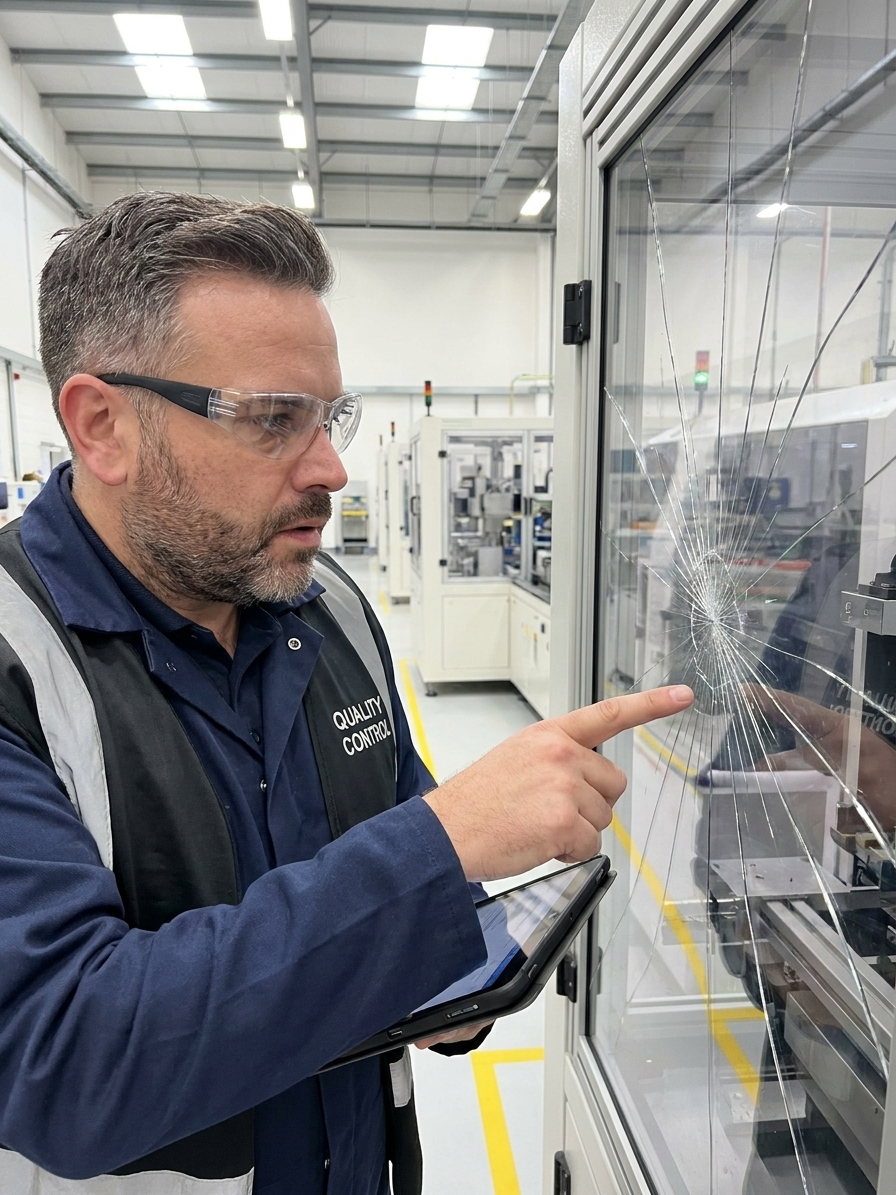
In 1969, psychologist Philip Zimbardo parked two identical cars — one in the Bronx, one in Palo Alto — and watched what happened. The Bronx car was stripped within hours. The Palo Alto car sat untouched for a week. Then Zimbardo smashed one of its windows with a sledgehammer. Within hours, it too was destroyed.
The message was clear: one broken window signals that nobody cares. And when nobody cares, everything becomes fair game.
Two criminologists — James Wilson and George Kelling — formalized this into the Broken Windows Theory in 1982. Their argument was simple: small signs of disorder invite larger ones. A neighborhood that tolerates broken windows, graffiti, and minor vandalism sends a signal that more serious crime will also be tolerated.
New York City put this theory into practice in the 1990s. By cracking down on fare evasion, graffiti, and petty crime, the NYPD didn’t just clean up the subways — it fundamentally altered the culture of the city. Major crime dropped. Not because they arrested every criminal, but because they changed the environment’s message.
Now here is the uncomfortable question: what are the broken windows in your manufacturing organization?
Because they are there. And they are multiplying.
The Factory Floor Is a Neighborhood
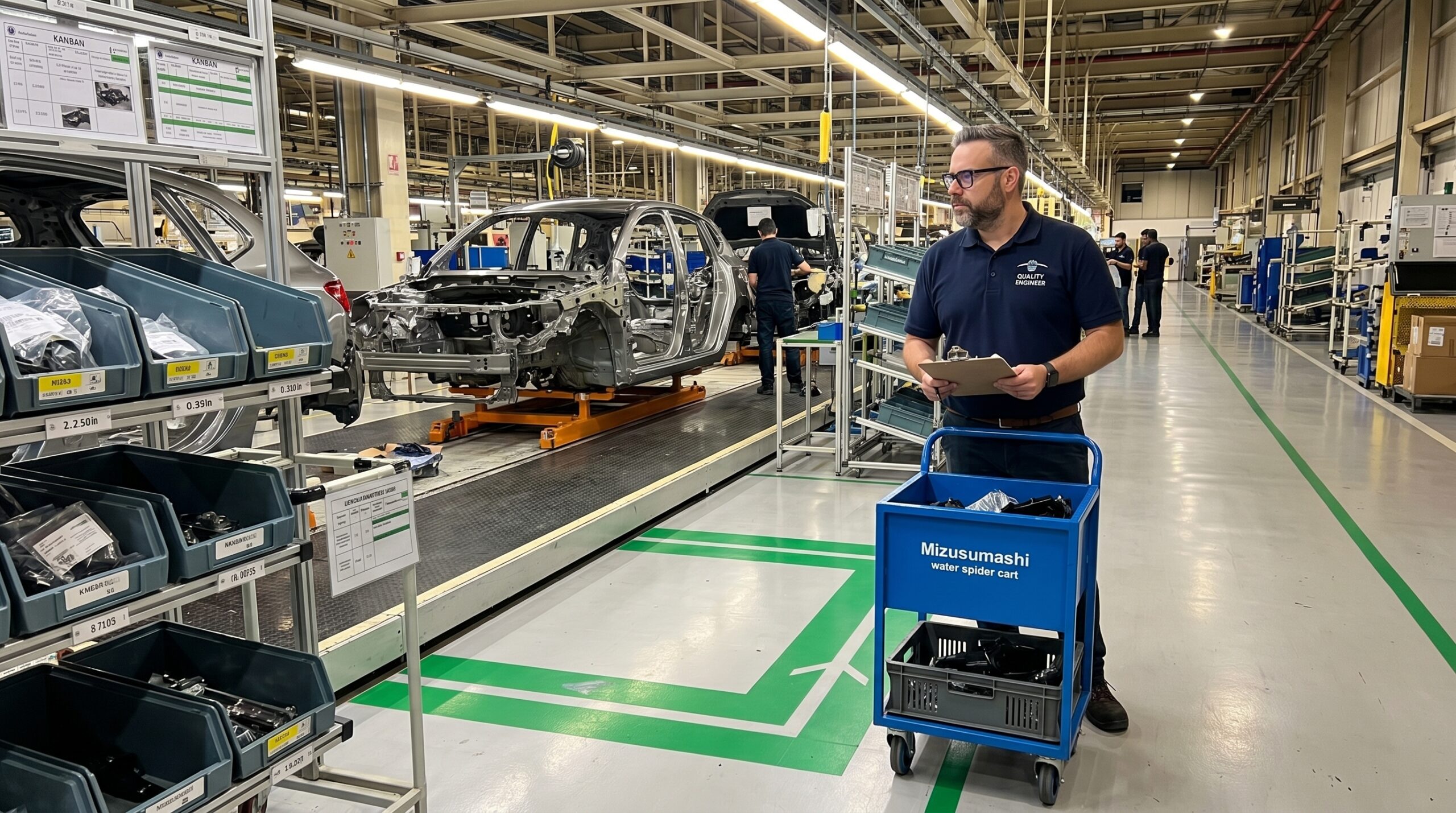
A manufacturing facility is a community. It has its own culture, its own norms, its own unwritten rules. And just like a neighborhood, it communicates what it tolerates through visible signals.
The operator who skips a torque check because the line is behind schedule. The supervisor who initials a quality log without actually verifying the measurement. The calibration sticker that expired three months ago but nobody flagged. The work instruction that references a tooling revision from two changes ago. The nonconformance report filed under “operator error” without a root cause investigation.
None of these events, by themselves, will bring down your organization. Each one is a cracked window. A small thing. Easily overlooked. Easily rationalized.
But the people working in that environment notice. They always notice.
When a calibration sticker is expired and nobody says anything, the message is: precision doesn’t really matter here. When a supervisor signs off on a check they didn’t perform, the message is: the paperwork is more important than the reality. When a nonconformance gets rubber-stamped, the message is: we’re going through the motions.
And the people receiving these messages are the same people making your products.
The Cascade Nobody Sees Coming
Broken windows don’t stay broken. They multiply. And the multiplication follows a pattern that is as predictable as it is dangerous.
Stage 1: Tolerance. A deviation occurs. It’s small. Someone notices but doesn’t report it. Maybe they’re busy. Maybe they’ve reported things before and nothing changed. Maybe they genuinely don’t think it matters. The deviation becomes part of the background noise.
Stage 2: Normalization. The deviation happens again. And again. After the third or fourth time, it’s no longer a deviation — it’s just how things are done. The expired calibration sticker becomes “that gauge we always use anyway.” The skipped inspection becomes “the one we catch downstream.” The informal workaround becomes the de facto standard.
Stage 3: Expansion. Once one broken window is accepted, others follow. If we can skip this check, why not that one? If the documentation for this process is flexible, why be rigid about the documentation for that process? The boundaries don’t hold because the principle behind them was already surrendered.
Stage 4: Catastrophe. The major defect arrives. The customer complaint. The recall. The safety incident. And everyone is shocked. How did this happen? We have procedures! We have systems! We have audits!
Yes. You also had broken windows. And you walked past every single one of them.
The Real Cost Is Cultural
Here is what makes broken windows so insidious in manufacturing: the cost is never just the defect itself. The cost is the culture that produced it.
Consider two factories. Both produce the same product. Both have the same equipment, the same specifications, the same ISO certification on the wall.
Factory A has a culture where minor deviations are flagged immediately. When a gauge reads slightly out of calibration, the operator stops. The supervisor is notified. The gauge is replaced. The production delay is thirty minutes. Everyone grumbles, but everyone understands why.
Factory B has a culture where minor deviations are absorbed. The gauge reads slightly off, but the operator knows it’s “close enough.” The supervisor walks past without comment. Production continues uninterrupted. Thirty minutes are saved.
Which factory has lower quality costs?
It’s Factory A. Every time. Not because Factory A catches more defects — though it does. But because Factory A has a culture where the standard means something. The operators in Factory A know that quality is real, not theoretical. They know that when the procedure says ±0.02mm, it means ±0.02mm. Not ±0.03mm on a busy day. Not ±0.05mm when the customer is waiting.
Factory B’s operators know something different. They know that the standard is aspirational. That the real standard is whatever you can get away with. That the number on the work instruction is a suggestion, not a requirement.
And Factory B’s operators carry that knowledge into every single product they make.
Where Broken Windows Hide
Broken windows in manufacturing don’t always look like obvious violations. Some of the most dangerous ones are subtle, embedded in routines that everyone has accepted without question.
Documentation theatre. Forms filled out after the fact. Quality records completed in batch at the end of the shift rather than at the point of execution. The appearance of compliance without the substance of it. This is a broken window because it teaches people that the record matters more than the reality.
Selective auditing. Auditing the processes you know will pass and avoiding the ones that might fail. Walking the clean sections of the factory and steering around the areas where things are messier. This teaches people that audits are performances, not investigations.
The “good enough” mentality. The phrase itself is a broken window. When someone says “good enough” about a product, a process, or a measurement, they are saying: the standard and I have agreed to compromise. And the standard always loses.
Escalation avoidance. When people stop escalating problems because the last three times they escalated, nothing happened. The problem isn’t that they’ve lost the ability to see issues — it’s that they’ve learned the organization doesn’t want to hear about them.
Temporary fixes that become permanent. The clamp that replaced the proper fixture “just for today” — three months ago. The manual override that’s been engaged so long nobody remembers what it was overriding. The workaround that was supposed to last a week and has now become the standard operating procedure.
The Mathematics of Tolerance
There is a mathematical reality behind broken windows that most organizations never calculate.
Suppose your organization tolerates a 1% deviation from standard on any given process step. Just 1%. Barely noticeable. Well within the margin that any reasonable person would accept.
Now suppose your product goes through 50 process steps. Each with that same 1% tolerance for deviation.
The probability that all 50 steps are executed perfectly — that is, with zero deviation from the “tolerated” 1% — is 0.99 raised to the 50th power. That equals approximately 60.5%. Which means there is a 39.5% chance that at least one of those steps has a deviation.
But here’s the real problem: those deviations compound. A 1% deviation in material preparation, combined with a 1% deviation in machining tolerance, combined with a 1% deviation in assembly torque, does not produce a 1% deviation in the final product. The effects multiply, not add.
This is why organizations that tolerate small broken windows eventually face large failures. Not because any single window caused the collapse, but because the cumulative effect of all those small tolerances created a structure that was fundamentally unsound.
Fixing Windows: What Works
The good news about broken windows is that the fix is as simple as the theory: fix the window. The moment you repair a broken window, you change the signal. You tell everyone who sees it: this matters here.
But in manufacturing, “fixing the window” requires more than just correcting the deviation. It requires addressing the conditions that allowed the window to break in the first place.
Make the standard visible. People can’t uphold a standard they can’t see. Post specifications at the point of use, not in a binder in the quality office. Make the correct state obvious — color-coded gauges, visual management boards, photographs of acceptable and unacceptable outputs. When the standard is visible, deviations are visible too.
Respond to every deviation, no matter how small. This doesn’t mean shutting down the line for every minor issue. It means acknowledging it, recording it, and addressing it. Even a five-second conversation — “I noticed the fixture isn’t seated properly. Let me help you adjust it.” — sends the message that someone is watching and someone cares.
Close the loop on every reported issue. Nothing breaks more windows faster than a reporting system that swallows concerns without burping back results. When an operator reports a potential issue and never hears what happened with it, they learn that reporting is futile. The fastest way to destroy a quality culture is to ignore the people who are trying to protect it.
Audit the audit system. If your audits never find anything, your audits are broken. A healthy audit program should surface issues regularly — not because your organization is failing, but because your organization is looking. An audit that finds zero nonconformances is not a sign of excellence. It’s a sign of blindness.
Model the behavior at every level. The plant manager who picks up a piece of debris from the floor sets a different tone than the one who walks past it. The quality director who stops a shipment because of a documentation discrepancy teaches a different lesson than the one who signs the waiver. Leadership behavior is the most powerful signal in any organization, and it either reinforces or undermines every standard on the books.
The Window You Fix Today
There is a broken window in your organization right now. You might know what it is. You might not. But the people on your production floor know. The operators, the technicians, the inspectors — they see them every day. They walk past expired labels, informal workarounds, skipped checks, and accepted compromises. And they make a calculation: is this the kind of place where this matters?
Your job, as a quality professional, is to make sure the answer is yes.
Not through posters. Not through slogans. Not through annual quality awareness campaigns that everyone endures and nobody remembers.
Through the relentless, unglamorous, daily practice of fixing windows.
Every expired calibration sticker you replace. Every incomplete form you return. Every shortcut you interrupt. Every “good enough” you refuse to accept. These are not small acts. They are the acts that define what your organization believes about quality.
Because the broken windows theory works in both directions. Just as one broken window invites more, one repaired window signals that the standard still stands. That someone is paying attention. That quality is not a poster on the wall — it’s the way things are done here.
Fix a window today. Then fix another one tomorrow. And watch what happens to the neighborhood.
About the Author
Peter Stasko is a Quality Architect with over 25 years of experience in manufacturing quality management. He has implemented and managed quality systems across automotive, aerospace, and industrial manufacturing sectors, specializing in the intersection of human psychology and quality performance. Peter holds certifications in Six Sigma, ISO 9001, IATF 16949, and multiple lean manufacturing disciplines. His work focuses on building quality cultures that sustain themselves — not through compliance pressure, but through organizational understanding of why quality matters at every level. He writes about the psychological and systemic forces that shape manufacturing quality at iaec.online.