Quality
and the Lindy Effect: When Your Organization Discovers That the Quality
Tools That Survived Decades of Testing Are the Ones Worth Trusting — and
the Latest Trend Everyone’s Chasing Will Probably Be Forgotten by Next
Year
Every year, the quality industry reinvents itself. A new framework
lands on the conference circuit. A consultant publishes a book with a
promise that this time — this time — the old problems will
finally disappear. Your inbox fills with webinars. Your LinkedIn feed
becomes an echo chamber of enthusiasm. And somewhere in your factory, a
process that has been quietly producing defects for fifteen years
continues producing defects, because the team that was supposed to fix
it got pulled into a workshop on the newest methodology instead.
I have watched this cycle repeat for twenty-five years across
automotive, aerospace, and pharmaceutical manufacturing. I have been the
person introducing the new tool. I have also been the person cleaning up
after it failed. And somewhere along the way, I discovered a mental
model that changed how I think about quality investments — not from a
management textbook, but from a obscure idea about how ideas themselves
survive or die.
It is called the Lindy Effect, and understanding it might be the
single most important filter you can apply to your quality strategy.
What the Lindy Effect
Actually Says
The Lindy Effect originated in a New York delicatessen in the 1960s,
where a group of comedians observed something peculiar: the longer a
Broadway show had been running, the longer its future run was likely to
be. A show that had survived ten years was expected to survive another
ten. A show that had been running for fifty years could reasonably
expect another fifty. The idea caught the attention of mathematician
Benoit Mandelbrot and later was popularized by Nassim Nicholas Taleb,
who extended it to technology, ideas, and institutions.
The core principle is counterintuitive but powerful: for
things that don’t have a natural aging process — ideas, technologies,
methodologies — the life expectancy is proportional to how long they
have already existed.
A book that has been in print for a hundred years will probably still
be in print in another hundred. A management philosophy that has
survived thirty years of real-world application will likely survive
another thirty. A piece of software that has been debugged by millions
of users is more reliable than the brand-new alternative that looks
shinier on paper.
This is not a law of physics. It is a heuristic — a thinking tool.
But it is a thinking tool that the quality industry desperately needs,
because we are spectacularly bad at distinguishing between what is
genuinely new and what is just newly packaged.
The Graveyard of Quality
Trends
Let me take you on a short tour of the quality methodologies that
were supposed to change everything.
In the 1990s, it was Total Quality Management. Every organization
worth its ISO certificate had a TQM initiative. Posters went up on
walls. Committees were formed. Training programs consumed weeks of
calendar time. And then, gradually, the posters came down, the
committees stopped meeting, and the training binders gathered dust on
shelves. TQM did not fail because the ideas were wrong — its principles
of customer focus, continuous improvement, and employee involvement were
sound. It failed because it was adopted as a program rather than a
practice, as something you implemented rather than something
you became.
In the early 2000s, it was Six Sigma’s turn. The belt system created
a hierarchy of certified practitioners. Statistical rigor was the
promise. And in many organizations, the rigor was real — Motorola and GE
showed what disciplined application could achieve. But in thousands of
other companies, Six Sigma became a credentialing exercise. People
collected belts like merit badges. Projects were selected for their
certificate-worthiness rather than their business impact. The
methodology survived — it had enough genuine substance to endure — but
in many organizations, it survived as a hollowed-out version of
itself.
Then came Lean. Value stream maps appeared on every conference room
wall. Kaizen events became the default response to every problem. The
five S’s were painted on factory floors from Stuttgart to Shanghai. And
once again, the organizations that genuinely understood and practiced
Lean philosophy — not just its tools — achieved remarkable results. The
ones that adopted it as a flavor of the month moved on to the next
flavor.
More recently, we have seen Industry 4.0, digital twins, AI-powered
quality prediction, predictive analytics, and blockchain traceability.
Each carries genuine potential. Each also carries the risk of becoming
the next entry in the graveyard — adopted with enthusiasm, abandoned
when the enthusiasm faded, replaced by the next trend before the current
one had time to prove itself.
What Survives and What
Doesn’t
Now apply the Lindy Effect. Which quality ideas have been around the
longest? Which ones have survived not just one management cycle but
multiple generations of practitioners, multiple technological
revolutions, multiple economic upheavals?
Statistical Process Control has been with us since
Walter Shewhart developed the control chart at Western Electric in the
1920s. That is a hundred years of survival. A century of practitioners
refining, applying, teaching, and depending on it. The mathematics have
not fundamentally changed. The insight — that every process varies, and
that you can distinguish between routine variation and signals that
something has changed — is as relevant today as it was when the first
control chart was drawn on graph paper.
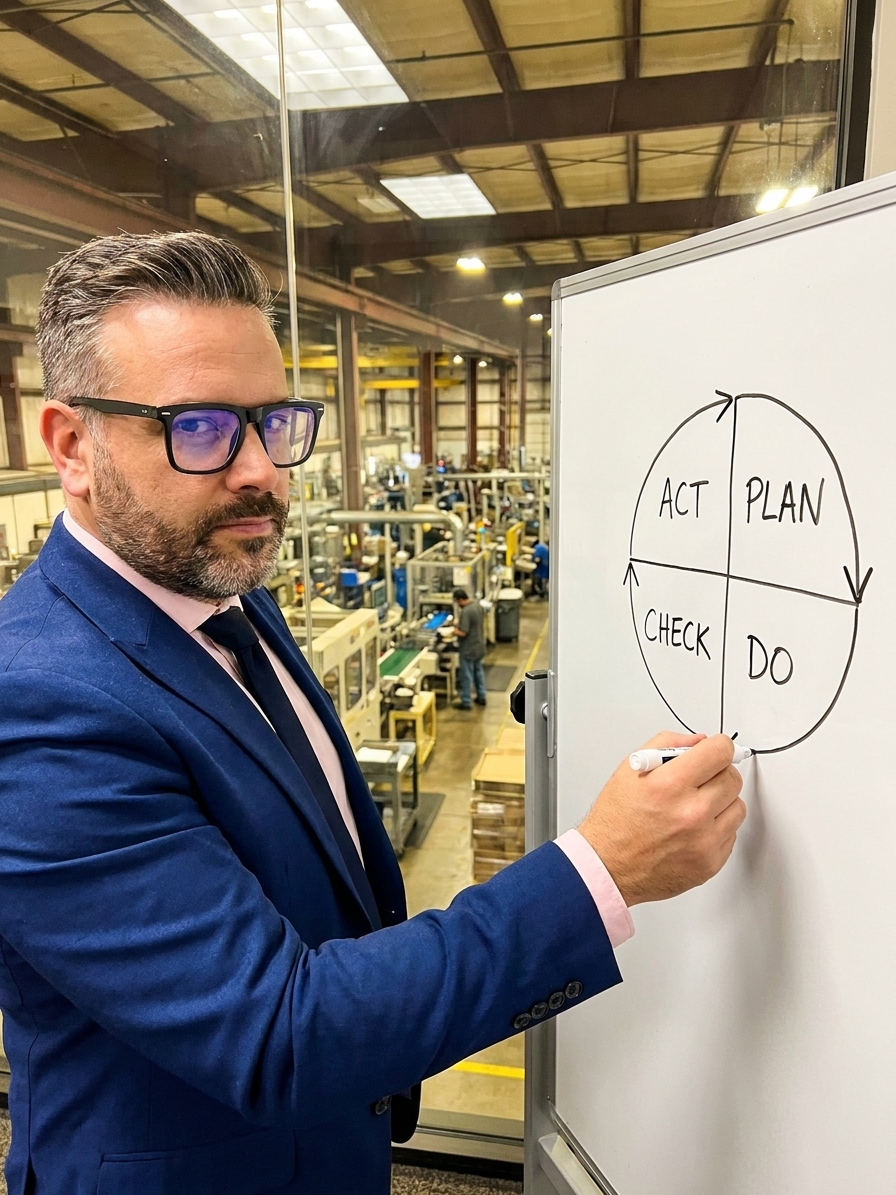
The Plan-Do-Check-Act cycle traces back to Deming,
who himself credited it to Shewhart. It has been the backbone of
continuous improvement for over seventy years. Every sophisticated
quality framework you have ever encountered — Six Sigma’s DMAIC, A3
Thinking, 8D Problem Solving — is at its core a variation of PDCA with
different packaging.
Failure Mode and Effects Analysis emerged from the
aerospace industry in the 1940s and was formalized by NASA in the 1960s
for the Apollo program. The basic structure — identify what could go
wrong, assess how severe it would be, estimate how likely it is, and
plan what to do about it — is so fundamentally sound that it has been
adapted into every major industry standard without material change to
its logic.
The Ishikawa diagram — the fishbone — has been
helping teams explore root causes since Kaoru Ishikawa introduced it in
the 1950s. No one has proposed a better way to structure a brainstorming
session around cause and effect.
These tools are not exciting. They will not generate buzz at a
conference. No consultant will build a career around reinventing them.
But they have something that no new framework can claim: they have been
tested by millions of practitioners across thousands of organizations in
dozens of industries over many decades, and they are still
here.
That is the Lindy test. Not whether something is new. Whether
something has survived.
The Temptation of the New
I am not arguing against innovation. The quality profession has
genuinely evolved. Real-time SPC software is better than plotting points
by hand. Digital FMEA platforms enable collaboration that was impossible
with paper forms. Machine learning can detect patterns in process data
that human analysts would miss.
But there is a critical distinction between improving how we
apply old wisdom and replacing old wisdom with new
nonsense.
The Lindy Effect warns us to be skeptical of anything that claims to
be a paradigm shift in quality management. If a methodology claims to
replace PDCA, the burden of proof should be extraordinary — because PDCA
has survived every paradigm shift that has ever been announced. If a
tool claims to make FMEA obsolete, ask yourself whether the tool
understands failure modes better than the engineers who designed the
first one in the 1940s.
The temptation of the new is especially dangerous in quality because
of how we measure success. A quality manager who introduces a
cutting-edge AI-powered predictive quality system can point to the
investment as evidence of innovation and leadership. A quality manager
who insists on better application of basic SPC principles looks like
they are stuck in the past. The incentive structure rewards novelty,
even when effectiveness lies in depth.
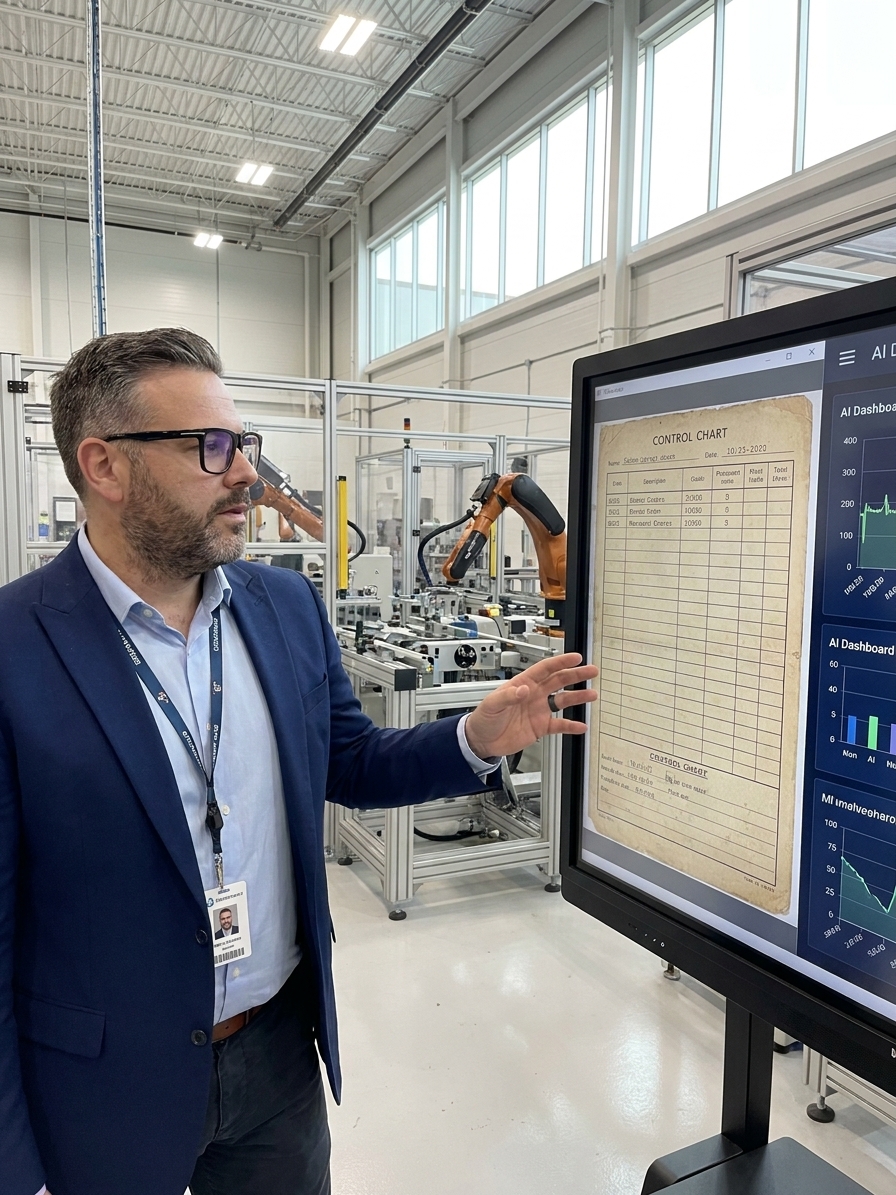
I once consulted for a medical device manufacturer that had invested
heavily in an AI-driven quality prediction platform. The platform was
impressive — real-time dashboards, anomaly detection, automated alerts.
But when I walked the production floor, I discovered that the operators
had not been trained to interpret basic control charts. They could not
distinguish between common cause and special cause variation. The AI
system was flagging signals that any competent SPC practitioner would
have recognized immediately, but the organization had outsourced that
competence to an algorithm without building the foundational
understanding that would have made the algorithm genuinely valuable.
They had the newest technology and the oldest problem: people who did
not understand their processes.
A Practical
Lindy Filter for Quality Investments
Here is how I apply the Lindy Effect when evaluating quality
initiatives — for my own work and when advising organizations.
Step 1: Ask how old the underlying principle is. If
the methodology is built on an idea that has been around for decades, it
has already passed the Lindy test. DMAIC is structured PDCA. The house
of quality in QFD is a structured cause-and-effect analysis. The 5 Whys
is a structured root cause investigation that a child could understand.
These are old ideas in new clothes, and that is perfectly fine — old
ideas in new clothes are often the best investments, because the
underlying principle is proven and the new packaging merely makes it
more accessible.
Step 2: Ask what would happen if the technology
disappeared. If your quality system depends entirely on a
proprietary software platform and the vendor goes out of business
tomorrow, what remains? If the answer is “nothing,” you have built on
sand. If the answer is “our people still understand process variation,
still know how to investigate root causes, and still can structure an
improvement cycle,” then the technology was amplifying real capability
rather than substituting for its absence.
Step 3: Ask who else has done this successfully for more than
five years. The Lindy Effect is not just about the age of an
idea — it is about the age of its successful application. A case study
from a pilot project is not the same as a track record. A white paper
from the company selling the solution is not the same as independent
verification over time. Look for organizations that adopted the approach
years ago and are still using it — not as a badge on their website, but
as an integrated part of their daily work.
Step 4: Ask what the methodology replaces. Every new
approach claims to solve problems that older methods could not. That is
fair — there are genuine gaps in every framework. But if the new
methodology requires you to abandon the foundations — if it asks you to
stop doing SPC because the AI will handle it, or to stop doing FMEA
because the digital twin will predict everything — be very careful. The
most dangerous quality initiatives are the ones that substitute
technology for understanding.
Step 5: Ask whether your organization has actually mastered
the old tools before adopting new ones. In my experience, the
organizations that benefit most from new quality technologies are the
ones that have already mastered the old ones. They understand what the
technology is automating because they have done it manually. They can
evaluate whether the algorithm’s output makes sense because they have
developed engineering judgment. The organizations that struggle are the
ones that reach for technology as a shortcut — hoping the tool will do
the thinking that the organization never learned to do.
The Quality Tools
That Will Outlive Us All
If the Lindy Effect holds, here is what the quality landscape will
look like in fifty years:
Process variation will still need to be understood and managed.
Control charts — or their computational descendants — will still be the
primary tool for that understanding.
Root cause analysis will still depend on structured investigation.
The 5 Whys, Ishikawa diagrams, and fault tree analysis will still be
taught because they encode a universal logic of causation that does not
change with technology.
Risk-based thinking will still require identifying what could go
wrong, assessing how bad it would be, and deciding what to do about it.
Whether you call it FMEA, hazard analysis, or something that has not
been invented yet, the fundamental structure will be the same.
Improvement will still be cyclical. Plan, do, check, act. Or whatever
language the frameworks of 2075 use for the same four steps.
And the quality professionals who thrive will not be the ones who
adopted every trend. They will be the ones who went deep on the
fundamentals, who built organizations that genuinely understood
variation and causation and risk, and who used new tools to amplify that
understanding rather than replace it.
The Deeper Lesson
The Lindy Effect is ultimately about humility — the recognition that
the accumulated wisdom of millions of practitioners over many decades is
worth more than the confident promises of a single innovator with a good
presentation.
In quality, this humility is not just a virtue. It is a survival
strategy. Every defective product that reaches a customer is evidence
that something in your system failed. And when you trace that failure
back — as I have done hundreds of times — you almost never find that the
organization lacked the latest methodology. You find that the
organization failed to apply the most basic principles with discipline
and consistency.
The control chart that was ignored. The FMEA that was completed as
paperwork rather than engineering analysis. The corrective action that
addressed the symptom and left the root cause untouched. The training
that was cut because a new software tool was supposed to eliminate the
need for operator knowledge.
These failures are not failures of innovation. They are failures of
fundamentals. And the Lindy Effect reminds us that fundamentals have
survived for a reason.
The next time someone pitches you a revolutionary quality approach,
ask the Lindy question: What is this built on? How old is the
foundation? Has the core principle been tested across decades and
industries and cultures? If the answer is yes, the innovation might be
worth your time — it is amplifying something proven. If the answer is
no, if the foundation itself is new and untested, proceed with the same
caution you would apply to any unproven idea.
Your operators, your customers, and your margins will thank you.
Peter Stasko is a Quality Architect with 25+ years
of experience transforming organizations across automotive, aerospace,
and pharmaceutical industries. He has spent a quarter-century watching
quality trends come and go — and learning to tell the difference between
tools that transform and tools that merely impress. His work focuses on
building quality systems that survive not just the next audit, but the
next decade.