Quality
Confirmation: When Your Organization Stops Trusting Assumptions and
Starts Verifying Reality at Every Critical Step — and the Simple Act of
Checking Becomes Your Most Powerful Quality Tool
The Defect That
Shouldn’t Have Happened
It was a Thursday morning in November when the call came. A Tier 1
automotive supplier in central Europe had just shipped 12,000 machined
housings to a major OEM assembly plant. By Friday afternoon, 400 of
those housings were sitting in a containment cage at the customer’s
receiving dock. The bore diameter was out of specification — not by
much, just 0.012 mm beyond the upper limit — but enough to cause
interference fit failures during assembly.
The quality engineer who answered the call pulled up the inspection
records. Every single part in that shipment had been signed off. The CMM
reports showed conformance. The operator had initialed the routing
sheet. The final inspector had stamped the release form. Everything
looked perfect on paper.
So how did 400 nonconforming parts reach the customer?
The investigation took three weeks. It revealed something far more
uncomfortable than a broken process. The CMM program had been updated on
Tuesday — two days before the shipment — and the new coordinate system
was misaligned by 0.015 mm. The operator noticed the readings looked
slightly different but assumed the new program was more accurate. The
final inspector saw the initialed routing sheet and trusted the
operator’s judgment. The quality engineer reviewing the batch release
saw two signatures and moved on.
Nobody confirmed. Everyone assumed.
This is not a story about bad technology or incompetent people. It’s
a story about the most invisible quality failure in manufacturing: the
breakdown of confirmation. And it happens thousands of times a day, in
factories around the world, in ways both large and small.
What Quality
Confirmation Actually Means
Quality confirmation is not inspection. Inspection asks, “Is this
part good?” Confirmation asks, “Is our system of knowing still
working?”
The distinction sounds subtle. It is not. Inspection checks the
product. Confirmation checks the process of checking. It is the
meta-layer — the quality system’s immune system turned inward, verifying
that its own sensors are still sensing, its own judgments are still
valid, and its own assumptions are still true.
Think of it this way: every quality decision in your organization
rests on a stack of assumptions. The gauge is calibrated. The operator
is trained. The fixture is positioned correctly. The software is running
the right version. The material certificate matches the actual material.
The specification revision is current. Each assumption is a load-bearing
wall. Remove one, and the whole structure collapses.
Quality confirmation is the practice of deliberately testing those
load-bearing walls at regular intervals. Not because you expect them to
fail. Because you know that over time, without attention, they will.
The Hierarchy of
Confirmation
Not everything needs the same level of verification. Effective
quality confirmation operates on a hierarchy based on risk, complexity,
and history.
Level 1 — Self-Confirmation. The operator checks
their own work before passing it along. This is the baseline. Every
machined dimension verified against a go/no-go gauge. Every torque value
confirmed against the specification. Every visual attribute compared to
a boundary sample. Self-confirmation catches the obvious errors — but
only if the operator’s reference is still valid.
Level 2 — Cross-Confirmation. A second person — a
team leader, a setup technician, a quality inspector — independently
verifies the critical parameters. Cross-confirmation catches the errors
that self-confirmation misses because the operator and the checker share
the same assumption set. The most powerful cross-confirmations come from
someone who approaches the check differently: a different gauge, a
different method, a different angle of observation.
Level 3 — System Confirmation. The quality system
itself is checked. Gage R&R studies verify that measurement systems
can still distinguish good from bad. Capability studies confirm that
processes are still performing within their historical baselines.
Layered process audits confirm that operators are still following
standard work. System confirmation catches the drift — the slow,
invisible degradation that turns a robust process into a fragile
one.
Level 4 — External Confirmation. An outside entity —
a customer audit, a third-party registrar, an independent laboratory —
verifies what the internal system has been saying. External confirmation
is the most uncomfortable because it is the most honest. It has no
organizational loyalty, no relationship with the operator, no investment
in the answer being “good.”
Most organizations are strong at Level 1, decent at Level 2, sporadic
at Level 3, and terrified of Level 4. The best organizations treat all
four levels as essential and non-negotiable.
The Psychology of Assumption
Why do confirmation failures happen? The answer lies in how human
cognition works under conditions of routine.
When a person performs a task for the first time, their brain
allocates maximum attention. Every reading is scrutinized. Every
measurement is double-checked. The cognitive load is high, and the error
rate is relatively low — not because the person is especially skilled,
but because they are especially alert.
After the hundredth time, something changes. The brain encodes the
task as a pattern and shifts it from conscious processing to automatic
processing. This is efficient — it frees cognitive resources for other
challenges. But it comes with a cost: the automatic mode suppresses the
very scrutiny that made the first attempts so careful.
Psychologists call this inattentional blindness. In
manufacturing, we call it “experience.” The experienced operator who has
checked ten thousand parts is actually less likely to catch a
subtle deviation than the new hire who is still in conscious-processing
mode — unless the confirmation system is designed to counteract this
effect.
This is why visual management matters. This is why boundary samples
degrade and need replacement. This is why gauge calibration intervals
exist. Not because the equipment changes — but because the human
relationship to the checking process changes.
Quality confirmation is the structural countermeasure to the
psychology of routine.
The Anatomy of a
Confirmation System
Building an effective confirmation system requires three elements:
triggers, methods, and records.
Triggers — When to Confirm
Confirmation should happen at predictable moments, not random ones.
The most common triggers include:
-
Setup confirmation: After every machine setup,
changeover, or adjustment. Before the first production part is released,
the setup is independently verified against the specification. Not just
the critical dimensions — the entire setup: tooling offsets, fixture
alignment, program version, material identification, and work order
match. -
First-piece confirmation: The first piece from
every production run is inspected using a method that is independent of
the production measurement system. If the operator uses a digital
caliper, first-piece is checked with a CMM. If the production check is
automated, first-piece is verified manually. Independence is the
key. -
Interval confirmation: At defined intervals
during production (every 25th piece, every hour, every shift change), a
sample is pulled and checked against the original standard — not against
the last sample, which may have already drifted. -
Event-driven confirmation: After any unplanned
event — a machine interruption, a tool breakage, a material lot change,
a power fluctuation, a software update — the process is reconfirmed
before production resumes. Events are the moments when assumptions are
most likely to be violated. -
Boundary confirmation: At the transition points
between processes, shifts, or responsibility zones. Handoffs are where
information degrades and accountability blurs. Confirmation at
boundaries ensures that what was true in one domain is still true in the
next.
Methods — How to Confirm
The method of confirmation must be different enough from the method
of production checking to expose different failure modes.
-
Redundant measurement with a different
technology: If production uses optical measurement, confirm
with contact measurement. If production uses contact, confirm with
optical. The technology difference ensures that systematic errors in one
system are caught by the other. -
Blind verification: The person confirming does
not know what result the production check produced. This eliminates
confirmation bias — the tendency to see what you expect to see. -
Reversibility checks: The confirmation process
includes checking parameters that should be impossible to get wrong —
material identification, part orientation, fixture seating. These
“sanity checks” catch the catastrophic failures that sophisticated
measurement systems often miss because they assume the fundamentals are
correct. -
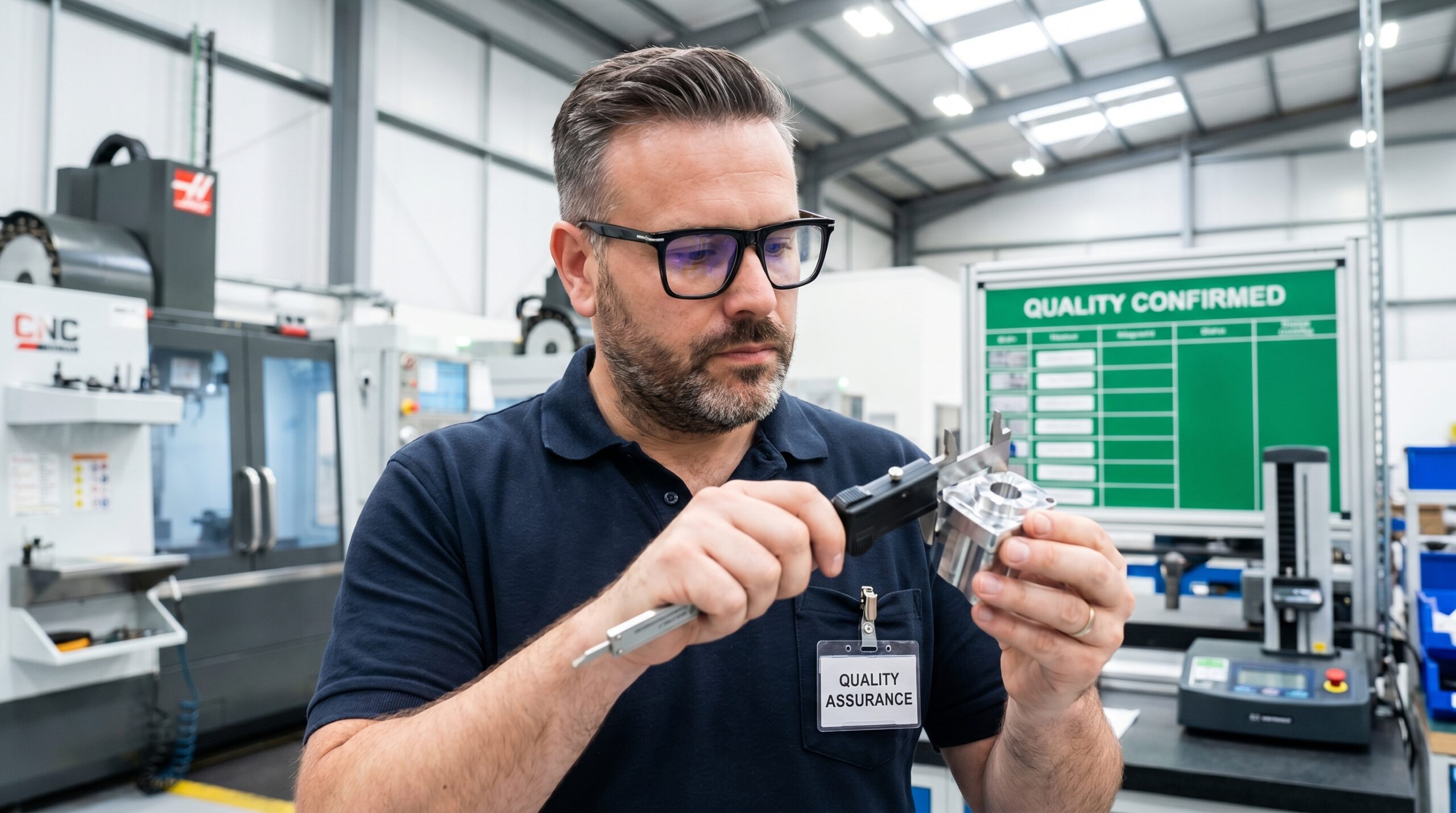
Golden part verification: A known-good reference
part is measured at the beginning and end of every confirmation cycle.
If the golden part reads correctly, the measurement system is
functional. If it doesn’t, everything measured since the last successful
golden part check is suspect.
Records — Proving the
Confirmation Happened
A confirmation system without records is a suggestion, not a system.
Records serve three purposes: they prove that confirmation occurred,
they provide traceability when something goes wrong, and they create the
data needed to evaluate whether the confirmation system itself is
effective.
The most effective confirmation records are simple and visual. A
checklist with yes/no fields. A signature block with a timestamp. A
control chart showing the golden part readings over time. The goal is
not paperwork — it is evidence. And evidence should be effortless to
create and easy to audit.
The Cost of Skipping
Confirmation
Organizations that skip confirmation do not save time. They borrow
time at an interest rate they cannot afford.
Consider the economics. A setup confirmation takes 8 minutes. A
first-piece inspection takes 12 minutes. An interval check takes 3
minutes. For a typical production run of 500 parts, the total
confirmation time might be 45 minutes — roughly 5.4 seconds per
part.
Now consider the cost of missing a confirmation failure. The Tier 1
supplier in our opening story spent three weeks investigating the
defect, produced 12,000 replacement parts on an expedited schedule, paid
premium freight to the customer, absorbed a containment and sorting
charge, lost their preferred supplier status for six months, and
dedicated two engineers full-time to the corrective action. The total
cost exceeded €380,000.
Forty-five minutes of confirmation would have caught the misaligned
CMM program on Tuesday afternoon. The replacement cost per part of that
confirmation would have been €0.003. The cost of skipping it was €31.67
per part — a 10,000x multiplier.
This math is not unusual. It is typical. Every quality professional
who has investigated a significant customer complaint has traced the
root cause back to a confirmation that was skipped, shortened, or
assumed.
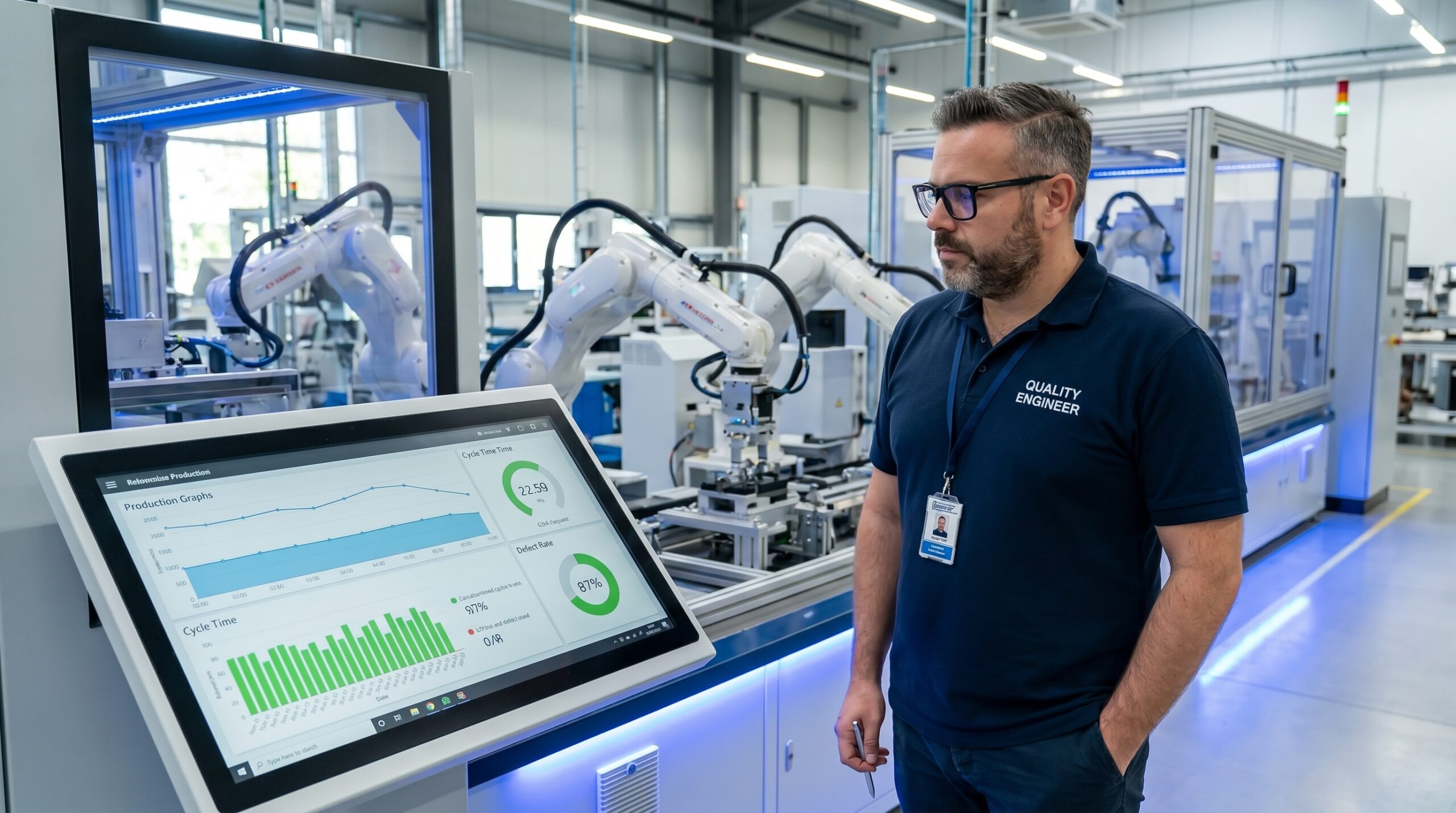
Confirmation in the Digital
Age
Industry 4.0 technologies are transforming quality confirmation, but
they are also introducing new risks.
Automated inline measurement systems can check 100% of production —
eliminating sampling risk entirely. Machine learning algorithms can
detect subtle pattern shifts that human inspectors would miss. Digital
twin simulations can predict process behavior before the first part is
produced.
But every digital confirmation system carries its own assumptions.
The sensor is calibrated. The algorithm is trained on representative
data. The network connection is stable. The software update didn’t
change the calculation method. The timestamp is accurate. The data
hasn’t been corrupted in transmission.
The digital confirmation paradox is this: the more automated the
checking becomes, the more critical the human confirmation of the
automation becomes. And the more tempting it is to skip that human
confirmation because “the system is watching.”
The most sophisticated quality organizations use digital tools to
handle the volume and speed of confirmation while maintaining a parallel
human verification layer that checks the digital system itself. The
operator walks the line every shift and physically touches the parts
that the automated system says are good. Not because they expect to find
something different. Because they know that the moment they stop is the
moment the automation starts lying to them.
Building a Confirmation
Culture
Systems and tools matter. But confirmation is ultimately a cultural
practice. And culture is shaped by what leaders do, not what they
say.
The plant manager who stops at a workstation and asks, “When did you
last check your gauge against the master block?” is building a
confirmation culture. The quality director who reviews not just the
audit findings but the audit methodology is building a confirmation
culture. The shift supervisor who asks the incoming shift, “Walk me
through what you’re verifying at startup” is building a confirmation
culture.
Conversely, the manager who says “We don’t have time for all this
checking” is building a different culture — one where assumptions go
unchallenged and defects go undetected until they become crises.
The cultural signals are straightforward:
-
Make confirmation visible. Confirmation
activities should appear on production schedules, not be squeezed into
gaps. If it’s on the schedule, it’s real. If it’s not, it’s
optional. -
Celebrate confirmation catches. When someone’s
confirmation check finds a problem, celebrate it — publicly and without
blame for the person whose work was caught. Every confirmation catch is
proof the system is working. Every catch that doesn’t happen is a reason
to wonder. -
Audit the confirmation system. Layered process
audits should include checks on whether confirmation activities are
being performed as designed. Not just “Did you sign the form?” but “Show
me how you verified the setup. What reference did you use? When was it
last validated?” -
Share confirmation failures. When a defect
escapes because a confirmation was skipped or ineffective, share the
story across the organization. Not as a blame exercise — as a learning
opportunity. Every operator, inspector, and engineer should hear the
story and think, “That could have been me.”
The Paradox of Trust
Here is the deepest tension in quality confirmation: organizations
need trust to function efficiently, but trust without verification is
the foundation of every quality disaster.
The resolution is not to eliminate trust. It is to make trust
earned and renewed rather than assumed and permanent. I trust
you because you confirmed. You trust me because I confirmed. Our trust
is not based on hope or history — it is based on evidence that is
refreshed at every critical step.
This is the mindset shift that separates world-class quality
organizations from the rest. They do not confirm because they don’t
trust their people. They confirm because they respect their people
enough to give them a system that catches the errors that human biology
and cognitive routine make inevitable.
The best operator in the world will miss a subtle shift after ten
thousand repetitions. The best inspector in the world will experience
inattentional blindness on the part that matters most. The best engineer
in the world will write a CMM program with a misaligned coordinate
system.
Quality confirmation exists because excellence is human, and humans
are fallible. Not in spite of it.
The First Step
If your organization does not have a systematic confirmation
practice, start small. Pick one critical process. Identify the five
assumptions that, if violated, would cause the most damage. Build a
confirmation check for each one. Run it for thirty days. Measure what
you find.
You will find something. Every organization that implements
systematic confirmation for the first time discovers problems that were
hiding in plain sight — problems that everyone assumed were being caught
by a system that was no longer looking.
That discovery is not a failure. It is the moment your quality system
opens its eyes.
Peter Stasko is a Quality Architect with over 25
years of experience transforming manufacturing organizations across the
automotive, aerospace, and industrial sectors. He specializes in
building quality systems that don’t just detect defects — they prevent
them by design. His approach combines deep technical expertise in lean,
Six Sigma, and Industry 4.0 with a pragmatic understanding of what
actually works on the shop floor. Peter believes that the best quality
systems are the ones that make it easy for people to do the right thing
and hard for problems to hide.