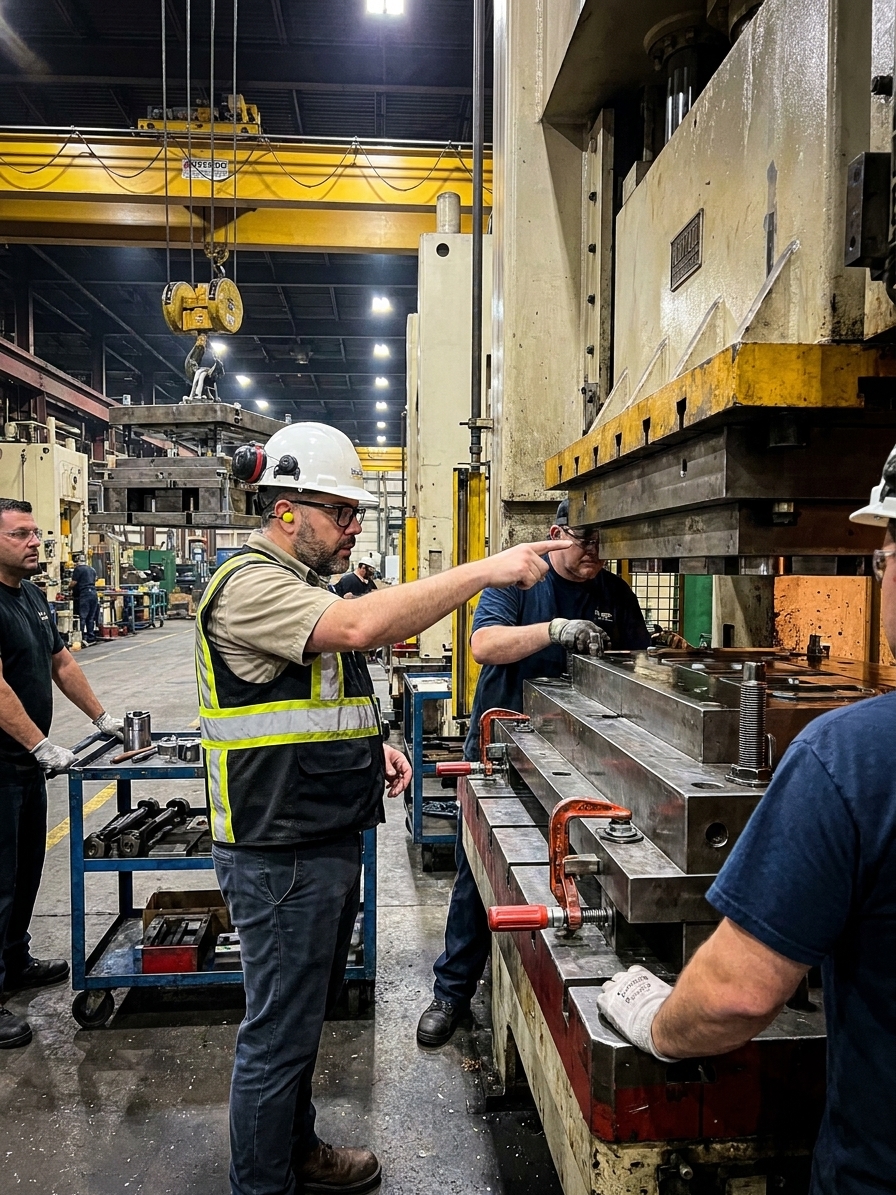
Shigeo Shingo’s original insight at a stamping press in 1969 was elegant: separate internal setup (which requires the machine stopped) from external setup (which can be done while it runs), then relentlessly convert the former into the latter. This is not complex theory. It is a fundamental reframing of industrial workflow. The goal is to maximize a machine's productiveuptime rather than simply trying to speed up its downtime.
The manufacturing sector adopted SMED with enthusiasm, integrating it into the foundational logic of lean manufacturing, IATF 16949 expectations, and operational excellence audits. Books were written, certification programmes sprouted, and consultants built careers on it. Yet in factories today, actual changeover times remain stubbornly high. The charts on the walls show the target, while the production floor reflects a different, much slower reality.
I have audited dozens of plants where the documented setup time sits at 25 minutes, while the real, measured time from the last good part to the first good part exceeds an hour. SMED has often become a compliance ritual. We generate standard work, host kaizen events, and file the paperwork. But the systemic discipline required to sustain the gains is missing. The methodology designed to eliminate waste has instead become a generator of organizational friction.
The Kaizen Event Illusion
The dominant failure pattern in setup reduction is the event-based approach. Management identifies high changeover times on a specific line. A cross-functional team is assembled, consultants are hired, and the current state is meticulously videoed and dissected. Over three days, the team engineers parallel operations, installs quick clamps, and builds staging carts. The setup time is cut dramatically.
The event concludes with presentations and celebration. The improvement is real. But improvement is a discipline, not a destination. Six months later, the changeover time has crept back to 75% of its original duration. The quick clamp broke and was replaced with standard bolts. The tool cart became a dumping ground. The standard work document was never updated when a new product variant was introduced to the line.
The event solved the technical problem but ignored the systemic one. It created a temporary efficiency that decayed back into permanent inefficiency. Without a rigid sustainment mechanism—tiered audits, preventive maintenance schedules for the clamps, and immediate red-flag triggers when standard work is bypassed—the engineering improvements evaporate. The DMAIC cycle is closed, but the control phase never actually takes root on the shop floor.
Optimizing the Wrong Constraint
Factories routinely apply SMED to the wrong machines. A team will target Press Line A because its 120-minute changeover is highly visible and politically annoying. They successfully reduce it to 60 minutes, reclaiming two hours of capacity per week. Management reports a 50% reduction in setup time. The metric looks excellent in the monthly review.
Meanwhile, Press Line B sits fifty metres away, running fourteen changeovers per week at 90 minutes each. Nobody touched Press Line B because its supervisor was less vocal or it was not selected for the pilot. The factory optimized a non-bottleneck, achieving a locally brilliant but globally meaningless result. Throughput is dictated by the constraint, and Theory of Constraints dictates that improvements anywhere else are an illusion.

To correct this, use value stream mapping to identify the bottleneck before authorizing any setup reduction work. SMED applied to a machine that is not the constraint simply builds excess Work In Progress (WIP) downstream. You do not need faster changeovers on a machine feeding an already choked process. You need faster changeovers on the asset dictating factory output. This is the core requirement for making setup reduction actually pay.
The External Setup That Isn’t External
Stage 1 of SMED demands that external work happen while the machine runs. In standard documentation, operators are instructed to stage the next die, verify components, preheat the tooling, and position the cart before the current job ends. This requires rigorous preparation discipline that most organizations simply do not possess or enforce.
In reality, the operator finishes the run, stops the machine, and then goes to find Die Set 47. The die is in the tool crib, but the attendant is on break. When retrieved, the die is missing a locating pin. The preheat station is occupied by another job. Twenty minutes have passed before the operator even brings the tooling to the machine. Every minute of this is supposed to be external setup.
The SMED documentation still shows a 25-minute internal setup time, because the 30 minutes spent hunting for parts is classified as 'external'. This creates a dangerous reporting gap. The metrics report 25 minutes; the actual changeover takes 55 minutes. Factories hide their inefficiency behind this classification, and the standard work provides perfect cover for poor logistical discipline.
Documented vs. Actual Changeover
Documented SMED
- External setup done during previous run
- Internal setup timed at 25 minutes
- Quick clamps engage flawlessly
- Standard work posted at station
Actual Reality
- Operator hunts for die after stopping machine
- Locating pin missing, preheat station occupied
- Clamps forced with hammer, causing variation
- Total machine downtime exceeds 50 minutes
Hardware Seduction and Forced Adjustments
The hardware side of SMED is seductive. Factories invest heavily in hydraulic locking systems, pre-positioned locating pins, and color-coded quick-release clamps. The engineering looks impressive during an audit. But quick clamps are only quick when alignment is perfect. The moment there is dimensional variation, a worn locating surface, or thermal expansion from an improperly preheated die, the mechanism fails to engage.
The operator grabs a dead-blow hammer to force the clamp closed. Once forced, the alignment is compromised. The first part produced after the changeover is out of tolerance. The operator then spends twenty minutes adjusting the setup—exactly what Stage 4 of SMED demands we eliminate. The adjustments are necessary because the setup conditions were coerced, not engineered.
This creates a vicious cycle. The quick clamp system, designed to eliminate adjustment, becomes the root cause of adjustment. Because the clamps are documented as requiring zero adjustment, the time spent correcting the alignment is logged elsewhere. The setup time metric remains artificially healthy, while first-pass yield on the new batch plummets. The hardware solved a symptom but ignored the underlying maintenance failure of the locating surfaces.
The Setup Time Paradox
A factory successfully engineers a sustained setup reduction, cutting changeover from 120 minutes to 30 minutes. Production planning immediately reacts. If changeovers are cheap, they reason, we should run smaller batches to reduce finished goods inventory. The math is sound on paper. Lower carrying costs and higher responsiveness.
But the factory increases its changeover frequency fourfold. They now do four 30-minute changeovers instead of one 120-minute changeover. Total changeover time per shift remains identical. Machine availability has not improved. Factory output capacity has not increased. What changed is the batch size, bringing a massive increase in administrative complexity, material handling touches, and quality verification.
Reducing the cost of changeovers increases total cost if the organization simply increases the quantity to compensate.
The organization traded one form of waste (excess inventory) for another (excess changeovers and scheduling complexity). Every changeover is an opportunity for a setup error. The stress placed on operators now doing four setups per shift instead of one is never factored into the lean calculation. The methodology solved the unit-cost problem and inadvertently created a total-cost problem that goes entirely unmeasured.
Digital SMED Theatre
Factories now install industrial cameras and IoT sensors above their presses to capture changeovers in high definition. AI-powered video analytics flag wasted motion. Automated alerts fire to management smartphones when a setup exceeds the target time. This technology generates vast amounts of data, which generates reports, which generates meetings. What it does not generate is actual improvement.
The bottleneck was never a lack of information. The operators always knew the locating pin was worn. They told their supervisors six months ago. The supervisors asked for data to justify the maintenance request. Now the management has high-definition data confirming the pin is worn. The pin is still worn. The investment went into the monitoring system rather than the underlying hardware and organizational discipline required to fix it.
Digital SMED theatre is the most expensive form of process avoidance. It costs significant capital to confirm what the shop floor already knew. Real setup reduction requires addressing the core issues: poor tool crib logistics, inadequate preventive maintenance on heavy tooling, and the absence of dedicated setup technicians. Dashboards do not tighten bolts or preheat dies. Action does.
Engineering Sustainable Setup Reduction
Making SMED work requires shifting from event-based enthusiasm to systemic operational control. First, measure what actually matters. Stop measuring setup time in isolation. Measure total changeover cost, factoring in setup time, frequency, quality risk, and scheduling complexity. A 15-minute changeover that produces 30 minutes of scrap is worse than a 45-minute changeover that yields good parts immediately.
Make external setup a dedicated role. If it is the machine operator’s secondary responsibility, it will always default to the urgent task of keeping the current machine running. Assign a staging technician or setup team whose performance KPI is strictly changeover readiness. Audit their work against the staging checklist using the same rigour applied to a PPAP submission.
Invest in the boring infrastructure. The hydraulic clamps get the attention, but it is the preheat stations, the organized tool cribs, and the preventive maintenance of locating surfaces that dictate performance. Treat these as critical assets. If the locating surface is worn, the clamp will fail, and the entire SMED standard collapses. Infrastructure, not innovation, sustains lean manufacturing.
Core SMED Performance Metrics
Respect the operator’s knowledge. The technician who has executed a thousand changeovers holds the critical insights into setup efficiency. The most effective improvements I have implemented came from operators who were listened to and given the resources to execute their ideas. The least effective came from engineers who watched a video and designed a bracket from behind a desk. Shingo did not create a methodology for generating impressive audit reports. He created a system for making machines productive. The standard works if you actually work the standard.