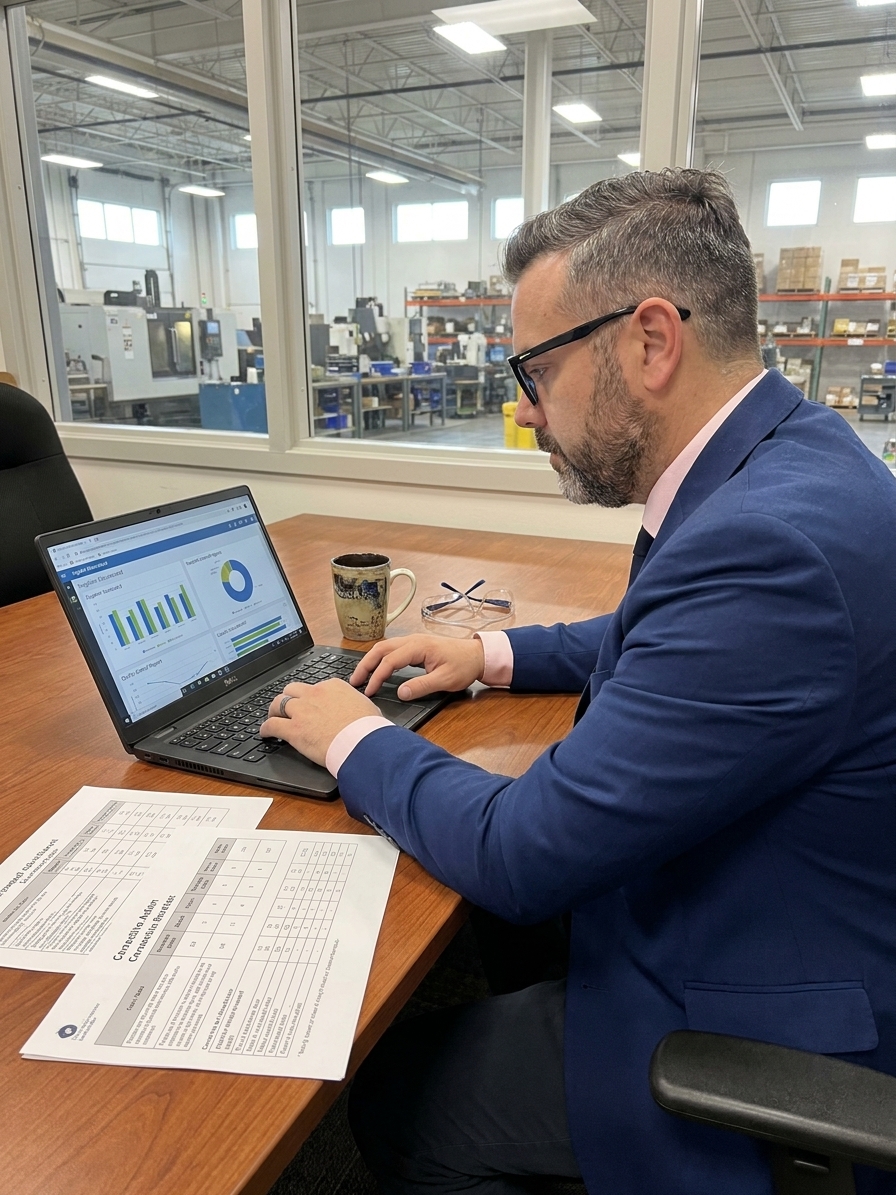
You set up the supplier quality program with a cross-functional team, a scoring rubric, and a monthly review meeting. Three years later, the scorecard exists, the audits happen on schedule, and your defect rate from suppliers has not moved. The program did not fail because you lacked rigor. It failed because you confused measuring suppliers with improving them.
This is the reality of supplier quality management in the manufacturing sector. It plays out in receiving departments, on production floors, and in supplier conference rooms where the same conversations happen quarter after quarter. The gap between the procurement textbook and operational reality is filled with dashboards nobody acts on and audits that verify documentation instead of capability.
I have audited plants that maintained pristine supplier scorecards while their lines ran on 100% sorting. The measurement system was flawless. The underlying processes were broken. Closing this gap requires dismantling the bureaucratic apparatus you built and replacing it with engineering rigour and supplier development.
The Theory Versus the Operational Reality
The foundational theory of supplier quality management (SQM) is sound. Your supply chain is an extension of your own operations. If your suppliers produce nonconforming material, your downstream processes inherit that variation. No volume of in-house inspection can undo the cost and disruption of defective incoming material.
A properly designed SQM system selects the right suppliers through rigorous qualification audits and process capability assessments. It monitors performance through metrics like PPM defective, on-time delivery, and corrective action closure rates. Finally, it develops capabilities through joint improvement projects, technical support, and structured feedback loops.
Executed correctly, this framework creates a supply base that improves annually. Suppliers learn from their failures because you help them understand systemic root causes. New parts launch smoothly because quality is engineered into the supplier's process before the first shipment. The cost of poor quality drops because problems are caught and resolved upstream.
That is the promise. The operational reality is different. The system devolves into a compliance exercise where visibility is mistaken for control, and measurement is mistaken for improvement. The scorecard becomes a substitute for the engineering work required to actually change a process.
The Scorecard Trap and Metric Manipulation
The monthly supplier scorecard arrives in inboxes across the organization. On-time delivery sits at 87%. PPM defective is 1,247. Open corrective actions stand at 14. The numbers are colour-coded, a brief narrative explains the misses, and the meeting lasts forty-five minutes. Next month, the same scorecard arrives with slightly different numbers and the identical fundamental problems.
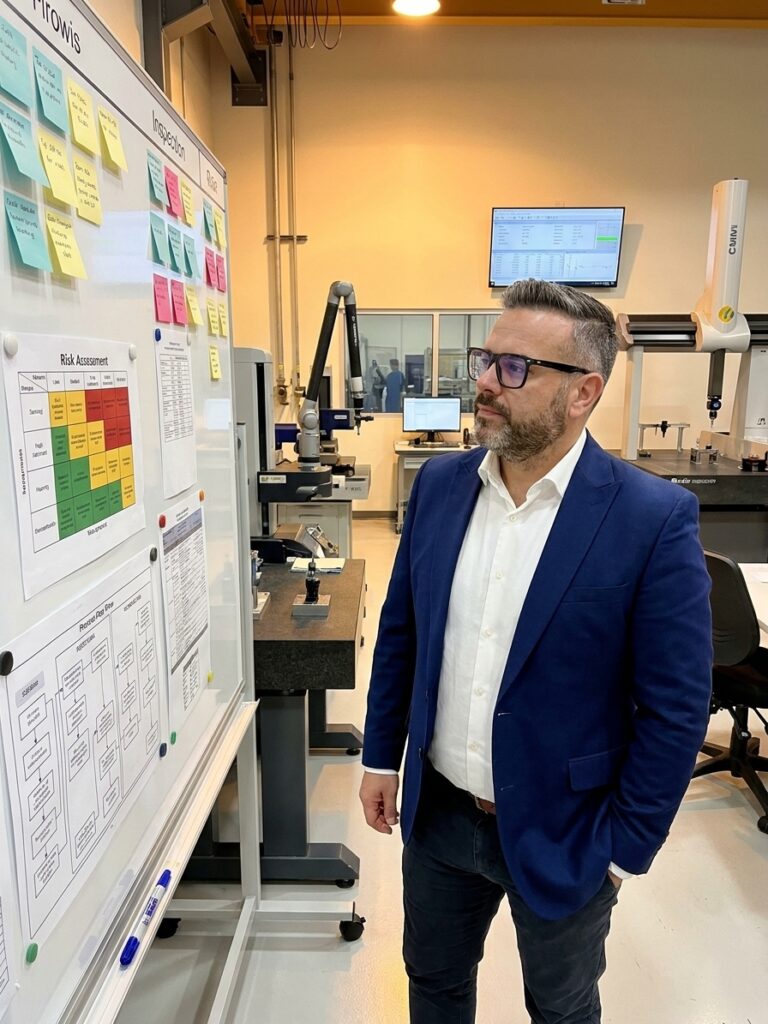
The scorecard became the end product instead of the starting point. Organizations invest heavily in data collection, normalization, and dashboard software, assuming that visibility alone will drive behavioral change. It does not. Suppliers see their scores the way students see grades without feedback. They know the number is bad, but they lack specific direction on what to engineer differently.
Worse, the scorecard frequently measures the wrong things. A supplier with 99.5% on-time delivery looks excellent until you realize they expedite every shipment at their own cost to mask planning failures. A supplier with low PPM looks superior until you discover they perform 100% sorting at their facility before shipment. That manual inspection will eventually break down, at which point you will receive a flood of defects.
Core Supplier Quality Indicators
The scorecard trap is seductive because it creates the illusion of control. You possess data, trends, and quarterly business reviews. What you lack is a supply base that is fundamentally improving. The metric improved while the underlying process decayed. You simply built a more sophisticated version of the problem you started with.
Audit Theater and the Failure of Compliance Verification
Every year, your quality team visits key suppliers for a requalification audit. The agenda is standardized: review the quality manual, walk the floor, check calibration records, verify training matrices, and examine corrective action logs. The supplier prepares for weeks. Everything is presentable, and the nonconformances found are minor. The audit closes successfully and the certificate is renewed.
Meanwhile, the systemic problems that actually cause defects remain invisible. Inconsistent machine setup procedures, uncontrolled incoming material from sub-tier suppliers, operators working from memory instead of work instructions, and process parameters that drift between shifts are hidden during the audit. The supplier knew you were coming and presented the best version of themselves.
This is audit theater. The audit was designed to verify that the supplier's quality system is capable of consistently producing conforming product. Instead, it verifies that the supplier can prepare for an audit. These are fundamentally different things. The clean floor and organized documentation reveal nothing about the informal workarounds and undocumented process deviations that exist between audits.
Audit theater carries a severe hidden cost. It consumes engineering resources from both organizations without producing improvement. Your quality engineers spend weeks verifying compliance instead of driving capability. The supplier's quality team spends those same weeks getting ready to be audited instead of fixing actual problems. Everyone is busy. Nothing improves.
The Corrective Action Loop That Never Closes
A defect arrives. You issue a Supplier Corrective Action Request (SCAR). The supplier responds within the required five business days with an 8D report. The root cause analysis states 'operator error.' The corrective action states 'retrained operator.' You accept it because the box is checked and the timeline is met. Three months later, the identical defect arrives from the same supplier on the same part.
You issue another SCAR. The supplier responds with another 8D. The root cause analysis states 'operator error' again, but it is a different operator. The corrective action states 'retrained operator' again. You accept it again because the system has never required you to push back. The loop repeats because the systemic failure was never addressed.
Operator error is not a root cause. It is a symptom of a system that allowed or forced the failure to occur.
The root cause is whatever in the system allowed the operator to make the error. Was the work instruction unclear? Was the fixture inadequate? Was the measurement system analysis (MSA) incapable of catching the defect? Was the process inherently unstable? Each of these points to an engineering failure, not a human failure. But 'operator error' is easy to write, easy to accept, and easy to close.
True preventive action changes the process so the error cannot recur. It requires a poka-yoke device, a design modification, or an automation step. Retraining the operator prevents that specific operator from making that error again, but it does nothing for the next shift or the next year. Over time, the SCAR system accumulates hundreds of closed actions representing problems that were deferred rather than solved.
Rebuilding Around Development and Root Cause Rigor
If your SQM program has become a bureaucratic exercise, you must rebuild it around engineering principles. Stop announcing audits months in advance. Shift to process-focused assessments conducted on short notice. Observe the actual manufacturing process, talk to operators, and look for the gap between documented procedure and reality. The goal is risk identification, not documentation review.
Reject insufficient corrective actions immediately. When a supplier submits 'operator error' as a root cause, return the 8D. Every single time. Demand a rigorous 5-Why analysis or Ishikawa diagram that traces the problem to a system cause. Provide coaching if the supplier lacks the competency. The initial pushback will be uncomfortable, but suppliers will quickly learn the standard for acceptance.
Effective Supplier Corrective Action Cycle
- 01Issue SCARDocument the defect with evidence, containment actions, and precise specifications.
- 02Validate Root CauseReject 'operator error.' Demand systemic failure identification using 5-Why or DOE.
- 03Verify PreventionEnsure the action engineers the failure mode out of the process entirely.
- 04Monitor RecurrenceTrack the specific part and failure mode to confirm the fix held long-term.
Measure fewer things more deeply. Discard the scorecard with twenty metrics nobody acts on. Select the three indicators that actually predict defects and investigate every deviation. A thorough understanding of why one supplier's capability index dropped is worth more than a dashboard showing Cpk values for fifty suppliers. Measure recurrence above all else. Track whether closed corrective actions actually prevented the failure from returning.
Building the Partnership You Substituted Audits For
The deepest failure in supplier quality management is relational. The system was intended to be built on partnership. In practice, the relationship is entirely transactional, governed by purchase orders and enforced through financial penalties. Suppliers withhold transparency because every problem becomes their fault. Customers withhold trust because defects keep arriving.
In a genuine partnership, a defect triggers a joint investigation. The customer opens their own books to ask if the specification was clear and robust. The supplier opens theirs to find where the process failed. This requires sending your engineers to the supplier's facility to help them improve their processes, not to audit them. It requires sharing technical knowledge and treating the supplier's problems as your own.
Pick your two or three most strategic suppliers and commit to a rigorous development effort. Run joint improvement projects, share best practices, and measure the engineering results. You cannot develop fifty suppliers simultaneously, but you can deeply develop three. The results will be far more meaningful than scorecards covering fifty suppliers that never improve.
Your supplier quality program is failing because it was designed to monitor rather than improve, to assign blame rather than solve problems, and to maintain distance rather than build partnership. You can keep issuing SCARs and conducting audits that find the same minor nonconformances. Or you can dismantle the measurement apparatus and start doing the engineering work required to actually develop your supply base.