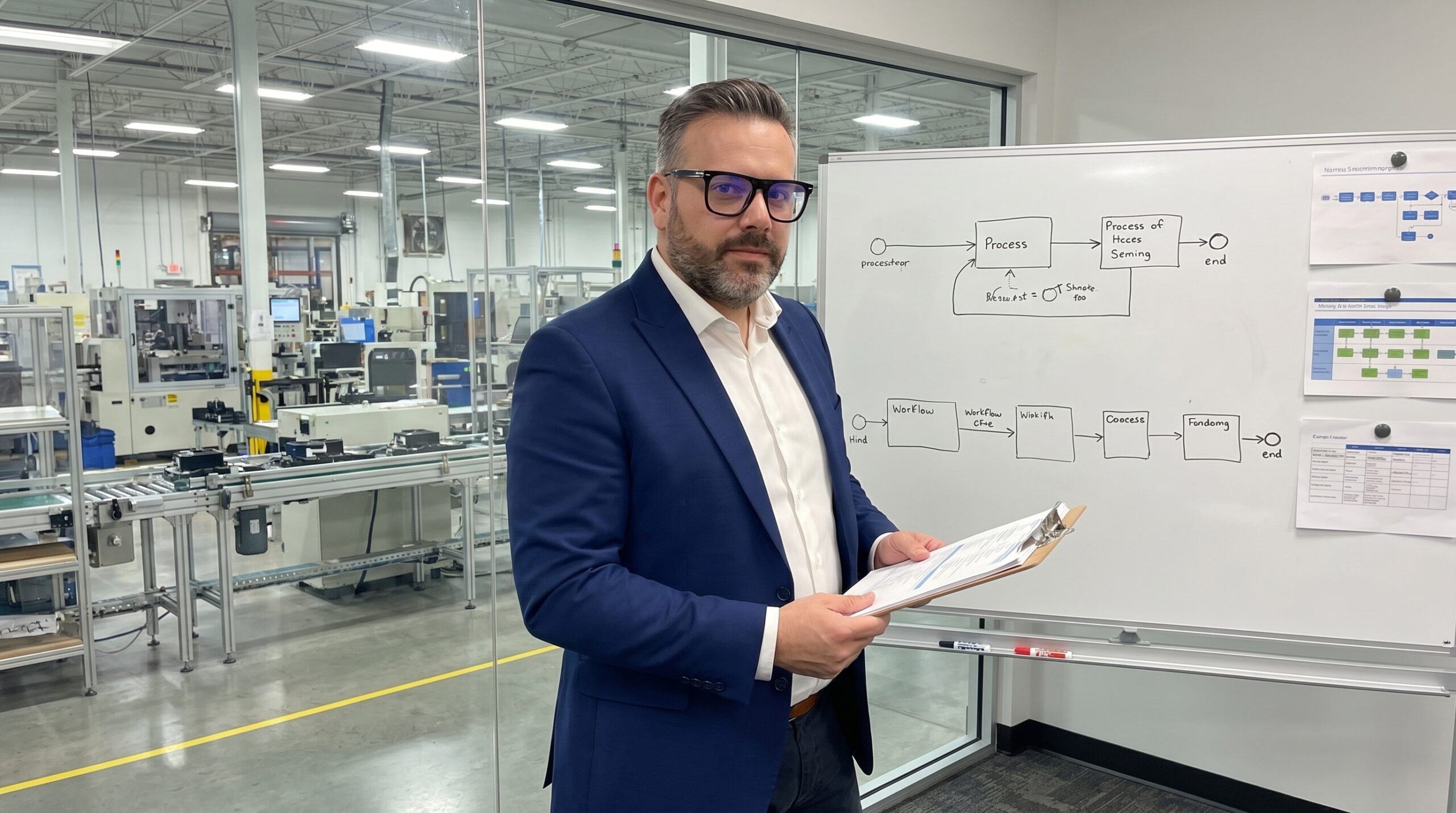
Training Within Industry (TWI) is not a historical footnote. Born in 1940s US manufacturing to rapidly upskill a wartime workforce, it became the bedrock of the Toyota Production System. The three core modules—Job Instruction (JI), Job Methods (JM), and Job Relations (JR)—remain the most effective framework for supervisors to standardise work, drive kaizen, and manage floor-level personnel.
Over 20 years of implementing ISO 9001 and IATF 16949 systems across automotive and aerospace plants, I have audited countless facilities facing high scrap rates, inconsistent cycle times, and severe operator turnover. The root cause is rarely the process flow or the machinery. The bottleneck is almost always supervisors who have never been taught a structured method to instruct their teams or analyse the work being done.
When organisations attempt to deploy lean tools without TWI, the systems collapse. You cannot sustain standard work if supervisors do not know how to teach it. You cannot sustain kaizen if shift leaders do not know how to analyse a process for micro-waste. TWI provides the missing operational discipline that anchors every quality management system.
Job Instruction: Replacing Tribal Knowledge with Standard Work
The standard shop-floor onboarding is a failure mechanism. A senior operator shows a new hire a welding or assembly task once, declares it simple, and walks away. The new operator is left alone, makes a critical dimensional error within the hour, and reaches baseline productivity only after months of frustrating trial and error. This unstructured approach directly causes early attrition and PPM spikes.
Job Instruction solves this with a strict four-step method. The supervisor must first prepare the workstation, breaking the operation down into logical steps and identifying crucial 'key points'—specific actions where safety, quality, or cycle time can be compromised. The instructor then demonstrates the task, explicitly stating the key points and the reasons behind them. The learner attempts the task while explaining the steps back to the instructor.
The final step is follow-up. The supervisor gradually reduces direct oversight, measures the time taken to reach the target cycle, and verifies the operator is adhering to the new standard. At an automotive supplier, my team applied JI to a complex welding operation that historically took six weeks to master. By breaking the task into fourteen specific steps with five strict key points, we reduced training time to two weeks and cut first-month defect rates by sixty percent.
Job Methods: Operator-Led Kaizen on the Shop Floor
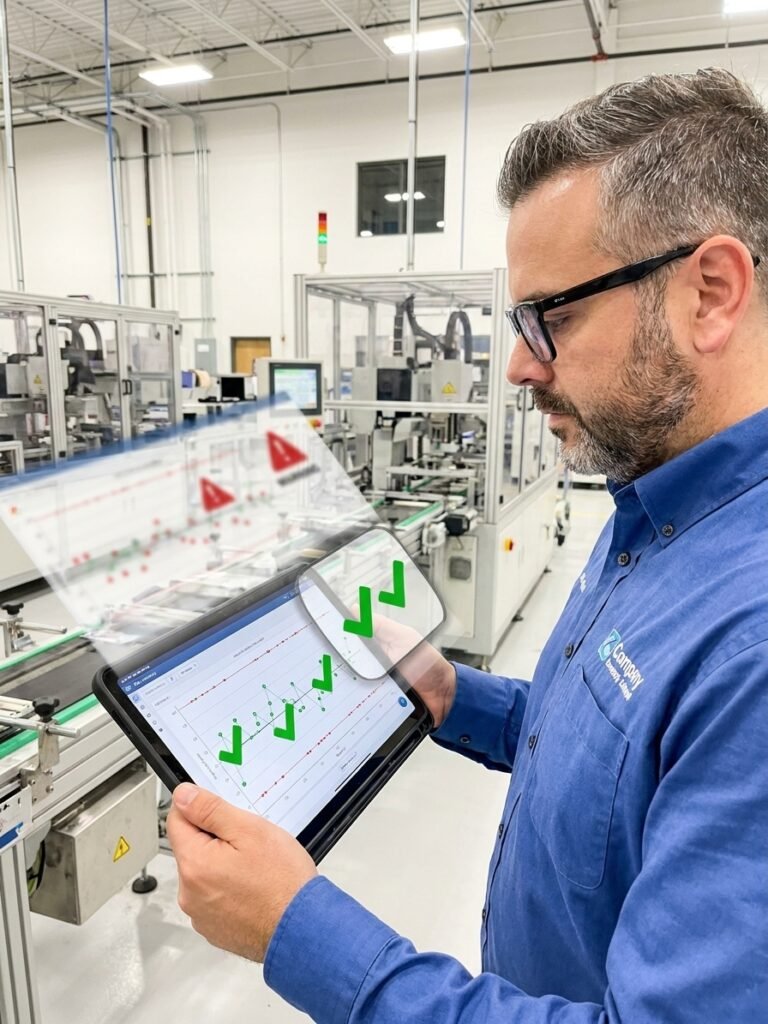
Job Methods trains supervisors and operators to analytically break down their current work to eliminate waste. It operates on a simple principle: the people closest to the process hold the best micro-improvement ideas. This is not top-down engineering; it is structured, daily optimisation driven by the shift leader.
The JM methodology requires the supervisor to meticulously document the existing process. Every material handling movement, every tool retrieval, and every secondary operation is questioned against a strict set of criteria: Why is this necessary? What is its purpose? Where and when should it be done? This forensic breakdown forces the team to see the hidden waste in routines they previously considered standard.
The outcome of a JM workshop is a newly proposed method. Unnecessary steps are eliminated, operations are merged or reordered, and mechanical aids are introduced to reduce operator fatigue. In one aerospace assembly cell, we used JM to analyse a station where operators spent a significant portion of their shift walking to retrieve fasteners. By repositioning the material kitting point and introducing point-of-use kanban, we reclaimed nearly twelve minutes per shift per operator without any capital investment in new machinery.
The Job Instruction (JI) Four-Step Method
- 01Prepare the WorkerBreak the task into steps, identify quality and safety key points, and position the operator at a correct, ergonomic station.
- 02Present the OperationInstructor demonstrates the task slowly, emphasising key points and explaining the exact reason for each one.
- 03Try Out PerformanceOperator performs the task while verbalising the steps, key points, and reasons. Errors are corrected constructively.
- 04Follow UpSupervisor reduces oversight gradually, verifies adherence to the standard, and measures time to target cycle.
Job Relations: The Operational Glue of Quality
Job Relations is the most frequently ignored module of TWI, yet it is the mechanism that holds the quality system together. Perfect Job Instruction and optimised Job Methods will fail completely if the supervisor cannot manage interpersonal conflict or build cooperation on the line. Poor shift relations directly cause high operator turnover, which destroys process stability and makes Cpk data meaningless.
JR establishes that a supervisor's foundational duty is to build and maintain positive relations with their team. This requires setting clear expectations, informing people in advance of changes that affect them, utilising each person's specific abilities, and delivering recognition for good work. When these foundations are absent, management decisions are perceived as arbitrary, breeding resentment and resistance to lean transformations.
If a supervisor cannot teach the standard, they cannot enforce it. If they cannot build cooperation, they cannot sustain it.
When a people-problem does arise—whether it is a performance drop, an attendance issue, or a conflict between line workers—JR provides a structured resolution method. The supervisor must gather all objective facts, weigh alternative actions against organisational goals, take decisive action, and check the results. This prevents emotional, knee-jerk disciplinary reactions that erode trust between operators and management.
Integrating TWI with Modern Quality and Industry 4.0
Modern manufacturing plants attempt to bolt digital tools onto broken management systems. Deploying an Augmented Reality (AR) training headset or an AI-driven predictive maintenance dashboard on top of unstandardised, poorly supervised work simply automises the chaos. TWI provides the operational stability required to make Industry 4.0 investments actually pay off.
Digital work instructions and video microlearning heavily complement Job Instruction. They ensure the standard is perfectly replicated across all shifts. Similarly, the data harvested from IoT sensors and connected tools perfectly feeds the Job Methods analysis phase. The data proves exactly where the micro-waste exists, but the supervisor must still apply the JM framework to eliminate it.
Implementation Reality: Lean Tools vs. TWI Foundations
Deploying Lean Without TWI
- Standard work sheets printed but ignored when the supervisor leaves.
- Kaizen events deliver initial gains that erode within 90 days.
- Digital work instructions installed, but operators revert to old habits.
Deploying Lean With TWI
- Supervisors use Job Instruction to audit and enforce the standard daily.
- Supervisors use Job Methods to analyse operator feedback and adapt the layout.
- Job Relations secures operator buy-in, making the new standard a permanent habit.
TWI does not compete with Six Sigma or DMAIC frameworks; it acts as their prerequisite. A Black Belt can engineer a highly capable process with a Cpk well above 1.33, but if the shift supervisor cannot properly instruct the operators on the new control plan, the variation will return within a week. TWI ensures that engineering gains are permanently locked into daily floor operations through disciplined habit.
Sustaining the System: Deployment Metrics and Common Failures
When deploying TWI, operations leadership must track specific leading indicators. Do not measure generic employee satisfaction. Measure the time it takes a new operator to reach the target cycle time. Track the defect rate of operators in their first thirty days. Monitor the number of JM-driven improvements generated per shift. These are hard operational metrics that prove the system is working.
The most common failure mode is treating TWI as an HR initiative. Human resources can coordinate the scheduling, but plant managers and operations directors must own the deployment. If the senior leadership refuses to participate in the initial Job Instruction training, the shift supervisors will immediately recognise the initiative as a low-priority compliance exercise and abandon the methodology.
Another critical error is modifying the TWI methodology to suit organisational preferences. Teams frequently attempt to remove the 'try out performance' step in JI or soften the direct questioning in JM. TWI functions specifically because its rigid structure eliminates ambiguity. Altering the steps destroys the psychological and operational discipline that has made the system effective for over eighty years.
Measuring TWI Deployment Success
Ultimately, a robust quality management system requires predictable, standardised human input. The ISO 9001 standard demands competent personnel, but the clause is frequently met with a simple sign-off sheet. True operational competence requires a supervisor who can actively teach the process, continuously improve it, and manage the human variables executing it. TWI is the structural framework that builds those exact capabilities.