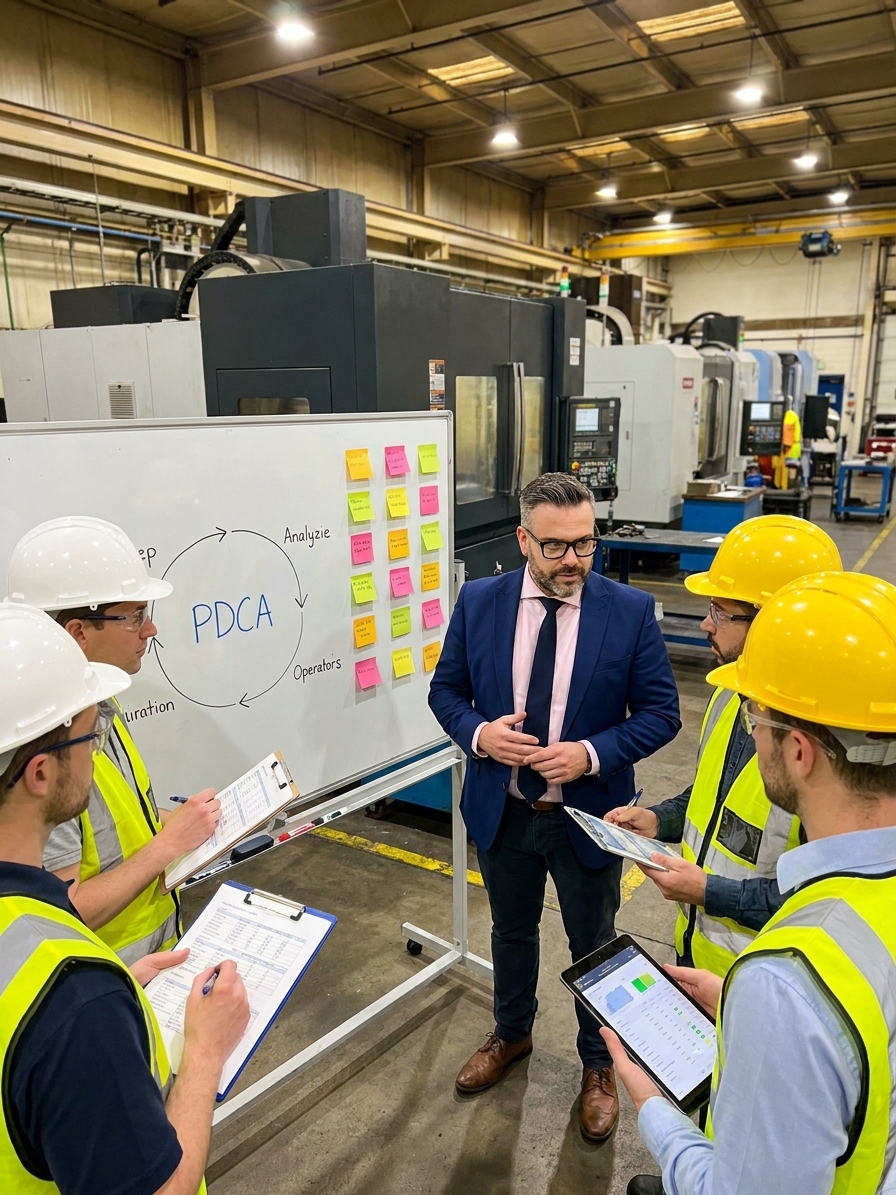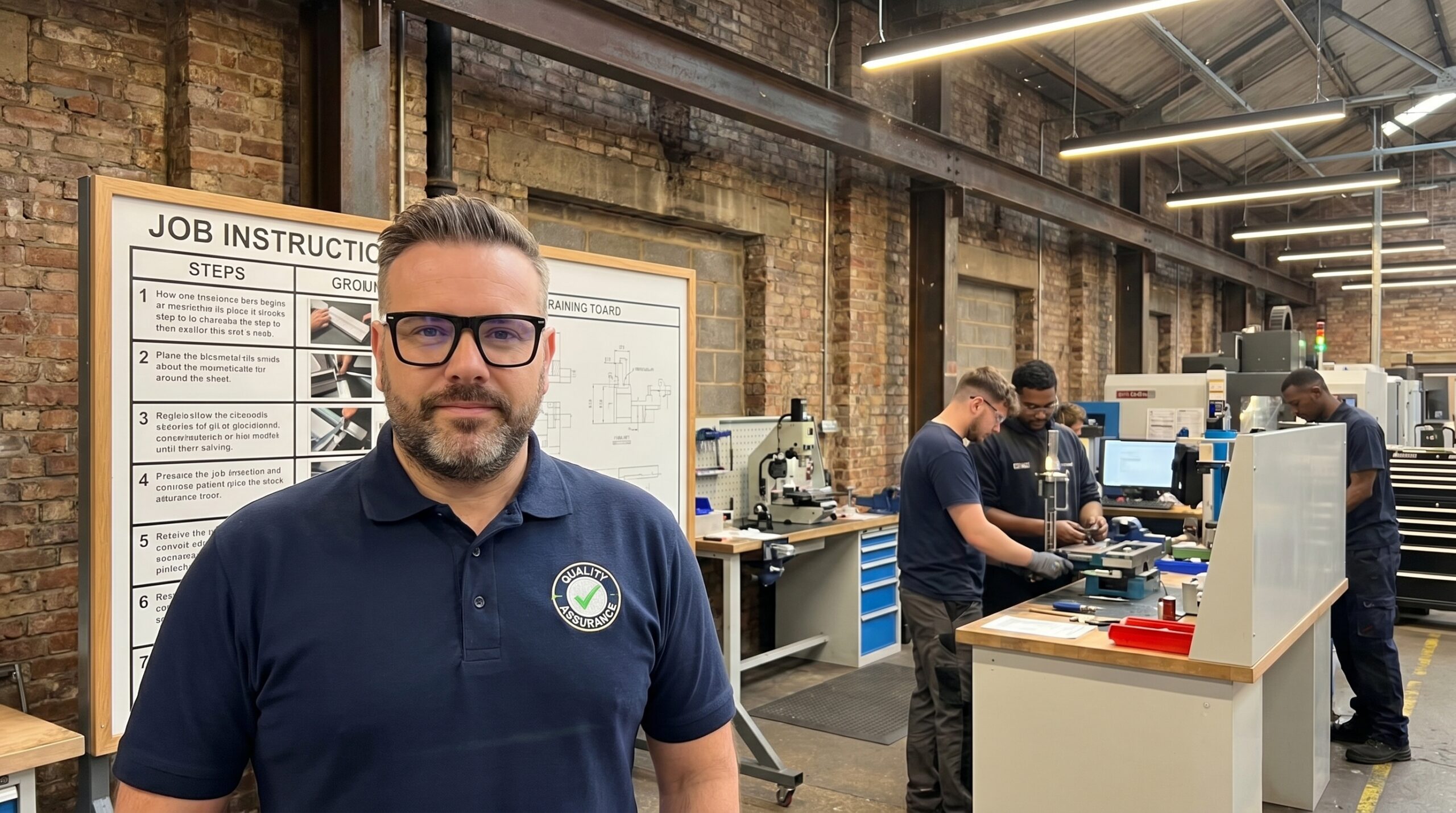
TWI — Training Within Industry: When Three Forgotten Programs from the 1940s Still Outperform Your Modern Training System — and Your Quality Depends on Them More Than You Think
The Best Training Program You’ve Never Heard Of
In 1940, the United States faced a crisis that had nothing to do with enemies overseas and everything to do with the factories at home. Millions of experienced workers were leaving for the military, replaced by people who had never set foot on a production floor — housewives, farmhands, retired workers called back to service. The War Department needed planes, tanks, and ammunition in staggering quantities, and the people building them had never held a wrench.
The solution they created was called Training Within Industry — TWI. It wasn’t a training program in the modern sense. There were no PowerPoint decks, no e-learning modules, no gamified mobile apps. It was three stripped-down, ruthlessly practical skill sets designed to be taught in hours and applied immediately:
- Job Instruction (JI) — How to teach someone to do a job correctly, safely, and consistently
- Job Methods (JM) — How to improve a job by eliminating waste and simplifying steps
- Job Relations (JR) — How to lead people through conflict, change, and daily friction
These three programs helped the U.S. outproduce the entire Axis powers combined. After the war, TWI was exported to Japan as part of the reconstruction effort. The Japanese didn’t just adopt it — they built their entire manufacturing philosophy on top of it. Toyota’s Production System, the foundation of lean manufacturing worldwide, traces its roots directly to TWI. Kaizen, standard work, employee engagement — all of it rests on the scaffolding that TWI provided.
And yet, most quality professionals today have never heard of it.
That’s not just a historical gap. It’s an operational problem. Because the three skills TWI teaches — how to instruct, how to improve, and how to relate — are the exact skills missing from most organizations struggling with quality. You can implement SPC, deploy FMEA, certify to ISO 9001, and install the most sophisticated quality management system money can buy. But if your supervisors can’t teach a job correctly, can’t improve a process systematically, and can’t handle the human friction that comes with change — your quality system is a shell.
Let me show you why.
Job Instruction: The Quality Problem That Starts Before the First Part Is Made
Here’s a scenario that plays out in factories around the world, every single day.
A new operator joins the line. The supervisor is busy, so an experienced operator is asked to “show them the ropes.” The experienced operator demonstrates the job once — quickly, because production can’t wait — and then says, “You got it?” The new operator nods, because nobody wants to look incompetent on their first day. Within an hour, the first defective part appears. Within a week, the defect rate on that station has doubled. Within a month, the supervisor is writing a corrective action report that says “operator error” and the real cause — terrible instruction — is invisible.
TWI’s Job Instruction module was designed to eliminate exactly this problem. It teaches a four-step method that is almost absurdly simple in concept but profoundly powerful in execution:
Step 1: Prepare the Worker. Put them at ease. Find out what they already know. Make them want to learn. This isn’t hospitality — it’s neuroscience. A stressed, confused worker doesn’t retain information.
Step 2: Present the Operation. Tell, show, illustrate, and demonstrate. One key point at a time. Stress the key points — the things that make or break quality, the things that cause defects or injury. Explain why each key point matters.
Step 3: Try Out Performance. Have the worker do the job while explaining each step back to you. Then have them do it while explaining each key point. Then have them explain why each key point is important. Only when they can do all three have they actually learned the job.
Step 4: Follow Up. Check on them. Not once — repeatedly, on a declining schedule. Day one: every hour. Day two: every two hours. Week one: daily. Week two: every other day. Gradually release them as competence builds.
The genius of Job Instruction isn’t the steps themselves — any competent trainer would recognize them. The genius is in the rigid discipline of the method. TWI demands that every job be broken down into its component steps and key points before training begins. This breakdown — called a Job Breakdown Sheet — becomes the organization’s memory of how to do the job correctly.
Think about what this means for quality. Every Job Breakdown Sheet is essentially a quality standard written in the language of the operator. Every key point is a potential failure mode that’s been identified and addressed through instruction rather than inspection. When Toyota says that quality is built into the process, not inspected into the product, Job Instruction is one of the primary mechanisms they’re talking about.
I once worked with an automotive supplier that was struggling with a persistent defect on a welding station — a cold weld that passed visual inspection but failed under load. They had written procedures. They had control plans. They had SPC charts on the weld parameters. But the defect kept appearing.
When we broke down the job using the TWI method, we discovered something remarkable: the experienced operator who had been “training” new workers was teaching them to hold the gun at a 35-degree angle — not the 45 degrees specified in the procedure. The 35-degree angle was actually faster, which is why the experienced operator preferred it. But it also reduced penetration depth by 15%, which was exactly enough to create the cold weld under certain material conditions.
The procedure said 45 degrees. The training said 35. The defect rate said “operator error.” The real error was in the instruction.
Once we implemented Job Instruction with proper Job Breakdown Sheets and trained every supervisor in the method, the cold weld defect dropped by 92% in eight weeks. No equipment changes. No process changes. No capital expenditure. Just better instruction.
Job Methods: The Improvement Engine That Doesn’t Require a Black Belt
Most continuous improvement programs today are heavyweight affairs. You need a champion. You need a project charter. You need statistical analysis and a tollgate review. The barrier to entry is so high that most improvements never start.
TWI’s Job Methods takes the opposite approach. It teaches every supervisor — not engineers, not Six Sigma black belts, but frontline supervisors — how to improve any job using a simple four-step process:
Step 1: Break down the job. List every step in detail. Every movement, every tool, every material. Don’t skip anything, no matter how small.
Step 2: Question every detail. Why is it necessary? What is the purpose? Where should it be done? When should it be done? Who is best qualified to do it? How is the best way to do it? This is the 5W1H method that lean practitioners recognize — but TWI was using it decades before “lean” was a word.
Step 3: Develop the new method. Eliminate unnecessary steps. Combine steps when possible. Rearrange for better sequence. Simplify everything that remains.
Step 4: Apply the new method. Get approval. Train the new method using Job Instruction. Follow up to make sure it sticks.
What makes Job Methods revolutionary isn’t the individual techniques — it’s the democratization of improvement. When every supervisor knows how to improve a job, improvement stops being a special event and becomes a daily habit. You don’t need a kaizen event to fix a problem. You don’t need a cross-functional team. You need a supervisor who knows the method and has the discipline to use it.
In quality terms, Job Methods is the engine of process optimization at the level where it matters most — the actual point of production. Every step eliminated is a step that can’t go wrong. Every simplification is a reduction in human variability. Every rearrangement is an opportunity to build quality into the sequence rather than checking for it afterward.
I’ve seen Job Methods reduce cycle time by 30% on an assembly line without any capital investment — purely by eliminating unnecessary movements, consolidating tool pickups, and rearranging the work sequence. But the quality impact was even more significant: the defect rate dropped by 40% because the simplified process left fewer opportunities for error.
Job Relations: The Human Foundation That Holds Everything Together
This is the module that gets the least attention and causes the most problems.
Quality systems are built on procedures, specifications, and data. But quality is produced by people — people who have bad days, misunderstand instructions, resist change, carry grudges, and sometimes just don’t care. Job Relations teaches supervisors how to handle the human side of production with the same systematic approach they use for technical problems.
The four steps of Job Relations are:
Step 1: Get the facts. Before reacting, gather information. What actually happened? What’s the context? What does the person involved say? What do others say? What policies or practices are relevant?
Step 2: Weigh and decide. Consider the options. What are the possible actions? What are the consequences of each? What’s fair to everyone involved? What’s consistent with the organization’s values?
Step 3: Take action. Don’t procrastinate. Don’t overreact. Don’t pass the buck. Handle it yourself, promptly and directly.
Step 4: Check results. Did the action solve the problem? Did it create new problems? Is the person satisfied? Did it maintain or improve the relationship?
Again, the power isn’t in the individual steps — it’s in the discipline. Most supervisors handle people problems reactively, emotionally, and inconsistently. One day they let something slide; the next day they explode over a minor issue. This inconsistency destroys trust, and trust is the foundation of a quality culture.
Job Relations also teaches four foundations for building positive relationships:
- Let each worker know how they’re doing. Give regular, specific feedback — not just annual reviews.
- Give credit when due. Recognition is fuel for engagement. Workers who feel valued produce better quality.
- Tell people in advance about changes that affect them. Surprises breed resentment. Resentment breeds carelessness.
- Make the best use of each person’s ability. People thrive when they’re challenged and wither when they’re bored.
These aren’t soft skills. They’re quality skills. Every study ever conducted on employee engagement and quality output shows the same relationship: disengaged workers produce more defects. Workers who don’t trust their supervisors hide problems instead of reporting them. Workers who feel ignored stop caring about the details that make the difference between good quality and great quality.
The TWI-Quality Connection: Why This Matters Now More Than Ever
You might be thinking: “This sounds interesting, but I have a modern quality system with digital tools and automated inspection. Do I really need a training program from the 1940s?”
Yes. Here’s why.
First, the skills gap is back. The manufacturing sector is facing a workforce crisis that echoes the original TWI problem. Experienced workers are retiring faster than they can be replaced. New hires arrive with less industrial experience than ever before. The average time to competency for a new manufacturing worker has stretched from weeks to months — and during those months, quality suffers.
Second, complexity has increased, but instruction hasn’t kept pace. Modern manufacturing processes are more complex than anything the 1940s could have imagined. But the way we teach people to perform those processes hasn’t fundamentally changed since someone first said, “Watch me and you’ll figure it out.” TWI’s structured instruction method is more necessary today, not less.
Third, continuous improvement has become a specialist function. Somewhere along the way, improvement stopped being everyone’s job and became the domain of engineers and black belts. TWI’s Job Methods puts improvement back in the hands of the people closest to the work — where the best ideas have always come from.
Fourth, the human factor remains the dominant quality variable. Equipment can be calibrated. Software can be validated. Materials can be inspected. But people — with their moods, their habits, their misunderstandings, and their unspoken knowledge — remain the largest source of quality variation. Job Relations addresses this directly.
Implementing TWI: Lessons from the Field
If you’re considering bringing TWI into your organization — and I strongly recommend that you do — here are some practical lessons from implementations I’ve been part of:
Start with Job Instruction. Of the three modules, JI has the most immediate and measurable impact on quality. It’s also the easiest to implement because the benefits are visible within days: fewer defects from new operators, faster time to competence, less rework.
Train the trainers. TWI is designed to be delivered in a specific format — “multiplier” training where certified trainers teach supervisors, who then apply the methods on the floor. Don’t shortcut this. The quality of the training delivery determines the quality of the results.
Require Job Breakdown Sheets for every critical operation. This is non-negotiable. If you don’t have a Job Breakdown Sheet, you don’t have a standard — you have an assumption. And assumptions are where defects breed.
Integrate TWI with your existing quality system. Job Breakdown Sheets should be referenced in your control plans. Job Methods improvements should feed your corrective action system. Job Relations principles should be part of your audit criteria. TWI isn’t a replacement for your QMS — it’s the human operating system that makes your QMS actually work.
Be patient with Job Relations. This module takes the longest to show results because it’s about culture, not mechanics. But the long-term payoff is enormous: organizations that master Job Relations have lower turnover, higher engagement scores, better safety records, and — consistently — better quality metrics.
Measure the impact. Track time-to-competency for new hires. Track defect rates before and after JI implementation. Track the number of supervisor-initiated improvements after JM training. Track employee engagement and turnover after JR. TWI produces measurable results, but only if you measure them.
The Deeper Truth: Quality Is a Teaching Problem
Here’s what I’ve come to believe after 25 years in quality: most quality problems aren’t really quality problems. They’re teaching problems. They’re leadership problems. They’re communication problems that manifest as defects on a control chart.
The operator who assembles a part backwards wasn’t trying to create a defect. They were never taught the correct method in a way that stuck. The supervisor who lets a known problem persist isn’t incompetent. They were never given a systematic method for improvement. The team leader who ignores a conflict until it explodes isn’t careless. They were never taught how to handle human problems with the same rigor they apply to technical ones.
TWI addresses all three of these root causes with a simplicity that borders on the profound. Three skills. Four steps each. Teachable in hours, applicable for a lifetime.
The factories that won World War II used these methods. The factories that rebuilt Japan used these methods. The factories that set the global standard for quality — Toyota, Honda, Denso, and hundreds of others — built their entire management systems on these methods.
Maybe it’s time your factory did too.
Peter Stasko is a Quality Architect with 25+ years of experience in automotive and manufacturing quality. He has implemented TWI programs across multiple plants and seen firsthand how structured instruction, systematic improvement, and principled leadership transform quality outcomes. He believes the best quality system is one that works on the shop floor — not just in the boardroom.