What’s
New in ISO 9001:2026 vs ISO 9001:2015: Key Changes Explained
The Moment You
Realize Everything Has Changed
I was sitting in the ISO/TC 176 dissemination webinar last autumn,
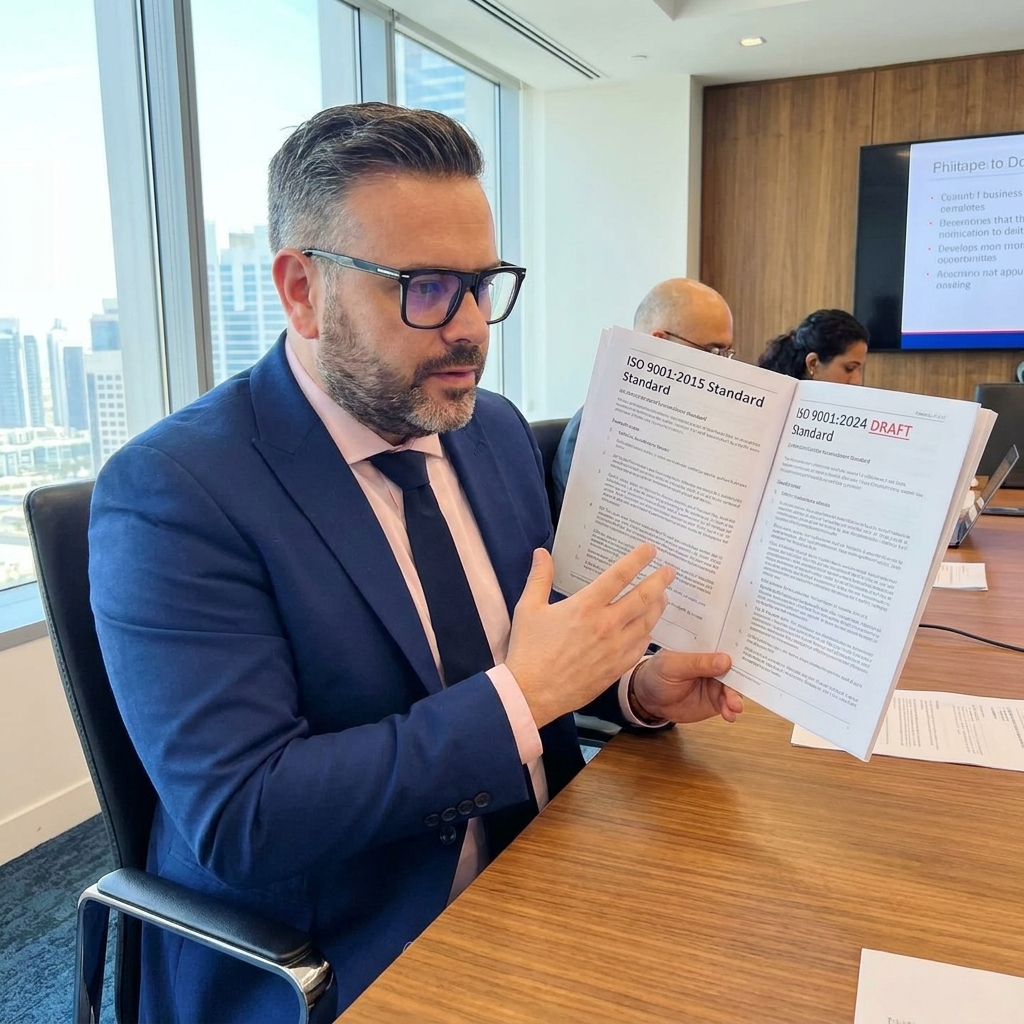
watching a slide that compared the 2015 and 2026 clause structures side
by side. On the surface, it looked familiar — same ten clauses, same
Annex SL skeleton, same Plan-Do-Check-Act logic. Then the presenter
highlighted a single subsection that had grown from three sentences to
an entire page. I leaned forward. Around me — virtually, in a Zoom room
of 400 quality professionals — the chat exploded. “This changes
everything about how we manage suppliers.” “Our document control system
can’t handle this.” “Does this mean we need to rewrite our entire
quality manual?”
They were all right. And they were all overreacting. Let me explain
what actually changed, what it means for your QMS, and where the real
work hides.
The Big Picture:
Evolution, Not Revolution
ISO 9001 revisions follow a pattern: the structure stays stable, the
intent sharpens, and the requirements get more specific. The 2026
edition follows this pattern faithfully. If you’re hoping for a radical
rewrite that renders your 2015 QMS obsolete — or, conversely, hoping
nothing changed enough to require real work — you’ll be disappointed on
both counts.
Here’s the quantitative reality:
- Clause structure: Unchanged. Still ten clauses,
same numbering, same Annex SL hierarchy. - Requirements enhanced: 14 significant
requirement-level changes across 7 clauses. - New concepts introduced: 4 — climate change
considerations in context analysis, digital QMS infrastructure, expanded
organizational knowledge requirements, and enhanced supply chain
transparency. - Terminology changes: 9 defined terms updated or
added. - Clauses with zero change: Clauses 1, 2, and 3
(scope, normative references, terms — though terms got updates in Clause
3).
Now let’s dig into the specific changes that will actually affect
your daily work.
Change
1: Climate Considerations in Context (Clause 4.1 and 4.2)
What 2015 said: Determine external and internal
issues relevant to your purpose and strategic direction.
What 2026 adds: Climate change must be explicitly
considered as a relevant external issue — not necessarily as something
you must act on, but as something you must evaluate and document your
reasoning about.
What this means in practice: You need to add
climate-related factors to your context analysis. For a manufacturing
company, this might include supply chain vulnerability to extreme
weather, energy costs under carbon regulations, or customer requirements
for carbon footprint reporting. For a software company, it might mean
data center energy consumption and remote-work policies.
I worked with a mid-sized automotive supplier in Slovakia that
initially dismissed this requirement: “We make brake components, not
solar panels.” Then we mapped their supply chain and discovered that 40%
of their raw steel came from a region that experienced severe flooding
in 2024, disrupting deliveries for six weeks. Climate risk in your
context analysis isn’t politics — it’s supply chain resilience.
Effort estimate: Low to moderate. A well-facilitated
2-hour workshop with your leadership team can produce a credible climate
context analysis.
Change
2: Digital QMS Infrastructure (Clause 7.1.1 — General, Resources)
What 2015 said: Determine and provide the resources
needed for the QMS.
What 2026 adds: Organizations must consider digital
infrastructure as part of their QMS resources. This includes data
management systems, digital documentation platforms, and the IT
infrastructure that supports quality processes.
What this means in practice: If your quality records
live in a shared drive with a file naming convention from 2012, this is
your wake-up call. The standard doesn’t mandate specific technology, but
it expects you to have consciously designed your digital quality
infrastructure — not inherited it accidentally.
Key questions your auditor will ask: – How does your digital QMS
ensure data integrity? – What controls prevent unauthorized changes to
quality records? – How is digital data backed up, secured, and made
retrievable? – Can you demonstrate traceability through your digital
systems?
Effort estimate: Moderate to high, depending on your
current digital maturity. Organizations with modern eQMS platforms (like
eQMS cloud solutions) may need only documentation updates. Those relying
on shared drives and spreadsheets face a significant technology
project.
Change
3: Expanded Organizational Knowledge (Clause 7.1.6)
What 2015 said: Determine the knowledge necessary
for the operation of your processes and ensure it is maintained and made
available.
What 2026 adds: Knowledge management must be
proactive — capturing tacit knowledge before it walks out the door,
systematically learning from failures and successes, and ensuring
knowledge transfer across the organization.
What this means in practice: The 2015 requirement
was widely interpreted as “keep your procedures up to date.” The 2026
edition makes clear that organizational knowledge is broader than
documents. It includes:
- Tacit knowledge: The know-how that experienced
operators carry in their heads - Lessons learned: Systematic capture from
nonconformities, complaints, and near-misses - Cross-functional knowledge sharing: Breaking down
silos where knowledge lives in one department - Succession planning: Ensuring critical knowledge
survives personnel changes
At Airbus, we implemented a “knowledge bridges” program after losing
three senior quality engineers to retirement in a single year. Each
departing expert was paired with a successor for a 4-week structured
knowledge transfer, including shadow auditing, decision-making
walkthroughs, and documentation of undocumented workflows. We captured
over 200 process insights that existed nowhere in our QMS
documentation.
Effort estimate: Moderate. This is mostly a process
and culture change, not a technology investment.
Change 4:
Supply Chain Quality Management (Clause 8.4)
This is the change that generated the most chat-box panic in the
webinar. Let’s break it down.
What 2015 said: Control externally provided
processes, products, and services. Define controls based on the impact
on conformity.
What 2026 adds: – Extended scope to include sub-tier
supplier awareness – Real-time or near-real-time performance monitoring
expectations – Enhanced transparency requirements throughout the supply
chain – Stronger integration of supplier risk into your overall QMS risk
management
What this means in practice: The annual supplier
questionnaire is dead. Or at least, it’s no longer sufficient. You
need:
-
Tiered supplier management: Not all suppliers
need the same level of control, but your tiering must be risk-based and
dynamic — updated when supplier performance changes. -
Performance data, not just compliance data:
On-time delivery trends, defect rate trends, corrective action closure
times, capacity utilization. Your auditor will ask to see trend data,
not just the latest scorecard. -
Supply chain mapping: You need visibility beyond
your direct suppliers. If your key supplier depends on a single
sub-supplier for a critical component, that’s your risk, whether you
like it or not. -
Supplier development, not just monitoring: The
standard encourages active supplier improvement initiatives — joint
process improvement projects, capability building, technology
transfer.
I saw this play out dramatically in 2025. A Tier 1 automotive
supplier I advise lost their primary raw material source when a sub-tier
supplier (three links down the chain) had a catastrophic factory fire.
Nobody in the chain had mapped beyond Tier 1. The recovery took four
months and cost €12M in expedited logistics and alternative sourcing.
ISO 9001:2026 doesn’t prevent fires, but it requires the supply chain
visibility that would have identified the single-source risk months
earlier.
Effort estimate: High. This is the most
resource-intensive change for most organizations.
Change 5: Risk
Management Maturation (Clause 6.1)
What 2015 said: Determine risks and opportunities,
plan actions to address them.
What 2026 adds: Risk management must be systematic,
integrated across all QMS processes, and connected to strategic
planning. The vague “risk-based thinking” concept of 2015 evolves into
demonstrable risk management processes.
What this means in practice: You need to show: – A
defined risk management methodology (not ad-hoc risk identification) –
Risk registers that are living documents, reviewed and updated regularly
– Integration between QMS risks and enterprise risk management –
Evidence that risk assessments drive actual decisions and actions
Effort estimate: Moderate. Most organizations have
some risk management in place — the work is making it systematic and
demonstrating the connection to decisions.
Change 6: Leadership
Engagement (Clause 5.1)
What 2015 said: Top management must demonstrate
leadership and commitment to the QMS.
What 2026 adds: More specific requirements for how
leadership demonstrates engagement — including active participation in
management reviews, accountability for QMS effectiveness (not just
delegation), and integration of quality objectives into business
strategy.
What this means in practice: Your CEO signing the
quality policy once a year is no longer sufficient evidence. Auditors
will look for: – Leadership’s actual involvement in management reviews
(attendance, participation, decision-making — not just a signed minutes
document) – Quality metrics in executive dashboards and board reports –
Evidence that quality objectives influenced business decisions (budget,
resources, strategy) – Leadership communication about quality throughout
the organization
Effort estimate: Variable. If your leadership is
already engaged, this is documentation work. If quality is seen as “the
quality department’s job,” this requires a cultural shift that no amount
of documentation can fake.
Change 7: Documented
Information (Clause 7.5)
What 2015 said: Maintain and retain documented
information to support the operation of QMS processes.
What 2026 adds: Enhanced requirements for digital
documented information — including version control in digital systems,
access management, and data integrity assurance for electronic
records.
What this means in practice: Your document control
system needs to demonstrate: – Clear version history and approval
workflows for digital documents – Access controls that prevent
unauthorized modifications – Audit trails showing who changed what and
when – Data backup and disaster recovery capabilities for quality
records
Effort estimate: Low for organizations with
established eQMS. High for those still managing quality documents in
file shares.
Changes 8–14: The
Smaller (But Important) Updates
Beyond the seven major changes, there are several smaller updates
worth noting:
-
Clause 8.2 (Requirements for products and
services): Enhanced requirements for digital communication of
requirements — including API-based order systems and digital contract
management. -
Clause 8.5.1 (Control of production and service
provision): First-piece inspection requirements strengthened;
validation of digital inspection systems added. -
Clause 8.5.6 (Control of changes): Change
management must include impact assessment on the entire supply chain,
not just internal processes. -
Clause 9.1.3 (Analysis and evaluation): Data
analytics expectations elevated — trend analysis must use appropriate
statistical methods, not just month-over-month comparisons. -
Clause 9.2 (Internal audit): Auditor competence
requirements expanded to include digital system auditing
capability. -
Clause 9.3 (Management review): Climate
considerations and digital transformation progress must be included as
management review inputs. -
Clause 10.2 (Nonconformity and corrective
action): Root cause analysis must be systematic — “operator
error” is explicitly called out as insufficient without determining why
the error occurred.
The Change
That Isn’t in the Standard (But Should Be)
Having read the final draft multiple times, I believe the most
significant shift isn’t in any individual clause — it’s in the
philosophical orientation of the standard. ISO 9001:2026 moves from a
compliance mindset to a performance mindset.
The 2015 edition asked: “Do you have a quality management system that
conforms to these requirements?”
The 2026 edition asks: “Does your quality management system actually
drive quality outcomes?”
This distinction will reshape how auditors approach assessments.
They’ll spend less time verifying that procedures exist and more time
examining whether those procedures produce results. Your internal audit
program needs to evolve accordingly — auditing for effectiveness, not
just conformance.
Priority Action Matrix
To help you prioritize, here’s my recommended sequence based on
effort vs. impact:
| Priority | Change | Effort | Impact on Audit |
|---|---|---|---|
| 1 | Supply chain management (8.4) | High | Critical |
| 2 | Organizational knowledge (7.1.6) | Moderate | High |
| 3 | Digital QMS infrastructure (7.1.1) | Moderate-High | High |
| 4 | Risk management (6.1) | Moderate | Medium-High |
| 5 | Leadership engagement (5.1) | Variable | High |
| 6 | Documented information (7.5) | Low-Moderate | Medium |
| 7 | Climate considerations (4.1/4.2) | Low | Medium |
| 8–14 | Smaller updates | Low | Low-Medium |
Start at the top. Work down. Don’t try to do everything at once.
Key Takeaways
- The structure is unchanged — Annex SL is preserved, so your QMS
architecture remains valid - 14 significant changes, but only 3–4 require major effort
- Supply chain management is the biggest change — start there
- Climate considerations sound scary but require minimal effort for
most organizations - The philosophical shift from compliance to performance will change
how audits feel - Priority: supply chain → knowledge → digital infrastructure → risk →
everything else

Peter Stasko is Quality Director at Airbus with 25+ years of
experience in quality transformation across automotive and aerospace
sectors. Certified PSCR, Six Sigma Black Belt, and lead auditor for ISO
9001, AS9100, and IATF 16949. He has led four ISO 9001 transitions and
survived all of them.