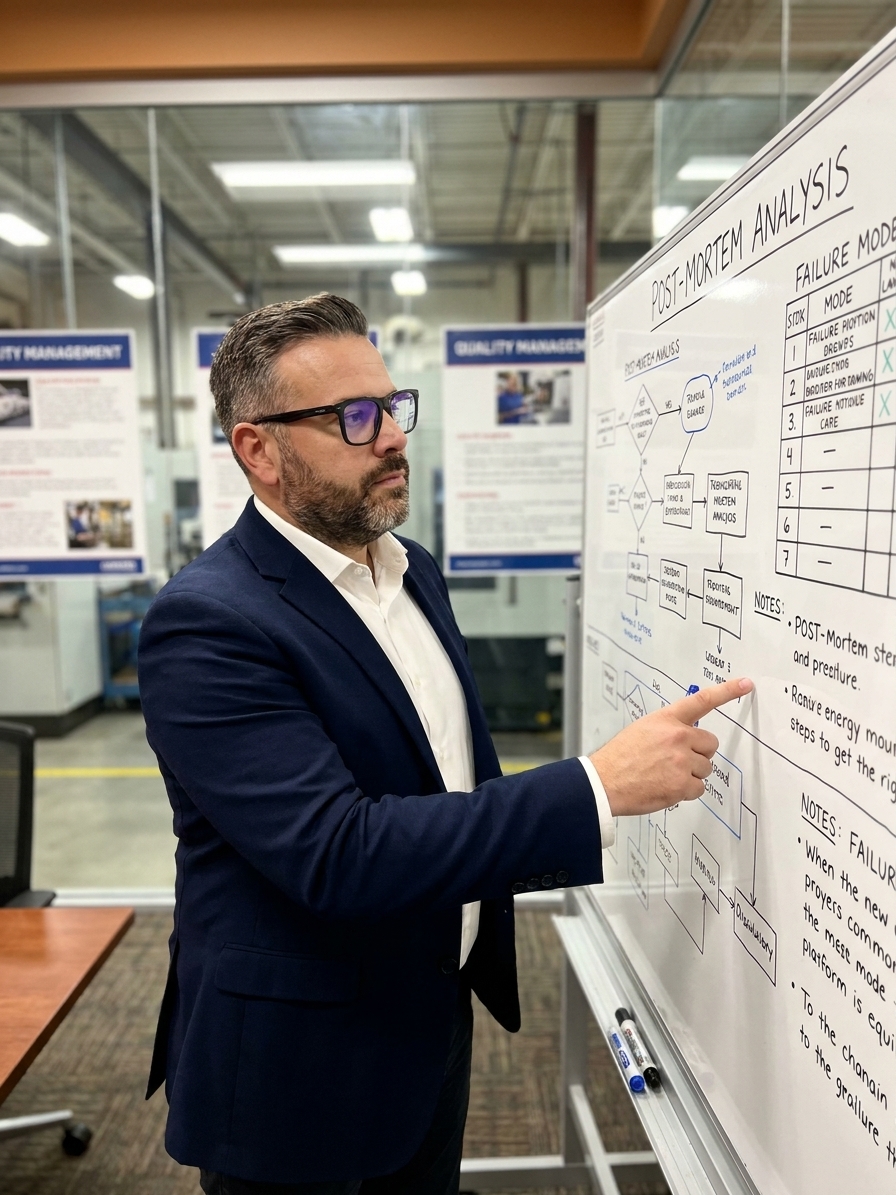
The standard quality planning toolkit is analytically robust but behaviourally naive. PFMEA, control plans, and risk registers systematically map technical vulnerabilities across process steps. However, these instruments share a critical economic blind spot: they depend entirely on a team's willingness to be candid about operational realities in a social setting.
Across two decades implementing ISO 9001 and IATF 16949 systems in automotive and aerospace, I have observed a consistent financial pattern. The most costly failures rarely stem from unidentified technical risks. They are caused by known organisational risks—single-source vulnerabilities, rushed operator training, pending staff departures—that a PFMEA cannot capture because the social dynamics of a planning meeting actively suppress them.
The core issue is accountability economics, not methodology. When a risk identification exercise requires a junior engineer to challenge a senior manager's procurement decision, the exercise is structurally compromised. The premortem technique realigns the social cost structure. Instead of asking what might go wrong, the facilitator states the project has failed and demands an explanation.
How Social Dynamics Inflate the Cost of Quality
Assigning risk priority numbers requires consensus, and consensus in a hierarchical room naturally gravitates toward the safest, least confrontational assessment. If a procurement manager is present, a junior engineer is unlikely to flag a critical single-source supplier vulnerability. The resulting PFMEA reflects a sanitised version of reality, guaranteeing that actual operational exposures remain completely unmitigated when production begins.
This silence directly inflates the cost of quality. Internal failure costs—specifically scrap, rework, and sort operations—spike when undocumented risks materialise on the production floor. External failure costs escalate even faster through customer line shutdowns, premium freight, and warranty claims. The financial damage compounds because the organisation has made no contingency plans for a failure it refused to acknowledge.
I have audited plants where the entire quality team knew a critical measurement system was not capable, but nobody documented it because the capital expenditure was already approved. The PFMEA showed acceptable detection ratings. Three months after launch, that same measurement system generated a 70% increase in sort-and-rework costs. The risk was never in the document because the person who owned the knowledge did not own the authority to report it.
Optimism bias and groupthink are structural features of human cognition that actively degrade risk assessments. Planning fallacy causes teams to underestimate timelines, compressing validation phases. Groupthink forces convergence on a shared, confident view, suppressing individual doubts. When the social cost of raising a concern is higher than the cost of staying silent, the concern stays unspoken, and the organisation pays the difference later.
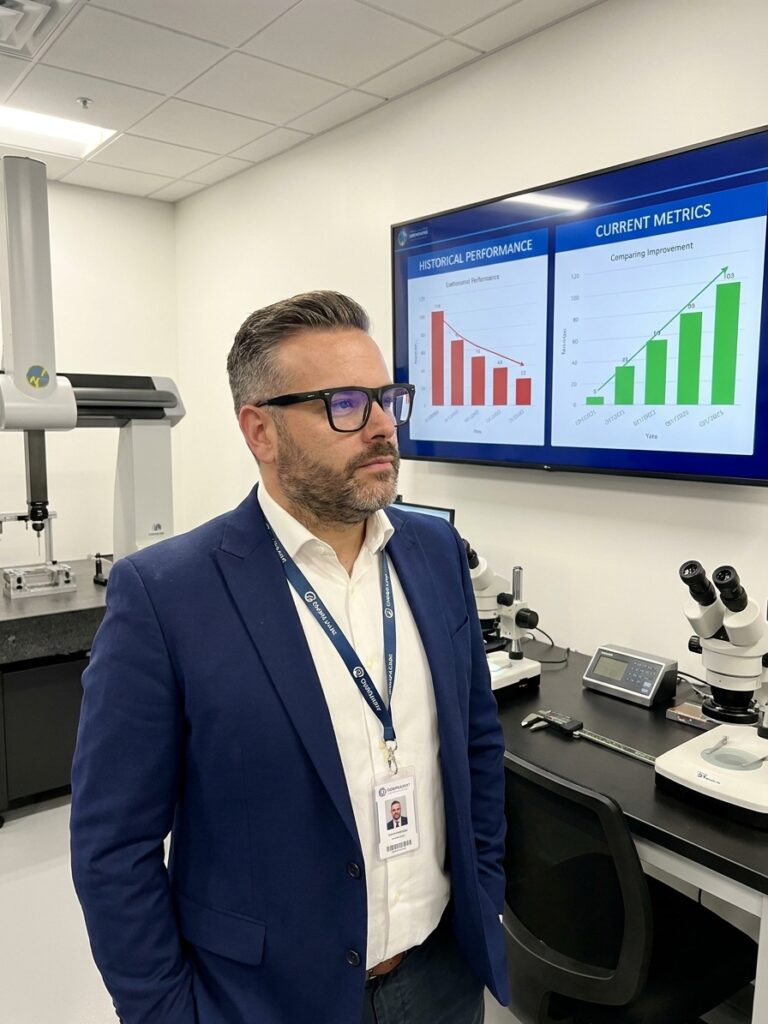
The Financial Mechanics of Prospective Hindsight
The premortem works because it leverages prospective hindsight to bypass social friction. When individuals assume an event has already occurred and work backward to explain it, they generate significantly more reasons for the outcome than when they try to predict it. The technique shifts the financial burden of risk identification from the individual to the group.
More importantly, the social risk equation inverts. In a standard planning meeting, participants worry about looking negative or threatening project approval by raising a concern. In a premortem, participants focus on looking unprepared if they cannot explain the assumed failure. The cognitive posture shifts from defensive optimism to diagnostic rigour, forcing the team to acknowledge expensive vulnerabilities.
This shift captures the organisational and human factors that drain manufacturing margins. A team asked to predict future problems will cite generic technical risks. The same team asked to explain a past failure will identify the specific procurement shortcut, the uncalibrated gauge, and the untrained night-shift operator. These are the exact factors that drive up the cost of quality when they are ignored.
A premortem does not give you better analytical tools; it gives you a mechanism to surface the risks your team is already paying to ignore.
Participant Selection and the Cost of Missing Expertise
Participant selection determines whether the premortem surfaces real financial exposures or rehearses what the planning team already knows. The project core team will generate risks they have already discounted. You need the operators, supplier quality specialists, and shift supervisors who interface with the process outputs daily. Their perspective exposes the operational blind spots that inflate downstream costs.
Seniority matters here, but not in the way meeting organisers typically assume. A production supervisor with two decades on the floor will identify implementation risks that a senior engineering manager cannot. The supervisor knows which maintenance backlogs will delay gauge calibration, which shift leaders struggle with new work instructions, and which suppliers consistently short-ship on Fridays. This knowledge is alive on the floor and dead in a risk register.
Include the dissenters deliberately. Every organisation has engineers who raise concerns in hallways but not in meetings. Their concerns are suppressed by the social dynamics of the planning process, not by a lack of analytical ability. A structured premortem with enforced silent generation gives these voices a legitimate channel. The mechanism matters more than the personality.
Conversely, exclude anyone whose presence will suppress candour. If a senior director's attendance causes the room to defer, their attendance defeats the economic purpose of the exercise. Explain the rationale, share the output, and invite their response to the documented risks. The premortem is a generation exercise, not a consensus-building exercise.
Executing the Protocol to Protect Margins
Schedule 60 to 90 minutes at a critical decision point, such as a design review or Phase 3 PPAP gate. The production plan must be detailed enough to evaluate but flexible enough to modify. Running the exercise too early yields generic risks that waste time. Running it too late means confronting locked-in capital decisions that no one has the authority or budget to change.
The facilitator's first job is to enforce the frame. State the scenario without qualification: assume it is six months in the future and this product launch has failed completely. The team's assignment is to write the post-mortem report explaining the specific root causes. Treat the failure as an absolute certainty. Any hedging, any discussion of likelihood, undermines the exercise.
Four-Phase Quality Premortem Protocol
- 01Frame the FailureEstablish that the project has definitively failed and the team must explain why.
- 02Generate IndependentlyAllow 10 minutes of total silence for individuals to list specific root causes.
- 03Share and ClusterCapture every explanation publicly, grouping overlapping systemic vulnerabilities.
- 04Translate to ActionAssign specific mitigation tasks and feed them directly into the existing FMEA.
Before any group discussion, enforce a period of silent individual generation. Give every participant ten minutes to write down three to five explanations for the failure. Instruct them to look beyond technical defects and consider organisational, political, and resource factors. This phase is where the junior engineer documents the actual reason a new measurement system will fail without having to contradict the senior tooling manager.
Converting Candour into Preventive Controls
Once silent generation ends, go around the room. Each person reads their list while the facilitator records every item without debate. Patterns emerge immediately. One operator might cite improper gauge validation, another might highlight untrained night-shift staff, and a third might reference the upcoming departure of the lead quality engineer. These are three perspectives on the same systemic vulnerability.
Cluster these items logically but preserve the individual descriptions. The nuances matter for accountability and resource allocation. If three people independently identified a training gap, that risk carries a different weight than a single speculative concern. Use dot voting or a simple impact matrix to prioritise the cluster groups based on their potential severity to the production line. The prioritisation must be visible and defensible.
Predictive Risk Assessment vs Structured Premortem
Standard PFMEA Session
- Asks participants to predict what might go wrong
- Triggers optimism bias and groupthink dynamics
- Limited to technical failure modes within scope
- Output: a sanitised risk priority number matrix
Structured Premortem
- Assumes failure has occurred and asks why
- Triggers diagnostic thinking and operational candour
- Captures organisational and human factors openly
- Output: targeted preventive controls with named owners
The deliverable is not a ranked list; it is a set of specific, actionable control measures integrated into quality planning. For every high-priority failure scenario, the team must determine what must change immediately to prevent the hypothetical failure from becoming an actual 8D corrective action. Assign an owner and a deadline to each control measure. Without ownership, the exercise is intellectual entertainment.
Do not confuse a premortem with a risk register. A risk register is a living tracking document. A premortem is a time-bounded generation exercise. Feed the insights directly into your existing FMEA and control plans to ensure they actively drive daily quality operations, rather than sitting in an isolated report that no one reads after the gate review.
The Cost of Ignoring Results and Sustaining Discipline
The most damaging failure mode is running the exercise and ignoring the results. If you identify real risks and then proceed with the original plan because the schedule is too tight, you have taught the team that honest input is performative. The next premortem will be useless because participants will have learned the exercise has no authority. You destroy the credibility required to surface expensive risks.
Corrective action implementation is a critical application point. After defining a root cause and designing a CAPA, run a premortem assuming the corrective action failed. This catches the most common CAPA failure mode: a technically correct solution that collapses during actual shop-floor execution due to lack of operator buy-in or inadequate training resources. The solution was correct on paper and unimplementable in practice, wasting engineering hours.
Significant process changes benefit heavily from this approach. Implementing new automated inspection equipment or revising a production routing requires a premortem to identify implementation risks that the change management procedure overlooked. The goal is to surface the operational blind spots before the first part is run, not after the first rejection arrives from your customer's incoming inspection.
Treat the exercise as a calibration tool. After a project launches, revisit the premortem document and compare the predicted failures against actual field failures or internal scrap reports. This feedback loop sharpens the team's ability to identify real operational risks. It also demonstrates, concretely, which participants consistently see the risks that others miss, and that intelligence is invaluable for building resilient quality teams.