Managing Quality Clauses and Customer-Specific Requirements in Manufacturing
Quality clauses and CSRs buried in purchase orders dictate how you build parts, not just the result. Without a systematic…
Your blog category
887 articles
Quality clauses and CSRs buried in purchase orders dictate how you build parts, not just the result. Without a systematic…
Different departments pursuing different definitions of quality is an emergent organisational risk. Here is the diagnostic and the structural fix.
Most Quality Circle programmes die because leadership measures enthusiasm instead of tracking the data that proves whether the mechanism is…
Orthogonal arrays are only as strong as the manufacturing data infrastructure feeding them. Here is how to wire MES, SPC,…
A practitioner's guide to the hypothesis tests that matter on the shop floor, the errors that undermine them, and the…
How cross-functional teams can use structured risk registers and control hierarchies to catch systematic failures before they reach the customer.
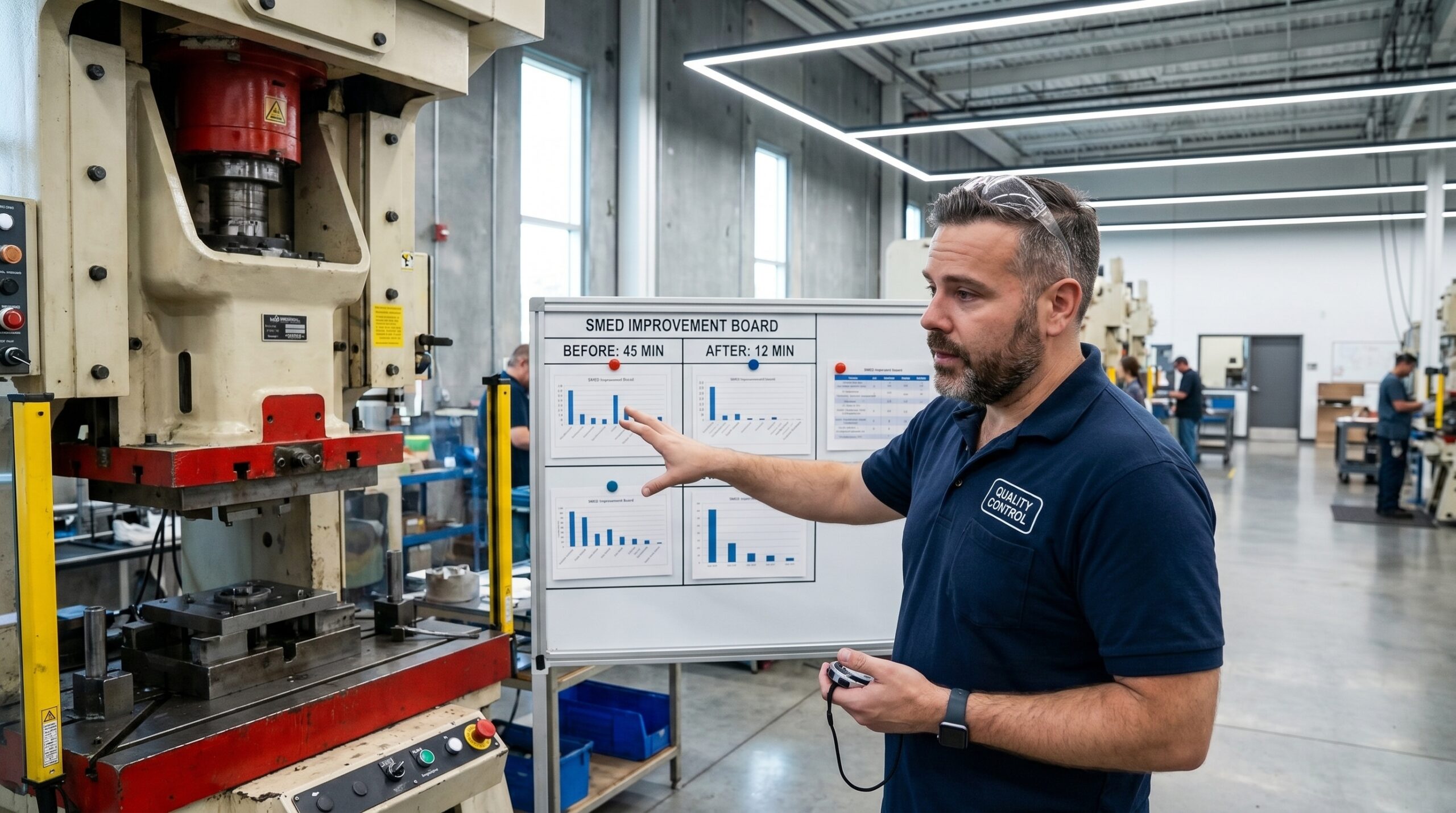
Most plants waste 50-70% of their changeover time on tasks performed during machine downtime. Here is the structured methodology for…
Merging two certified QMS environments without destroying process control requires a disciplined 180-day plan. Here is the field-tested integration framework.
A Control Plan that lives in a binder is a liability. Here is how to build, structure, and sustain one…
Production leveling is not a scheduling trick. It is a structural mechanism that cuts defects, stabilises lead times, and makes…