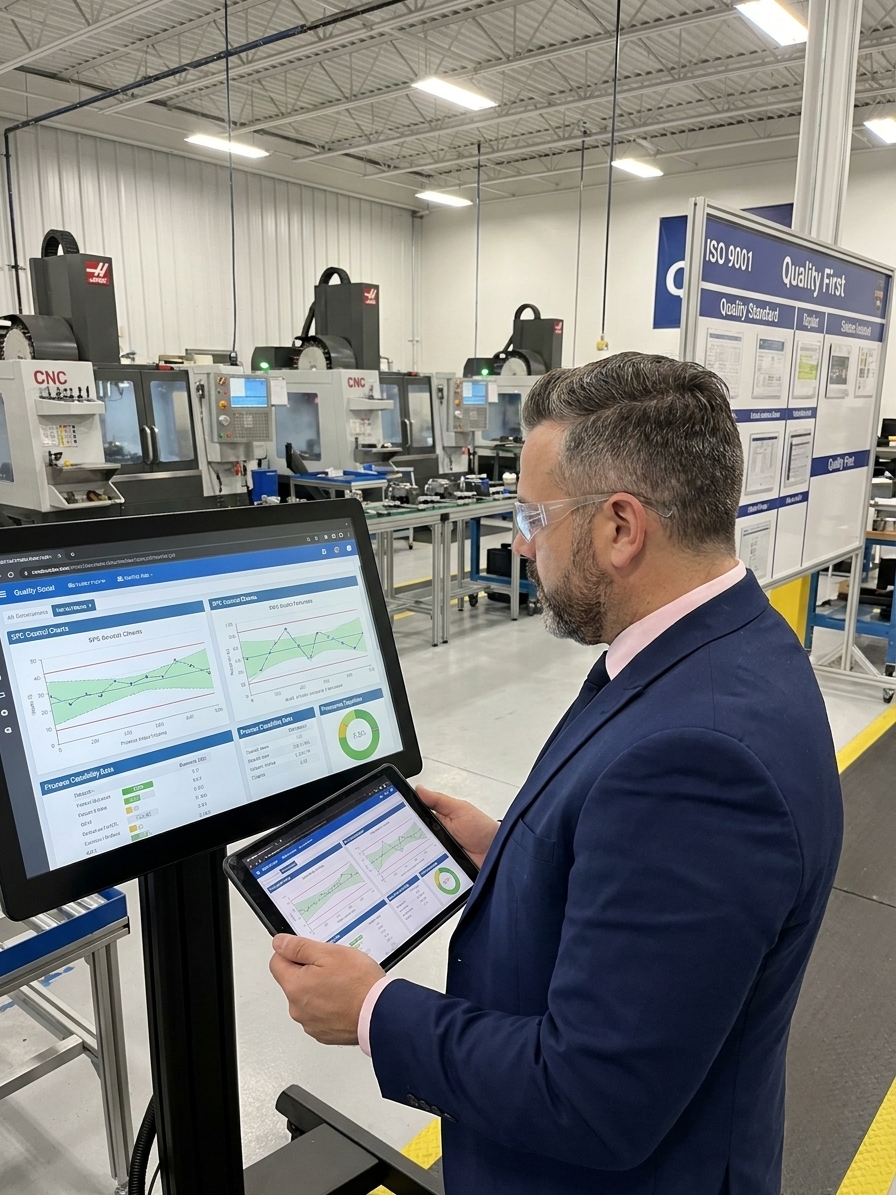
Detecting Gradual Quality Drift Before Standards Collapse
Quality systems rarely fail catastrophically. They erode through normalised deviations and tolerance creep that evade standard daily reporting.
390 articles
Quality systems rarely fail catastrophically. They erode through normalised deviations and tolerance creep that evade standard daily reporting.
How rational resource allocation creates self-reinforcing quality loops—and the specific countermeasures that break the cycle before it builds systemic fragility.
The Pygmalion Effect dictates that supervisor expectations directly alter operator performance. Quality leaders must engineer their daily interactions to drive…
Why most manufacturing operations settle for average performance, how benchmarking against the industry norm locks in mediocrity, and what it…
Why quality departments reject proven frameworks and tools in favour of custom-built systems, and the structural changes that break the…
Your FMEA, SPC, and CAPA systems are useless if your operators are afraid to speak. Here is how to measure…
When quality data contradicts entrenched practice, organisations routinely reject the data. Here is how to recognise reflex rejection and build…
Dramatic quality failures capture executive attention and budgets, but the statistical base rate tells a different story about where your…
Why Cpk, PPM, and on-time delivery rarely determine customer trust — and how to engineer the two moments that actually…
Why manufacturers keep pouring money into failing QMS platforms, Six Sigma programs, and supplier relationships, and how to use zero-based…