How I Can
Help with Automotive VW and PFMEA in 2026
The automotive industry doesn’t forgive mistakes. A single overlooked
failure mode in a production process can cascade into recalls, warranty
costs, and reputational damage that takes years to repair. In 2026, as
Volkswagen and other OEMs push deeper into electric vehicle
manufacturing, software-defined architectures, and tighter quality
tolerances, the stakes are higher than ever.
I’ve spent over two decades in quality management — implementing ISO
9001 systems at Airbus, SNOP, and WITTE Automotive — and I want to be
straightforward about what I bring to the table when it comes to
VW-specific requirements and Process FMEA (PFMEA).
What VW Actually Demands in
2026
Volkswagen Group operates under the VDA (Verband der
Automobilindustrie) quality management standard, which in 2026 remains
closely aligned with IATF 16949. But VW doesn’t just check boxes. Their
quality expectations are layered:
- VDA 6.3 Process Audits — systematic evaluation of
every process step in the supply chain - Formel Q — Volkswagen’s master quality agreement
that defines supplier obligations - PFMEA aligned with AIAG-VDA harmonized methodology
— the joint harmonization that merged AIAG’s 4th edition and VDA’s
approach into a single seven-step method - Production Process Approval (PPA / VDA 2) — the
German equivalent of PPAP, with its own documentation rigor
If you’re a Tier 1 or Tier 2 supplier to VW, you already know this.
What you might need is someone who can translate these requirements into
actionable process improvements rather than paperwork exercises.
PFMEA: Not Just a
Compliance Document
Here’s the honest truth: most PFMEA documents I’ve reviewed in the
industry are reverse-engineered. Someone writes the control plan first,
then backfills the FMEA to match. That’s not how it’s supposed to work,
and it’s not how it delivers value.
The AIAG-VDA harmonized methodology — which VW fully adopted —
follows seven steps:
- Planning and Preparation — defining scope, team,
and boundaries - Structure Analysis — breaking down the process into
operations, steps, and work elements - Function Analysis — identifying intended functions
at each level - Failure Analysis — identifying potential failure
modes and their causes - Risk Analysis — scoring severity, occurrence, and
detection (S-O-D) with the updated rating scales - Optimization — defining actions to reduce risk,
assigning owners and deadlines - Results Documentation — communicating outcomes to
stakeholders
The critical shift in the harmonized approach is the Action
Priority (AP) system, which replaced the old RPN (Risk Priority
Number). Instead of multiplying S × O × D — which often produced
misleading rankings — the AP method uses a matrix that considers
severity first, then occurrence, then detection. This means a failure
with catastrophic safety implications gets attention regardless of how
unlikely it seems.
Where I Add Value in PFMEA
I don’t just fill out forms. Here’s what I actually do:
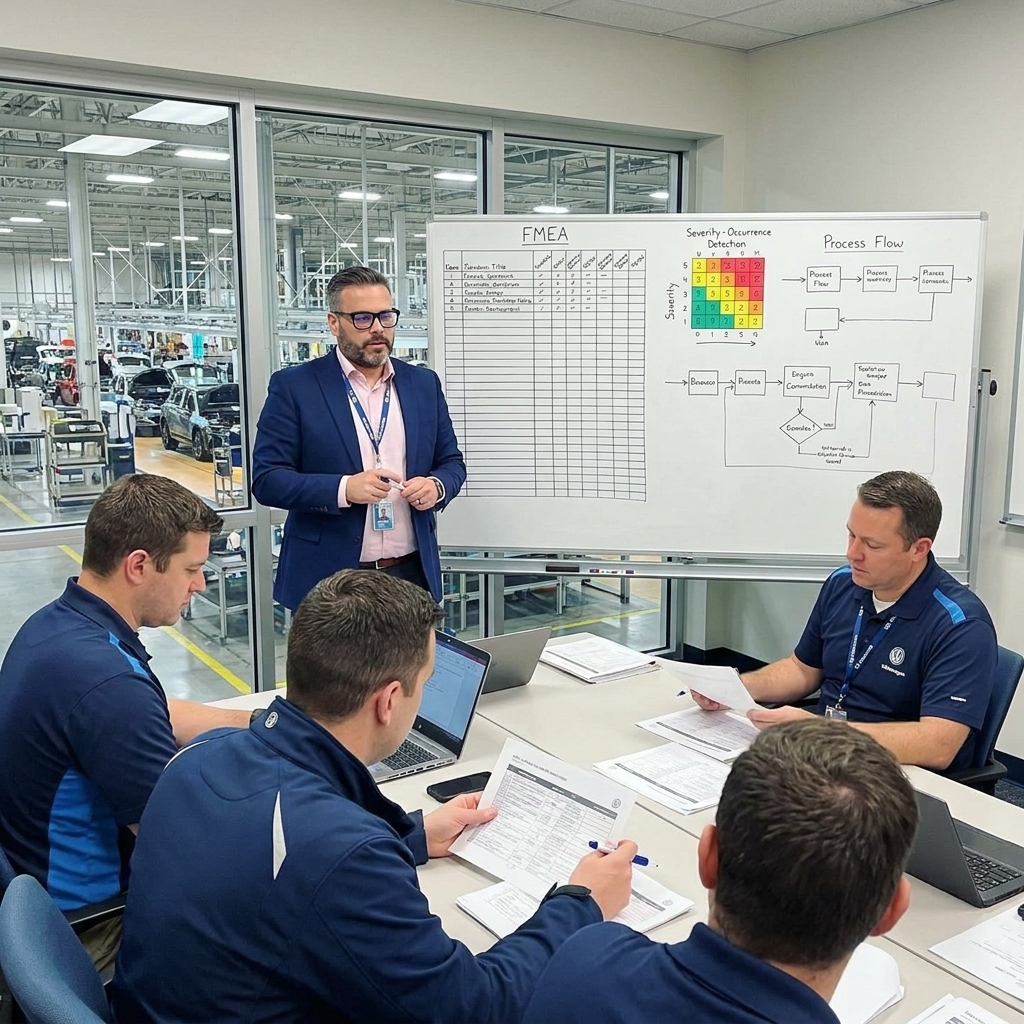
Facilitate cross-functional FMEA workshops. The best
PFMEA sessions I’ve led involved operators, engineers, quality
technicians, and suppliers in the same room. The operator who runs the
press shop knows failure modes that the engineering team hasn’t
considered. I structure these sessions to extract that knowledge
systematically.
Link PFMEA to the control plan. Every significant
failure mode identified in the PFMEA should have a corresponding control
in the control plan. I audit this linkage — and in my experience, about
30% of high-risk failure modes have inadequate or missing controls.
Apply the seven-step method correctly. Many
suppliers I’ve worked with are still using the pre-harmonization AIAG
format. VW requires the harmonized approach. I help teams transition
without losing their existing institutional knowledge.
Prioritize actions based on AP, not gut feeling. The
optimization step is where most FMEAs stall. I help teams assign
realistic deadlines, identify action owners, and — critically — follow
up on completion.
VW-Specific Challenges in
2026
Electric Vehicle
Powertrain Transitions
VW’s shift to MEB (Modularer E-Antriebs-Baukasten) platforms means
suppliers who previously made internal combustion components are now
adapting to high-voltage battery systems, e-motor manufacturing, and
power electronics. The failure modes are fundamentally different:
- Battery cell production introduces thermal runaway
risks that don’t exist in traditional powertrains - Inverter soldering and bonding processes have
failure modes related to thermal cycling that standard solder
inspections miss - High-voltage connector assembly requires process
controls that go beyond standard torque verification
If you’re navigating this transition, I can help you build PFMEA
documents that reflect the actual risks of EV manufacturing — not
recycled ICE-era templates.
Software-Defined Vehicle
Impacts
VW’s CARIAD division and the shift toward software-defined vehicles
mean that process FMEA increasingly needs to consider software-process
interfaces. Over-the-air (OTA) updates, calibration processes, and
software-hardware integration points all introduce failure modes that
traditional mechanical PFMEA doesn’t cover.
I help teams identify where software processes intersect with
manufacturing processes and ensure those interfaces are captured in the
FMEA structure.
Supply Chain Resilience
VW’s Tier 1 suppliers are being asked to audit their own
sub-suppliers more rigorously. VDA 6.3 process audits now extend deeper
into the supply chain. If you’re a Tier 1 facing these audit demands, I
can help you:
- Prepare your processes and documentation for a VDA 6.3 audit
- Conduct internal process audits using VDA 6.3 questions
- Develop corrective action plans for identified gaps
My Approach: Practical,
Not Bureaucratic
I’ve seen quality systems that work and quality systems that are just
theater. The difference is usually whether the tools (FMEA, control
plans, audit checklists) are used to drive improvement or just to
satisfy a customer requirement.
Here’s what I commit to:
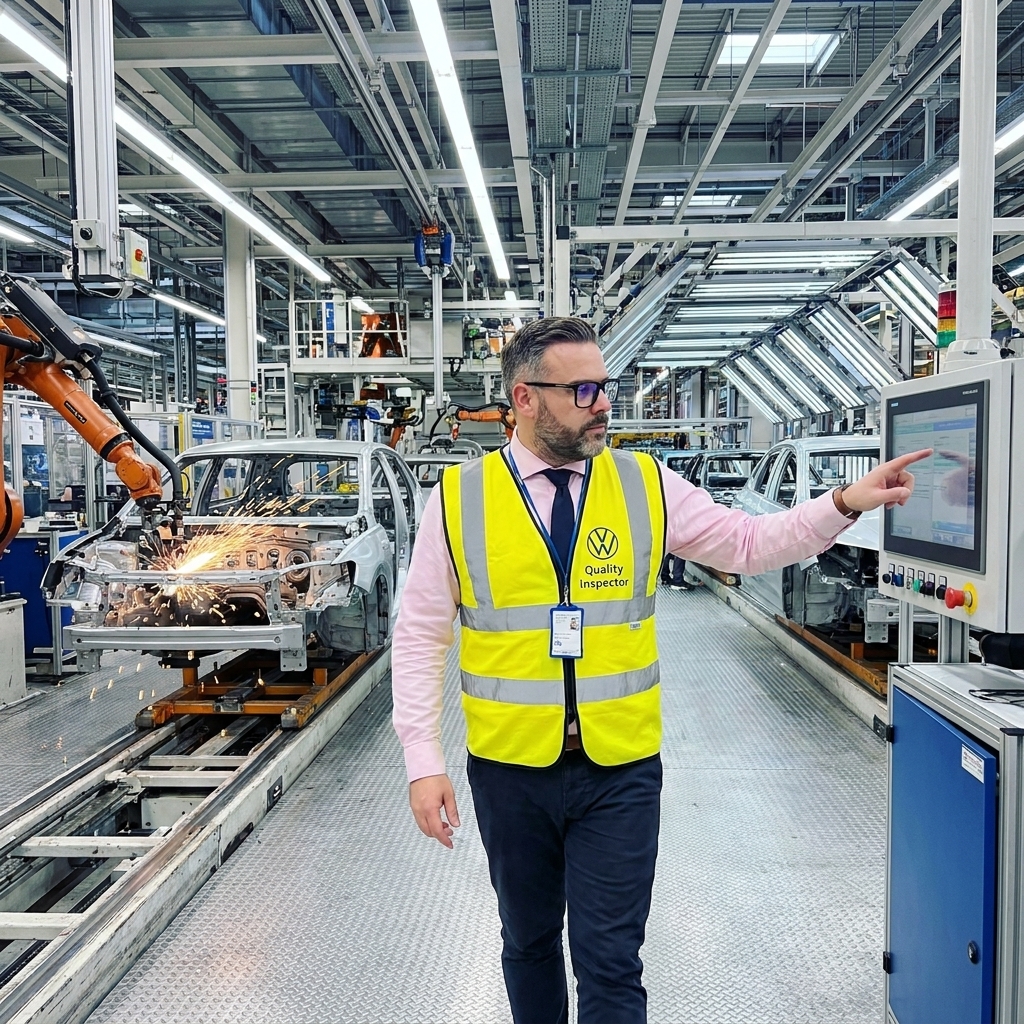
I start with the process, not the document. Before I
touch an FMEA template, I walk the production floor. I watch the
process. I talk to operators. The most valuable failure modes are the
ones hiding in plain sight — visible to the people running the line
every day but invisible to anyone reviewing a spreadsheet.
I keep it actionable. Every action item I assign in
an FMEA optimization step has an owner, a deadline, and a verification
method. No open-ended “monitor and review” entries that linger for
years.
I connect quality tools. PFMEA doesn’t exist in
isolation. It feeds into the control plan, which feeds into PPAP/PPA
submissions, which feeds into VDA 6.3 audit readiness. I ensure these
connections are intact and consistent.
I train your team. The goal isn’t to make you
dependent on an external consultant. The goal is to build internal
capability so your team can maintain and update FMEAs as processes
evolve. I’ve trained quality engineers at multiple organizations in the
harmonized AIAG-VDA methodology.
What I’ve Learned
from 20+ Years in Quality
The most important lesson I carry from my time at Airbus, SNOP, and
WITTE Automotive is this: quality is built into processes, not inspected
into products. FMEA is one of the most powerful tools for building
quality into processes — but only if it’s done honestly, with real
cross-functional input and genuine follow-through on actions.
In 2026, with VW’s escalating quality demands, the transition to
electric mobility, and the increasing complexity of software-hardware
integration, suppliers who treat PFMEA as a living document — not a
one-time compliance exercise — will be the ones who survive and
thrive.
If you’re facing a VW audit, transitioning a process to EV
manufacturing, or simply want to make your PFMEA process more effective,
let’s talk. I bring the methodology, the experience, and the practical
mindset to help you turn quality requirements into competitive
advantage.
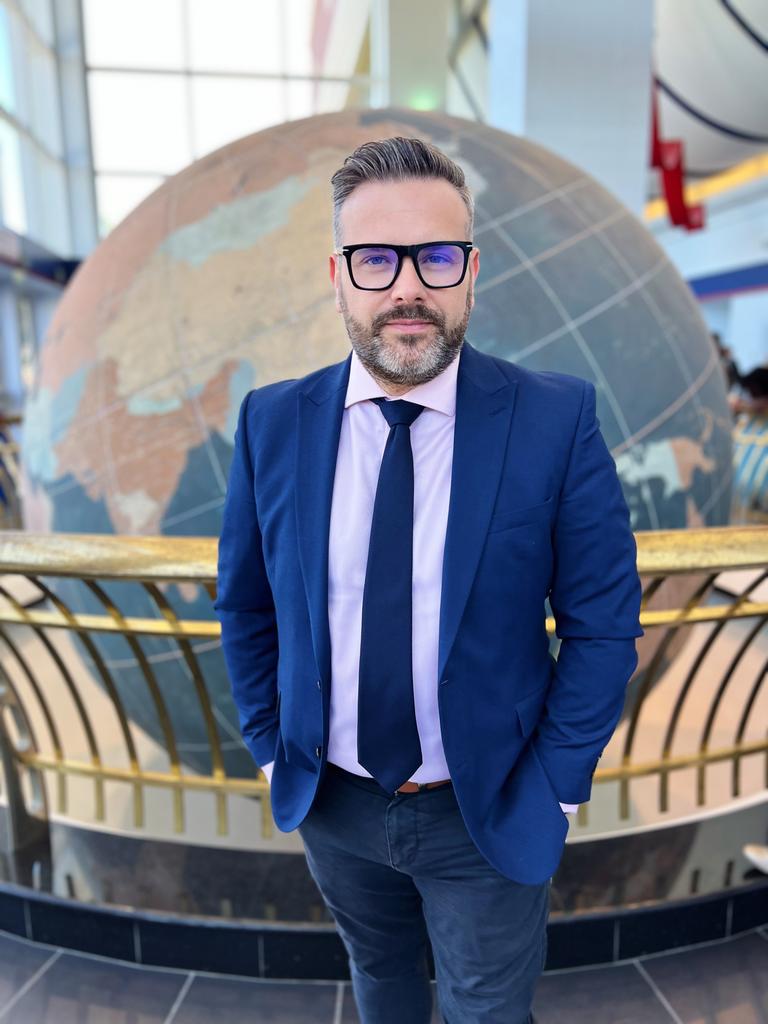
Peter Stasko is a Quality Director with 20+ years of experience
leading quality management systems across the automotive and aerospace
industries. He has implemented and transitioned ISO 9001 systems at
Airbus, SNOP, and WITTE Automotive.