The
Observation That Changed Everything — and Then Changed Nothing
In the late 1920s, researchers at Western Electric’s Hawthorne Works
near Chicago set out to study how lighting levels affected worker
productivity. They increased the light. Productivity went up. They
decreased the light. Productivity went up again. They changed nothing at
all. Productivity still went up.
The researchers were confused. The workers were not confused at all.
They knew someone was watching them, and that knowledge alone changed
their behavior. The light never mattered. The attention did.
This phenomenon — now called the Hawthorne Effect — is one of the
most well-documented findings in organizational psychology. People
change their behavior when they know they are being observed. The change
is usually positive. The change is usually temporary.
And in manufacturing quality, the change is usually gone by the time
the auditor leaves the building.
Every quality professional has seen it. The production line runs at
97% yield for three weeks before the customer audit and drops back to
91% the day after the auditor’s plane takes off. The inspection team
catches every defect during the measurement study and misses half of
them during regular production. The operators follow every step of the
work instruction while the supervisor is standing there and skip the
ones they find annoying the moment the supervisor walks away.
You did not improve quality. You performed quality. And you confused
the performance with the reality.
How
the Hawthorne Effect Infiltrates Manufacturing Quality
The Hawthorne Effect does not announce itself. It does not show up in
your defect data as a separate category. It does not come with a warning
label. It simply inflates your numbers during any period when people
know they are being watched, measured, or evaluated, and then deflates
them when the attention fades.
In manufacturing environments, the Hawthorne Effect appears in at
least six critical areas:
1. Process Audits and
Inspections
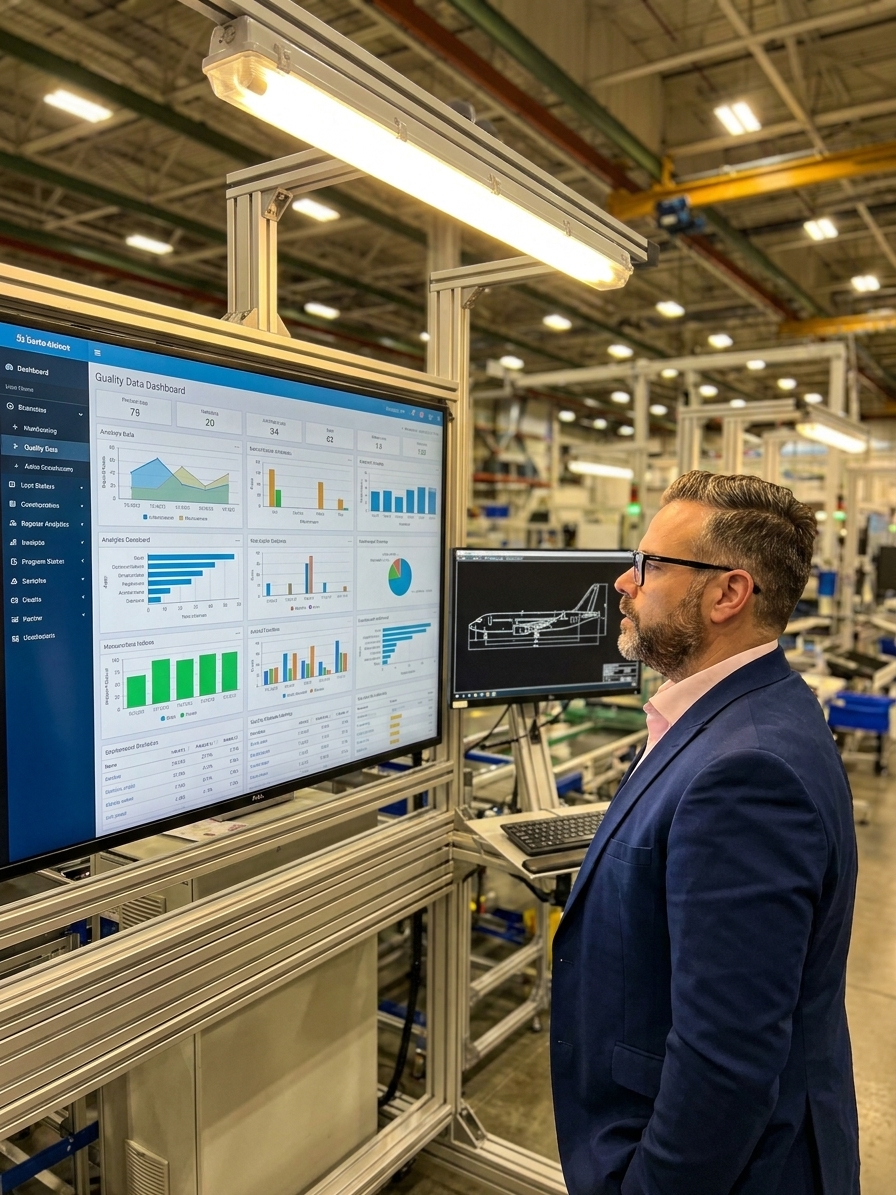
Every auditor has experienced this. You walk onto the production
floor and the atmosphere shifts. Operators sit up straighter.
Supervisors check their clipboards. The line speed adjusts to something
more deliberate. People who have been taking shortcuts for months
suddenly follow every procedure to the letter.
You observe a process that does not actually exist. The process you
are auditing is the process people perform for auditors. The real
process — the one that runs when nobody is watching — may be completely
different.
This is not dishonesty. This is human nature. People want to look
competent. They want to avoid trouble. When someone with authority shows
up to evaluate their work, they give the best version of their work. But
the best version is not the typical version, and the typical version is
what your customers actually receive.
2. Measurement System Studies
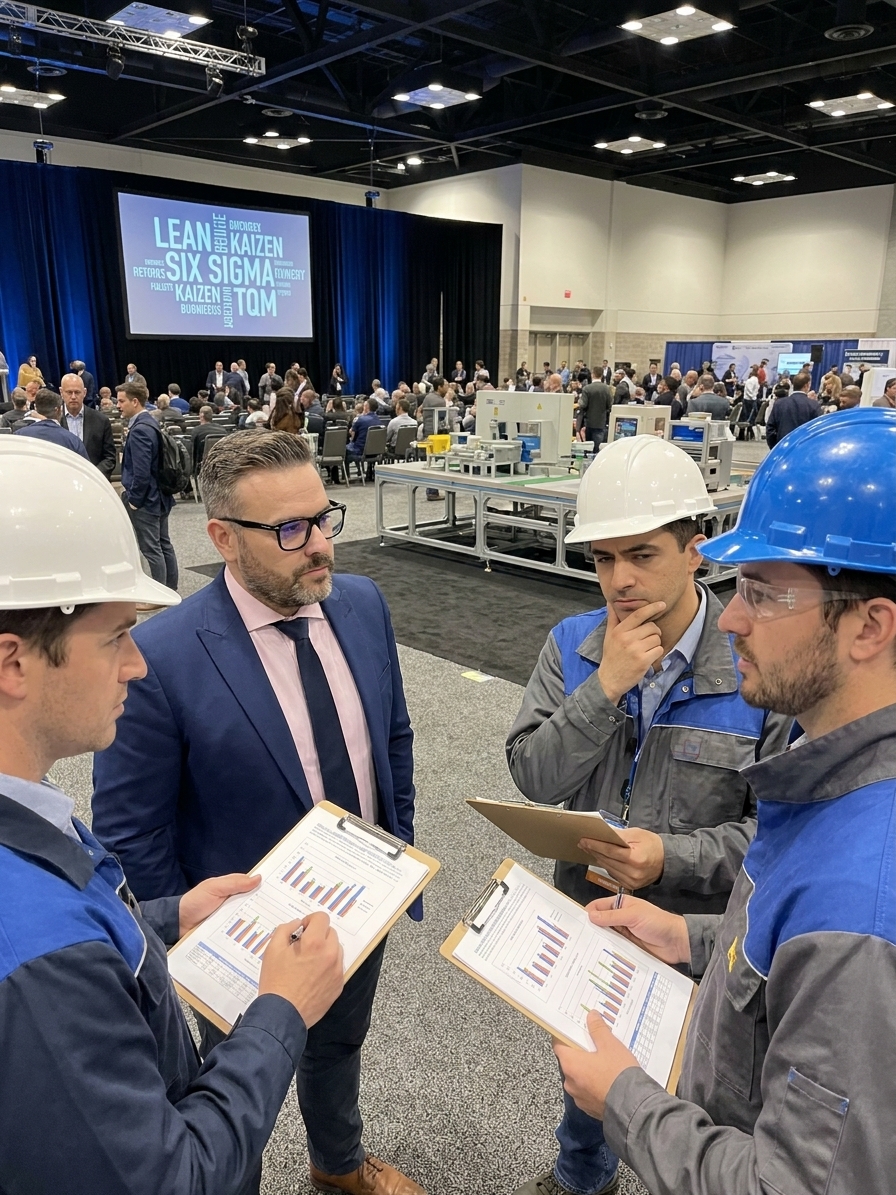
When you conduct a Gage R&R study, you are asking operators to
measure parts while knowing their measurement ability is being
evaluated. The result is predictable: operators are more careful, more
deliberate, and more consistent than they are during normal production.
Your MSA shows excellent repeatability and reproducibility. Then you
wonder why your production measurements are erratic and your SPC charts
look like seismograph readings during an earthquake.
The measurement system you validated is the measurement system under
observation. The measurement system you actually have is the one that
runs on a Tuesday night when the operator is tired, the lighting is
poor, and nobody from engineering has visited the cell in weeks.
3. Process Capability Studies
You want to demonstrate Cpk of 1.67 to your customer. You set up a
capability study. You tell the team this run is for capability. You
monitor everything carefully. The operators are meticulous. The material
is from a good lot. The machine was just calibrated. The environment is
controlled.
You get Cpk of 1.72. You celebrate. You send the report to your
customer. Six months later, the customer sends you a stack of
nonconforming parts and asks what happened.
What happened is that your capability study measured the process
under ideal conditions with heightened attention. It did not measure the
process under normal conditions with normal attention. The Cpk you
reported was not a lie. It was a measurement of something that only
exists when people know they are being measured.
4. New Process Introductions
A new process is launched. Management is watching. Engineering is
standing by. The quality team is sampling every tenth part. Everyone is
engaged, everyone is careful, and the results are excellent.
Then the launch team moves on to the next project. The operators
settle into their routine. The sampling frequency drops to the normal
rate. And slowly, almost imperceptibly, the defect rate creeps upward.
Not because the process changed. Because the attention changed.
The launch metrics looked great because the Hawthorne Effect was
doing most of the heavy lifting. The real process capability only
reveals itself after the launch team leaves and the process becomes just
another cell on the production floor.
5. Kaizen Events and
Improvement Projects
Your kaizen event produces dramatic results. Defects drop by 40%.
Cycle time improves by 25%. The team presents their achievements to
management. Photos are taken. Certificates are handed out.
Three months later, you walk past the same cell and notice that half
the improvements have been abandoned. The visual management boards are
outdated. The standardized work has been modified — or ignored. The
defects are creeping back.
The kaizen event created a burst of attention. People performed
better because the performance was visible and celebrated. When the
visibility and celebration ended, the performance followed. You did not
change the process. You changed the level of attention. When the
attention went away, so did the improvement.
6. SPC Implementation
You implement statistical process control on a critical dimension.
You train the operators. You install the charts. For the first few
weeks, the charts are meticulously maintained, out-of-control conditions
are investigated, and the process runs beautifully.
Then the novelty wears off. The charts become a task to complete, not
a tool to use. Data is recorded but not analyzed. Points outside the
control limits are noted but not investigated. The chart becomes a
record-keeping exercise rather than a process control mechanism.
The SPC worked initially because people were paying attention to it.
When the attention faded, the SPC became wall art — expensive, framed,
and entirely decorative.
Why
the Hawthorne Effect Is Particularly Dangerous in Quality
The Hawthorne Effect is dangerous in any context, but it is
especially insidious in manufacturing quality for three reasons:
First, quality decisions are only as good as the data behind
them. When your data is contaminated by the Hawthorne Effect,
your decisions are based on a version of reality that does not persist.
You invest in improvements that address problems that only exist during
normal conditions — but you measured those problems under observed
conditions, so your solutions target the wrong root causes.
Second, the effect creates a false sense of
security. Your audit scores look good. Your capability studies
look good. Your measurement systems look good. Everything looks good
because everything was measured during periods of heightened attention.
You believe your quality system is robust when it is actually fragile —
dependent on constant observation to maintain performance that should be
self-sustaining.
Third, the effect is self-reinforcing. When
measurements improve during observation, organizations reduce the
frequency of observation. “The process is capable now, so we can reduce
our sampling.” “The audit score was excellent, so we can move to a less
frequent audit schedule.” The improved performance was caused by the
observation. Remove the observation, and the performance reverts. But by
the time you notice the reversion, you have already adjusted your entire
quality strategy around numbers that no longer reflect reality.
The
Measurement Paradox: You Cannot Eliminate the Hawthorne Effect, But You
Can Manage It
Here is the uncomfortable truth: you cannot eliminate the Hawthorne
Effect. Any measurement system that involves human beings will produce
different results when people know they are being measured versus when
they do not. This is not a flaw in your quality system. It is a feature
of human psychology.
But you can manage it. And managing it starts with recognizing that
the effect exists, understanding where it distorts your data, and
designing your quality systems to account for it rather than pretending
it does not matter.
Strategy 1:
Separate Observation from Evaluation
People perform differently when they know they are being evaluated,
not just observed. If you want to understand the true state of your
process, you need to create conditions where data is collected without
the perception of personal evaluation.
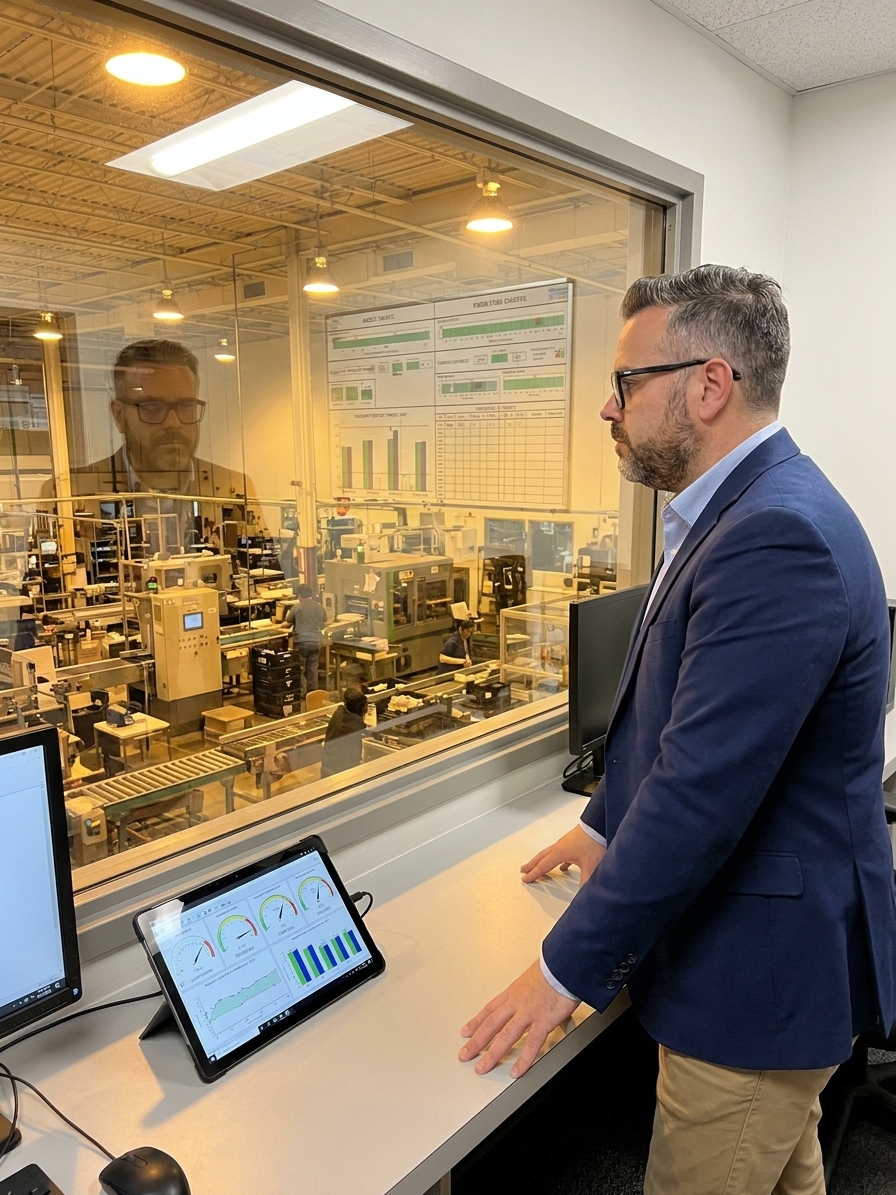
Automated data collection helps here. When a machine records process
parameters without human intervention, the operator does not perceive
the measurement as an evaluation of their performance. The data reflects
the actual process, not the operator’s best performance for an
audience.
Similarly, aggregate data — reported at the cell or line level rather
than the individual operator level — reduces the perception of personal
evaluation while still providing the process insights you need.
Strategy 2: Measure Over
Longer Periods
The Hawthorne Effect is strongest in the early stages of observation
and diminishes over time as people habituate to being watched. A
one-week capability study captures the peak of the effect. A three-month
capability study captures the tail end. The data you want is in the
tail.
Extend your measurement periods. Do not make capability judgments
based on short runs conducted under heightened scrutiny. Use longer data
collection windows that allow the novelty of observation to wear off and
the true process behavior to emerge.
Strategy 3:
Use Blind and Unannounced Measurements
Some of the most revealing quality data comes from measurements that
people do not know are happening. Unannounced audits, blind samples
inserted into normal production flow, and retrospective data analysis of
periods when nobody knew they were being evaluated — these methods
capture the process as it actually runs, not as it performs for an
audience.
This is not about catching people doing things wrong. It is about
understanding the true capability of your process so you can design
quality systems that work under real conditions, not just observed
ones.
Strategy
4: Design Systems That Do Not Depend on Attention
The most robust quality systems are the ones that produce good
results regardless of whether anyone is watching. This is the principle
behind poka-yoke, automation, and process design that makes the right
way the easy way.
If your quality system only works when people are paying close
attention, it is not a quality system. It is an attention-dependent
workaround. Real quality is built into the process — through
mistake-proofing, automated controls, robust process design, and
standardized work that is easy to follow and hard to deviate from.
When a process produces good quality whether or not anyone is
watching, you have eliminated the Hawthorne Effect by making it
irrelevant. The observation does not change the behavior because the
behavior is constrained by the system design, not motivated by the
observer’s presence.
Strategy 5:
Make the Observed State the Normal State
If people perform better when they are being observed, the question
is not how to eliminate the observation. The question is how to sustain
the level of attention that produces the better performance.
This is where visual management, layered process audits, and
management standard work become valuable — not as inspection tools, but
as attention-sustaining tools. If a daily gemba walk by the area manager
keeps the team focused on quality, the gemba walk is not overhead. It is
a process input that produces a quality output.
The key is to make the observation routine, consistent, and
non-evaluative. When the observation is a normal part of the work
environment rather than an exceptional event, it ceases to trigger a
temporary performance boost and instead becomes a stable element of the
process conditions.
The
Warning Signs: How to Know When the Hawthorne Effect Is Distorting Your
Quality Data
Look for these patterns in your quality data:
- Performance drops after audits end. If your defect
rate spikes in the weeks following a customer or third-party audit, the
audit-period performance was inflated by heightened attention. - New metrics degrade over time. If a new SPC chart
or inspection protocol produces excellent results initially and then
gradually worsens, the initial results were likely
Hawthorne-influenced. - Short studies look better than long-term data. If
your capability studies consistently show better performance than your
ongoing production data, the studies are capturing observed behavior,
not typical behavior. - Improvements from events do not persist. If your
kaizen events produce impressive results that fade within weeks, the
results were driven by attention, not by sustainable process
changes. - There is a large gap between internal and external quality
data. If your internal measurements look excellent but your
customers keep reporting defects, your internal measurements may be
taken under observed conditions that do not reflect what actually
ships.
The Deeper
Lesson: Observation Is Not Improvement
The most important thing to understand about the Hawthorne Effect is
this: observing a process is not the same as improving it. When people
perform better because someone is watching, the improvement belongs to
the observer, not to the process. Remove the observer, and the
improvement vanishes.
Real improvement survives the departure of the observer. Real quality
persists when nobody is watching. Real process capability is what
happens on the night shift, in the rain, with the B-team, on old
tooling, when the customer is not visiting and the auditor is not due
for six months.
If your quality system only produces good quality when someone is
paying attention, you do not have a quality system. You have a
surveillance system. And surveillance is exhausting, expensive, and
ultimately unsustainable.
The goal is not to watch everything all the time. The goal is to
build processes that do not need to be watched. Processes that produce
consistent quality because the quality is designed in, not inspected in.
Processes where the right way is the only way, not just the way people
choose when the boss is standing there.
The Hawthorne Effect tells us something profound about human
behavior: people rise to the occasion when they know it matters. The
challenge of manufacturing quality is to build systems where it always
matters — whether anyone is watching or not.
Peter Stasko is a Quality Architect with over 25
years of experience in manufacturing quality management, process
improvement, and quality systems design across automotive, aerospace,
and industrial manufacturing sectors. He writes about the real-world
failures of quality tools and methodologies — not the textbook versions,
but the ones that happen on production floors every day. His work
focuses on bridging the gap between what quality systems are supposed to
do and what they actually do when implemented by real people in real
factories under real pressure.