Quality
and the Wisdom of Crowds: When Your Organization Discovers That
Collective Judgment Outperforms Individual Expertise — and the Lone
Expert Everyone Trusted Became the Blind Spot Everyone Overlooked
The Expert Who Was
Wrong About Everything
In 1906, the statistician Francis Galton attended the Plymouth County
Fair. He watched as 787 people guessed the weight of a dressed ox. Some
were butchers. Some were farmers. Most were just fairgoers with no
particular expertise. Galton, who had spent his career studying human
intelligence, expected the crowd to be wildly wrong. He believed most
people were incompetent and that the average guess would be hopelessly
far from the truth.
He was wrong.
The crowd’s median guess was 1,207 pounds. The actual weight was
1,198 pounds. The collective estimate was off by less than one percent.
Not a single individual came that close. But together, without
coordination, without expertise, without any special knowledge — the
crowd nailed it.
Galton published his findings in Nature under the title “Vox
Populi.” He called it the wisdom of crowds. And over the next century,
that observation would be replicated in stock markets, prediction
platforms, engineering estimates, and — though most organizations
haven’t realized it yet — quality decision-making.
Here is the uncomfortable truth about quality organizations: most of
them are built around the opposite principle. They rely on individual
experts. The senior quality engineer. The lead auditor. The plant
quality manager. The technical specialist who has been there for twenty
years and whose word is treated as gospel. And in many cases, that
expertise is genuinely valuable. But in far more cases than anyone wants
to admit, the lone expert is the weakest link in the quality system —
not because they are incompetent, but because no single mind, however
brilliant, can outperform a properly aggregated collective judgment.
The question is not whether your experts are smart. They almost
certainly are. The question is whether your quality system is structured
to leverage collective intelligence or whether it has accidentally
created a chain of single points of failure dressed up as expertise.
Why the Crowd Works (and
When It Doesn’t)
The wisdom of crowds operates on four principles, and understanding
them is the key to understanding why most quality organizations get this
wrong.
Diversity of perspective. Each person in the crowd
brings a different mental model, a different set of experiences, a
different way of seeing the problem. In quality terms, this means the
production operator sees the defect differently from the quality
engineer, who sees it differently from the design engineer, who sees it
differently from the supplier quality manager. Each perspective is
incomplete. Together, they cover the full picture.
Independence of judgment. People in a wise crowd
make their decisions independently, without being influenced by what
others think. The moment you put everyone in a room and ask the senior
person to speak first, you have destroyed independence. Everyone else
will anchor on that opinion. You have not created a wise crowd. You have
created a following.
Decentralization. Nobody is in charge of the crowd’s
decision. Knowledge is distributed. People specialize in different areas
and bring local knowledge that no central authority could ever possess.
In manufacturing, this means the person closest to the process has
information that the manager in the office never will.
Aggregation. There must be a mechanism to combine
individual judgments into a collective decision. This is where most
quality organizations fail spectacularly. They aggregate through
hierarchy — the boss decides — or through consensus — everyone agrees —
and neither of these methods produces wisdom. They produce
conformity.
When all four conditions are met, the crowd’s judgment is remarkably
accurate. When any one of them is missing, the crowd can be dangerously
wrong. And in quality organizations, the condition that is almost always
missing is independence.
The Expert Trap in Quality
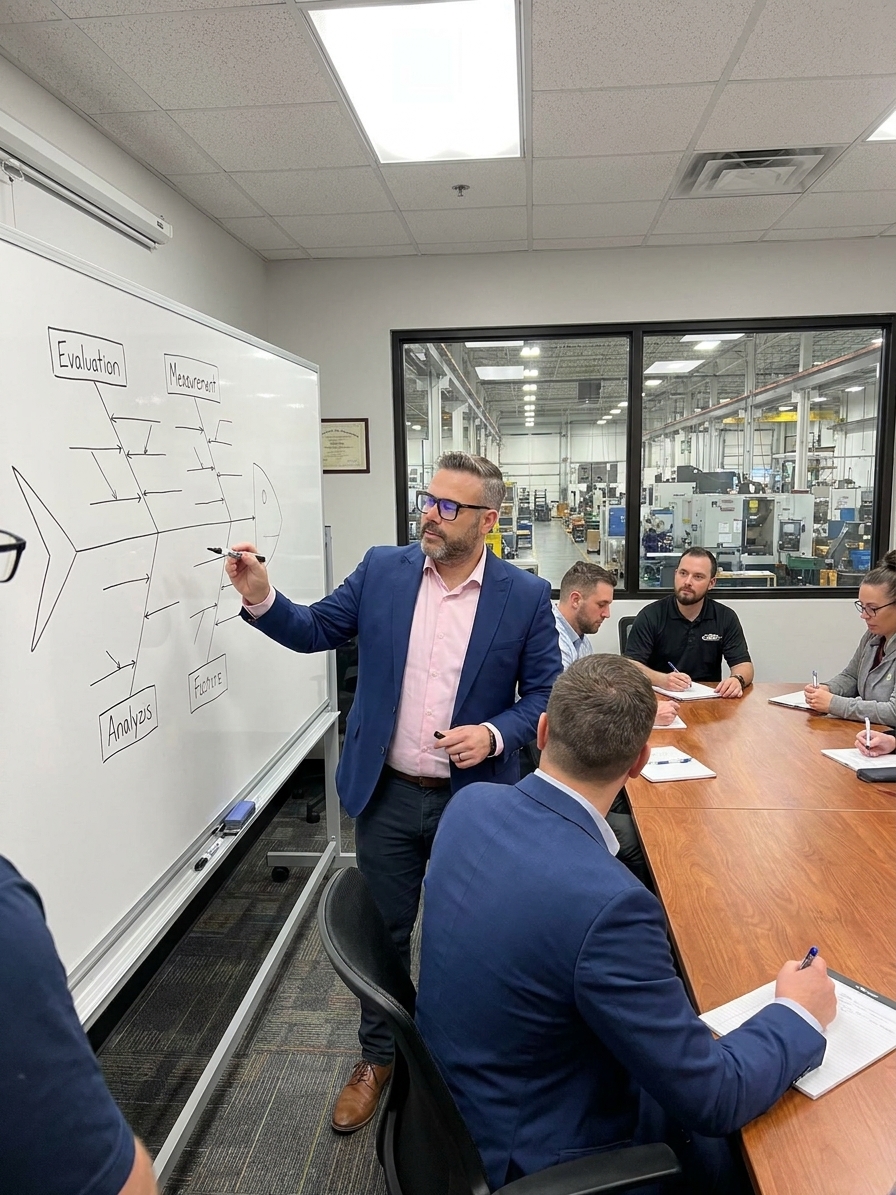
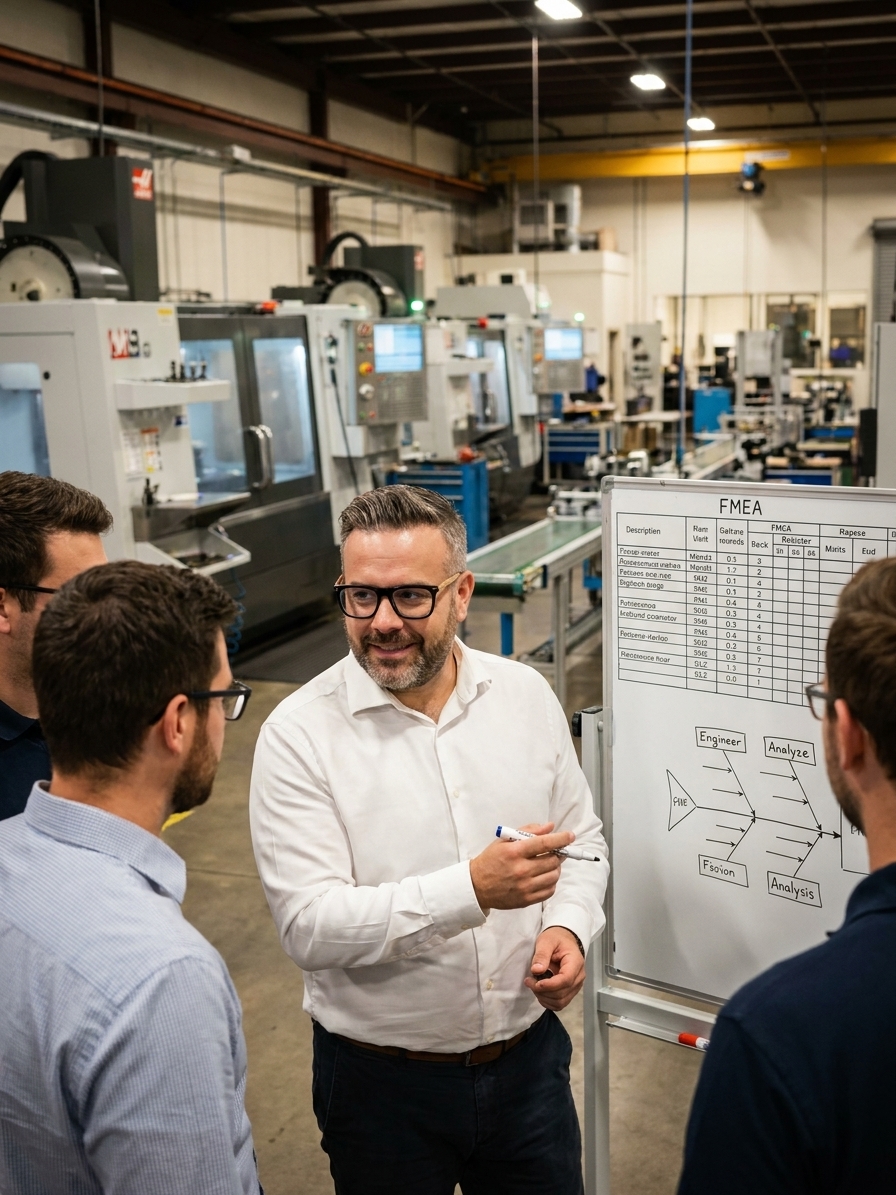
Consider a typical FMEA session. The facilitator gathers a team: a
design engineer, a process engineer, a quality engineer, a production
supervisor, and maybe a maintenance technician. The goal is to identify
potential failure modes and assess their severity, occurrence, and
detection.
In theory, this is a wisdom-of-crowds exercise. In practice, it
usually works like this: the most senior person in the room — let’s say
the quality engineering manager with 22 years of experience — offers an
opinion on the first failure mode. The severity rating, they say, is an
8. The occurrence is a 4. The detection is a 3.
Everyone else nods. The RPN is calculated. The team moves on.
What just happened was not a wisdom-of-crowds exercise. It was a
confirmation exercise. The senior person spoke first, anchoring the
entire group. The design engineer, who might have had a completely
different view of severity based on field failure data, stayed quiet.
The production supervisor, who knew from experience that the occurrence
was actually much higher, deferred to the expert. The maintenance
technician, who could have pointed out that the detection rating was
optimistic because the inspection method was unreliable, said
nothing.
The FMEA was completed. It looked rigorous. It had cross-functional
participation. It had ratings and risk priority numbers and action
plans. And it was significantly less accurate than it would have been if
every person in the room had written down their ratings independently
before anyone opened their mouth.
This is the expert trap. It is not that the expert is wrong. It is
that the expert’s presence distorts the information aggregation process.
The crowd never gets to be wise because it never gets to be
independent.
Where
Collective Intelligence Already Works in Quality
Interestingly, some of the most powerful quality tools are already
wisdom-of-crowds mechanisms — they just are not recognized as such.
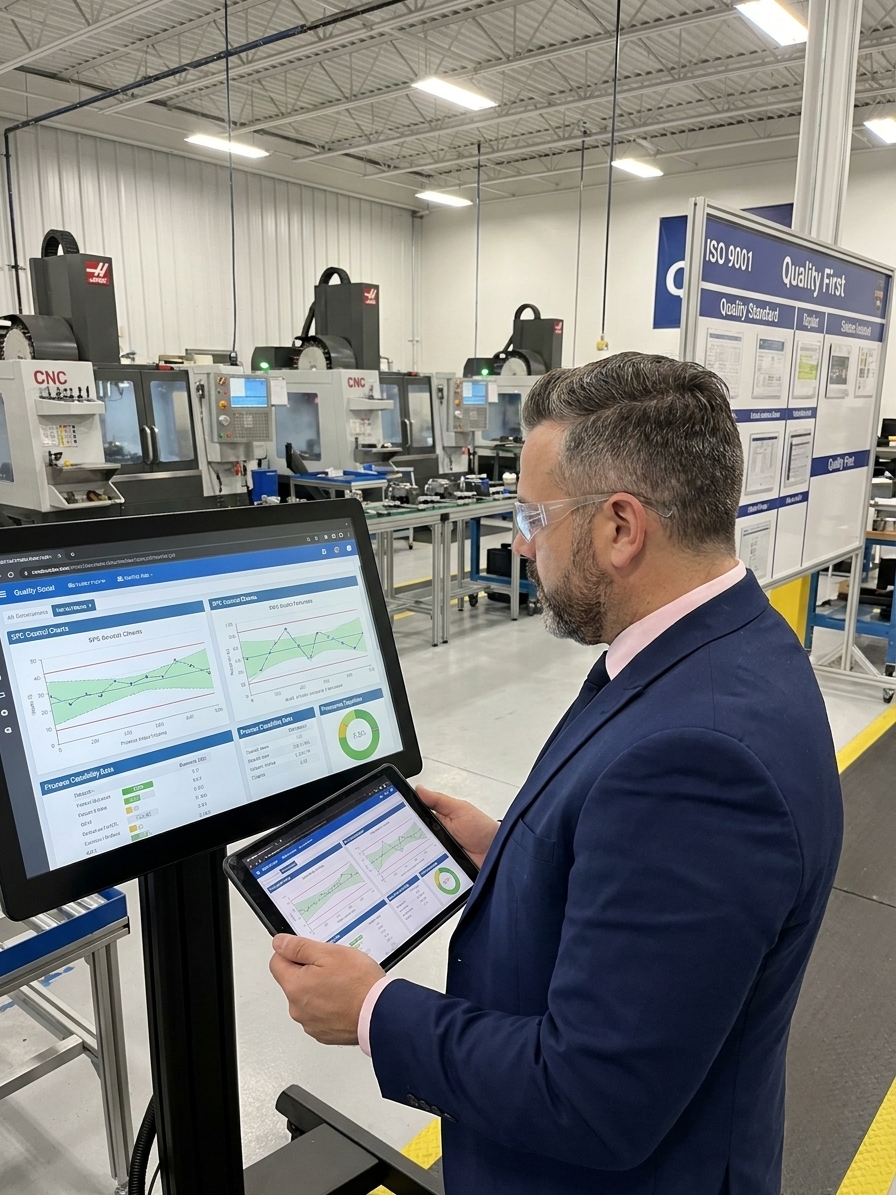
Statistical Process Control is collective
intelligence. You do not rely on a single measurement to determine
whether a process is in control. You rely on the aggregate pattern of
many measurements, each taken independently. The control chart is a
mathematical aggregation of distributed information. It works precisely
because it meets all four conditions: diverse data points, independent
measurements, decentralized collection, and mathematical
aggregation.
Measurement Systems Analysis is a crowd test for
your measurement process. You do not trust one operator’s readings. You
test multiple operators, multiple trials, multiple parts, and you
aggregate the results to determine whether your measurement system is
reliable. Gage R&R is literally a structured wisdom-of-crowds
exercise applied to metrology.
Audit programs work best when they aggregate
findings from multiple auditors across multiple shifts and multiple
departments. A single audit by a single auditor is prone to every bias
in the book. A program of regular audits by different people creates a
collective picture that is far more accurate than any individual audit
could be.
Customer complaint analysis leverages the wisdom of
the customer crowd. One complaint is an anecdote. A hundred complaints,
properly categorized and analyzed, reveal patterns that no single
complaint could ever surface. The aggregate voice of the customer is
almost always more informative than the loudest individual voice.
The tools already exist. The problem is that organizations apply the
wisdom-of-crowds principle to their data but not to their people.
How to Build a Wise
Quality Organization
If you want your quality organization to benefit from collective
intelligence — and the evidence overwhelmingly suggests you should —
here are the structural changes that make the difference.
1. Separate Generation From
Evaluation
Before any group decision — FMEA ratings, root cause hypotheses,
corrective action selection — have every participant generate their
answers independently. In writing. Before any discussion begins. Only
then aggregate the results and discuss.
This single change transforms the accuracy of group decisions.
Research consistently shows that the average of independent estimates is
more accurate than the estimates of 95% of individual participants. And
in quality, where a missed root cause or an underestimated risk can have
catastrophic consequences, that accuracy improvement is not incremental.
It is transformational.
2. Flatten the Hierarchy of
Opinion
In too many quality organizations, the hierarchy of authority becomes
the hierarchy of truth. The plant manager’s opinion about root cause
carries more weight than the operator’s, regardless of who has better
information. The supplier quality director’s view of a corrective action
overrides the receiving inspector’s, regardless of who sees the actual
parts.
The wisdom of crowds requires that the person closest to the
information has the loudest voice — not the person closest to the top of
the org chart. This does not mean democracy. It means weighting input by
information quality, not by rank.
3. Create Structured
Disagreement
The most dangerous quality meetings are the ones where everyone
agrees. Agreement is not the same as accuracy. Agreement is often the
product of social pressure, anchoring, and the fundamental human desire
to avoid conflict.
Build disagreement into your quality processes. Assign someone the
role of challenger in every root cause analysis. Require that FMEA teams
consider at least one failure mode that the senior engineer dismisses.
Create a formal mechanism for junior team members to submit anonymous
risk assessments. The goal is not to manufacture conflict. The goal is
to ensure that the crowd’s diversity of perspective actually
surfaces.
4. Aggregate Before You
Discuss
The sequence matters enormously. If you discuss first and decide
second, the discussion will be dominated by whoever speaks first or
loudest. If you aggregate first and discuss second, the discussion
starts from a collective baseline that already incorporates everyone’s
independent judgment.
In practice, this means using tools like anonymous voting, digital
polling, or simple written ballots before opening the floor. It takes
five extra minutes. It can double the accuracy of the decision.
5. Track and Reward
Collective Accuracy
Most quality organizations track individual performance. They reward
the engineer who catches the defect, the auditor who finds the
nonconformity, the manager who drives the improvement. They rarely track
whether the team’s collective judgment was accurate.
Start tracking it. After every major quality decision — root cause
determination, corrective action selection, risk assessment — record
what the team decided and what actually happened. Over time, you will
see whether your collective processes are getting wiser. And you will
have the data to prove that the investment in structured collective
intelligence is paying off.
The Case for Humility
There is a deeper lesson here, and it has to do with humility — not
the performative kind, but the structural kind.
Quality systems are built on the assumption that we can control
processes, predict outcomes, and prevent defects. These are noble
ambitions, and they are achievable. But they are not achievable by
individual experts working alone, no matter how brilliant they are. They
are achievable by organizations that have the structural humility to
distribute decision-making, aggregate diverse perspectives, and trust
the collective over the individual.
The best quality engineers I have ever worked with were not the ones
who had all the answers. They were the ones who knew how to extract the
right answers from the people around them. They understood that their
job was not to be the smartest person in the room. Their job was to make
the room collectively smarter than any individual in it.
This is the paradox of expertise in quality: the more you rely on
individual experts, the more fragile your quality system becomes. The
more you structure collective intelligence into your processes, the more
resilient it becomes.
Galton figured this out in 1906. He was surprised by it. He expected
the crowd to be foolish. Instead, he found that the crowd was wise —
wiser, in the aggregate, than any single member. The fairgoers in
Plymouth were not quality engineers. They were not statisticians. They
were ordinary people making independent guesses about the weight of an
ox.
But they had something that most quality organizations lack: they
were not influenced by each other. Nobody told them what to guess.
Nobody’s opinion anchored their own. They looked at the ox, made their
estimate, and wrote it down.
If you can create those conditions in your quality organization —
genuine independence, real diversity, proper aggregation — you will
discover that your team already knows more than your best expert. The
wisdom has been there all along. You just never structured your
processes to let it surface.
The Cost of Getting This
Wrong
Let me be specific about what happens when organizations ignore
collective intelligence.
I worked with an automotive supplier that had a persistent defect in
a machined housing — a dimensional nonconformity that appeared roughly
once every 500 parts. The quality team conducted four separate root
cause analyses over eighteen months. Each time, the most senior quality
engineer led the investigation. Each time, the team converged on a
different hypothesis: tool wear, material variation, fixture alignment,
thermal expansion. Each time, they implemented a corrective action. Each
time, the defect came back.
After the fourth failure, I asked the quality engineer if I could try
something different. I gathered seven people — the operator, the setup
technician, the maintenance mechanic, the incoming material inspector,
the process engineer, the quality technician, and a newly hired
production supervisor who had been on the job for three weeks. I asked
each of them, independently and in writing, to identify the most likely
root cause.
The operator wrote: “The coolant pressure drops during the third
shift because the auxiliary pump has a intermittent fault.”
The maintenance mechanic wrote: “The auxiliary coolant pump on
machine seven has been acting up. I’ve asked to replace it twice.”
The new production supervisor wrote: “I noticed the coolant pressure
gauge on machine seven fluctuates during third shift. I asked about it
and was told it’s always been like that.”
Four out of seven people independently identified the same root
cause. None of them had spoken up in the previous investigations because
the senior quality engineer had always anchored the discussion on his
own hypothesis — which was always something more technically
sophisticated and completely wrong.
The pump was replaced. The defect disappeared.
The organization had spent eighteen months and four root cause
analyses chasing the wrong problem because its quality system was
structured around individual expertise rather than collective
intelligence. The wisdom of the crowd was there all along. It was just
never asked for.
What This Means for
Your Quality System
The implications extend beyond root cause analysis. Every quality
process that relies on expert judgment — risk assessment, audit
planning, corrective action evaluation, supplier selection, calibration
scheduling, process validation — can be improved by applying the
wisdom-of-crowds principle.
This does not require more meetings. It does not require more
bureaucracy. It requires a fundamental shift in how you structure the
meetings and decisions you already have.
Start with one process. Maybe your FMEA. Maybe your management
review. Maybe your corrective action team. Apply the four principles:
diverse perspectives, independent judgment, decentralized knowledge,
structured aggregation. Track the results. Compare them to what you were
getting before.
I think you will find, as Galton did, that the crowd is wiser than
you expected. And I think you will find, as most organizations
eventually do, that the expertise you were relying on was not as
reliable as you thought.
The question is not whether collective intelligence works. The
evidence on that is overwhelming. The question is whether your quality
system has the structural humility to use it.
Peter Stasko is a Quality Architect with 25+ years of experience
transforming organizations across automotive, aerospace, and
pharmaceutical industries. He specializes in building quality systems
that leverage human insight, collective intelligence, and practical
rigor to achieve sustainable excellence.