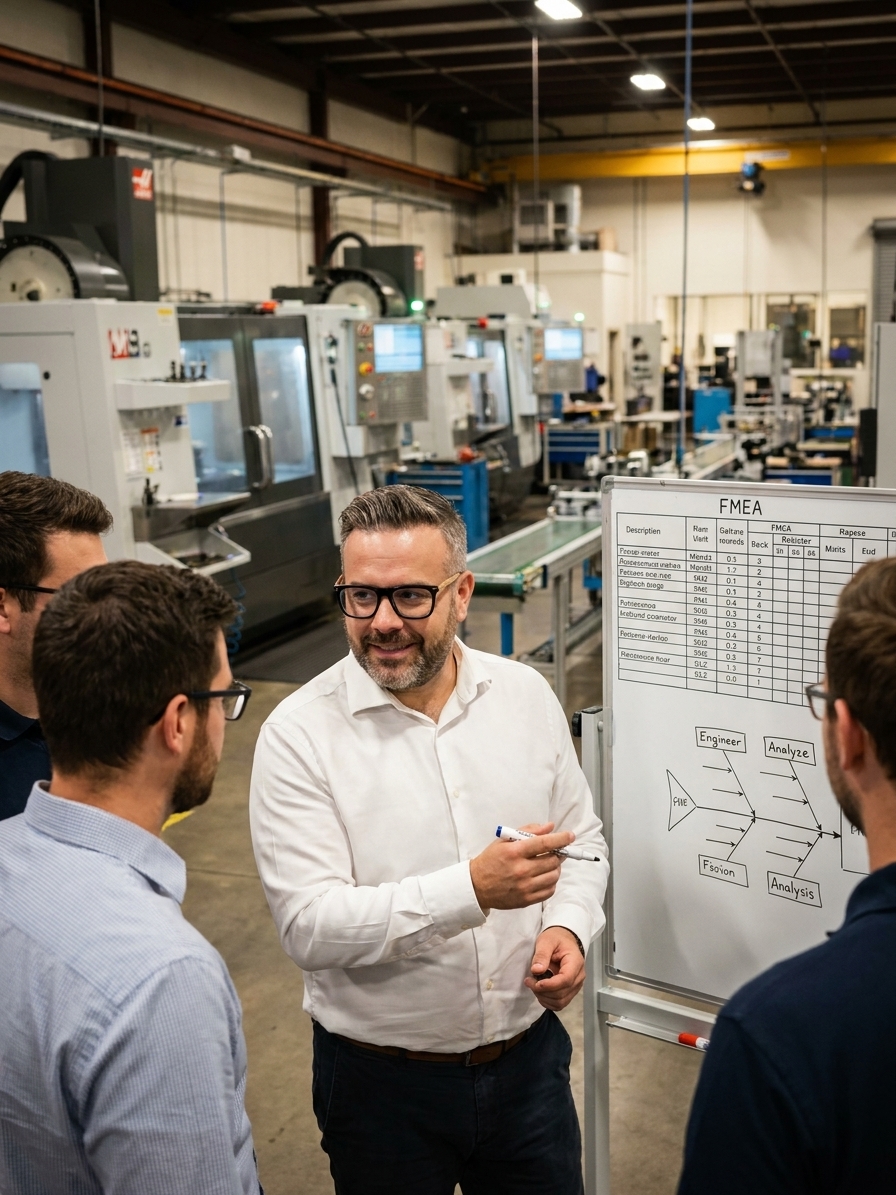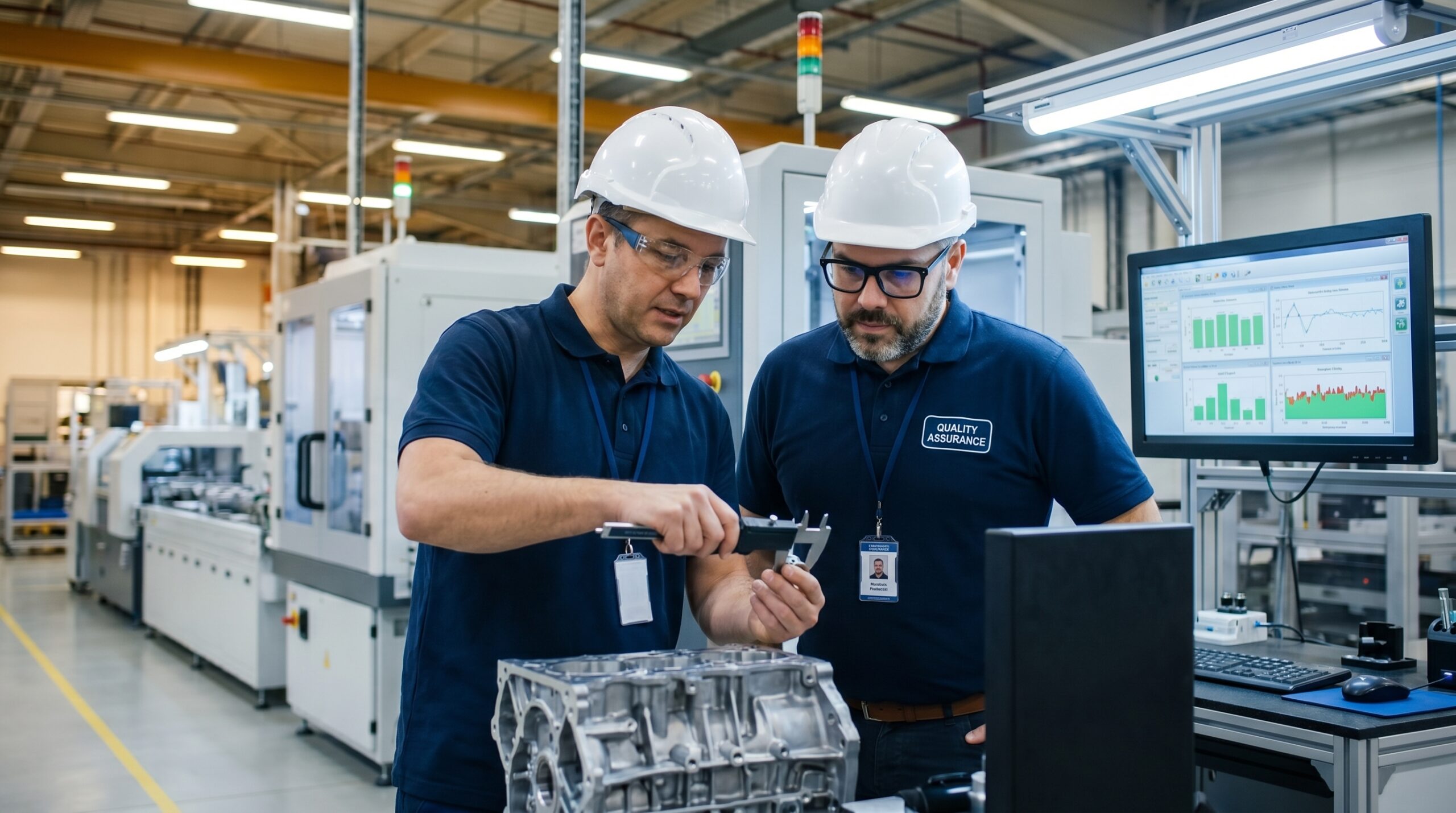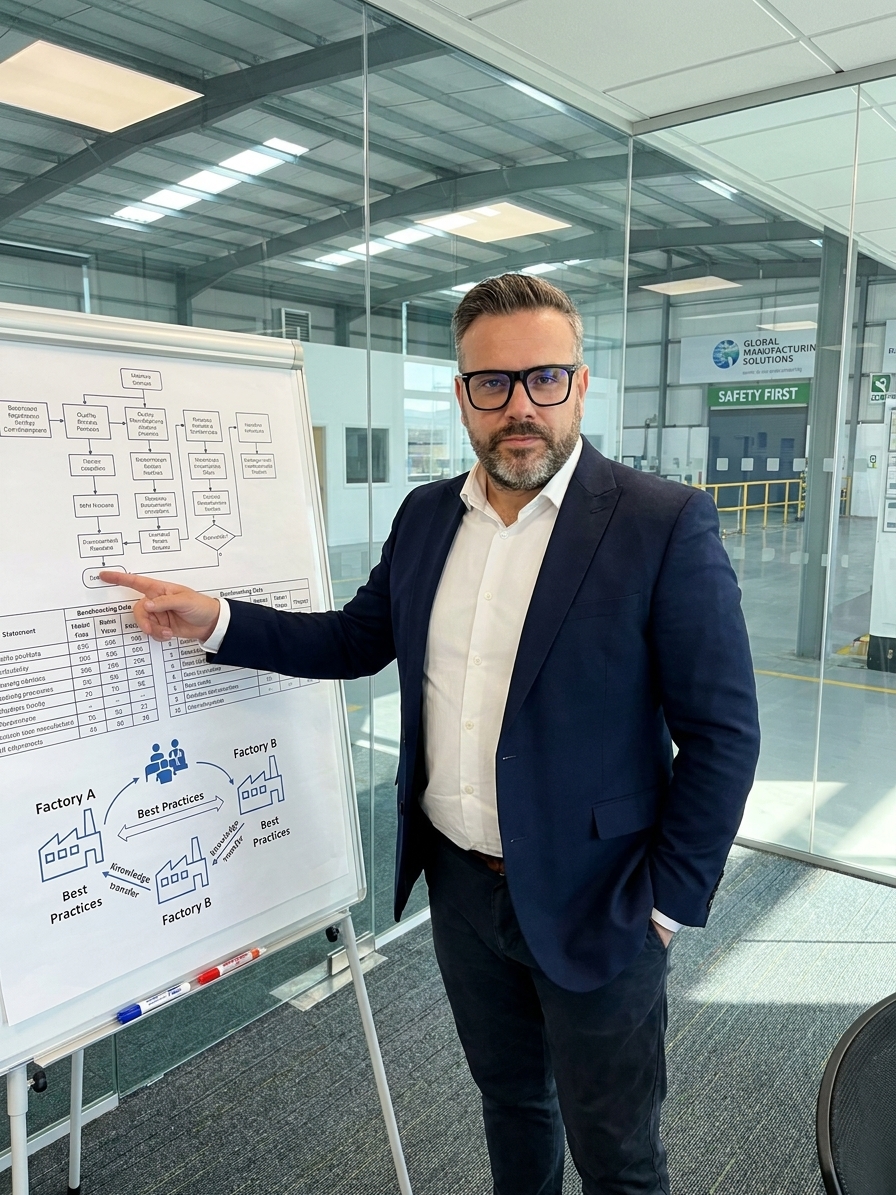
Quality Obsolescence Management: When Your Supply Chain Forgets to Tell You That a Component You Built Your Product Around Just Died — and Your Quality System Has to Reinvent Itself Overnight
The Part That Disappeared
It happens on a Tuesday afternoon. A purchasing agent forwards an email with two words that no quality engineer ever wants to read: “Last Time Buy.” A critical component — something embedded deep in your bill of materials, something your entire product architecture depends on — has been discontinued by the supplier. The manufacturer isn’t just raising the price or changing the lead time. They are killing it. Completely. Permanently. And they’re giving you six months to order everything you’ll ever need.
If you work in automotive, aerospace, medical devices, or any industry with long product lifecycles, you already know this story. You’ve lived it. And if you haven’t lived it yet, you will. Component obsolescence is not a question of if. It’s a question of when, how many at once, and whether your quality system is ready to absorb the shock.
Most organizations treat obsolescence as a supply chain problem — a purchasing inconvenience to be managed with buffer stock and last-time-buy orders. But obsolescence is fundamentally a quality problem. Every time a component changes, your product changes. Every time your product changes, your process validation changes. Every time your process validation changes, your customer experiences something different — even if the part number on the outside stays the same.
This is the story of how smart organizations manage obsolescence not as a fire drill, but as a disciplined quality process that protects product integrity, customer trust, and regulatory compliance — all at the same time.
Why Obsolescence Is a Quality Nightmare Disguised as a Procurement Problem
Let’s be honest about what happens when a component goes end-of-life in most organizations.
Phase 1: Panic. The purchasing team sends the “Last Time Buy” notice to engineering. Engineering says, “We need to qualify a replacement.” Quality says, “That’s going to take how long?” Management says, “We have customer orders to fill.” And everyone starts running in different directions.
Phase 2: The Buffer Stock Illusion. Someone decides to buy three years’ worth of the obsolete component. Problem solved, right? Not even close. Three years passes faster than you think. Meanwhile, the component sits in inventory, potentially degrading, potentially becoming its own quality risk. And the clock on finding a replacement is still ticking — you just chose not to hear it.
Phase 3: The Rushed Qualification. When the buffer stock finally runs low — and it always runs low at the worst possible moment — the replacement component gets qualified in a hurry. Testing is compressed. Process validation is abbreviated. The attitude becomes “close enough” because the production line can’t stop. And “close enough” is where quality goes to die.
Phase 4: The Surprise. The new component doesn’t behave like the old one. Maybe it has different thermal characteristics. Maybe its tolerances stack differently. Maybe it looks identical on paper but interacts with your process in a way nobody predicted. And the first person to notice isn’t your quality team — it’s your customer.
This cycle repeats in manufacturing plants around the world, every single day. And the root cause isn’t bad luck. It’s the failure to treat obsolescence as what it truly is: a change management event with profound quality implications.
The Real Scale of the Problem
If you think obsolescence is a rare event, consider the numbers. In the semiconductor industry alone, component obsolescence rates run at approximately 2-5% of active parts per year. In a product with 500 unique electronic components, that means 10 to 25 components face discontinuation annually. For automotive electronics, where a single ECU might contain thousands of discrete parts, the challenge is staggering.
But obsolescence isn’t limited to electronics. Materials go obsolete — a specific polymer grade, a particular adhesive formulation, a standard alloy composition. Processes go obsolete — the machine that made your custom stamping is no longer supported, the plating chemistry your surface finish depends on gets regulated out of existence. Even standards go obsolete — the test method you’ve used for years gets replaced, and suddenly your historical data is measured in a different language.
The intersection of product longevity and component churn is where the quality crisis lives. If your product has a 15-year lifecycle (common in automotive, aerospace, industrial equipment, and medical devices) but your electronic components have an average commercial availability of 5-7 years, you are guaranteed to face at least two, and likely three or more, waves of component replacement during the product’s active life. Each wave is a potential quality earthquake.
Building an Obsolescence Quality Framework
The organizations that handle obsolescence well don’t react to it. They anticipate it. They build systems that treat every component, material, and process as something that will eventually need to be replaced — and they design their quality systems accordingly.
Here is a practical framework for managing obsolescence as a quality discipline:
1. Obsolescence Risk Assessment
Before you can manage obsolescence, you need to know where it will hit hardest. This means conducting a structured risk assessment that goes far beyond a simple bill-of-materials review.
Criticality Mapping. Not all components are created equal. Classify every component in your BOM by: – Functional criticality — Does the component affect safety, regulatory compliance, or core performance? – Sourcing complexity — How many alternative sources exist? How difficult would qualification be? – Technology maturity — Is the component based on mature, stable technology, or is it in a rapidly evolving domain (like semiconductors or advanced materials)? – Lifecycle position — Where is the component in its manufacturer’s lifecycle? Is it a new release, a mature product, or already nearing end-of-life?
Components that score high on all four dimensions are your obsolescence critical few — and they deserve proactive attention long before the “Last Time Buy” email arrives.
Supply Chain Intelligence. Build relationships with component manufacturers and distributors that give you early warning. Many suppliers offer obsolescence forecasting services. Industry databases like IHS Markit’s Part Miner or SiliconExpert provide lifecycle status and predicted discontinuation dates. Use them. The difference between six months of warning and six weeks of warning is the difference between a controlled transition and a chaotic one.
2. Proactive Qualification Strategy
The worst time to qualify a replacement component is when you’re forced to. The best time is before you need to.
Dual-Source Strategy. For every critical component, maintain at least two qualified sources. This isn’t just a supply chain resilience tactic — it’s a quality protection strategy. When you have two qualified sources, obsolescence of one is a managed event, not an emergency. The qualification of the second source was done on your terms, with full testing, with proper process validation, and without time pressure.
Forward-Looking Qualification. When you design a new product, qualify components not just for current performance, but for forward compatibility. Ask: “If this specific part disappears, what’s the most likely replacement, and can we pre-qualify it?” Some organizations maintain a shadow BOM — an alternate bill of materials with pre-qualified replacements for every critical component. It’s extra work up front, but it transforms obsolescence events from weeks of chaos into days of controlled transition.
3. The Obsolescence Change Management Process
When obsolescence does occur, the quality system needs a structured response. This is not a standard Engineering Change Order (ECO) process with a few extra steps. It requires its own disciplined approach.
Impact Analysis. Before anything else, conduct a thorough impact analysis: – What products are affected? – What processes are affected? – What validations are affected? – What regulatory submissions are affected? – What customer approvals are required? – What is the timeline pressure?
This analysis determines the scope of the transition and the resources required. Skipping it guarantees that something important will be missed.
Risk-Based Qualification Plan. Not every component replacement requires a full re-validation. But the decision about how much qualification is needed should be driven by risk, not by schedule pressure. Use your criticality mapping from Step 1 to determine the appropriate level: – Low-risk replacements (commodity components with identical specifications from established suppliers): Design verification testing may be sufficient. – Medium-risk replacements (components with minor differences in specification or manufacturing process): Full design verification plus process validation at the affected operations. – High-risk replacements (components that affect safety, regulatory compliance, or have significant specification or process differences): Complete re-validation, including customer notification and regulatory update where required.
The temptation to shortcut high-risk qualifications under time pressure is enormous. This is where leadership discipline matters. If you wouldn’t qualify the component this way in a normal timeline, you shouldn’t qualify it this way under duress either.
First Article Inspection and Production Trial. Every obsolescence-driven change should include a formal first article inspection and a controlled production trial. The production trial is particularly important because it’s where you discover the process interactions that paper qualification can’t predict. Run the trial long enough, with enough units, to expose the statistical behavior of the new configuration. This isn’t bureaucracy — it’s the difference between catching a problem at 50 units and catching it at 50,000 units.
4. Lifecycle Quality Monitoring
Obsolescence management doesn’t end when the replacement component is qualified and production resumes. The transition introduces new variability, and that variability needs to be monitored.
Enhanced SPC. After any obsolescence-driven change, enhance your statistical process control at the affected operations. Lower your control limits temporarily. Increase your sampling frequency. Watch for shifts in process mean, increases in variation, or new patterns in your control charts that weren’t there before.
Customer Feedback Correlation. In the months following a component replacement, pay extra attention to customer feedback, warranty claims, and field returns. If something changed that your qualification didn’t catch — and qualification never catches everything — the field is where it will show up first.
Lessons Learned Capture. Every obsolescence event is a learning opportunity. Document what went well, what went wrong, and what you’d do differently next time. Feed these lessons back into your proactive qualification strategy and your obsolescence risk assessment. Over time, your organization gets better at this — but only if you capture the knowledge systematically.
The Hidden Quality Risks of Obsolescence
Beyond the obvious risks of component substitution, obsolescence creates several hidden quality dangers that most organizations miss entirely:
The Counterfeit Trap. When a component goes obsolete and authorized stock dries up, the gray market fills the vacuum. Independent distributors, broker networks, and online marketplaces offer “equivalent” parts that may or may not be what they claim. Counterfeit electronic components are a documented, growing problem in manufacturing. Your quality system needs specific controls for managing unauthorized sources — including advanced part authentication, enhanced incoming inspection, and a clear policy that says “if we can’t verify the source, we don’t use the part.” No exceptions. No production-pressure overrides.
The Compatibility Cascade. Replacing one component often forces changes in adjacent components. A new microcontroller might require a different voltage regulator. A different adhesive might need a different surface preparation. A substituted material might change the thermal profile of an entire assembly. Obsolescence rarely travels alone. Your impact analysis needs to map not just the direct substitution, but the full compatibility cascade — every downstream effect of the initial change.
The Documentation Debt. Every component change generates documentation: updated drawings, revised BOMs, new qualification reports, amended regulatory filings, revised work instructions. In the rush of an obsolescence event, documentation often falls behind. And documentation debt is dangerous because it means your quality records no longer match your actual product. Six months later, when a customer auditor asks to see the qualification report for the component that’s currently in production, and the report you have describes the component that’s been obsolete for six months — you have a problem that goes far beyond the technical change itself.
The Institutional Knowledge Gap. The original component was probably selected by someone who understood why — someone who knew that this particular grade of polymer was chosen because it resisted a specific chemical exposure, or that this specific tolerance was critical for an assembly operation three steps downstream. When that person leaves the organization and the component goes obsolete, the replacement decision is made by someone who sees the specification but not the reasoning behind it. This is why design intent documentation is a critical part of obsolescence management. Not just what was specified, but why.
Obsolescence in the Age of Industry 4.0
Technology is creating both new obsolescence challenges and new tools to manage them.
The Acceleration Effect. Industry 4.0 technologies — IoT sensors, edge computing, AI-driven analytics — rely on electronic components that evolve at consumer-electronics speed. If you’re building a smart connected product with a 10-year expected life, you’re embedding today’s technology into a timeline that the technology itself won’t survive. This creates a fundamental tension between product longevity and technology currency that traditional obsolescence management wasn’t designed to handle.
Digital Tools for Obsolescence Management. On the positive side, digital tools are making obsolescence management more proactive: – BOM health monitoring platforms that continuously scan your bill of materials against supplier lifecycle databases and alert you to upcoming discontinuations months or years in advance. – Digital twin simulations that model the impact of component substitutions before physical prototypes are built, reducing qualification time and risk. – Machine learning algorithms that analyze historical obsolescence patterns to predict which components in your current BOM are most likely to face discontinuation. – Blockchain-based supply chain traceability that provides verified provenance for replacement components, reducing the counterfeit risk.
These tools don’t replace the fundamental quality discipline of obsolescence management. But they give you earlier warning, better analysis, and faster response — and in obsolescence, time is the most valuable resource you have.
The Culture of Preparedness
Ultimately, obsolescence management is a cultural challenge as much as a technical one. Organizations that handle obsolescence well share several cultural traits:
They plan for impermanence. They don’t assume that any component, material, or process will be available forever. Every design decision includes the question: “What happens when this is no longer available?”
They invest ahead of the crisis. They spend money on dual-source qualification, shadow BOMs, and obsolescence monitoring before they’re forced to — because they know that proactive investment is always cheaper than reactive scrambling.
They treat obsolescence as a quality event first. Purchasing, engineering, and supply chain all have roles to play, but the quality function leads the transition process because the quality function owns the product integrity that’s at stake.
They learn from every event. They capture lessons, update their processes, and continuously improve their obsolescence response capability. Each event makes the next one less painful.
They communicate honestly. When obsolescence forces a change, they tell their customers. Not because they’re required to (although they often are), but because transparency builds trust — and trust is the most expensive thing to lose.
Practical Starting Points
If your organization doesn’t yet have a formal obsolescence quality process, here are five actions you can take this month:
-
Audit your BOM for obsolescence risk. Identify the top 20 components by criticality × sourcing risk. These are your immediate priorities.
-
Contact your key suppliers. Ask for lifecycle status on your critical components. Many will share projected discontinuation timelines if you ask directly.
-
Establish a dual-source plan for your top 5 critical components. If you have single-source dependencies that could stop your production line, start qualifying alternatives now.
-
Create an obsolescence response procedure. Write down the steps your organization will follow when a “Last Time Buy” notice arrives. Assign roles, define escalation paths, and set timelines. A procedure that exists on paper — even imperfect paper — is infinitely better than improvisation under pressure.
-
Build obsolescence awareness into your design process. Add a design review checklist item: “Has obsolescence risk been assessed for all critical components?” Over time, this single question will shift your organization from reactive to proactive.
The Uncomfortable Truth
Here is the uncomfortable truth about obsolescence: you cannot prevent it. Components will be discontinued. Materials will be reformulated. Processes will be retired. Suppliers will go out of business. Standards will be revised. This is the natural entropy of industrial systems.
What you can control is how your organization responds. You can be the organization that scrambles in panic, shortcuts its qualifications, and discovers problems in the field. Or you can be the organization that anticipates the change, executes a disciplined transition, and maintains product integrity throughout.
The difference isn’t luck. It’s preparation. And preparation starts with recognizing that obsolescence isn’t a supply chain inconvenience — it’s a quality event that demands the same rigor, discipline, and systematic thinking that you apply to every other aspect of your quality management system.
Your components will disappear. The question is whether your quality system disappears with them.
Peter Stasko is a Quality Architect with 25+ years of experience in automotive and manufacturing quality management. He has managed hundreds of component obsolescence events across multiple product lines and teaches organizations how to build proactive obsolescence management into their quality systems.