The Iron Triangle of Quality, Cost, and Delivery: When You Realize You Can Have It All — If You Stop Choosing
Most managers believe you have to pick two: quality, cost, or speed. They’re wrong. The organizations that figured out how to break the triangle didn’t find a shortcut — they found a completely different way of thinking.
The Lie We All Learned in Business School
Picture this scene. It happens in conference rooms every single day, in every manufacturing company around the world. A quality manager sits across from a production manager. The finance controller watches from the corner. They’re arguing about a new customer requirement — tighter tolerances, faster delivery, and a price reduction. Someone inevitably draws a triangle on the whiteboard. Three vertices: Quality, Cost, Delivery. And then comes the sentence that has killed more improvement potential than any competitor ever could:
“You can only pick two.”
It sounds reasonable. It sounds like physics. It sounds like wisdom passed down from generations of battle-scarred managers who learned the hard way that you can’t have everything. And it is — quite simply — one of the most expensive misconceptions in modern manufacturing.
I’ve spent twenty-five years watching organizations handicap themselves with this belief. I’ve watched companies deliberately lower their quality standards to hit a cost target, then spend three times the savings on warranty claims and customer escapes. I’ve seen plants sacrifice delivery speed for quality, only to discover that their lead times were bloated by rework loops, inspection queues, and scrap handling — all quality problems masquerading as logistics issues.
The Iron Triangle isn’t a law of nature. It’s a description of mediocrity. And the organizations that broke free from it didn’t do it by working harder. They did it by understanding something fundamental about how quality, cost, and delivery actually relate to each other.
What the Triangle Really Represents
Let’s be clear about what we’re talking about. The Iron Triangle — sometimes called the Quality-Cost-Delivery triangle or the QCD framework — is a mental model that suggests three competing priorities in any manufacturing operation:
- Quality: How well your product meets specifications and customer expectations
- Cost: How efficiently you use resources to produce it
- Delivery: How quickly and reliably you get it to the customer
The traditional thinking goes like this: if you want higher quality, you need more inspection, more testing, slower processes — so cost goes up and delivery slows down. If you want lower cost, you cut corners — quality drops. If you want faster delivery, you rush — quality suffers and overtime costs explode.
This logic feels airtight. And it is — if your process is fundamentally broken.
Here’s the insight that changes everything: the triangle only exists when your process is generating waste. In a process where every part is made correctly the first time, quality is free. In a process where machines run reliably and materials arrive on time, delivery is automatic. In a process where you’re not reworking, scrapping, sorting, and expediting, costs are naturally lower.
The triangle doesn’t describe a trade-off between good things. It describes the symptoms of a process that hasn’t been fixed yet.
The Toyota Revelation: When Someone Broke the Triangle First
In the 1950s, Toyota faced an impossible situation. They had limited capital, a small domestic market, virtually no economies of scale compared to American automakers, and a workforce that was still learning mass production. By every conventional measure, they should have been crushed by Ford and GM.
Instead, Taiichi Ohno and his team did something that shouldn’t have been possible. They simultaneously improved quality, reduced cost, and shortened lead times. Not by choosing two out of three — by attacking the root causes that made the triangle exist in the first place.
Their secret wasn’t a miracle technology. It was a relentless focus on eliminating waste — specifically, the waste that created the illusion of trade-offs.
When a defective part was made, they didn’t choose between “fix it slowly” (quality, poor delivery) or “ship it anyway” (delivery, poor quality). They stopped the line, identified the root cause, and prevented the defect from ever happening again. The first time, this was expensive. The hundredth time, it was the cheapest thing they’d ever done — because the defect was gone forever.
When a machine broke down, they didn’t choose between “run it until it dies and accept quality variation” (low cost, poor quality) or “replace it with expensive new equipment” (high quality, high cost). They implemented Total Productive Maintenance, taught operators to care for their own machines, and gradually eliminated breakdowns entirely. Maintenance costs dropped. Quality improved. Availability increased.
Toyota didn’t break the triangle by defying physics. They broke it by refusing to accept that the trade-offs were inevitable.
The Hidden Mathematics of the Triangle
Let me show you why the trade-off is an illusion, using numbers that mirror what I see in real manufacturing operations.
Imagine a production line making 10,000 units per month with the following characteristics:
- First Pass Yield: 92% (800 defective units per month)
- Rework rate: 60% of defects can be reworked (480 units)
- Scrap rate: 40% of defects (320 units)
- Cost of rework: $15 per unit
- Cost of scrap: $50 per unit (material + labor lost)
- Cost of final inspection to catch defects: $2 per unit (all 10,000)
- Additional expediting costs due to rework delays: $5,000/month
Now let’s calculate the total cost of poor quality:
- Rework cost: 480 × $15 = $7,200/month
- Scrap cost: 320 × $50 = $16,000/month
- Inspection cost: 10,000 × $2 = $20,000/month
- Expediting cost: $5,000/month
- Total: $48,200/month
Now here’s the critical question. What happens if you improve First Pass Yield from 92% to 98%?
- Defective units drop from 800 to 200
- Rework cost: 120 × $15 = $1,800/month
- Scrap cost: 80 × $50 = $4,000/month
- Inspection cost: You can begin reducing this — maybe to $1.50/unit = $15,000/month
- Expediting cost: Drops to $1,000/month
- Total: $21,800/month
Savings: $26,400/month — $316,800 per year.
And here’s the part that destroys the triangle: quality went up (fewer defects reaching customers), cost went down (less waste), and delivery improved (fewer rework delays and expedited orders). All three. Simultaneously. Not because of a trade-off — because the trade-off was being caused by the defects themselves.
This isn’t theoretical. I’ve seen this pattern in automotive plants, electronics assembly, medical device manufacturing, and aerospace suppliers. The mathematics always work the same way. The cost of poor quality is the fuel that makes the triangle seem real. Remove the poor quality, and the triangle collapses.
The Four Levels of Triangle Thinking
Over the years, I’ve observed that organizations relate to the Quality-Cost-Delivery triangle in four distinct stages. Each stage represents a fundamentally different understanding of how these three priorities interact.
Level 1: The Trade-Off Believers
At this level, managers genuinely believe they must sacrifice one priority to improve another. Quality is seen as an expense. Faster delivery means cutting corners. Lower cost means accepting more risk. The triangle is drawn in permanent marker on the wall, and every decision is framed as a compromise.
These organizations typically have high defect rates, excessive inspection, frequent expediting, and a culture of firefighting. Quality is the quality department’s job. Cost is finance’s concern. Delivery is production’s problem. Nobody sees the connections.
Level 2: The Priority Setters
These organizations have recognized that the triangle exists, and they’ve chosen a dominant priority. “Quality first” is the most common slogan, though “customer delivery” runs a close second. The problem is that declaring a priority doesn’t change the underlying process. It just tells people which trade-off to accept.
A company at Level 2 might invest heavily in inspection equipment and still have high defect rates. They’ve chosen quality as a priority, but they’re achieving it through detection rather than prevention. The cost is enormous, delivery is slow because of inspection bottlenecks, and the quality isn’t even that good — it’s just caught before it reaches the customer. Mostly.
Level 3: The Process Improvers
This is where breakthrough thinking begins. Organizations at Level 3 have realized that the trade-offs are symptoms of process problems, not laws of nature. They invest in prevention, root cause analysis, statistical process control, and employee training. They measure First Pass Yield, track the cost of quality, and systematically eliminate sources of variation.
At this level, the triangle starts to dissolve. Quality improves, and costs come down with it. Delivery becomes more reliable because there are fewer disruptions. The organization discovers that the three priorities aren’t competitors — they’re different manifestations of the same underlying process health.
Level 4: The Triangle Breakers
The rarest and most advanced organizations don’t just improve their processes — they fundamentally redesign them. They use Design for Manufacturing principles to build quality into the product from the start. They implement predictive maintenance to eliminate equipment-related variation. They create supply chains that are resilient by design, not by buffer stock. They develop workforces that can detect and respond to anomalies in real time.
At Level 4, the triangle isn’t just dissolved — it’s irrelevant. These organizations deliver superior quality at lower cost with faster delivery because every element of their system supports all three simultaneously. They haven’t found a cheat code. They’ve built a system where trade-offs simply don’t arise.
The Practical Framework: How to Break Your Own Triangle
If you’re sitting in a manufacturing organization right now, feeling the pressure of competing priorities, here’s a practical approach to breaking the triangle in your own operation.
Step 1: Quantify the Cost of Your Trade-Offs
Before you can fix the triangle, you need to see it clearly. Calculate your total cost of poor quality — including rework, scrap, inspection, warranty, customer returns, expediting, and overtime caused by quality problems. This number is usually 15-25% of revenue in organizations that are still at Level 1 or 2.
This becomes your improvement budget. Every dollar of waste you eliminate is a dollar that improves all three priorities simultaneously.
Step 2: Map Your Defect Architecture
Don’t just count defects. Map them. Where do they originate? Where are they detected? How far do they travel through your process before someone catches them? The further a defect travels, the more expensive it becomes — and the more it damages all three priorities.
Create a simple flow diagram showing every defect type, its point of origin, its point of detection, and the cost of each stage it passes through. This map will reveal where your triangle is most distorted and where improvement efforts will yield the greatest simultaneous benefit.
Step 3: Attack the Vital Few
Your Pareto analysis will show you that 20% of defect types cause 80% of the cost. Focus on these first. For each major defect type, conduct a thorough root cause analysis. Not a five-minute brainstorm — a disciplined investigation using 5-Why analysis, fishbone diagrams, or whatever tool fits the complexity of the problem.
The goal isn’t to manage defects better. It’s to eliminate them at the source. Every defect type you eliminate removes a cost from your system, a delay from your schedule, and a quality risk from your customer relationship. All three vertices of the triangle improve simultaneously.
Step 4: Redesign for Prevention
Once you’ve addressed the chronic defects, move upstream into design and process planning. Apply Design for Manufacturing principles. Build mistake-proofing (poka-yoke) into your processes. Establish statistical process control on your critical parameters. Implement Total Productive Maintenance to eliminate equipment variation.
At this stage, you’re not just fixing problems — you’re preventing them from ever occurring. And every problem prevented is a gift that keeps giving: lower cost, faster delivery, higher quality — forever.
Step 5: Build the Culture That Sustains It
Technical improvements are necessary but not sufficient. The triangle will reassert itself unless your entire organization understands the relationship between quality, cost, and delivery. This means:
- Operators who understand that their work quality directly affects the company’s ability to compete on all three dimensions
- Engineers who design products and processes with prevention in mind
- Managers who measure and reward simultaneous improvement, not trade-offs
- Leaders who refuse to accept the triangle as inevitable and who model the belief that excellence in one area drives excellence in all areas
The Metric That Changes Everything: Rolling Throughput Yield
If I could recommend one metric to organizations trying to break the triangle, it would be Rolling Throughput Yield (RTY) — the probability that a unit passes through your entire process without a single defect.
Most companies measure yield at each station and multiply the station yields to get an overall figure. What they discover is sobering. A process with 98% yield at each of 20 stations has a Rolling Throughput Yield of only 67%. One-third of your production is being reworked or scrapped — and you thought 98% was pretty good.
RTY makes the triangle visible. It shows you exactly how much waste is flowing through your system, how much hidden cost is embedded in your process, and how much delivery time is consumed by non-value-adding activities. When you improve RTY, you improve everything. Quality goes up because fewer defects occur. Cost goes down because less rework and scrap. Delivery speeds up because material flows without interruption.
Track RTY. Trend it. Set aggressive targets. And watch the triangle dissolve.
What Happens When You Finally Break Free
I’ve had the privilege of working with organizations that successfully broke the triangle. The transformation is remarkable — not because of any single technical improvement, but because of how the organization’s thinking changes.
Meetings stop being arguments about trade-offs. They become discussions about root causes. Investment proposals aren’t framed as “we need to spend more on quality” but as “eliminating this defect source will save $X while improving customer satisfaction and reducing lead time by Y days.” Quality professionals stop being seen as a cost center and start being recognized as profit enablers.
The most striking change is in the culture. When people stop believing in inevitable trade-offs, they become genuinely creative. Operators suggest improvements that engineers never thought of. Engineers design processes that managers considered impossible. Managers set targets that would have seemed delusional a year earlier — and the organization hits them.
This isn’t about working harder or spending more money. It’s about seeing the system clearly and having the courage to fix what’s actually broken instead of managing the symptoms.
The Triangle Was Never the Enemy
Let me close with a thought that took me two decades to fully appreciate. The Iron Triangle of Quality, Cost, and Delivery was never the problem. It was always a diagnostic tool — a way of seeing where your process was wasting potential.
If you feel the triangle pressing in on you — if every quality improvement seems to cost more, if every cost reduction seems to sacrifice something, if faster delivery seems to require cutting corners — that’s not the triangle’s fault. It’s your process telling you something important. It’s telling you that there’s waste embedded in your system that you haven’t found yet. There’s a root cause you haven’t addressed. There’s a prevention opportunity you haven’t seized.
The triangle isn’t a cage. It’s a compass. And it points directly at your biggest improvement opportunities.
The organizations that understand this don’t just compete on quality, cost, or delivery. They compete on the system that delivers all three — and they win.
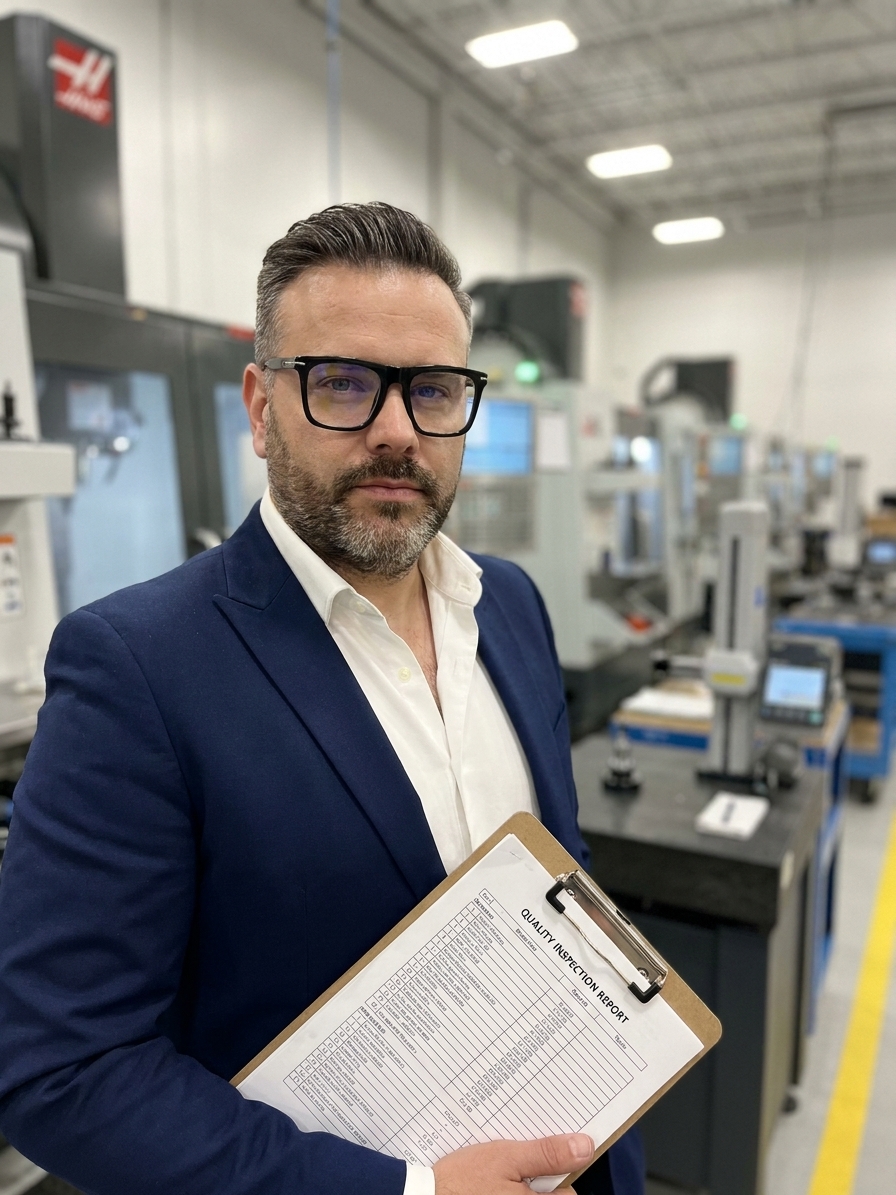
Peter Stasko is a Quality Architect with 25+ years of experience transforming manufacturing operations across automotive, electronics, and industrial sectors. He specializes in building quality systems that don’t just comply with standards — they break the trade-offs that most organizations accept as inevitable.